
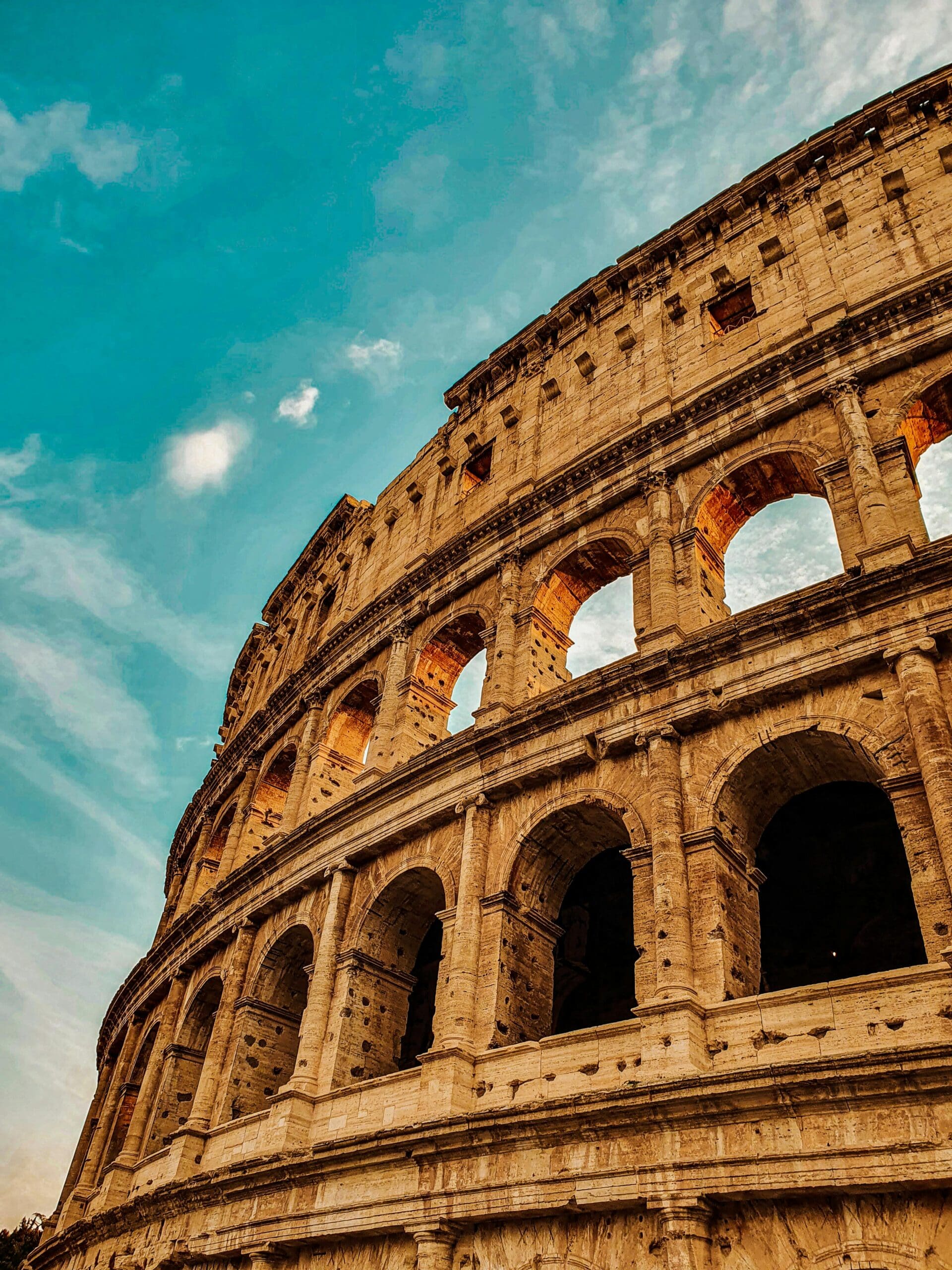
There is a specific quality to the light in Rome just before sunset: it hits the ochre facades of the centro storico and turns the entire city into a living, breathing sepia photograph. It is a visual texture that cinematographers have chased for a century, trying to bottle the atmosphere of a city that feels suspended somewhere between ancient history and modern chaos.
For the traveler, walking through Rome is an exercise in déjà vu: you have been here before, even if you haven’t. You may have seen these cobblestones under the wheels of a Vespa; you may have seen that fountain embraced by a soaking wet screen siren; you may have seen that dome looming over a conspiracy. The capital of Italy has long been known as “Hollywood on the Tiber,” a moniker earned during the golden age of the 1950s and 60s when American productions flocked to the city to stretch their **** and capture its grandeur.
While the streets serve as the open-air stage, the engine room of this industry is undeniably Cinecittà. Located in the southeastern suburbs, these legendary studios were the birthplace of epics like Ben-Hur and Cleopatra. However, the true magic remains outside the studio gates. To visit the famous film locations in the eternal city is to walk through a timeline of cultural history, seeing how the city has shifted in the lens of the world’s greatest directors.
To understand Rome through film is to understand the evolution of the city itself. From the black-and-white innocence of the post-war era to the high-definition gloss of modern fashion biopics, the locations remain constant while the context shifts. This tour is designed to take you through the decades, offering a blend of cinematic nostalgia and practical travel advice for those looking to capture their own footage.
It is impossible to discuss cinema in the capital without starting with the film that introduced American audiences to the concept of the Italian holiday. William Wyler’s Roman Holiday did more for Roman tourism than any marketing campaign in history. The film, starring Audrey Hepburn and Gregory Peck, captures a city waking up from the darkness of World War II, full of hope and sunlight.
The most enduring image is arguably Hepburn enjoying a gelato on the Spanish Steps: in 1953 the steps were a casual meeting place, a spot to idle away an afternoon. Today things are different: to preserve the UNESCO World Heritage site, sitting on the Spanish Steps is now prohibited and enforced by police whistles. However, the visual impact of the sweeping staircase leading up to the Trinità dei Monti church remains undiminished. Standing at the bottom of the Piazza di Spagna, looking up, you can still frame the shot that defined a generation’s idea of European romance.
A short distance away, at the portico of the Church of Santa Maria in Cosmedin, lies the Mouth of Truth (Bocca della Verità). In the film, Peck pranks Hepburn by pretending the ancient stone face has bitten off his hand (a legend stating the mouth closes on liars). Today, the line to take a photo with your hand in the mouth can wrap around the block. The best strategy is to arrive early in the morning, before the tour buses unload, to replicate the scene without the pressure of a hundred onlookers waiting for their turn.
If Roman Holiday was the innocence of the 1950s, Federico Fellini’s La Dolce Vita was the decadent explosion of the 1960s. The term “paparazzi” comes from a character in this movie, and the aesthetic of the “sweet life” became Italy’s global brand.
The centerpiece of the film, and perhaps the most famous scene in Italian cinema history, features Anita Ekberg wading into the Trevi Fountain in a black strapless dress, beckoning Marcello Mastroianni to join her. It is a scene of surreal beauty, contrasting the silence of the Roman night with the roar of the water.
Visiting the Trevi Fountain today requires a recalibration of expectations, because it is rarely empty. The crowds are indeed dense, tossing coins over their shoulders to ensure a return to Rome. Mimicking Ekberg is of course forbidden; entering the fountain will result in a hefty fine and immediate ejection from the area. One must visit the Trevi in the dead of night, with the crowds gone and the floodlights illuminating the baroque sculptures, so the fountain regains the magical, theatrical quality that Fellini immortalized.
Ridley Scott’s epic brought the Roman Empire back to the forefront of pop culture. While much of the filming took place in Malta and utilized digital extensions, the Colosseum remains the spiritual and narrative heart of the film, because the story of Maximus Decimus Meridius is inextricably linked to the Flavian Amphitheatre.
Standing on the second tier looking down into the hypogeum (the underground maze where gladiators and animals waited before battle) you get a sense of the terrifying scale depicted in the movie. The structure is currently undergoing a massive project to restore the arena floor, which will eventually allow visitors to stand right in the center of the amphitheater, seeing the rising tiers exactly as a gladiator would have. It is a visceral experience, grounding the Hollywood fiction in cold, hard stone.
Based on the Dan Brown novel, Ron Howard’s thriller turned the Vatican and Rome into a high-stakes puzzle board. The protagonist, Robert Langdon, races against time to save kidnapped cardinals, following a “Path of Illumination” laid out by the artist Bernini.
This film serves as an excellent itinerary for art lovers who want a side of adrenaline. One of the key dramatic scenes takes place in Piazza Navona, at the Fountain of the Four Rivers. In the movie a cardinal is nearly drowned in the fountain’s basin; in reality, this Bernini masterpiece is a celebration of the four major rivers of the known world at the time. It is a bustling square, filled with artists and cafes.
The climax leads to St. Peter’s Square. While the production recreated the square on a massive scale in a parking lot in Los Angeles due to filming restrictions at the Vatican, the real location is remarkable. Standing in the embrace of Bernini’s colonnades, looking toward the basilica, the grandeur is overwhelming: it is one of the few iconic movie locations where the reality is actually more impressive than the film set. The sheer scale of the squares, designed to hold hundreds of thousands of pilgrims, cannot be fully replicated.
Paolo Sorrentino’s Academy Award-winning masterpiece is a love letter to Rome, but a melancholy one. It explores the vacuity of high society against the backdrop of the city’s stunning, indifferent beauty. It is the spiritual successor to La Dolce Vita, updated for the 21st century.
The film opens with a cannon firing on the Janiculum Hill (Gianicolo), followed by a sweeping sequence involving a choir singing near the Fontana dell’Acqua Paola. This fountain, known locally as “Il Fontanone” (the big fountain), offers one of the most spectacular panoramic views of Rome. Unlike the frantic energy of the Spanish Steps or the Trevi, the Janiculum is often quieter, a place for reflection, it is here that you can understand the protagonist’s weariness and his awe. The view stretches across the rooftops, domes, and bell towers, presenting the city as a singular, timeless entity.
Ridley Scott returned to Rome to film the turbulent history of the Gucci family. This film shifts the focus from ancient ruins to the high-gloss world of 1970s and 80s fashion; it showcases the Rome of the wealthy, the power players, and the dynasties.
The epicenter of this world is Via Condotti, the street that runs directly into the Spanish Steps. This is the heart of Rome’s fashion district, home to the flagship stores of Italy’s greatest designers, including the actual Gucci boutique. Walking down this street is a sensory overload of luxury and the window displays are art installations themselves. The film captures the allure of Italian style (the leather, the silk, the gold) that is as much a part of Rome’s identity as its marble columns: it is a reminder that Rome is a thriving, modern capital of style.
The cinematic allure of Italy rarely stops at the borders of Lazio. For film enthusiasts and travelers alike, the narrative often continues north to Tuscany. In the world of Dan Brown, the sequel to Angels & Demons is Inferno, which sees Robert Langdon running through the Boboli Gardens and the Palazzo Vecchio in Florence. Similarly, the saga of the Gucci family is deeply rooted in Florence, where Guccio Gucci founded the house in 1921.
The visual contrast between the two cities provides a perfect cinematic cut: Rome is golden, chaotic, and imperial; Florence is stony, medieval, and intimate. It is the cradle of the Renaissance, offering a different architectural palette for directors and photographers. The journey between these two cultural heavyweights is seamless, allowing you to wake up near the Colosseum and have an aperitivo by the Ponte Vecchio.
Florence also has a lot to offer and you can take the fast train from Rome. This high-speed connection changes the logistics of an Italian vacation, turning a multi-city itinerary into an easy day trip or a quick transfer. The train ride itself is a transition scene, blurring the lines of the Italian countryside as you move from the Tiber to the Arno.
Whether you are chasing the ghosts of gladiators, the glamour of 1960s paparazzi culture, or the thrill of a modern mystery, the streets of Italy deliver. These locations are enduring monuments that have hosted millions of personal stories, of which the movies are just the most famous.
share:

March 19th, 2026 at 12:05 pm
Интересная статья, которая раскрывает Рим через призму кинематографа. Город с его уникальной архитектурой и атмосферой действительно часто становится идеальной площадкой для съёмок, а знакомые локации приобретают новый смысл, когда видишь их в фильмах. Такой взгляд делает путешествие по Риму ещё более увлекательным, особенно для любителей кино. Если любите фильмы и сериалы онлайн, рекомендую смотреть на lordfilmhd.club — удобно и всегда есть из чего выбрать.
April 14th, 2026 at 12:17 am
A beautifully written piece that perfectly captures the magic of Rome through cinema. I love how it connects iconic films with real locations, making the city feel like a living movie set. It truly inspires travelers to explore Rome not just as a destination, but as a cinematic experience