
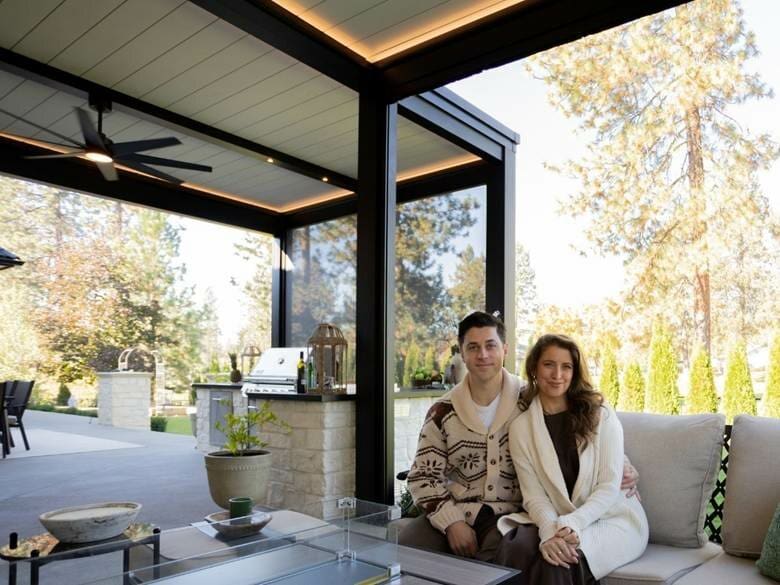
When David Henrie set out to redesign his backyard in Idaho, the goal wasn’t just aesthetic, it was functional. The question was simple: could an outdoor space be used year-round in a climate defined by seasonal shifts, changing temperatures, and unpredictable weather?
The result offers a clear answer and reflects a broader shift in how outdoor spaces are being designed across the United States.
Designing for Use, Not Just Looks
Rather than treating the backyard as a secondary or seasonal space, the project was approached as a true extension of the home. The objective was to create an environment that could be used consistently, whether for cooking, relaxing, or entertaining.
The solution consists of two attached pergolas, each measuring just over 300 square feet, creating more than 600 square feet of covered outdoor space. Both structures extend directly from the house, reinforcing a seamless transition between indoor and outdoor living.
The layout is intentionally divided into two zones:
· an outdoor kitchen and gathering space
· a quieter lounge area connected to the primary bedroom
This type of configuration reflects a growing trend in residential design, where outdoor spaces are structured to support different uses rather than left as open, undefined areas.
How It Works in a Variable Climate
Idaho’s climate presents real constraints. Summers can bring strong sun, while spring and fall introduce cooler temperatures and rain. Designing for this environment requires more than traditional shade structures.
Instead of a fixed roof, the project uses a motorized louvered system that can adapt throughout the day:
· open for sunlight
· angled for shade and airflow
· closed for rain protection
A closer look at how this Idaho pergola was designed for year-round use shows how adaptable outdoor systems can maintain usability across changing conditions.
Materials Designed for Long-Term Performance
As outdoor spaces become more integrated into daily life, material selection plays a larger role.
Traditional materials such as wood can be affected by moisture, heat, and temperature variation over time. In contrast, engineered aluminum systems are increasingly used for their durability and low maintenance requirements.
According to Azenco Outdoor, which designed and manufactured the system used in this project, outdoor structures are increasingly approached as functional, engineered components of the home rather than decorative additions.
Solving Real-World Constraints
Beyond climate, the property itself introduced additional challenges. The backyard faces a golf course, creating both visibility concerns and occasional impact risks.
Rather than enclosing the space completely, the design balances openness and protection through positioning and integrated screening. This allows the homeowners to maintain views while improving comfort and usability.
This type of site-specific approach reflects a broader evolution in outdoor design, where each project responds to the unique conditions of its environment.
Outdoor Spaces Are Becoming Everyday Spaces
One of the pergolas covers a fully equipped outdoor kitchen, while the second creates a more private lounge area. Together, they transform the backyard into a functional living environment.
“It’s quickly become our family’s favorite spot to unwind, eat, and enjoy the view,” said David Henrie. “It really changed how we use our outdoor space day to day.”
The project has since drawn attention as an example of how outdoor spaces can be designed to perform beyond seasonal limits.
Alt text for the second image:
David Henrie and his wife seated under their Azenco Outdoor pergola at their Idaho home enjoying a covered outdoor living space
A Shift Happening Beyond One Project
While this installation is tied to a recognizable homeowner, the trend it reflects is much broader.
Across the U.S., homeowners are increasingly looking for outdoor environments that:
· function year-round
· integrate with the home’s architecture
· adapt to changing weather conditions
This shift is also influencing hospitality and commercial design, where extending outdoor usability can directly impact both experience and capacity.
Those exploring similar approaches can learn more about available systems and configurations through Azenco Outdoor’s pergola solutions, which are designed to adapt to a wide range of climates and use cases.
From Seasonal Feature to Functional Space
Projects like this illustrate a broader redefinition of outdoor living. What was once considered an optional, seasonal feature is now being treated as a permanent extension of the home.
As expectations continue to evolve, the focus is shifting toward outdoor spaces that offer the same level of usability and reliability as interior environments, regardless of location or season.
share:

Be the first to comment