
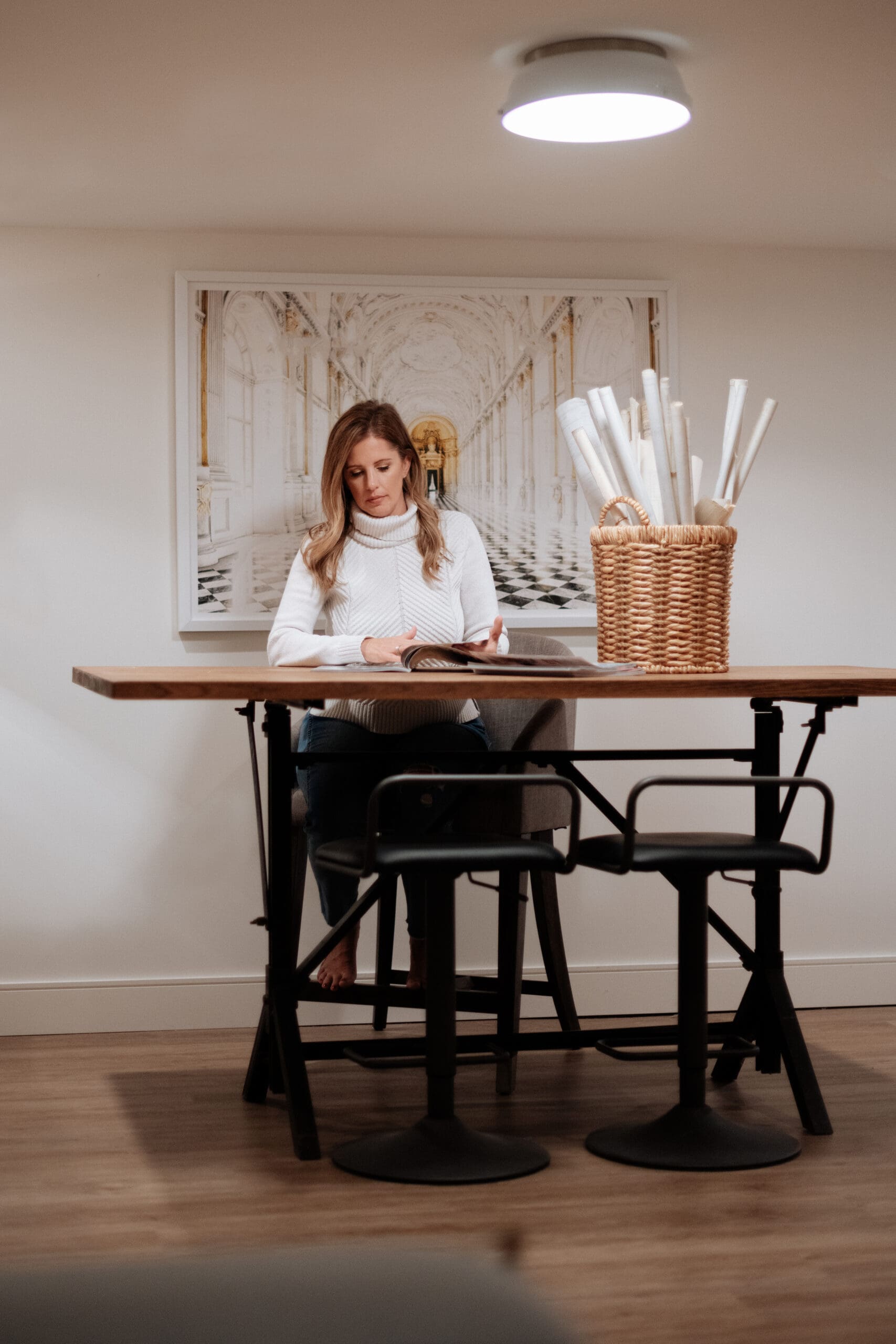
If you’ve ever found yourself panic-buying tile the night before install… this one’s for you. Interior designer Danielle Nicholson is on a mission to change the way we renovate—with smarter planning, fewer regrets, and a whole lot less overwhelm. With the launch of her new project planner, she’s breaking down why great design starts long before demo day—and how getting organized early can save you time, money, and major headaches. —Noa Nichol
You say planning starts long before demolition—what are the very first steps someone should take when they’re just dreaming about a renovation?
When you’re dreaming about a renovation, chances are you have pretty pictures in your head of how you would like your space to look. But the most important thing is to think about how you want to function in the space. We can all appreciate a Pinterest board, but it doesn’t necessarily mean it works for our everyday lives.
So get out some blank paper. It doesn’t have to be graph paper, and start drawing. You do not have to have any previous experience. Draw your existing space as basic as you need it to be and start brainstorming.
Once you feel confident that you have it figured out that’s when I suggest putting it on graph paper in your book (Don’t Start Without Me).
What’s the biggest mistake homeowners make in the planning phase—and how can they avoid it from day one?
Trying to execute before they really know what they want. Thinking that the planning should involve trades, contractors, etc. Most of the planning should be happening at home before you call anybody.
This can all be avoided by having more conversations with yourself or people who will be involved in the projects and living in the space. Brainstorming and allowing time is so important.
For example, if you’re starting a project in January because your daughter is getting married in June, it’s probably not a good idea. This is exactly when I would suggest not doing a renovation.
For someone starting from scratch, what should a “must-have” renovation plan actually include?
Well, for starters my book for sure! That is why I created it. This outlines everything that I believe you need through the renovation process, budget sheets, graph paper, contact list, etc.
In order to plan, you need an outline. You can’t execute a project if you have no idea what you’re looking at. So by having everything on paper, most importantly measurements, this will give you an idea of what your budget looks like.
Budgets are where things often go off the rails—what are your top strategies for setting a realistic budget and sticking to it?
Again, this is why I bring up the book and why it’s so important. Typically, we all know how much money we have to spend. If you plan ahead, chances are you can come pretty close to staying within budget.
People generally go over budget because they’re picking items out as they go through the process and they haven’t taken the time to make their selections ahead of time.
Creating a space that fits within your budget takes more time, because more sourcing is involved to find the right thing within your budget. It is definitely possible to do and I’ve definitely done it myself.
Educating yourself on the cost of material and having your numbers in place becomes very empowering and I promise you will help you stay on budget.
How can homeowners prioritize where to spend versus where to save without compromising the overall design?
Oh, this is such a great question. It can definitely be tricky. First thing you need to think about is what matters most to you. So for instance, if you’re renovating a bathroom and a tub is something that’s super important to you, then I would make this your number one priority. Or if a complete shower system with a steam shower, etc. is important to you, then I would start with that. Price out what’s most important to you because that is not going to change and you will regret it if you don’t put exactly what you want and something that will be very difficult to change later. Once you’ve priced out your non-negotiables, you will know exactly how much money you have left in your budget and you go down the line of what’s most important to you next. As far as the overall design, you will want to rely heavily on your mood board. The design really isn’t about how much money you spend. It’s more about your choices and how it comes together.
What’s your go-to method for keeping a renovation organized—especially when there are multiple decisions, timelines, and contractors involved?
Getting it out all on paper. Writing down exactly what you need and if you don’t know, asking the questions from the professionals you’re relying on.
That is why there is a calendar in the book and contact list. Ask your builder or contractor for an outline on material select selections. Again, this is why I strongly suggest having most of this done before you even start your project so you’re not feeling pressured.
Measurements and layouts can make or break a space—what are the most common (and costly) mistakes people make here?
For people tackling a project in stages, how can they plan ahead so everything still feels cohesive in the end?
The biggest mistake I see people make, especially with building is seeing something on paper and thinking it looks great, but not actually thinking about how they’re going to live in the space. What type of furniture placement do they envision and will that realistically work. Is this room more of a conversation room or do you need to create a focal point with directional viewing to the TV for as many people as possible.
How many people do you want to be able to fit at your dining room table at any given time?
It might mean that a door needs to be moved over or a window should be placed a little bit higher in order for you to actually function in the space. Think of all your entry points your walkways that are invisible at the time of drawing stage.
If you’re renovating think long-term, especially if you’re doing it in stages. Keep your canvas as simple and classic as possible. If you’re not renovating the entire home, then consider the rest of your home when making new material selections.
Keep things as cohesive as possible, and try not to be tempted on the latest and greatest trends.
What’s one thing designers wish every client had figured out before stepping into a store or hiring trades?
I don’t know if I can think of one thing but here’s a short answer: What their budget looks like. What they want their space to look like, and how they want to live in it?
If you could give homeowners one practical piece of advice to save time, money, and stress on their renovation, what would it be?
Remember when making material selections you don’t have to break the bank, not everything should have a wow factor. It’s not about each individual item but how the space comes together.
Plan ahead and have realistic expectations. Enjoy the journey and know that things will go wrong, problem-solving his key. Everything will work out in the end. The less you stress, the better the outcome will be, that I promise you.
share:

April 22nd, 2026 at 3:40 am
Discover the secret to a stress-free home makeover: professional tips on budgeting, timelines, and the power of a solid design plan.
I’ve been sourcing pipes for multiple construction projects, and my experience with Trutuf Pipes has been exceptional. Their product quality is consistent, durable, and meets industry standards every time. What impressed me most is how they maintain reliability in PVC pipe manufacturing in Udaipur without compromising on performance. Their team is responsive and professional, ensuring smooth coordination. If you’re looking for long-term dependability and superior pipe solutions, Trutuf Pipes is definitely a brand you can trust.