
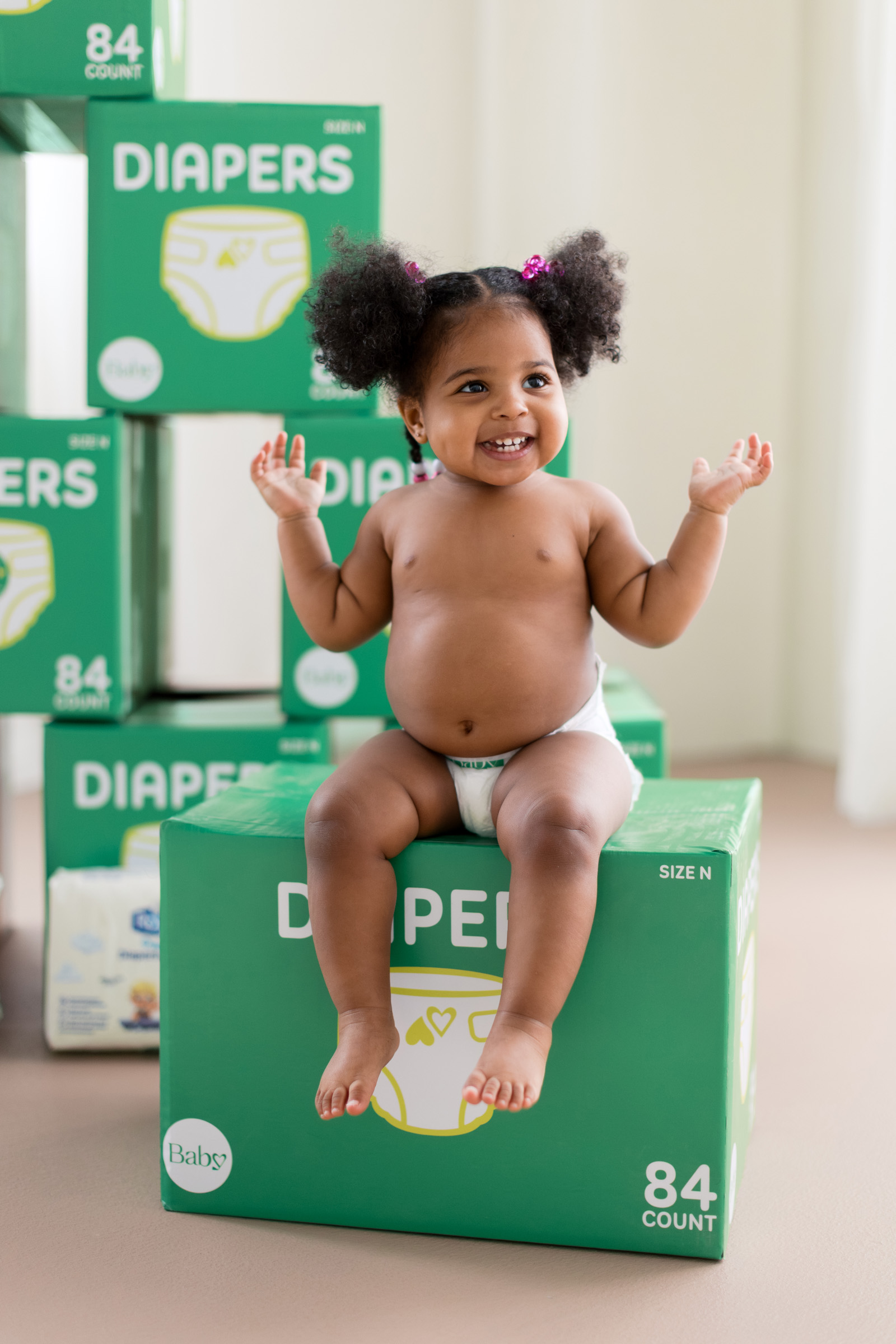
This Mother’s Day, beyond flowers and brunch, there’s a more meaningful way to show up for moms—especially those who need it most. Behind Baby Love Beginnings, co-founders Julia Miller Black and Tanya Taylor are tackling one of the most overlooked challenges facing families today: diaper need. What began in a basement during COVID has grown into a national movement—one that’s changing lives, one essential at a time. We sat down with the duo to talk impact, urgency, and why this might be the most important gift you give this year. —Noa Nichol
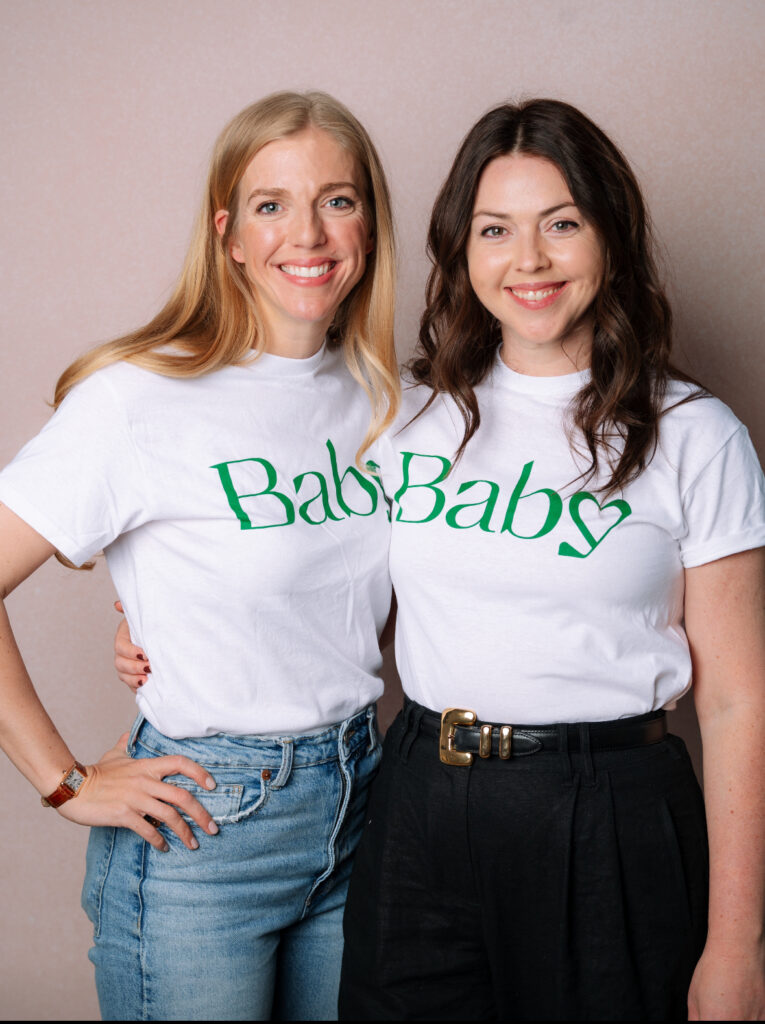
Baby Love Beginnings started in a basement during COVID. Can you take us back to that moment and what made you realize this was a much bigger, systemic issue?
Tanya: I remember Julia calling me during lockdown, and there was an urgency in her voice I hadn’t heard before. As two best friends who had babies around the same time and were home in the thick of it changing diapers around the clock, barely sleeping we both understood in the most visceral way how essential diapers are. You cannot go a single day without them. The idea that families right here in Toronto were rationing them, or going without entirely, was something neither of us could sit with.
Julia: We started packing boxes in a basement, completely by hand, thinking we were solving a temporary problem. That first month, we distributed 10,000 diapers and it felt like a lot. But the calls kept coming long after restrictions lifted. That’s when Tanya and I looked at each other and realized: this isn’t a COVID problem. This is a poverty problem that COVID finally made impossible to ignore. One in five families in Toronto cannot afford diapers and that number exists in good times and bad. We just hadn’t been talking about it.
Diaper need is something many people don’t think about. Why do you think it’s been such an overlooked dimension of poverty in Canada?
Julia: I think it comes down to what we imagine poverty looks like. We picture food insecurity, or housing instability. But diapers, something every baby needs every single day, aren’t covered by food bank staples and there’s no program that fills that gap. Because babies can’t advocate for themselves, the need stays quiet. Last year we created the Diaper Barrier installation at Commerce Court to show exactly what that looks like in real life: if a parent doesn’t have diapers, they can’t drop their child off at daycare, and if they can’t do that, they can’t get to work. It’s a chain reaction that starts with something most of us never think twice about. The installation sparked nearly 10 million media impressions and the reaction was genuine shock. People had no idea this was happening in their city.
Tanya: There’s also something about how we define what counts as a “worthy” cause. Diapers feel so basic that I think people assume someone must already be taking care of it. But nobody was, not at scale, not consistently, not in a way that families could actually rely on. That’s the gap Baby Love exists to fill. And once people truly understand it, they want to help immediately. We see that every single time we tell this story.
You’ve shared that 1 in 5 families in Toronto struggle to afford diapers. What does that reality actually look like day-to-day for the mothers you support?
Tanya: The numbers tell a story that’s hard to shake. Nearly 75% of the families we serve rely on Baby Love diapers to meet the minimum supply requirements for their children to attend daycare. We know mothers who have lost their jobs not because of anything they did wrong, but because they couldn’t get their child through the daycare door without diapers. We’ve also heard from a mother who was at a paediatrician’s appointment and was threatened with a call to children’s services because she didn’t have enough diapers. These stories stay with you. And they’re more common than most people realize.
Julia: And beyond daycare and work, it’s the quiet indignity of it. A baby left in a diaper longer than is safe because mom doesn’t know when she’ll get more. A mother skipping an opportunity because she simply can’t leave the house. One of our families, Yosselyne, a refugee who came to Canada while pregnant, shared that there was a week when she had one diaper left and no money. That same day, a Baby Love delivery arrived. She said: “I cried. It felt like someone out there truly cared, and it gave me the strength to keep going.” That’s what this is about.
How does diaper insecurity ripple into other areas of a mother’s life, like work, childcare, and mental health?
Julia: The data is really clear on this. Nearly 75% of the families we serve use Baby Love diapers specifically to meet daycare attendance requirements, and when they have consistent access, 83% of our partner organizations see an increase in program attendance. One partner saw a 60% jump in families walking through their doors. And 100% of families we serve reported reduced stress after receiving support. These aren’t small numbers. They show that solving one foundational need unlocks everything else: work, school, community, stability.
Tanya: The mental health piece is something I feel deeply as a mom. Motherhood is already so emotionally full, even when you have everything you need. Both Julia and I know that from our own lives with our boys. The weight of not being able to meet your baby’s most basic need, on top of everything else a mother is carrying, compounds every single day. When we remove that one burden, we see women show up differently for their children, engage in programs, pursue opportunities. It genuinely changes everything.
Your model of manufacturing diapers at reduced cost and distributing through community partners is unique. What makes this approach more effective than traditional donation models?
Tanya: From the very beginning, we knew we had to work at scale, and that meant thinking about this like a supply chain problem, not a donation drive. My background in manufacturing gave me a real understanding of how to source well, how to build reliable logistics, and how to design a model that could actually grow. We knew that inconsistent donations, random sizes, unpredictable timing, varying quality, would never give families what they truly needed: reliability. So we built a purchasing model that lets us buy directly and pass those savings directly to families. I’m incredibly proud that every diaper we distribute is now Canadian-made through our partnership with Irving Personal Care and the Royale Premium Diaper, and that we partner with WaterWipes to provide families with the purest, gentlest wipes for their babies. These partnerships are a reflection of what these families deserve.
Julia: On the ground, that model means 14 trusted community organizations are delivering diapers to families through relationships that already exist. We’re not just dropping off a box. We’re integrated into wraparound support programs, early childhood programs, newcomer services, housing supports. Families receive essentials through people they already trust. And when we started, we distributed 10,000 diapers in our very first month. Today, we’re at 150,000. That growth is a direct reflection of the model working.
You’re now supporting more than 1,500 families each month. What has been the most surprising or eye-opening part of that growth?
Julia: The waitlist. We have over 20 organizations right now waiting to partner with us. Each of those organizations represents hundreds of families who are being told “not yet.” That is not a number we celebrate it’s a call to action. The scale of unmet need in our city is something I still find staggering, even after everything we’ve seen.
Tanya: For me, it’s witnessing what consistency does for a family. We started thinking we were solving a logistics problem. What we didn’t anticipate is how much one reliable essential changes a mother’s day-to-day. When she’s not spending mental energy figuring out how to diaper her baby, she shows up differently for her child, she engages in programs, she pursues things she’d put on hold. Going from 10,000 diapers in our first month to 150,000 a month today means we’ve watched that play out thousands of times. That’s the part that keeps us going.
This Mother’s Day, you’re highlighting mothers who are often left out of the conversation. Who are these women, and why is it so important to centre their stories right now?
Tanya: The mothers we serve are largely invisible in the way our culture celebrates motherhood, and honestly that’s what this time of year makes us think about most. Half of the households we serve are led by single mothers. Many are newcomers and refugees who came here with very little and are building a life for their kids with incredible determination. These women deserve to feel celebrated on Mother’s Day just as much as anyone else.
Julia: This year we’re hosting Spring Showers, a celebration for 50 expectant mothers from our partner organizations, where we gift them with the newborn essentials they need to welcome their baby, and just as importantly, connect with each other. Last year at our first Spring Showers, one mother said something that really stayed with me. She had felt so alone navigating this journey, and being in that room, surrounded by other women going through the same thing, made her feel like she was finally part of a community. That’s what we’re trying to create alongside the practical support.
Tanya, coming from the fashion world, and Julia, from grassroots community work: how did your different backgrounds shape the vision for Baby Love?
Julia: Our backgrounds are genuinely complementary in a way I don’t think either of us fully anticipated. Tanya has spent her career building a brand that people connect with emotionally and that matters in how she thinks about Baby Love. She understood from day one that how we show up, how we communicate, how the whole organization feels to families and to donors, would determine whether this thing actually grew. That instinct for brand and storytelling has shaped everything from our name to how we talk about our mission publicly. My background is in community work. I know these organizations, I know how to build trust on the ground, I understand where the real gaps are. Together those two things make something neither of us could have built alone.
Tanya: Julia is being generous. What I’ll say is that coming from fashion and building a brand, I’ve always believed that how something is presented reflects how much you value the person receiving it. That applied to Baby Love immediately. These families deserve to feel that someone put real thought and care into what they’re getting, not just that they’re recipients of receiving the donations. Julia brought the depth of knowledge and the relationships. I brought a belief that we could build something people would be genuinely proud to be part of, whether you’re a donor, a partner, or a family we serve. The friendship made it work. We trust each other completely.
With over 20 organizations on your waitlist, what does that say about the scale of diaper need in Canada, and what needs to change?
Tanya: It says the need is much larger than most people realize and that the organizations closest to families already know it. Every one of those 20-plus groups has reached out because they are watching families struggle and they believe in what we’re doing. That gives us a lot of confidence in the model. What we need now is the resources to say yes to all of them.
Julia: I think what needs to change is awareness, first. When more Canadians understand that diaper need is real, widespread, and completely unaddressed by existing programs, the support follows we’ve seen that. The corporate sector also has a huge role to play. The kind of partnership Irving Personal Care and Royale brought to this where a company looks at their core business and asks how it can be part of a solution that’s the template. And for everyday Canadians, it’s as simple as $25 a month. The will is there. We just need to keep connecting it to the need.
For readers who want to make a meaningful impact this Mother’s Day, why is donating diapers or supporting this cause such a powerful way to give?
Julia: Because it’s immediate, tangible, and real. Our core operating costs are covered by a private donor, which means every dollar you give goes directly to diapers for families. When you join our Care Club with $25 a month, you’re providing a full month of diapers and wipes for a baby. It’s a small, recurring gift that goes directly to families who need it.
Tanya: As two moms, we both know what it means to have people in your corner, especially in those early months when everything feels like a lot. There’s something really meaningful about being able to extend that to another mother who’s navigating it with far fewer resources. A $25 monthly gift through our Care Club does exactly that. It’s a small, consistent act that makes a real difference to a family on the other end of it. We’d love for VITA readers to be part of what we’re building.
share:

Be the first to comment