
For years, the world of fragrance has been dominated by the same heritage houses, the same scent stories, and the same points of view. But when Jenn Fong discovered Chinese perfume houses and realized how much of global scent culture was missing from mainstream beauty conversations, it changed everything. The result was Meridian Perfumery—a destination for niche fragrance brands shaped by memory, ritual, heritage, and underrepresented perspectives. In this Q&A, Jenn shares why perfume is one of the most intimate forms of storytelling, the scents redefining modern fragrance culture, and how she’s helping Canadians discover an entirely new world of perfume. —Noa Nichol
What was the first fragrance that made you realize perfume could tell a cultural story—not just smell beautiful?
My fragrance journey involves learning how to make it, with the Institute of Art and Olfaction, so I came at this differently than most consumers do, through construction and craft rather than the final on-the-shelf product.
Through this, I learned that every perfume has a story; every perfume starts with a brief, and every brief carries an intention. These intentions are rarely communicated to the customers, but the intentions exist. Whether it’s to capture a memory, set a mood, or paint a picture of a moment or a way of living. Perfumery is art, and art often draws from lived experience.
Meridian Perfumery spotlights brands outside the traditional European fragrance canon. Why did that feel important to you personally?
Most people point to France and Italy as centres of perfumery. But European perfumery wouldn’t exist without the knowledge and ingredients from Eastern and ancient civilizations. India gave us spices, jasmine, and sandalwood. Southeast Asia gave us oud. The raw materials and traditions came first.
The “European canon” sets a very particular story about who gets to make fine fragrance, and what fine fragrance should smell like. When that’s the only story that’s told, we often miss the vast majority of the history and the world’s relationship with scent.
You’ve spoken about discovering Chinese perfume and thinking, “I never knew this existed.” What did that moment unlock for you?
China holds thousands of years of fragrance culture, and for most of my life, I couldn’t access that easily. When I finally encountered those perfumes, it felt like a reconnection with myself – one I didn’t know I needed.
People talk about scents and perfumes bringing back memories of loved ones, of significant events. Nothing at a department store counter ever smelled like my grandma, or like my home… but when I started exploring Chinese perfumes, I recognized the possibility.
Not everything at Meridian will produce this feeling, and that’s not exactly the point. I want to be mindful not to racialize the work – let’s not box in a brand coming from a specific country by expecting them to only create perfume in certain ways. But I do hope that for those who need it, they are more able to find this feeling at Meridian than anywhere else. And for everyone else, Meridian is bringing a wider world of scent back into the North American conversation.
Fragrance is often tied to memory and identity. How do the scents you curate reflect different cultural experiences and emotional landscapes?
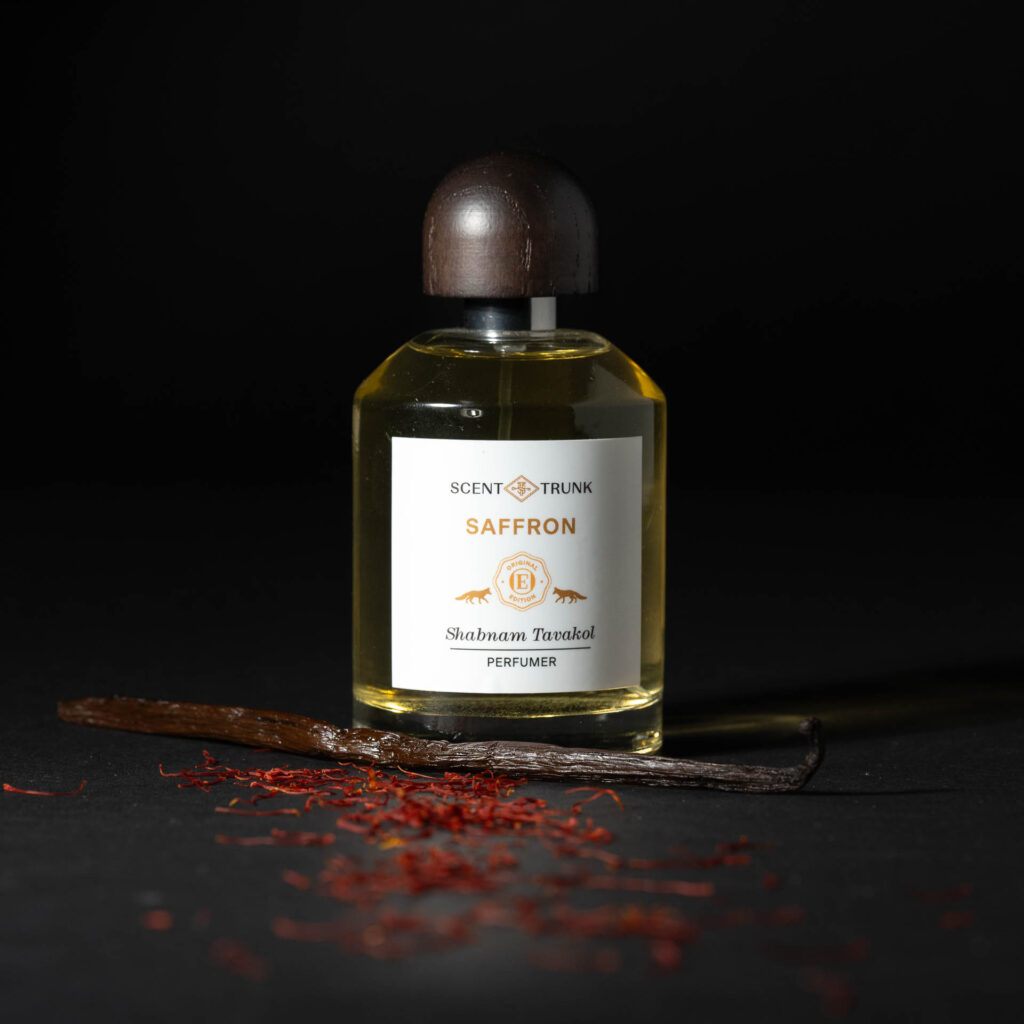
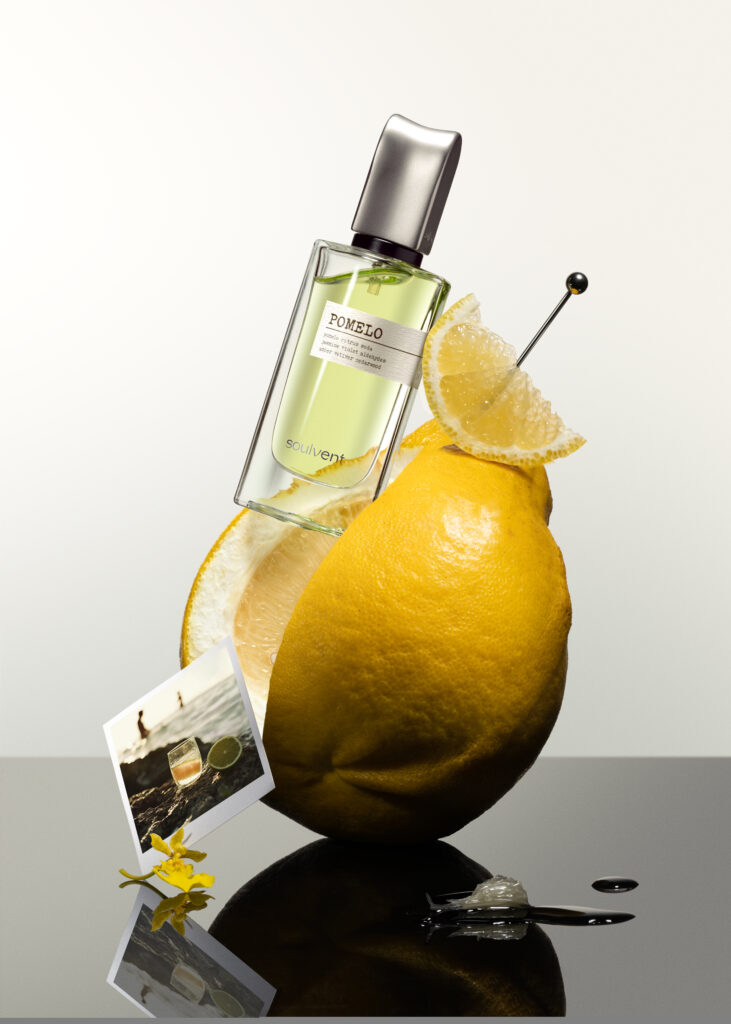
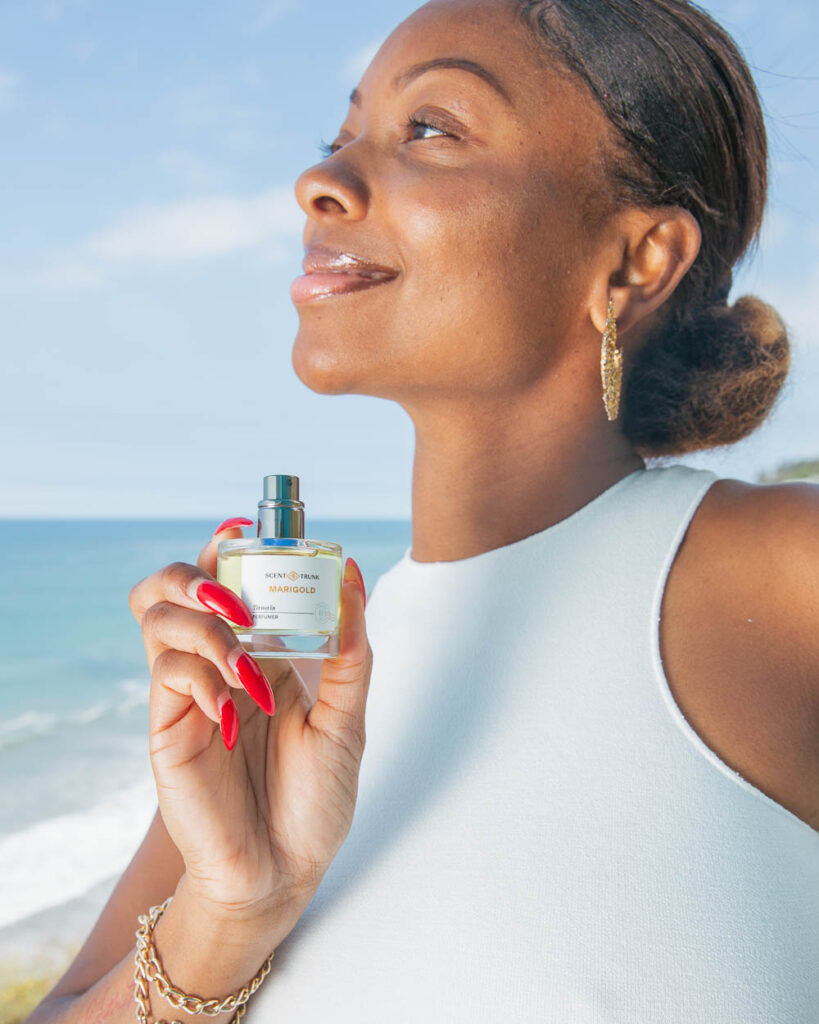
We’re focused on sharing perfumery from underrepresented perspectives. This often means non-white perspectives and stories. That said, emotions are human and universal. We all connect to shared experiences of love, grief, and joy. So, regardless of the brand, or where it’s from, the art still speaks to something that links us all. Saffron from Scent Trunk, which is crafted from a Persian perspective, resonates across cultures because so many people find comfort in sweet, lactonic notes. Gabar’s scents make an impact because of their luxurious feel. Whether it’s the story that resonates, or the scent itself, I hope people enjoy what Meridian is offering.
Tea, incense, coffee, skin, ritual—many of the fragrances you carry feel deeply transportive. What kinds of scent notes are resonating with people right now?
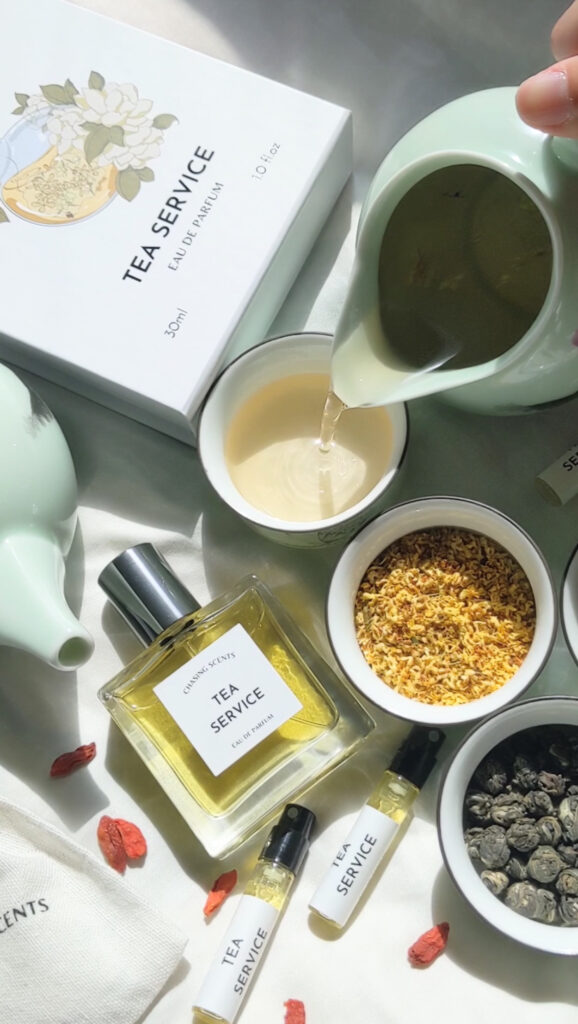
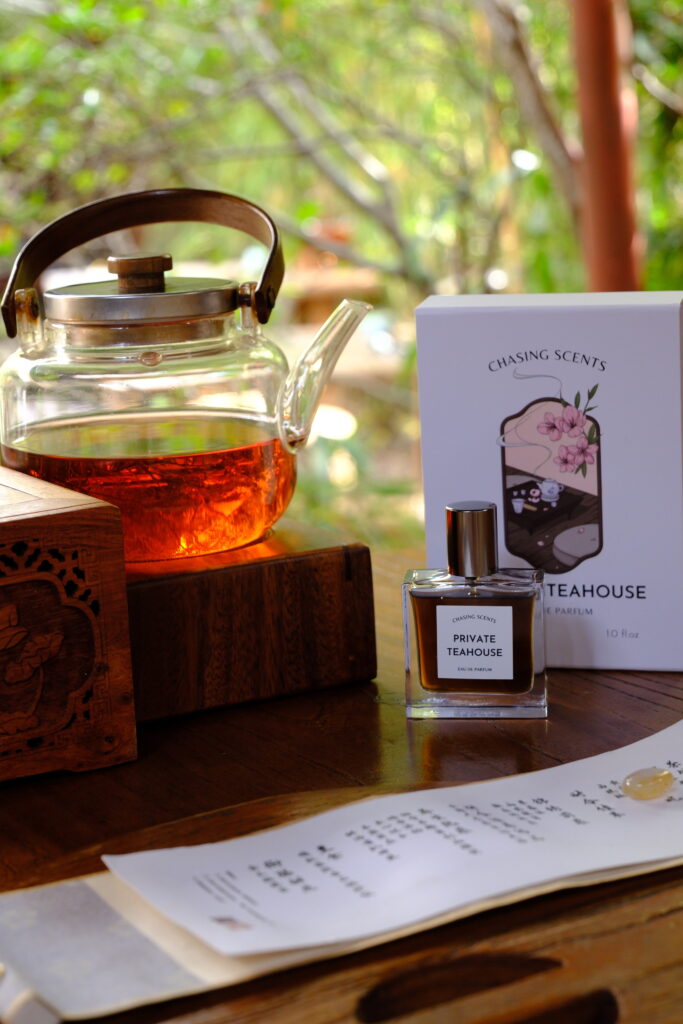
Like many things, fragrance is subject to trends. In North America, the gourmand trend is still holding strong but I think we’re seeing a slight shift away from gourmands being solely the realm of desserts and sweets, and broadening into the savoury. I find tea is an excellent example of this; non-western options are more olfactively astringent, tannic, herbal, and less floralized than their European counterparts – truer to the tea leaves.
Niche fragrance has exploded in popularity, but many people still feel intimidated by it. How do you help customers approach scent discovery in a more personal, intuitive way?
Fragrance can be intimidating. It’s hard to know what you like and smell is sometimes an underdeveloped sense. When was the last time you smelled an orange peel, really contemplated it, and developed a vocabulary to describe the scent? With our current behaviours too, there is sometimes frequent and ‘blind’ consumption of fragrance and a lot of space for others to inject their opinions over yours on what smells good or not.
I believe in developing a connection with a perfume, which requires time. This is why Meridian offers 2ml sizes so people can try a scent before committing to a full bottle, and I am always reachable for questions or suggestions.
In fact, here’s our post about selecting your next scent: https://www.instagram.com/p/DXzg159FPqE/?img_index=1
Brands like Chasing Scents and Gabar approach perfume through heritage, ritual, and storytelling. How does that differ from the way mainstream fragrance has traditionally been marketed?
The approach differs less than you might expect. Many European houses already lean hard on heritage in their marketing. The difference sits in which heritage, which stories, and which ingredients are being used, and how they’re being used.
I’ve seen storytelling growing across the industry, and for good reason. How do you sell a customer something they can’t experience until after they buy it? Before, and even often now, most people don’t get access to the story. They get a list of notes, which can only tell you so much about what the whole perfume composition smells like or are completely inaccurate to an individual’s experience.
What sets brands like Chasing Scents and Gabar apart comes down to the specifics: their sources of inspiration, the ingredients they reach for, the combinations they build, and the olfactive qualities they prioritize. Qualities like texture, density, projection, sillage. These choices reflect a different set of references for what smells good.
You’re introducing people to perfume houses they may never have encountered otherwise. What reactions do you love seeing when someone smells something completely unexpected for the first time?
I love when people are delighted. Sometimes they can’t articulate what causes it but their expression is clear. It’s also satisfying when someone finds something they haven’t smelled before – that I’ve provided a novel experience for them. But, honestly? I love any reaction. Someone doesn’t have to love a scent for it to do something. If it starts a conversation, that’s amazing.
Fragrance can be incredibly emotional and nostalgic. Are there scents in the shop that consistently spark powerful memories or reactions from customers?
We’ve only opened this month, so it’s still early days, but Chasing Scents has been very popular. The brand story connects to customers, and the tea-forward fragrances tap into something people seem to be ready for right now. People appreciate how truer these tea scents are to their tea experiences.
If Meridian Perfumery had its own signature scent, what would it smell like—and what feeling would you want it to leave behind?
Ooh, this is a fun question. A part of me feels that Meridian should be almost scent-less because we’re a vehicle for people to find their scent. If we had a scent, we wouldn’t be a blank slate from which you could experience your own needs and preferences.
However, if we had to commit to one: I think it’d be something texturally smooth, round in shape. Low density. A whisper of green, slightly woody, both staying well in the background. Something to clear the air rather than fill it. It’s unobtrusive, calming, and contemplative.
share:

May 13th, 2026 at 2:36 am
This insightful interview with Jenn Fong highlights how Meridian Perfumery is beautifully challenging traditional fragrance norms! It’s an inspiring look at how cultural heritage and unique storytelling are reshaping the world of modern perfume.
I had been facing issues with inconsistent mineral quality from previous suppliers, but Vasundhara Microns completely changed my experience. Their material works perfectly for our production requirements and helps maintain product consistency. While exploring options for a trusted Calcite powder manufacturer their company received strong recommendations, and now I can understand why. The support team is responsive, delivery timelines are accurate, and the pricing structure is also practical for long-term business. Overall, the experience has been reliable and professional, making Vasundhara Microns a preferred choice for high-quality calcite powder solutions.