
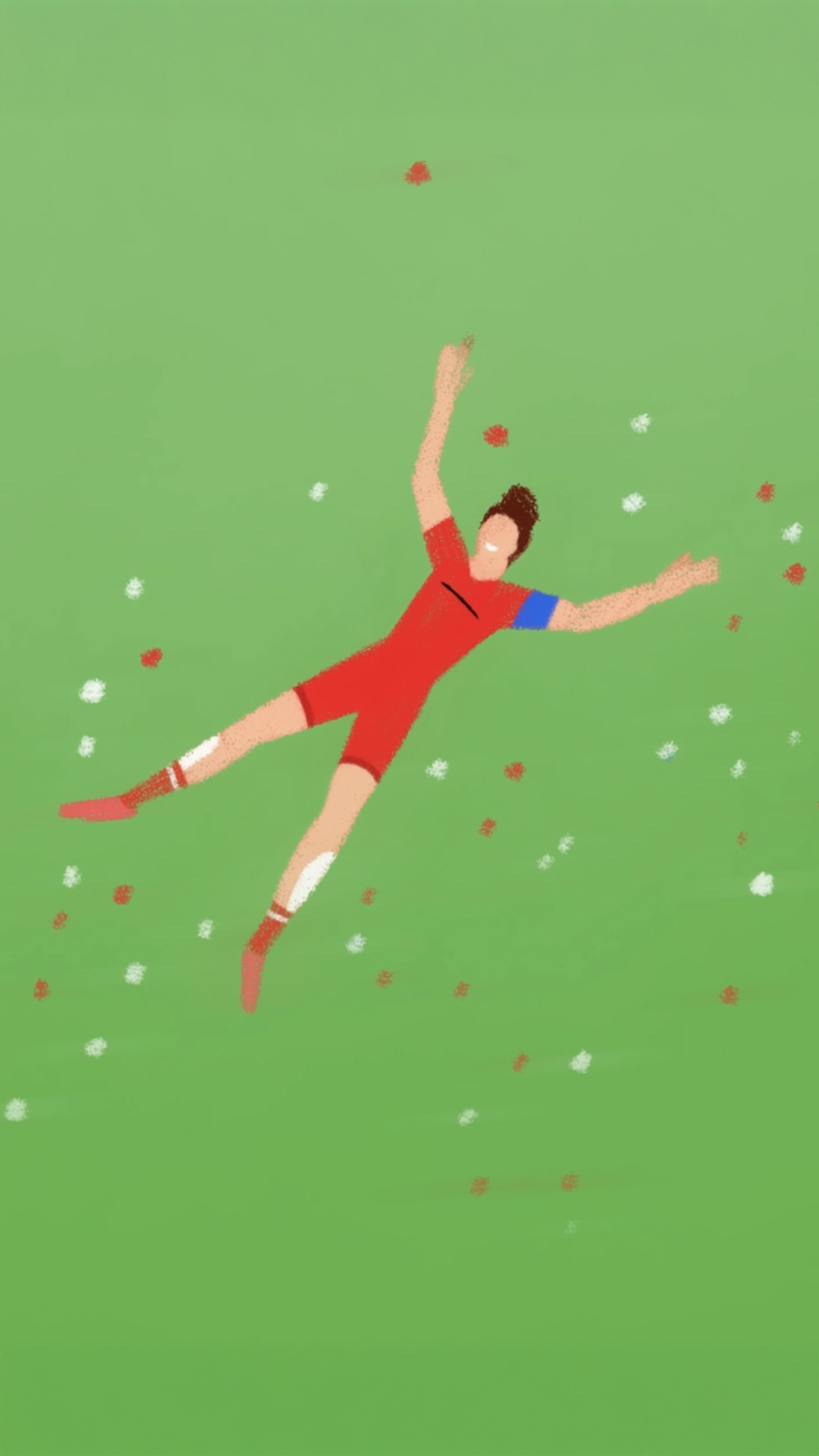
Canadian soccer icon Christine Sinclair has long been celebrated for her record-breaking career, quiet leadership, and lasting impact on sport—but a new animated short documentary is exploring the woman behind the legacy in a way we haven’t seen before. Christine Sinclair: Kind of a Big Deal, directed by Vancouver animator Eoin Duffy and narrated by Ryan Reynolds, blends artistry and documentary storytelling to trace Sinclair’s journey from Burnaby to the global stage, while reflecting on gender equity, Canadian identity, and the power of understated influence. We caught up with Duffy to talk about animation as storytelling, capturing Sinclair’s humanity, and why this moment feels especially meaningful as Vancouver prepares to host matches during the 2026 FIFA World Cup. —Noa Nichol
Animation often gets associated with children’s storytelling, but this film tackles legacy, leadership, and gender equity in sport. What made animation feel like the right medium for telling Christine Sinclair’s story?
Animation let us move away from making a traditional sports documentary and into something more emotional and subjective. We were much more interested in the pressure, expectations, and quieter personal moments that shaped Christine as a person. Animation gave us the freedom to explore those inner emotional spaces in a much more creative way.
Christine Sinclair is known for her quiet confidence rather than loud celebrity. How did you visually capture someone whose power comes from restraint and consistency?
That became a huge part of the film creatively. We really wanted to show the human side of leadership. Great leaders aren’t invincible icons, they’re people carrying pressure and doubt like everyone else. A lot of the visual approach came from trying to strip away the mythology and find the humanity underneath it.
Ryan Reynolds narrates the film, which adds another distinctly Canadian voice to the project. What did his narration bring to the emotional tone or storytelling style of the documentary?
Ryan originally came on board because we thought his humour would help balance some of the heavier parts of the film. But what really surprised us was how sincere and restrained the performance became. By the end, he brought a real warmth and honesty to the narration that helped ground the whole piece emotionally.
The film arrives at a moment when Vancouver is preparing to host the 2026 FIFA World Cup. Did that timing influence how you approached the story or its cultural significance?
Definitely. With Vancouver preparing to host the World Cup, it felt like the right moment to reflect on the people who helped build soccer culture in Canada long before it was getting this level of attention.
Christine’s career spans more than two decades, countless milestones, and massive cultural shifts in women’s sport. How did you decide which moments to include in just 10 minutes?
Honestly, that was probably the hardest part. We quickly realized we couldn’t tell Christine’s entire life story in ten minutes, so we focused on two emotional anchors for the film, the heartbreak of the 2011 World Cup and the gold medal win in Tokyo in 2021.
The documentary blends artistry with documentary storytelling in a really fresh way. Were there particular visual references, textures, or animation styles that shaped the world of the film?
Our Director of Animation, Henrique Barone, was a huge part of shaping the visual direction of the film. From early on, I wanted the animation to feel simple, textured, and emotionally driven rather than overly polished. We actually kept pushing the artwork simpler and simpler so the characters felt more universal and audiences could project themselves into the story more easily.
Beyond her athletic achievements, the film also touches on Christine’s impact on gender equity in sport. Why was it important to include that broader legacy alongside the soccer story itself?
Christine helped push women’s sports toward greater respect, visibility, and equality. We knew including that side of the story might step on a few toes, but it felt dishonest to leave it out because it’s such a huge part of her legacy.
As a Vancouver-based animator and filmmaker, what did it mean to tell the story of such an iconic British Columbian figure through a locally produced Canadian project?
Like a lot of people in BC, I knew who Christine Sinclair was before making the film, but I didn’t fully understand the scale of what she’d achieved. The more we researched the project, the more respect I gained for her. It quickly started feeling like more people should know this story, which is partly where the title came from. She really is kind of a big deal.
Sports documentaries are often very high-energy and adrenaline-driven, but this film sounds more reflective and intimate. Were you intentionally trying to challenge the traditional sports-doc formula?
Yeah, completely. I didn’t want the film to feel like a Wikipedia page or just a montage of greatest hits. I was much more interested in the quieter off-the-pitch moments that shaped Christine as a person. I think showing that vulnerability actually makes the achievements hit harder, especially for younger audiences.
After spending so much time immersed in Christine Sinclair’s story, what do you personally think makes her “kind of a big deal” in a way that goes far beyond sports?
It’s funny to say, but sports were never really my world. One of the biggest things I took away from researching Christine’s story was her style of leadership. She showed that you don’t have to be the loudest person in the room to lead powerfully. As someone who’s also pretty quiet and reserved, that resonated with me a lot.
share:

Be the first to comment