
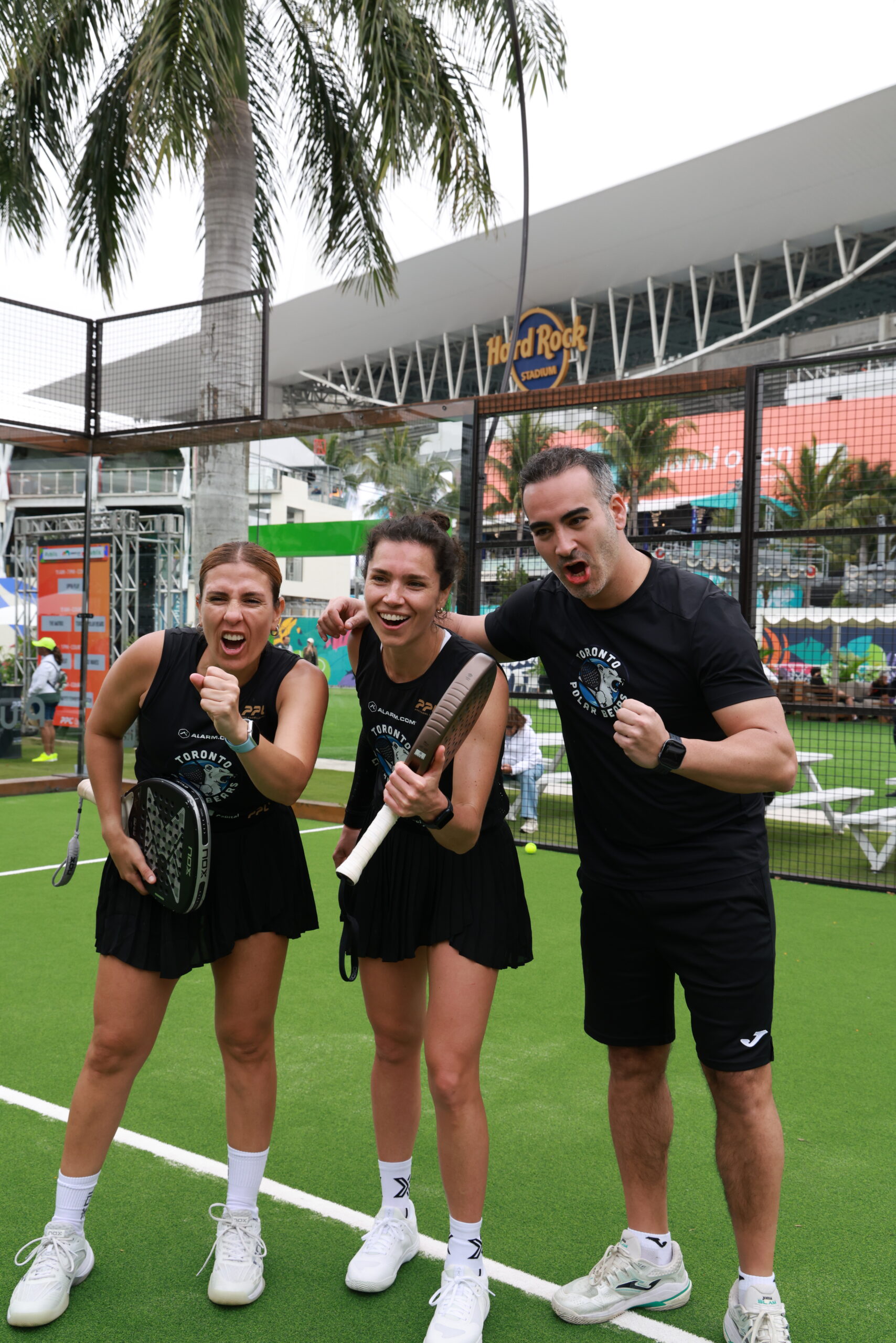
Part tennis, part squash and entirely addictive, padel is the world’s fastest-growing racket sport—and Canada’s only professional team thinks we’re just getting started.



If you haven’t heard of padel yet, you probably will soon.
Played on an enclosed court roughly one-third smaller than a tennis court, the fast-paced doubles sport combines elements of tennis and squash with an unmistakably social energy. Already boasting more than 35 million players worldwide and attracting everyone from celebrities and entrepreneurs to elite athletes, padel has become one of Europe’s hottest sporting obsessions. Now, it’s Canada’s turn.
Leading the charge is the Toronto Polar Bears, the country’s only professional franchise competing in the Pro Padel League. As the club prepares for its fourth season—opening July 9 in New York City—the team believes Canada is standing at the beginning of something much bigger than a new recreational pastime.
For founder and CEO Zale Turner, the appeal was immediate.
“I played padel for the first time four years ago, and after one time I became a frequent player,” he says. “It’s fast, accelerating, exciting, amazing socially, and the glass adds an amazing dynamic. Watching it live and on TV is just as amazing.”
That combination of accessibility and excitement is exactly what makes the sport so magnetic.
Unlike many racquet sports that can take months—or years—to become enjoyable, padel welcomes beginners almost instantly. Long rallies happen quickly, doubles play encourages conversation and teamwork, and the enclosed glass walls create spectacular angles that keep every point alive.
“It’s easy to get started,” says Turner. “And it’s the best feeling when you start getting better at the sport.”
The Sport That’s Also a Social Club
One of the biggest reasons for padel’s global explosion has little to do with winning.
Instead, it’s about community.
“It’s so quick, and you can chirp when you’re playing each other and really get competitive and up close and personal,” Turner says.
If padel were a person?
“The life of the party,” he laughs. “Everyone wants to be around it.”
That social spirit is something Adrian Morales, head coach of the Toronto Polar Bears, sees every day.
“People often think it’s the competition, the exercise or the social aspect,” he says. “The truth is, it’s all of those things combined.”
Morales believes padel offers something few sports can.
“It doesn’t matter where you’re from, what language you speak or what sport you played before. Once you step onto a padel court, everyone speaks the same language: padel.”
That’s why players don’t just fall in love with the game—they fall in love with the community surrounding it.
Why Everyone Gets Hooked
Professional player Mario Huete, ranked among the world’s Top 70 players, says newcomers often underestimate the sport.
“From the outside, padel looks like an easy sport because the court is smaller than a tennis court,” he explains.
Then they start playing.
“Within just a few minutes, you’re laughing, competing and enjoying long rallies. That’s one of the reasons so many people fall in love with the sport so quickly.”
Top-30 player Marta Caparrós agrees.
“A lot of people think padel is an easy sport compared to tennis,” she says. “But once you start playing at a higher level, you realize there are different shots, tactics, positioning and decision-making situations happening all the time.”
Still, that’s only part of the appeal.
“What surprises people the most is how social and fun it is,” she says. “It’s incredibly addictive because you’re constantly interacting with others and enjoying the experience while competing.”
Built for Beginners
Despite its professional league and elite athletes, padel isn’t intimidating.
In fact, every member of the Toronto Polar Bears says newcomers should stop worrying and simply book a court.
“My advice would be to start with a group of friends who are at a similar level,” says Huete. “Focus on enjoying the experience rather than worrying about playing perfectly.”
Caparrós offers similar advice.
“Don’t overthink it,” she says. “Find three friends, get on a court and enjoy the experience. Run, laugh and don’t worry about making mistakes.”
Morales believes one of padel’s greatest strengths is that improvement never really stops.
“Every point is different, every match tells a different story, and every session leaves you wanting one more game.”
A Sport That’s Going Places
Padel’s rapid rise has already transformed countries like Spain, where courts have become as common as tennis clubs and participation continues to soar.
Turner believes Canada is following the same trajectory.
“The pace it’s going now, I’m already at ‘wow,'” he says. “I see Spain as an example of where padel is going in Toronto eventually. The excitement is compounding daily.”
That optimism comes as the Toronto Polar Bears continue to grow alongside the sport itself, attracting new investment, expanding awareness and helping introduce Canadians to a game many have never experienced.
For Morales, the vision extends beyond professional competition.
“The perfect Canadian padel day starts with an early morning match, coffee and laughs,” he says. “Then maybe a clinic or league match later in the day, followed by food, drinks and great company—and ending with everyone watching the Toronto Polar Bears compete.”
In other words, padel isn’t just another sport.
It’s becoming a lifestyle.
And if the Toronto Polar Bears have anything to say about it, Canada is only getting warmed up. —Noa Nichol
share:

Be the first to comment