
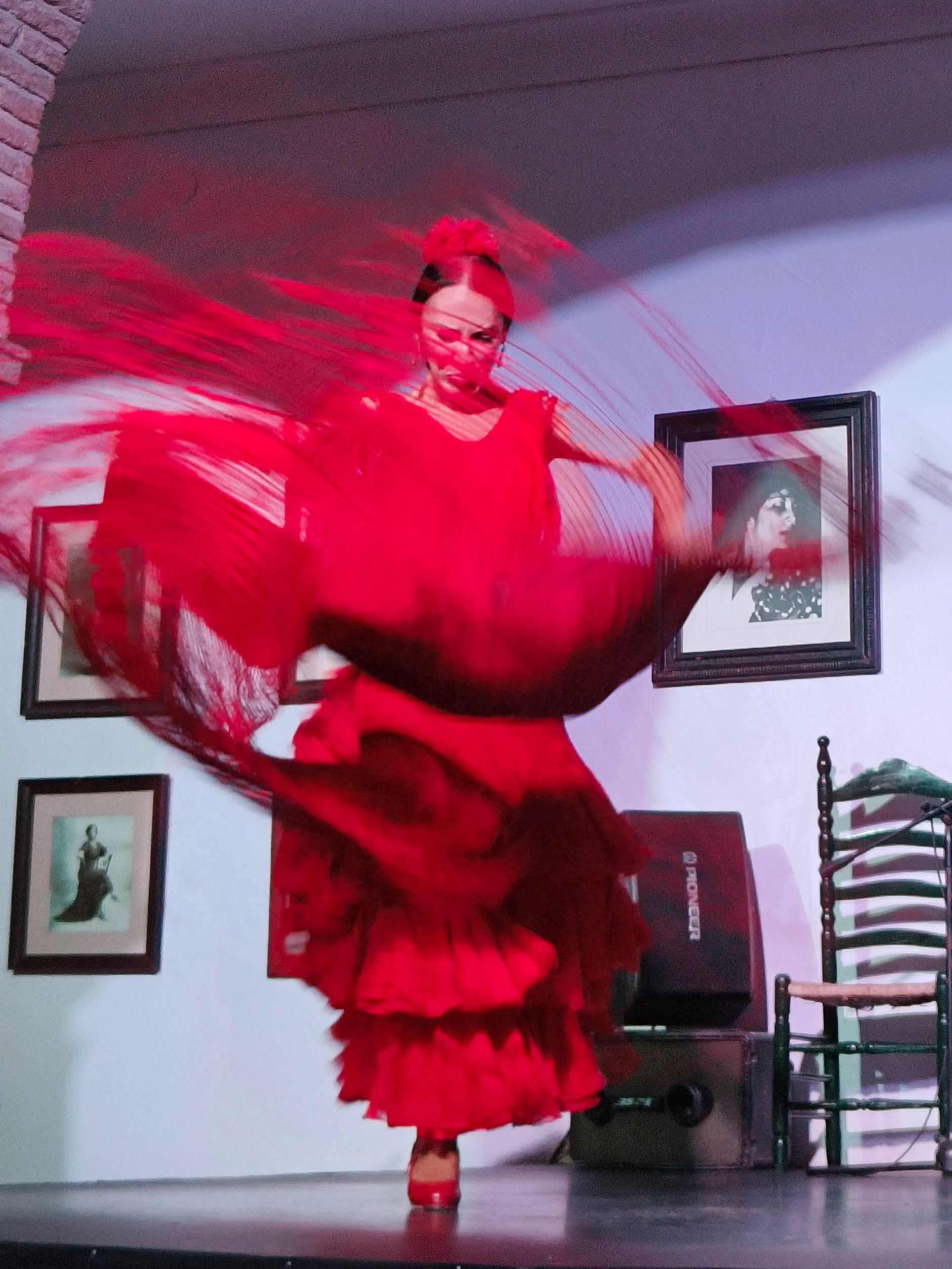
Madrid has a way of making the evening feel like the real beginning of the day. As the sun lowers over its ochre rooftops, the streets fill with conversation, late dinners begin, and plazas glow under soft lights. The city becomes warmer, louder, and more expressive after dark.
For visitors, this is often when Madrid feels most alive. Museums, markets, royal architecture, and historic neighbourhoods may shape the daytime itinerary, but the city’s emotional character tends to appear at night. A flamenco evening belongs naturally to that rhythm because it brings together music, movement, storytelling, intimacy, and atmosphere.
A private flamenco experience adds another layer to the night. Instead of arriving at a venue, watching a show, and leaving with only a surface impression, travellers can understand what they are hearing, why certain gestures matter, and how the performance connects to Spain’s layered cultural history. In Madrid, where old taverns, artistic enclaves, and late-night dining culture sit close together, flamenco becomes a powerful way to experience the city with more depth.
Flamenco Is More Than A Stage Performance
To someone encountering it for the first time, flamenco may appear to be mainly about dramatic dance, fast footwork, and striking costumes. Those elements give it visual power, but the form is built from several expressions working together: cante, or song; toque, or guitar playing; baile, or dance; and palmas, the rhythmic clapping that helps drive the performance.
Its emotional force comes from the balance between discipline and spontaneity. There are forms, rhythms, and traditions guiding the artists, yet each performance depends on the feeling in the room. A singer may stretch a phrase, a dancer may respond to a guitar accent, or the group may build toward a sudden shift in energy that feels immediate and unrehearsed.
Madrid is one of the strongest cities for seeing that exchange live. While Andalusia is deeply tied to flamenco’s origins, the capital has long attracted performers from across Spain to train, collaborate, and appear before audiences ranging from local aficionados to curious visitors. This gives Madrid a flamenco culture shaped by both tradition and urban artistic exchange.
A standard show can still be powerful, especially in a respected venue with skilled artists. Yet without context, many details can pass quickly: the calls, silences, handclaps, rhythmic changes, and physical cues between performers. A private experience helps travellers see flamenco as a conversation between artists rather than a spectacle viewed from a distance.
Why A Private Flamenco Experience Feels Different
The difference begins before the first note is played. A private flamenco evening can introduce visitors to the setting around the performance, from the neighbourhood where the night unfolds to the traditions that shape the music. That preparation changes how the show is received. Guests begin to notice how a dancer listens before moving, how a guitarist follows the singer, and how clapping can guide the emotional temperature of the room.
For travellers who want more than a seat at a show, private Madrid flamenco tours can provide a richer path into the experience by adding local context, artistic background, and a closer understanding of how flamenco lives within the city. The format matters because flamenco rewards attention. The more a visitor understands its vocabulary, the more vivid the performance becomes.
Privacy also changes the pace of the night. Guests can ask questions, pause in meaningful locations, and learn why certain places have become connected to Madrid’s flamenco culture. The experience may include a guided walk through central neighbourhoods, a conversation about rhythm, a visit linked to guitar-making or dance tradition, or a carefully chosen performance where the setting feels intimate rather than anonymous.
This type of evening suits travellers who prefer cultural experiences with texture. It allows flamenco to connect naturally with Madrid’s broader nightlife: a glass of wine before the show, tapas afterwards, or a walk through streets that feel more atmospheric once the music has given them a new emotional frame.
The Role Of Context Before The Curtain Rises
Flamenco becomes easier to appreciate when the audience understands how each element contributes to the whole. The singer often carries the emotional weight of the performance. The guitar provides melody, rhythm, and response. The dancer uses the body as both visual expression and percussion. Palmas may sound simple at first, but their timing and texture are essential to the pulse of the piece.
Even a basic explanation of compás, the rhythmic cycle behind many flamenco styles, can change how a visitor listens. What may seem like sudden acceleration or improvised intensity begins to reveal an inner structure. The audience starts to feel the discipline beneath the passion.
The idea of duende also helps explain flamenco’s intensity. It refers to a difficult-to-translate quality of emotional truth, presence, and force. Duende cannot be scheduled or manufactured. It appears when the artists, the music, and the room meet in a charged moment. A private guide or expert host can explain this idea without turning it into a cliché.
Context also brings respect. Flamenco is sometimes reduced to an image of Spain: a dress, a pose, a burst of guitar. Learning its foundations helps travellers move beyond that postcard version and see the skill, history, and emotional intelligence required to perform it well.
The Cultural Roots Behind The Music
Part of flamenco’s power comes from its layered history. It developed through the meeting of different communities and musical influences over time, with deep associations to Andalusian, Romani, Moorish, Jewish, and Spanish folk traditions. Like many living art forms, it has moved through homes, cafés, theatres, festivals, academies, and international stages while holding onto a strong sense of personal expression.
Today, flamenco is regarded as a recognised cultural tradition, which helps explain why it carries weight beyond the performance itself. It is music, dance, poetry, memory, and identity held together through practice. For visitors in Madrid, that background can make the difference between simply enjoying a show and feeling connected to the culture behind it.
The capital has played an important role in flamenco’s modern life. Its tablaos, academies, theatres, and informal music spaces have helped shape how the art is performed and understood by Spanish and international audiences. Madrid offers a different flamenco experience from smaller Andalusian towns, with its own authenticity rooted in artistic concentration, migration, and urban energy.
A private experience can make that distinction clearer. Rather than presenting flamenco as one fixed tradition, it can show how the art form travels, adapts, and gathers new meaning in each place. In Madrid, flamenco belongs to late-night streets, rehearsal rooms, historic venues, multicultural neighbourhoods, and the social rituals that give the capital its pulse.
Madrid Neighbourhoods Add Another Layer
The setting of a flamenco evening can shape the mood as much as the performance. Madrid is a city of neighbourhoods, each with its own pace and personality. A private flamenco experience can use those surroundings to create a fuller night, connecting the performance to nearby streets, bars, markets, and plazas.
Lavapiés, for example, offers a multicultural atmosphere that suits conversations about artistic exchange and urban creativity. La Latina brings narrow streets, old taverns, and the kind of social warmth that makes an evening feel unhurried. The area around Plaza Mayor and the historic centre adds a sense of old Madrid, where public life, food, music, and performance have long overlapped.
This neighbourhood context matters because the journey to and from the venue becomes part of the experience. The walk before the show, the anticipation before the first song, the meal afterwards, and the conversations along the way can all deepen the memory of the night.
Madrid’s tapas culture pairs especially well with flamenco because it encourages a slower pace. An evening can begin with a short walk, continue with a drink or small plates, build toward the performance, and end with time to talk about what was seen and heard. That rhythm allows the experience to settle rather than rush past.
What To Look For In A Private Flamenco Night
A meaningful private flamenco experience should offer thoughtful interpretation. A guide, host, or cultural expert should be able to explain the performance without overexplaining it. Flamenco still needs mystery. The goal is to give visitors enough understanding to watch with sharper attention while leaving space for emotion and surprise.
Small scale is another advantage. A private or intimate format can reduce the feeling of being processed through a tourist activity. It can make the evening more personal and responsive, especially when guests have specific interests in music, dance, food, history, or local culture.
The choice of venue also matters. A polished theatre performance can be impressive, while a smaller tablao can feel immediate and intense. Neither format is automatically better. What matters is the quality of the artists, the respect shown to the tradition, and the fit between the setting and the traveller’s expectations.
Travellers should look for experiences that treat flamenco as culture rather than background entertainment. A strong flamenco night gives the artists space, keeps the audience engaged, and makes the performance the emotional centre of the evening.
Experiential Travel And The Modern Madrid Night
The appeal of a private flamenco night reflects a wider shift in travel. More visitors are moving away from checklist sightseeing and toward experiences that feel personal, specific, and rooted in place. They want to return home with more than photographs. They want a story, a feeling, or a clearer understanding of a destination.
Madrid rewards that kind of travel. A conversation over vermouth, a quiet street after dinner, a guitarist tuning before a performance, or the sudden silence before a singer begins can reveal more than a packed schedule. These are the moments that define experiential travel for visitors who value depth over speed.
A private flamenco experience fits that mindset because it turns a night out into something layered. It gives travellers a way to engage with Madrid through sound, movement, history, and emotion. It also offers a sense of access based on attention rather than exclusivity alone.
Luxury, in this context, does not need to mean extravagance. It can mean having the time and guidance to understand what is happening in front of you. It can mean entering a venue with anticipation instead of uncertainty. It can mean leaving with the feeling that the city has revealed something intimate.
Why The Memory Lasts
A private flamenco evening in Madrid stays with travellers because it engages the senses as well as the imagination. It has rhythm, sound, movement, conversation, food, streets, and atmosphere. It begins before the performance and continues after the final applause, when the music still seems to echo through the walk back into the city.
The most memorable travel experiences feel inseparable from the places where they happen. They gather meaning from the setting, the people, the timing, and the emotions they create. In Madrid, flamenco has the power to do exactly that.
For visitors seeking a night that feels elegant, cultural, and deeply connected to the city, a private flamenco experience offers a way to understand Madrid through feeling as much as through history. Long after the evening ends, what remains is the sense of having witnessed something intimate, skilled, and unmistakably alive.
share:

Be the first to comment