
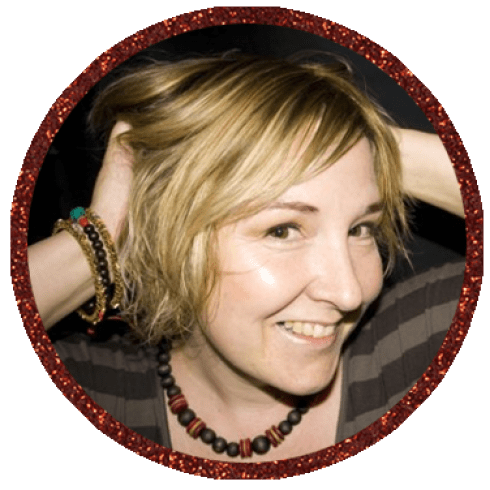
Canadian actress and writer Nicolle Nattrass has condensed her experiences as a first time mother, struggling with postpartum depression (PPD), into a daring performance called Mamahood: Turn and Face the Strange. This one-woman play, written and acted by Nattrass, tells the tale of Marie and her descent into motherhood as she travels to an alternate time and place, Planet Mamahood.
The show portrays Nattrass’ story of healing and hope with a humour and pathos that will captivate audiences. Mamahood: Turn and Face the Strange is running at Vancouver’s Firehall Arts Centre from Oct. 18-29. But for those who can’t make the show, VITA had the opportunity to chat with Nattrass and discuss her journey from her initial PPD diagnosis as well as her path to recovery.
With her customary wit and passion Nattrass educated us on why Mamahood is not a, “One size fits all gig.” —Michelle Gadd

What were the first signs for you that you were experiencing more than just the Baby Blues?
The biggest piece for me was becoming educated about the difference between the Baby Blues, Postpartum Depression (PPD) and then Post Traumatic Stress Disorder (PTSD). The Baby Blues pass after a certain time. I didn’t actually realize I had PPD at first. I’m a really strong person and that was part of my denial. I had really good coping systems and survival techniques as a writer and performer. I was actually given my first two professional writing commissions during the time when my baby was little so I was also managing work. My personal journey is: My son didn’t sleep through the night for almost two years. For me the big instigator was the sleep deprivation. If it hadn’t been for that I wouldn’t have hit a bottom.
Do you think there’s still a stigma around PPD even after the Brooke Shields/Tom Cruise debacle?
I think there are more stigmas around how I’m supposed to be as a mom. Aren’t I supposed to be perfectly dressed and not have a baby belly? I’m supposed to have a great career, be an awesome mom and have no behavioural issues with my children. The list goes on and on. I think there’s more stigma around standing up and saying this is not my experience of motherhood.

You mention that PTSD went hand in hand with PPD for you. Can you explain that more?
I read the literature given to me and I knew once we started talking about post trauma; I knew that it was there. I had a really difficult birth. Certain situations happened to me in the hospital that were not only strange but very traumatic. I’m an actor and writer and that was my first career but then I actually became an addictions counselor for a few years. So I’m aware of trauma. But all the PPD was completely new to me. I had always written it off until experiencing it first hand. I was really hard on myself. I’m a motivated person, an overachiever. I read every birth book, I removed all toxic paint from my baby’s room and fung shuied it. I made my birth plan and photocopied it in advance for everyone. I was going to have the perfect home birth.
Do you think the diagnosis of PTSD is misunderstood?
Completely. I’m a big advocate of awareness of PTSD. I think we have so much work to do around it, especially for women. I did a reading in Toronto and a woman came up to me who is a doula and said she was with her best friend in her birth and her friend disclosed to her for the first time about being raped. And the doula said that this happens all the time. It’s very common for women who have had any kind of sexual violence that it can come up during the birth process or after the birth process. I don’t think nurses or doctors are equipped or trained on how to handle women in that situation. Nobody talks about it and people think you have to work in emergency services or be in the army to get that diagnosis. We’re so out to lunch about stuff like that and when you think about the statistics of sexual violence, of how many women go through it and then how many women could possibly have difficulties in the hospital room… Women are more susceptible to PTSD symptoms around PPD if they’ve had any other previous trauma.
Who was your initial point of contact when reaching out for help with PPD?
I didn’t go to my family doctor at all. I just called the child resource centre in my area. I was really lucky. Fortunately I had an amazing woman, who retired a couple years after. It was such a vulnerable thing to do and she made a house call. I remember thinking, “What is she going to do? Just take over? That’s the last thing you need. It’s a delicate balance. The woman asked, “Do you remember getting a call form the public health nurse?” I remembered doing the postpartum checklist and I scored within the normal range. Also when I look back on that, when the public health nurse is calling you, you don’t know this person. You don’t have a relationship. How likely am I going to open up and be vulnerable with you?
In what other ways did you reach out for support?
I started going to mom and baby groups and I just felt like I was sticking out like a sore thumb. No one there seemed to be struggling. I say this in my show, “I swear a lot because I can’t do any swearing at home.” So I have to get it out. There have actually been some playgroups that I can’t go back to.
I also listened to people talk in these groups in a way that was abusive in my mind. Why did you put your son in the bathtub with his clothes on and pour cold water on him because he peed his pants? I wanted to get as far away from them as possible! There was a lot going on there.
What were the emotions you primarily struggled with during the postpartum period?
The emotions I most struggled with were fear, anxiety, impatience and feelings of inadequacy. I cried. But I think I did more crying later in the recovery. I think a lot of women are hard on themselves too. The harder I tried, the crappier I felt. And yet I had to function. I wanted to be a good mom. I was reading about attachment parenting and my husband took time off.
Did you end up using medication to treat PPD?
I didn’t. Counseling, exercise, and journaling were my treatment. I ended up creating a course called Mama Memoirs. I really believe in the healing power of journal writing. To be honest my family doctor doesn’t even know I went through it.
You were told you were an “older” parent. How did that label effect you?
I conceived on my 40th birthday. It was another layer added in. “While you’re an older parent. Aren’t you supposed to know every thing?” I’d never heard that term before, “Should I get a walker?” All of my friends had already been through the process. So even though I was older and ready, I still felt isolated. Maybe some of it was my pride too of not wanting to ask. You know, “How come I don’t know this stuff?” There are a variety of pressures we experience as mothers, no matter what age.
What sticks out in your partner’s mind about your experience with PPD and PTSD?
He said the absolute disregard for sensitivity towards women in the hospital. He felt there was this contempt by men for women in that environment. The hospital environment was so not aware of trauma. He still finds it upsetting.
What prompted you to write Mamahood: Turn and Face the Strange?
In 2013 I started writing a series of monologues on Motherhood. Then last year I premiered Mamahood: Turn and Face the Strange at a festival called Welcome to Parenthood with Theatre One. I’ve been doing Council of Canada readings to develop the work and working with a director and drama teacher. During that time I contacted Pacific Postpartum Society and invited them to a show. We hit it off and then every reading I’ve had, they’ve been there. The counselors come and facilitate the talk back.
Why do you include so much humour in the show while examining a serious issue?
My show is very funny. It’s not a show coming out of “Oh my God! This is going to be serious. PPD is very serious but I also found humour in it through the bizarre strangeness of what I particularly went through. I wanted to talk about my character as being on an alternate planet because that’s how motherhood felt. It was like going through space and landing on a new planet, navigating strange things and traumatic events, sleep deprivation, and peer pressure at mom and baby groups, at 40 years of age.
You do a talk back after your show facilitated by the Pacific Postpartum Society. Why was this an important element of the audience experience for you?
All the counselors have gone through personal postpartum difficulties and so they understand first hand what a woman struggling with PPD is going through. They’re not reading it from a textbook. The talkbacks have been essential for me. The other important part of the talkbacks has been to hear men’s reactions. I’ve had a young man say, “Wow my mom talked about birth but now I have a really good sense of what she actually went through.”
What do you hope is the takeaway message for audience members?
I have a lot of hopes. Number one is that any woman who is feeling alone or who’s feeling that she’s crazy or not a good mom walks away knowing that’s not true and also that there are resources out there. I want to also boost the profile of the Pacific Postpartum Society. They’re a private organization and so not publically funded at all which is hard. My other hope is that any family member walks away being a little bit more empathetic towards the mother. One of the best feedbacks I got was from a mother-in-law. She said, “Your show is not what I thought it would be but it helped me realize I’m judging my daughter-in-law all of the time. Now I’m going to go home: I’m going to watch her, make soup and massage her feet. I was being so judgmental of every single thing she was doing.” I also know people will come and laugh and walk away with more education about PPD and PTSD.
share:

Be the first to comment