
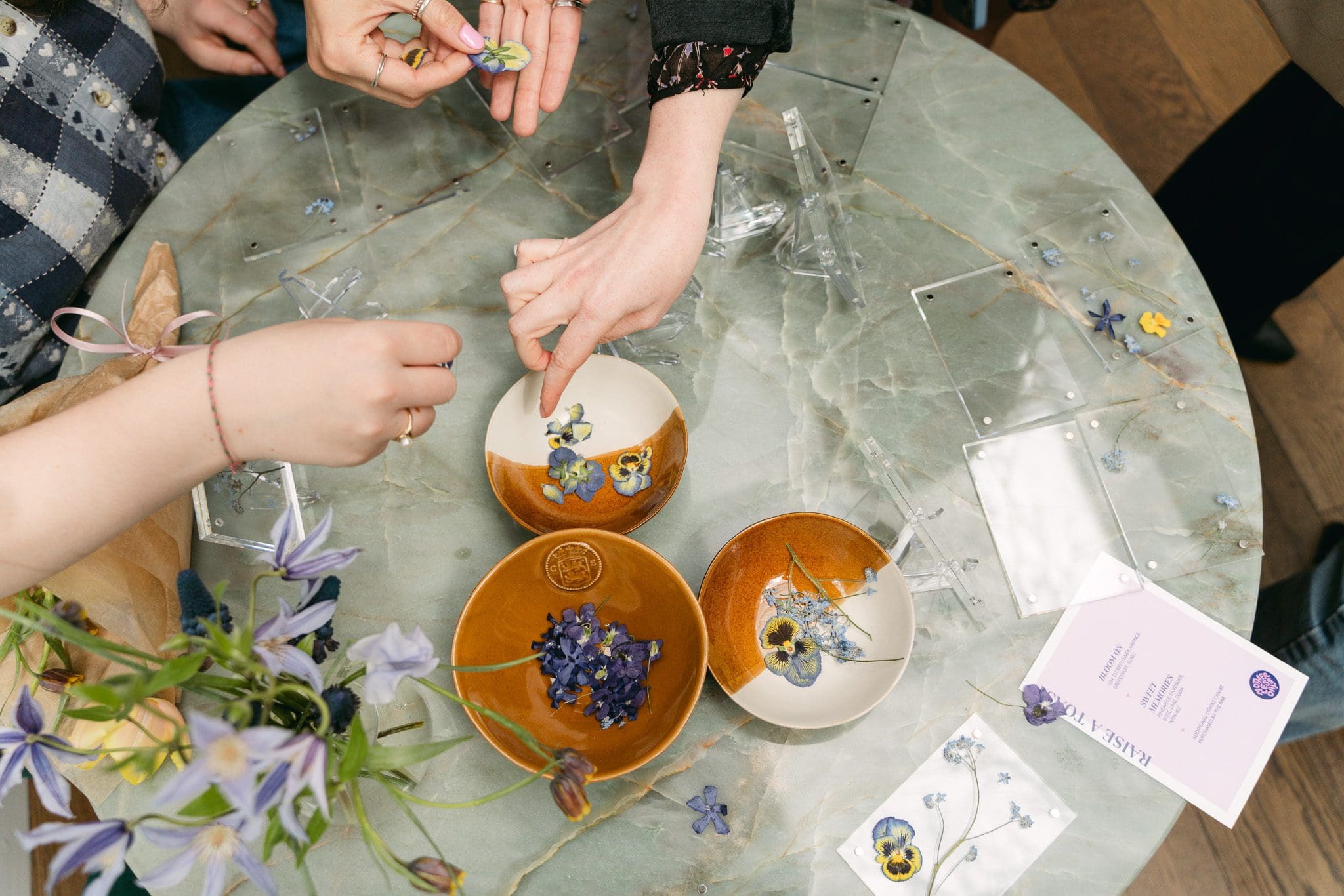
For those who have lost a parent, Mother’s Day can be a tough, isolating experience. But Vancouver’s Motherless Day: The Pity Party You Actually Want To Go To is flipping the script—with poetry, card writing, collaging, and connection at its heart.
We spoke with Nikki Lewis, co-founder of The Parentless Club, about how she turned her own grief into a growing national movement, what this year’s Vancouver event means to her, and why honouring our losses out loud can be one of the most powerful forms of healing. —Noa Nichol


Can you share the story behind The Parentless Club and what inspired you to create it after losing your mom at 18?
Losing a parent at any age is heartbreaking—but losing my mom, Linda Lewis, at such a pivotal stage of young adulthood, undoubtedly shaped the rest of my life.
There’s no one that tells you how to enter adulthood without the one person who’s supposed to be there. Over time, I’ve learned how to not just cope, but manage my grief. I’d never turned to groups or spoke to other women with similar stories because it all felt too ‘heavy’. And while I have an incredibly supportive network and years have passed, it’d become clear the world seemingly ‘moved on’.
Over a decade later, I came to realize the importance of having the right people in my orbit. So in 2024, I reconnected with my co-founder Amanda Katz (after nearly a decade since attending summer camp together) out of a shared desire to keep our late moms’ legacies alive while turning our grief into something bigger than ourselves—and we formed The Parentless Club.
The Parentless Club is the club nobody wants to join, but if you’re in it, you’re not alone. It’s a community that just gets it. Albeit tough to do sometimes, when we start talking openly about grief, there’s this bittersweet comfort that shows up. You connect with people who don’t need you to explain the weight of your loss. That connection, even when it comes from pain, is something special. And we wanted to build a space for that in a way that’s relatable, approachable, and talks to you like your best friend would.
Mother’s Day can be especially difficult for those grieving. How did the idea for Motherless Day first come about, and why did you choose to reframe it as a “pity party you actually want to go to”?
The Hallmark Holiday that’s Mother’s Day is something you can’t really avoid. The card aisles at your local shop, specialty brunch menus, floral arrangements on every street corner, and an inbox of newsletters filled with discounts on products—they all are designed to celebrate mom.
After six years of ‘sitting the day out’, my co-founder, Amanda Katz—who lost her mom in 2017—decided to rewrite the script on how we spend the day that’s all about mom.
Motherless Day was created with the intent to offer folks without moms new traditions to build and a place to go. It’s designed as a space to celebrate and commemorate the mothers we’ve lost because even though they’re gone, that doesn’t mean we shouldn’t continue to spend the day in their honour, surrounded by people who get it.
So while those of us without a mom historically would brace for sympathetic glances and “thinking of you” messages, why not just throw ourselves a gathering that can spark joy and let us move through the day our own way amongst the inevitable pity?
How did the first Motherless Day in Toronto resonate with attendees, and what moments stood out most for you from that inaugural event?
What started as a one-day local event in Toronto has grown into a multi-city gathering because we heard directly from attendees how valuable and impactful Motherless Day had been.
The inaugural Motherless Day in 2024 proved our hypothesis that despite grief being a vulnerable topic that comes with reluctance to share, there’s great value in fostering community around it.
Last year’s event kicked off with Comedian and Storyteller Shohana Sharmin, who, at the end of her set, opened up the floor for all the guests to share a life lesson from their mom. When one spoke up many followed suit. Years after experiencing a loss, all-too-often people stop asking questions, so we lose the opportunity to share tidbits about them—but our desire to share never stops.
Not only did attendees feel like it brought them closer to their moms in some way, the connections that they made with one another were so powerful. They came in as strangers, and left with an undeniable, judgment-free bond. Witnessing that being created within the short three hours of being together was nothing short of incredible.
What can guests expect from this year’s Vancouver gathering in terms of programming, tone, and community experience?
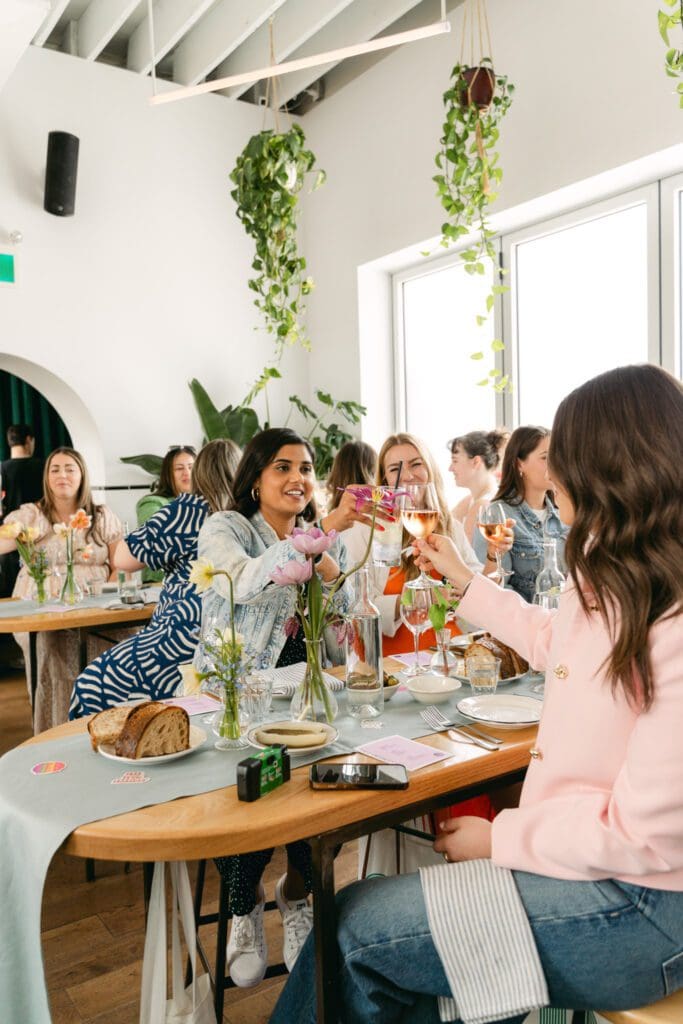
Vancouver’s event will carry the same heart and intention as Toronto’s; it’s rooted in togetherness, honesty, and a little levity. We’ll be blending storytelling, interactivity, and plenty of space to just be with each other (over a delicious pastry or two).
While we’re incorporating a variety of ways to be vulnerable, there is never any pressure to have to share or be vocal—we’re simply holding the space should guests choose.
Guests can expect intentional moments, building new traditions, and maybe making a friend or two, all through a friendly tone that strikes a balance of tenderness and brightness.
Vancouver Programming includes:
- Memory Collaging with SAD Magazine on custom journals
- Breathwork and intention-setting by Carolyn Ann Budgell
- On-site Live Typewriter Poetry by Ars Poetica
- Floral Bouquet-building and Dry Flower Workshop by Flower House Studios
- The best of pastries, focaccia, smoothies and sparkling beverages by local vendors
- Interactive photography stations and custom merch for lasting takeaways
Plus, just like how grief doesn’t end when the day does, neither will the experience, as guests will take home some Pity Party Favours that are small reminders that our moms’ big love lives on, as does our grief. Think: Free Jaybird pilates class, a Formula Fig facial and Saje Wellness discounts!
You’ve partnered with several beloved brands for this year’s event—why was it important to incorporate local and wellness-focused businesses like Jaybird, Blume, and Saje into the day?
Everything we do is to be done with the community, not just for them. That includes who we partner with. We’re intentional about working with local, wellness-forward brands who align with our values and care deeply about people’s lived experiences because grief touches everyone.
Whether it’s a calming scent from Saje, a gut-friendly electrolyte from Blume, a self-care facial from Formula Fig, or movement through Jaybird, these partnerships are more than just a promotional card in a gift bag—they’re making an impact in helping us create an experience that’s nurturing on all levels of loss within guests’ bodies, minds, and hearts. Our partners allow us to offer moments of reflection beyond Motherless Day, especially as more time passes post-loss.
Grief is often a quiet, isolating experience. How does The Parentless Club and Motherless Day help create space for more open, collective healing?
Grief doesn’t go away just because time passes, but all too often, the conversations around it do. And that silence can make things feel even lonelier. Or when people do their best to empathize and say they really understand, but it’s impossible for them to.
The Parentless Club is the friend who really gets it. We create spaces where you don’t need to explain your sadness or your conflicting emotions, but you can if you want. Whether it’s sharing stories, making dark jokes, laughing until it hurts or crying until there are no tears left, we meet people wherever they’re at and tell it like it is. Because grief is messy, weird, and keeps on going. And there should be no shame in that.
So while we may be without them, we’re with each other, and that’s more than we had before.
Your goal this year is to raise $20K for CAMH. Why did you choose CAMH as the recipient of this year’s fundraising efforts?
Approximately 1 in 5 Canadians experience a mental health problem or illness annually—and Amanda knows the reality of that statistic all too well. In 2017, she lost her mom to suicide after a lifelong battle with bipolar disorder. Since then, she’s worked closely with CAMH, Canada’s leading mental health hospital, whose work in research, treatment, and destigmatization is helping reshape how we talk about and treat mental illness.
Plus, it’s no secret that grief and mental health are deeply connected. Supporting CAMH is a tangible way of honouring that truth while helping push the conversation forward with building our own initiatives simultaneously. We’ve collectively come a long way, but there’s still so much work to be done.
For those who can’t attend in person but are navigating parent loss, what advice or encouragement would you offer to help them feel less alone on Mother’s Day?
There isn’t a one-size-fits all approach to grief and healing, so we’re not here to tell people how to feel, or what to do. But, the advice my mom gave me years ago rings true: “don’t lose sight of the small moments.” In other words, don’t put pressure on yourself to know how you’ll feel.
Maybe write a card to your mom and read it aloud.
Maybe visit one of her favourite places she’d take you to.
Maybe do something kind for someone else in her honour.
And maybe if all you can manage is getting through the day, that’s okay too.
Grief doesn’t have to be performative —it just needs to be felt. And know that we may not be down the block, but somewhere out there, a whole community is right there with you.
We’re not certified grief counsellors or therapists, so we never claim to know exactly what’s best. But we can continue to hold them, and their parents’ memories close. So we welcome our community to reach out not just for Motherless Day, but all the other ones they need us, too.
The language around loss can be tough to get right—how do you hope Motherless Day helps shift how we talk about and support grief in our culture?
If nothing else, we hope people talk about it. Not necessarily their own experience, but loss in general. Because of its inherently personalized nature, grief still feels like a taboo topic, something to tiptoe around or avoid altogether. But grief isn’t a problem to be solved—it’s an ongoing relationship with ourselves, the ones we’ve lost, and the rest of us who’ve experienced it.
By creating space for open conversation this Motherless Day, we’re reminding people that grief deserves to be acknowledged. It doesn’t go away, and neither do our stories, memories, or the love we still carry. It’s part of our lives, not just something that happened.
What’s next for The Parentless Club and your mission to make grief less lonely and more supported?
We’re just getting started, and are looking forward to all the ways we’ll grow to help better support those who need us most.
Our key priorities will continue to be providing multi-touchpoint resources to help connect people with others who get it—beyond just one day. Think: physical tools and kits for navigating loss, education for those outside the grief community to be better supporters, pop-up events and gatherings, content and authentic storytelling etc. What we offer will always be based on what we hear in real-time from our community. But no matter how we grow, our mission is simple: no one should—or will—have to go through this alone.
share:

August 18th, 2025 at 7:21 pm
HONDA4D