

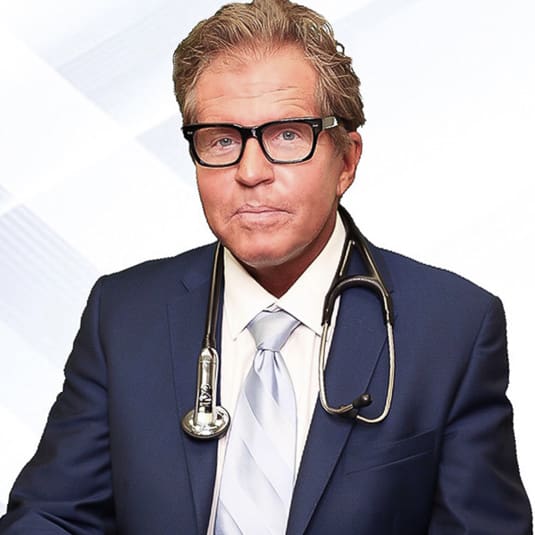
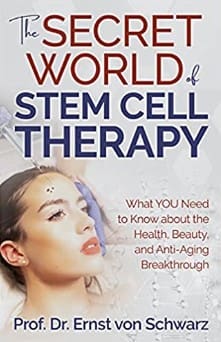
Professor Dr. Ernst von Schwarz—cardiologist, researcher and author of The Secret World of Stem Cell Therapy—cuts through the noise around regenerative medicine. In this Q&A he explains what stem cells really do, separates proven treatments from celebrity-fueled hype, and lays out the risks, regulations and realistic future of anti-aging and regenerative therapies. Read on for a clear-headed guide to one of medicine’s most talked-about frontiers. —Noa Nichol
You open your book by separating hype from hard data. What is the single biggest misconception about celebrity stem cell treatments, and what story or example best illustrates that gap between marketing and evidence?
If you search online for stem cell therapy for any condition, such as heart disease, within a fraction of a second you will get tens of millions of results. But if you start clicking, you will quickly realize that 99.999 percent of what appears is pure advertising and marketing, not science. The very first thing you will see is usually an FDA warning stating that stem cell therapies are unapproved. The second might be a legitimate research notice from the Mayo Clinic and the third is often someone claiming to be a “world expert” in stem cells, someone completely unknown in the scientific community, with no publications or clinical data whatsoever. That was one of the main reasons my team and I decided to write our book, to provide the public with factual, evidence based information about what is real in stem cell science, what is still experimental, and what is purely marketing.
From a mechanistic standpoint, which types of stem cells, mesenchymal, induced pluripotent, or autologous adults, currently show the most convincing clinical benefit for aging related conditions, and why?
That is an easy one to answer. The strongest results come from mesenchymal derived stem cells. These are most often obtained from umbilical cord tissue, placental tissue, or umbilical cord blood. They have shown consistent and measurable benefits in anti aging and regenerative applications. By contrast, induced pluripotent stem cells, known as iPSCs, have enormous potential but currently no clinical role because of their risk of tumor formation. They are laboratory generated and still many steps away from safe human application. Embryonic stem cells are very powerful but ethically problematic. To harvest them, you must destroy an embryo, which I personally and ethically oppose. So at this point, mesenchymal derived stem cells are the only type that show real, reproducible benefit in aging and regenerative medicine.
Can you walk us through a recent, well designed clinical trial in regenerative medicine that you find genuinely promising? What was measured, what changed for patients, and what limitations remained?
That is a broad topic. I have outlined all the key studies in my book, “The Secret World of Stem Cell Therapy” across cardiovascular, neurodegenerative, and autoimmune conditions. But to give you one example, a recent meta analysis reviewed eleven clinical studies involving more than four hundred patients treated with stem cells after traumatic brain injury. The analysis showed clear functional and symptomatic improvement, particularly in younger patients. Every week, new studies like this are published, expanding what we know about the benefits and limitations of regenerative medicine.
Many clinics offer off label or one size fits all stem cell injections for cosmetic or anti aging goals. What red flags should patients watch for when vetting a clinic or practitioner?
The biggest red flag is false claims, especially anyone claiming a cure. So far, no disease has been cured by stem cell therapy. What the evidence shows is improvement in symptoms, reduction in disease progression, and better functionality, not complete reversal. Another major warning sign is lack of transparency. There are no stem cell therapies currently approved by the FDA or reimbursed by insurance for general use. So patients should be cautious, do their research, and make sure the clinic is not exaggerating results or credentials.
Regulation is patchy globally. From your vantage point, what regulatory reforms or international standards would most quickly protect patients while still allowing responsible innovation to proceed?
The key issue is that large scale clinical trials are needed to prove both safety and effectiveness, and those require funding. Developing a new drug can take ten years and cost over one hundred million dollars, which is why pharmaceutical companies typically sponsor such research. However, Big Pharma has no interest in stem cells. Back in 2006, companies like Johnson and Johnson announced major commitments to stem cell research, but since then, not a single large scale clinical trial has been sponsored by them. Meanwhile, the FDA receives around seventy five percent of its funding from large pharmaceutical companies, which creates a clear conflict of interest. We need a separate regulatory agency specifically dedicated to stem cell evaluation, along with federal funding for independent clinical trials focused on safety and effectiveness—not just basic science.
How do you see stem cell based therapies fitting into a holistic approach to healthy aging, for example combined with lifestyle, nutrition, exercise, hormone therapy, or senolytics? Are there real synergies, or is that another area of premature claims?
I do not believe in a “one-size-fits-all” approach, and certainly not in a single miracle injection. Stem cell therapy should be part of a holistic anti-aging strategy that includes lifestyle modification, nutrition, exercise, and correction of underlying deficiencies. That means avoiding toxins, eating a heart healthy diet, following a consistent exercise routine, and using supplements or senolytics when there is solid evidence for them. Anti aging is not a single treatment, it is a whole body approach. Stem cells can be one component of that, but not the only one.
Adverse events from unproven therapies have been dramatic in some cases. What are the most serious risks patients underestimate, and how should clinicians handle informed consent in this field?
When stem cell therapy is performed under proper conditions, serious side effects are extremely rare. In our own research, we published a paper in which we analyzed adverse events from stem cell therapy in heart disease and found only minor, temporary complications such as injection related arrhythmias, and no serious or lasting harm. The real danger comes from poorly regulated or contaminated products, not from the stem cells themselves. In 2018 and 2019, for example, a California based laboratory distributed stem cell material contaminated with E coli, causing infections in eighteen patients across the United States. The problem was not caused by the doctors, it was the laboratories selling unclean materials. Many physicians simply do not have the resources to independently verify the sterility or legitimacy of what materials they are supplied with. That is why it is essential for patients to ask direct questions and for clinicians to ensure full transparency about sourcing and safety.
The bottom line is this: stem cell therapy is one of the most exciting medical frontiers we have seen, however, we must separate marketing from science. Real progress depends on data, transparency, and responsible application, not hype on the internet and social media.
share:

Be the first to comment