
As Breast Cancer Awareness Month approaches, we sat down with Julia Mertick, former participant, Look Good Feel Better, to hear how the organization helps people reclaim comfort, style and confidence during and after treatment. In this quietly powerful Q&A, Julia shares the small, practical moments that make the biggest difference—plus the resources every Canadian should know about. —Noa Nichol
You were diagnosed at 30 and 24 weeks pregnant — can you walk us through that moment and how you made decisions about treatment while protecting your baby?
My family doctor wanted me to start completing one mammogram or breast ultrasound a year when I turned 30, given my maternal mother’s history of breast cancer in her thirties. When I found out I was pregnant, I put off the screening for a few months and then decided I wanted to complete at least one before my baby was born, knowing it would be challenging to find the time to do so with a newborn. I have had a fibroadenoma in the past (a benign fibrous lump), so when they found a lump upon exam, I was not worried in the slightest. I was at work on a Monday morning when I got a call to go upstairs to the ACU to talk to Dr. Brule. When I was told I had triple-negative breast cancer, it felt like my world was crumbling around me. I was supposed to be enjoying my first pregnancy, and I felt so scared and lost.
Despite the circumstances, I was fortunate to have completed screening when I did because I had never felt a lump. Additionally, given the timing of everything, I was able to complete 4 “cycles” or rounds of chemo while pregnant. Triple-negative breast cancer can be aggressive, so everything was time sensitive. My oncologist, Dr. Pitre, was absolutely incredible and reassuring. The chemotherapy I received has been around for decades; therefore, enough studies have proven that the treatment did not impact my unborn baby. She outlined a comprehensive game plan for me, including chemotherapy pre-delivery, inducing labour, more chemotherapy and immunotherapy post partum, and surgery. She and my OB, Dr. Toubassy, collaborated to ensure my son and I were thoroughly monitored to give me peace of mind as well. I will never forget the expertise and compassion we experienced from them.
As an oncology nurse who became a patient, how did your insider knowledge help — and how did it sometimes make things harder?
I have been an Oncology Nurse for eight years now; Oncology and Palliative care are all I have known since graduating and becoming a nurse. I also hold my Canadian Nurses Association Specialization in Oncology Nursing. Oddly enough, I was not overwhelmed with what drugs I was receiving because I was so familiar with them. On the contrary, knowing the possible side effects worried me, as I would run through the “what if” scenarios in my mind. What if I got an infection, given my compromised immune system? What if I had an “allergic” reaction to my chemotherapy? More importantly, what if it made me feel so tired and unwell that I was unable to care for my son? Knowing this information eased some anxieties but, simultaneously, heightened others!
What were the biggest gaps in care or support you experienced as a young, pregnant patient that you wish more providers understood?
As a nurse in this area of medicine, I would always teach patients about how it can impact their immune system, gastrointestinal system, etc. However, experiencing treatment myself opened my eyes to a significant gap —not in knowledge, but in education and support regarding appearance-related side effects and how deeply impactful they can be.
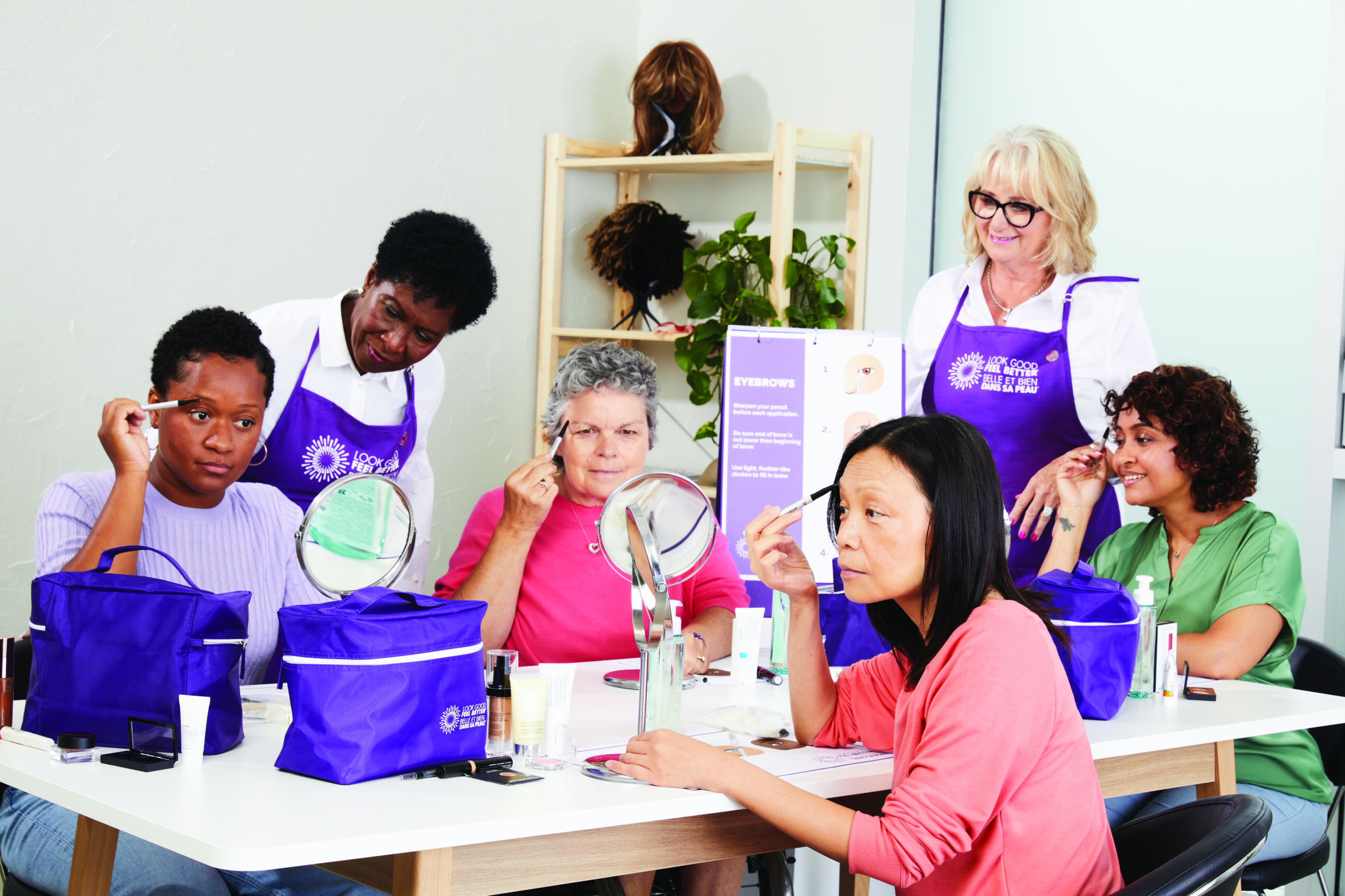
When I would work in our chemotherapy suite, I would routinely teach patients about chemotherapy-induced hair loss. Occasionally, I mentioned the Look Good Feel Better workshop, but knowing what I do now, I would have emphasized their impact even more. Look Good Feel Better is Canada’s only national charitable program dedicated to helping people manage the appearance-related impact of cancer and its treatment. The program offers complimentary workshops that help people feel like themselves again – addressing the visible and emotional effects of treatment and providing connection and community so that no one faces cancer alone. Everyone’s experience coping with the appearance-related side effects of cancer treatment is unique. When you’re already going through a time in your life where so much feels out of your control, looking in the mirror and not recognizing yourself can have a profound impact on your mental health, confidence, and sense of hope. I understand that now, on a personal level, and it’s something I plan to bring forward in my nursing practice—by ensuring future patients, and even my colleagues, understand just how important this kind of psychosocial support is in the cancer journey.
How did you navigate conversations with family, employers and medical teams about prognosis, maternity leave and childcare planning?
Telling the people I love about my cancer diagnosis while I was pregnant was one of the hardest things I have ever had to do in my life. My husband was the first person I told. It was the most difficult to tell my dad because he had already lived through my mom’s diagnosis and passing, and then he had to fear what would come of his daughter and unborn grandson. I had immense support from the very beginning; even my oncologist helped me share the news with my work colleagues. She was also extremely reassuring to my family that my prognosis was favourable, given how early the cancer was detected. I had to, of course, take a sick leave before my maternity leave to start treatment right away, and my boss and coworkers treated me like absolute gold, which I will forever be grateful for. My stepmom (whom I call my mom because she has been a mother to me, essentially my entire life) has been my rock, from accompanying me to appointments to helping me care for my son when I was at my appointments for treatment or had significant chemo-related fatigue. It took the “it takes a village” notion in caring for a newborn to a whole new level!
You’ve become an advocate — what inspired you to turn your experience into activism, and what has that work looked like so far?
Haha, that is very kind! I don’t know if I would call myself an advocate quite yet, but I do hope to be a source of support for young women and a reminder that they are not alone. Facing something as terrifying and life-changing as a cancer diagnosis, especially while starting a family, is incredibly daunting. Even with a strong support system, there were still many moments when I felt alone. I’m usually a private person, so when Look Good Feel Better first reached out to me after I attended their workshop, I wasn’t sure I wanted to share my story. But, the organization has helped so many people, including myself, make their cancer diagnosis more manageable. . It offers so much more than advice – it provides connection, confidence, and a true sense of community. The thought that sharing my story can help others feel the same hope and belonging that Look Good Feel Better gave me makes it all worth it.
What practical advice would you give a young person who’s just received a breast cancer diagnosis — especially those who are considering fertility, pregnancy or family planning?
I feel the biggest piece of advice to someone who is diagnosed while pregnant would be to keep looking at that light at the end of the tunnel because the light at the end is your little one, and once they are in your arms, nothing else seems to matter. I felt that majorly after I gave birth to my son. However, the journey through that tunnel may not be smooth. It’s okay to cry, it’s okay to be angry, it’s okay to acknowledge how unfair the situation is, because it is. But also, do not be afraid to ask for help. Find people who you are close with, who you trust and love, and accept help when it is offered as well (do not be stubborn like me), accept professional help as well through a therapist, social work, support groups, workshops, because even though your first instinct may be to guard your heart, you do not have to feel alone.
For those who have been diagnosed before starting a family, do not fear the worst; not all hope is lost. There are options.
Mental health often takes a backseat during treatment. What coping strategies, supports or resources were most meaningful for you?
It certainly does take a backseat! As an oncology nurse, I always knew this but never understood it, and now I do more than ever as to how important it is. My family and friends, of course, were the ultimate support. Talking to a professional was also crucial, and it took me a couple of tries to find the right fit. Every time I talk to my social worker, at the end of each interaction, I would feel as if twenty-pound weights were lifted from my back. Also, I had previously mentioned Look Good Feel Better, of course. They helped me regain some control in my life when my self-esteem was at its lowest point. There is a misconception that worrying about your appearance is being vain, which couldn’t be further from the truth. It is about empowerment and taking back some of that power that cancer has taken from you. It makes your journey to the light at the end of the tunnel a little less rough. LGFB showed me that.
Looking ahead, what changes in policy, clinical care or community support do you believe would make the biggest difference for young breast cancer patients and parents?
I think it’s critical that patients receive an immediate referral to support programs and mental health services – like Look Good Feel Better – right at the beginning of their cancer journey. Even a small introductory touch point early on, followed by regular check-ins throughout treatment, could make a tremendous difference.
At the time of my diagnosis, I was so overwhelmed with everything happening that I was at first reluctant to seek that type of help. And this is coming from someone who already has a comprehensive understanding of the medical side of cancer, so I can only imagine how difficult it must be for those navigating this unfamiliar world for the first time. Add the stressors of life and personal obligations, and emotional well-being often end up on the back burner.
Support programs like Look Good Feel Better play such an important role in that process – helping people find confidence, community, and connection when they need it most. My hope is that every person facing cancer knows this kind of support exists and feels empowered to reach for it. You can learn more about Look Good Feel Better’s workshops and programs at lgfb.ca.
share:

October 29th, 2025 at 1:01 pm
It is difficult to restoring confidence after cancer because disease is very danerous.
Available Here https://bergquistdesigners.com/remodeling-services-in-mountlake-terrace-wa/ Reliable Remodeling Services in Mountlake Terrace WA
November 4th, 2025 at 8:27 am
Its a powerful reminder that healing is about more than just treatment – its also about rediscovering ourselves. If you are looking for ways to restore your sense of wholeness – including the little things that make a big difference – check out HearWell Services. They specialize in personalized care and help bring back connectivity to lifes sounds and moments https://hearwellservices.com