
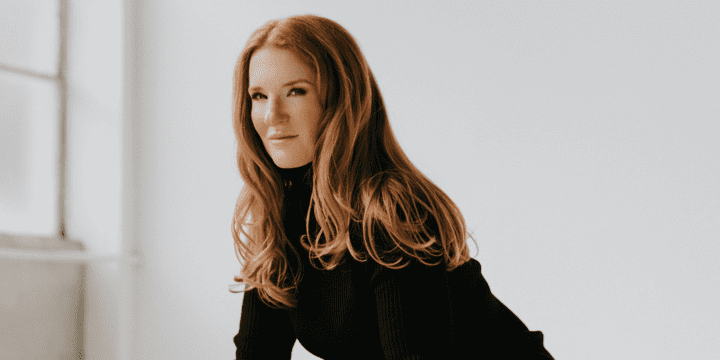
The holidays may sparkle on the surface, but for many, this time of year also stirs up old wounds, complicated family dynamics, and the pressure to perform festive joy. Enter Dr. Rebecca Kase—trauma specialist, author, and founder of The Trauma Therapist Institute—who believes that healing isn’t about avoiding the season, but approaching it with knowledge, boundaries, and compassion. In this timely Q&A, Dr. Kase unpacks why generational trauma often peaks during the holidays and shares practical, evidence-based strategies to help you navigate gatherings, protect your nervous system, and even build new rituals that feel genuinely nourishing. —Noa Nichol
The holidays are often seen as “the most wonderful time of the year,” but for many, they can be emotionally complex. Why do festive gatherings so often stir up old wounds or trigger generational patterns?
Holidays collapse the past and the present into the same room. As memory-based beings, we don’t walk into Grandma’s house as our current adult selves—we walk in carrying every pleasant and painful memory ever formed in that space. The familiar smells, sounds, traditions, and family roles activate deeply encoded neural pathways tied to our earliest experiences with attachment figures.
On top of that, the holidays come with enormous social pressure: expectations around how we should behave, what we should give, who we should be, and how “happy” we should feel. Nostalgia, comparison, and performance all get woven into the season. That pressure often conflicts with our actual emotional bandwidth, personal values, or current life circumstances. The combination of old memory networks and new expectations can easily stir up wounds, reactivity, or generational patterns we thought we’d outgrown.
You’ve spoken about the importance of nervous system regulation. How can understanding our body’s responses help us navigate family dynamics with more awareness and compassion?
When we understand that our feelings, sensations, and even our behaviors are expressions of our nervous system, not reflections of our worth, we gain options. Recognizing the signs that you’re overwhelmed, nearing capacity, or shutting down allows you to intervene before you spiral or react in ways you later regret. It helps you meet yourself with compassion rather than self-blame.
Understanding your own neurobiology also changes the way you see others. Instead of interpreting a family member’s aloofness, irritability, or pretentiousness as a personal attack, you start to recognize those behaviors as nervous system responses of their own—often rooted in discomfort, insecurity, or relational difficulty. This doesn’t excuse harmful behavior, but it does give you a clearer, more compassionate perspective on what’s happening in the room. You’re not just reacting anymore; you’re interpreting, regulating, and choosing how to respond.
Many people struggle with guilt when setting boundaries around family or holiday plans. What advice do you have for reframing boundaries as acts of self-respect rather than selfishness?
Boundaries aren’t walls. They’re agreements that protect your time, energy, and emotional well-being. Everyone needs them, and healthy relationships depend on them. The reason so many of us struggle is that we didn’t grow up seeing boundaries modeled well. We absorbed the idea that boundaries make us “difficult,” unkind, or ungrateful, especially within families.
But boundaries are actually acts of self-respect and clarity. They create the conditions for you to show up with integrity, rather than from resentment or burnout. And if someone responds to your boundary with anger, defensiveness, or guilt-tripping, that reaction says more about their relationship to boundaries than it does about you. Boundaries aren’t designed to please others. They’re designed to keep you aligned with your values and your capacity.
If someone consistently violates or resents your boundaries, that’s usually a sign that even firmer boundaries are needed. Ultimately, setting limits is an act of self-love, and it lays the foundation for healthier relationships, not selfish ones.
Boundaries are an act of self-love.
How does generational trauma subtly show up during seasonal traditions—and what are some small ways we can begin to rewrite those inherited scripts?
If you’ve ever caught yourself saying, “This is just how my family is”, and it’s not a compliment, there’s usually generational trauma behind those patterns. Rigid family roles, unspoken rules about emotions, conflict avoidance, pressure to drink or overeat, or expectations to “perform” a certain version of yourself are all inherited scripts that have been rehearsed for decades.
Rewriting those scripts doesn’t require dramatic confrontations. It starts with micro-interruptions. Small moments of awareness where you pause, notice the pattern, and choose a different way of engaging. Maybe that means stepping outside for air when the tension ramps up, opting out of a triggering conversation, or leaving an event early instead of forcing yourself to endure it.
Each pause is a powerful act of agency. Every time you disrupt an automatic pattern, you loosen your attachment to the generational trauma that shaped it. Over time, those micro-interruptions create entirely new pathways. Ones that reflect who you are now, not who your family history required you to be.
For trauma survivors, overstimulation and emotional volatility at gatherings can feel overwhelming. What are some quick, evidence-based techniques to ground and calm the body in those moments?
Here are three simple tools, and ones that I personally use:
Extend your exhale. When we slow down or breathe, and especially when we extend the exhale, we engage our vagus nerve. When the vagus nerve is stimulated, it slows heart rate and blood pressure and reduces overwhelming emotions.
Bilateral tapping. This is an easy go-to as you can tap on your knees or the tops of your thighs. It’s great to use this at the dinner table. Simply tap back and forth, slowly. As you do so, feel your feet on the floor, your butt in the chair, and feel the breath rise and fall in your chest. This is also a simple yet research-supported method for slowing heart rate, engaging the vagus nerve, and increasing a sense of calm.
Take a time out. When you notice you’re getting overwhelmed, overstimulated, or flooded, step away. Step outside, sit in your car, go for a walk, or go to the restroom. Get away from the stimuli so your nervous system can reset. When you step away, ground and breathe. Let your awareness be immersed in a moment of reduced stimulation.
In your book The Polyvagal Solution, you explore the connection between the nervous system and healing. How can readers apply some of those principles during stressful holiday interactions?
Honestly, every chapter of The Polyvagal Solution could double as a Holiday Survival Guide. The book breaks down the neurobiology of stress and overwhelm, helping readers understand why their nervous system reacts the way it does during moments of tension, conflict, or sensory overload. Once you understand your physiology, the path to regulating it becomes clearer.
The book is full of simple, practical tools you can use in real time. Several breathwork practices, especially those that emphasize slowing the exhale, are incredibly effective during holiday stress. The story of “Maybe” offers a helpful way to unpack generational narratives and loosen their emotional grip. And the BASC technique is a great go-to when you need a discreet way to pause, reconnect with yourself, and ground your body before re-engaging with others.
These strategies aren’t elaborate or time-consuming. They’re small, accessible shifts that help you stay aligned with your values, maintain your capacity, and show up as the most regulated version of yourself during challenging holiday moments.
“Being merry” is often treated like a social expectation. How can people honor their emotions authentically, even when they don’t fit the holiday mood?
Being “merry” is not about performative happiness. It’s a byproduct of living an embodied and honest life. True joy doesn’t require you to ignore the grief, sadness, or trauma you carry. In fact, the holidays often amplify those emotions. To me, merriment is the ability to feel joy alongside the sorrow, not in place of it. It’s what happens when we allow ourselves to experience the full spectrum of being human.
The holidays are personally complex for me. I lost my father to suicide six years ago during this season. This time of year brings back vivid, happy memories with him, and it also brings back the grief of losing him. Both are true at the same time. What I’ve learned is that when I allow myself to feel the joy of those memories, and the sadness, I feel the most grounded and alive. That, to me, is a form of “merry.” Not because I’m celebrating the loss, but because I’m honoring the truth of my experience.
Authenticity, not forced cheer, is what opens the door to genuine connection and meaning during the holidays. Being honest about your emotional reality is not only allowed; it’s profoundly human.
Finally, for those hoping to start new, healthier traditions—what’s one simple ritual you recommend to bring genuine connection and peace back into the season?
I actually recommend starting two traditions, one for yourself, and one for others.
First, create a personal ritual that you return to every year. Something that honors the life you’ve lived that year, the ways you’ve grown, and the challenges you’ve moved through. It could be a quiet walk, a journaling practice, lighting a candle, or anything that helps you reflect and show yourself genuine self-compassion. Marking the end of a year with intention can be incredibly regulating and meaningful.
Second, create a tradition rooted in kindness toward others. Acts of generosity change the nervous system in powerful ways. They activate the social engagement system, increase feelings of connection, and boost well-being far more profoundly than many forms of self-care. Some years, my husband and I have hung scarves on trees for people experiencing homelessness. Other years, we’ve donated to food banks or bought gifts for Giving Tree programs.
Self-care matters. But we live in a culture that often pushes individualism at the expense of community. Kindness, especially when offered without expectation, has a deeply positive impact on our physiology and on the world around us. A small, meaningful act each year can ripple out further than you might imagine.
share:

November 24th, 2025 at 12:18 am
Good article and useful information