
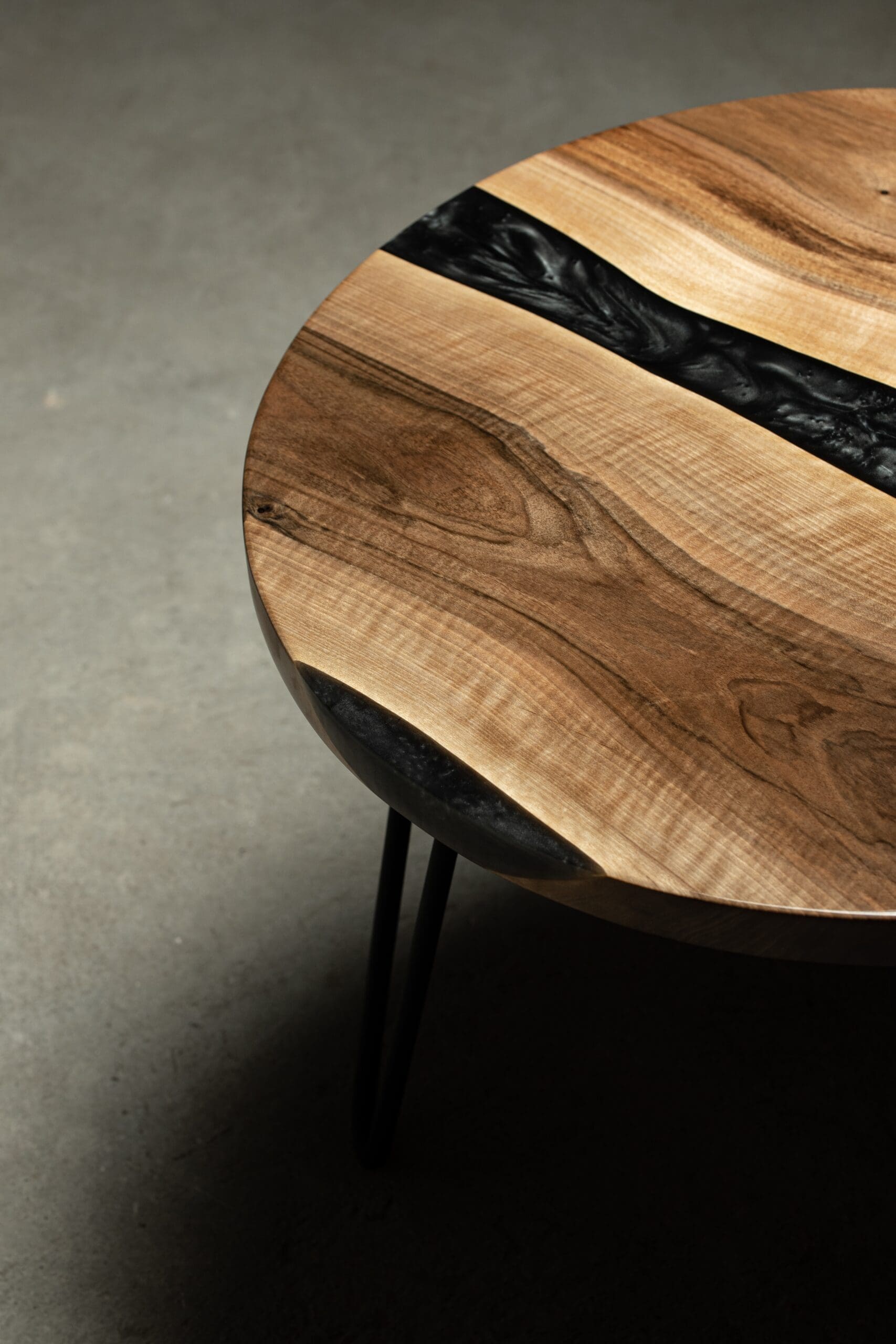
Some objects quietly demand attention even when they’re doing something ordinary. A table you pass every day suddenly catches your eye because of how the light moves across it, or because a detail feels deliberate rather than decorative. Resin furniture often creates that reaction. It functions as expected, yet something about it feels intentional, almost contemplative. It doesn’t shout for attention, but it doesn’t disappear into the background either.
Many people encounter this feeling for the first time when they see pieces like epoxy river tables. The surface looks stable and solid, yet there’s movement frozen inside it. The wood feels grounded, while the resin feels suspended in time. The object still works as a table, but it also invites a second look and sometimes a longer pause.
Where Function Ends and Interpretation Begins
Furniture usually exists to solve a problem. You need a surface. You need support. You need something that holds weight and survives daily use. Functional art doesn’t reject that responsibility. It leans into it.
Resin furniture works precisely because it respects function first. The table must be level. The structure must be sound. Only after those requirements are met does interpretation come into play. This order matters. When art ignores logic, it becomes fragile. When logic ignores expression, objects become forgettable.
Resin Is Less Forgiving Than It Looks
From a distance, resin can appear smooth and effortless. In practice, it’s a demanding material. Once poured and cured, it doesn’t offer second chances. Adjustments must be made before the process begins, not after.
That finality appeals to people who value clear decisions. Every choice — thickness, transparency, color, depth — commits the maker to a path. There’s no illusion of endless revision. That sense of commitment shows in the finished piece, even if the viewer can’t name it.
Wood Carries History, Resin Holds It Still
Wood has memory. Grain patterns, knots, cracks, and irregular edges all hint at time, growth, and change. Resin, by contrast, stabilizes. It stops movement. It fixes a moment in place.
When these two materials meet, something interesting happens. The wood keeps its story, but the resin prevents further change. This contrast creates a tension that feels both natural and deliberate. It’s not about hiding imperfections; it’s about deciding which ones remain visible.
Logic Isn’t Cold — It’s Clarifying
There’s a misconception that logic removes emotion from design. In reality, logic often sharpens it. Decisions made for structural reasons influence how a piece looks and feels.
A thicker resin layer isn’t just visual. It changes weight distribution. Edge geometry affects how people interact with the surface. These decisions may seem technical, but they quietly shape the experience of using the object every day.
Why Use Turns Art Into Something Else
Art that exists only to be observed stays separate from daily life. Furniture doesn’t have that luxury. It gets touched, leaned on, scratched, cleaned, and sometimes ignored.
That interaction changes everything. Resin furniture collects subtle signs of use over time — reflections shift, small marks appear, surfaces respond to light differently. These changes don’t diminish the piece. They complete it. Function doesn’t dilute the art; it activates it.
The Importance of Restraint
Resin allows dramatic effects. Color gradients, deep pours, bold contrasts — all of these are possible. Yet the most compelling pieces often show restraint.
Restraint is a logical decision. It’s knowing when enough is enough. When visual noise would distract from structure. When adding more would weaken the whole. This discipline is common in engineering and architecture, and it’s just as important in functional art.
Everyday Spaces Deserve Thoughtful Objects
Resin furniture doesn’t belong only in curated interiors. It lives in kitchens, offices, and shared spaces. It supports routine tasks: working, eating, gathering.
When functional art enters these spaces, it changes how people relate to them. Rooms feel less temporary. Objects feel chosen rather than filled in. Over time, that sense of intention affects how spaces are used and valued.
Imperfection Is Not the Opposite of Precision
Handmade resin furniture often includes small variations. A natural crack preserved in resin. A slightly uneven edge. A shift in transparency.
These details don’t signal carelessness. They signal acceptance of material reality. Precision isn’t about uniformity; it’s about coherence. As long as the object performs its role reliably, these variations add depth rather than distraction.
Time Works Inside the Object
Resin furniture is shaped by time in several ways. There’s the slow curing process, which cannot be rushed without consequences. There’s aging, as surfaces respond to light and use. And there’s the viewer’s time — noticing new details weeks or years later.
This layered relationship with time is part of what separates functional art from trends. The object doesn’t reveal everything at once.
Why Logic and Emotion Need Each Other
Logic ensures that resin furniture lasts. Emotion ensures that it matters. One without the other creates imbalance. Together, they produce objects that feel grounded and expressive at the same time.
People often respond to this balance intuitively. They may not articulate why a piece feels right, but they sense that it was made with intention rather than impulse.
When Furniture Becomes a Conversation
Functional art invites questions. How was this made? Why does it look this way? What happens if I use it differently?
Those questions extend the life of the object beyond its function. The furniture becomes part of thought, not just space. That’s when craft moves beyond technique and becomes dialogue.
Closing Thoughts
Resin furniture succeeds as functional art because it refuses to choose between usefulness and meaning. It treats logic as a foundation, not a limitation. Within that structure, craft has room to breathe.When objects are built this way, they don’t compete with daily life — they integrate into it. And that quiet integration is often what makes them last, both physically and emotionally. If you’re interested in exploring this balance further, you can find more perspectives and examples at https://thunderwood.studio/.
share:

February 1st, 2026 at 9:21 pm
KEAX designs premium cabinet door hinges built for daily use and long-lasting strength. Each hinge offers smooth opening, stable support, and a clean finish that suits modern kitchens and furniture projects. The smart build reduces noise and helps doors stay aligned over time. Many homeowners and manufacturers trust KEAX for reliable hardware solutions. To learn more about their product range and specifications, visit https://www.keahardware.com/ for detailed information. KEAX hinges combine quality materials with precise movement, making them a dependable choice for cabinets that need both style and strength.