
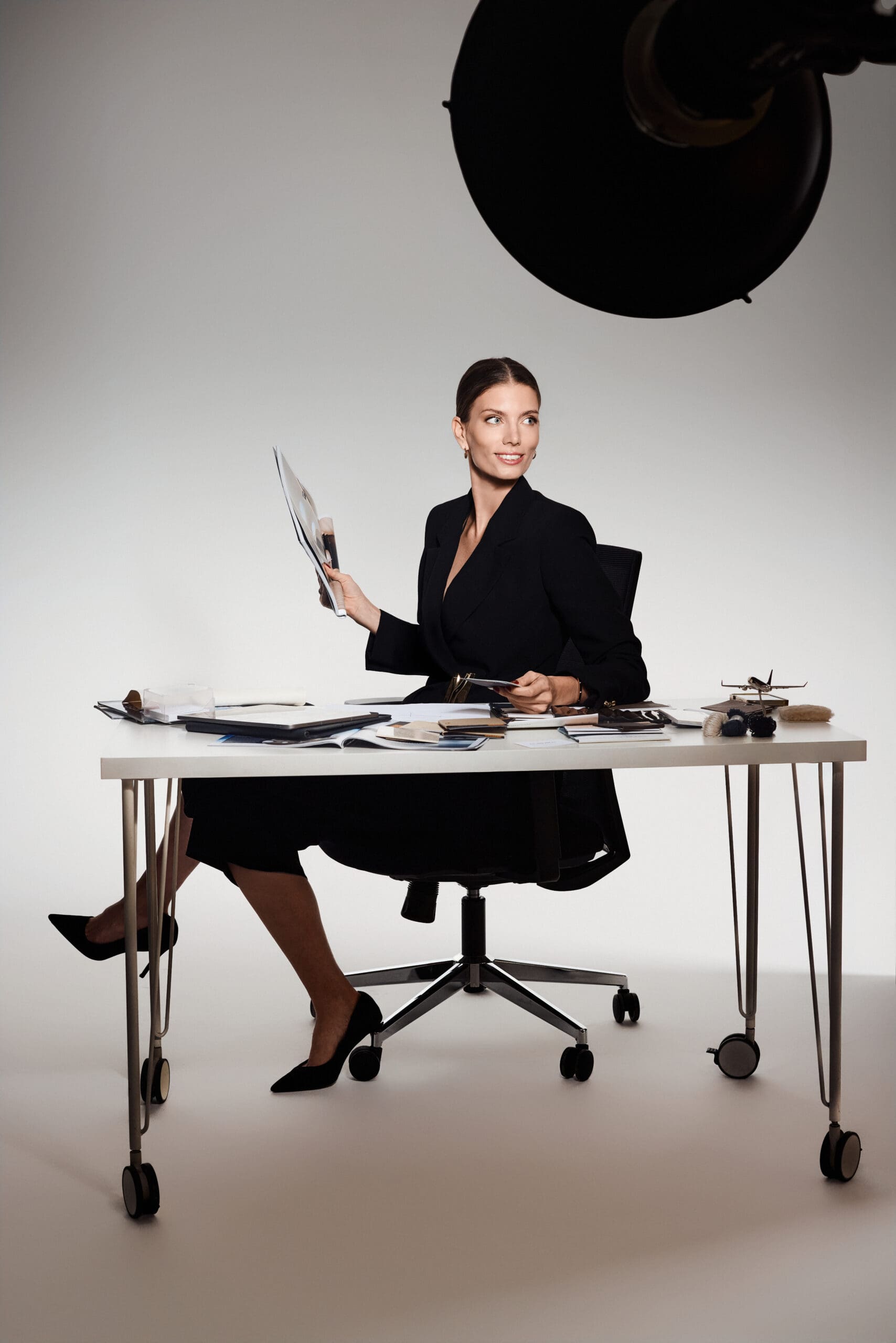
At a time when true privacy is becoming the rarest luxury of all, the private jet has quietly emerged as the most personal space the ultra-wealthy own—more controlled than a home, more discreet than any hotel. We sat down with Aurora Saboir, founder of Aurora Aero Design, to explore how luxury, power, and emotional intelligence are evolving at 40,000 feet. From designing “flying residences” for Gulfstream G700s and VVIP aircraft to collaborating with heritage luxury houses on fully bespoke interiors, Saboir offers a rare, insider perspective on why modern luxury is moving away from flash—and toward calm, precision, and deeply intentional design. —Noa Nichol
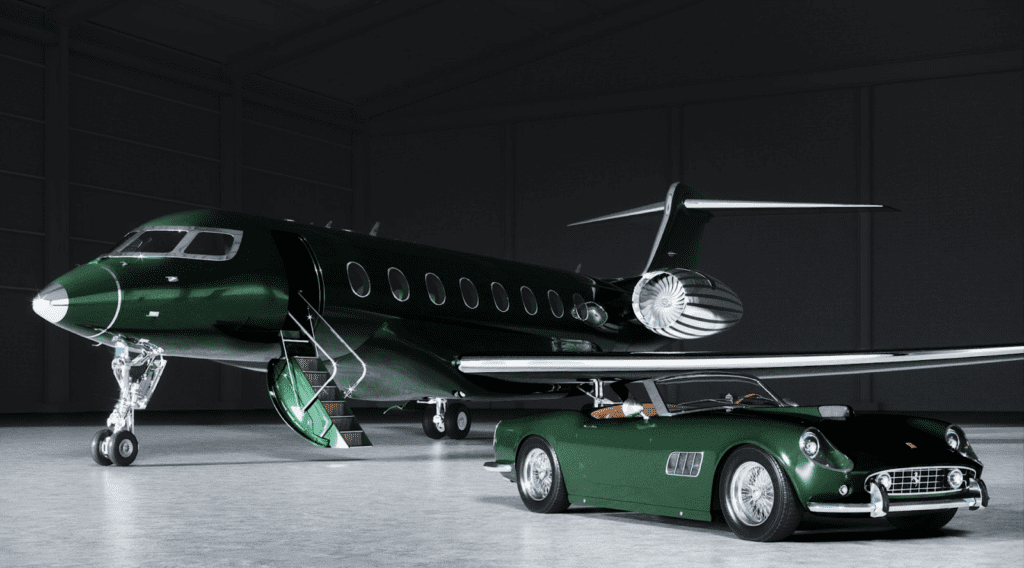
You’ve described private jets as the last truly private luxury environment. From your vantage point, what has shifted culturally or psychologically that’s made aircraft more personal than homes or hotels for the ultra-wealthy?
The difference is rooted in the fact that flying is a biologically and psychologically unique state of being. Unlike a home or a hotel, which are anchored in a single geography and timezone, an aircraft and it’s interior exists in constant flux. When you cross multiple timezones, your entire rhythm changes: your digestion, your sleep cycles, even the way your skin reacts to the environment.
On a VVIP level, my clients are different people at 40,000 feet than they are on the ground. They have different requirements for wellness, nutrition, and work-flow that a stationary suite simply doesn’t have to account for. Because the aircraft must facilitate this transition between multiple destinations, time zones and environments, the interior also has to be far more adaptable and intuitive than a house. I partly approach a cabin like a bespoke supercar:every millimeter is considered, branded to the individual’s psyche and persona,- engineered for peak efficiency and comfort. I specially put a lot of design effort to manipulate the very architecture of the space—for example, using complex curvature to break the ‘tube’ feeling of the fuselage, creating a sense of residential depth and architectural ‘soul’ that standard aviation lacks.
This ‘personal sanctuary’ manifests in deeply specific ways. For one client, it is an environment of total silence and rest, featuring ultra-high-end bespoke mattresses, custom-manufactured pajamas, and a dedicated on-board beauty center equipped with laser masks and curated skincare regimens. Conversely, for large families -particularly from the GCC- the sanctuary is about the experience of gathering and the ritual of dining. These are two diametrically opposed psychological needs, both requiring a hyper-customized approach that makes the aircraft the ultimate expression of the owner’s lifestyle.
You work in a world where discretion is everything. How does designing for people who value invisibility over validation fundamentally change the way you approach luxury?
In this tier of design, luxury remains defined by the same pillars: the unique, the rare, and the handcrafted,- but the audience is reduced to a party of a few. When a client values invisibility over validation, the ‘show-off’ element of luxury evaporates, leaving only the pure essence of the object or the space.
From my perspective as a designer, this offers a rare and unique freedom. Most luxury products are designed with constraints: they must have a market price tag, a target audience, and a strategic brand positioning. When you design for a private audience, those constraints vanish. There is no ‘market value’ for a signature piece that will never be for sale; there is only the ultimate value of a one-of-a-kind token.
This changes my approach from ‘branding’ to ‘storytelling.’ We are curating emotions and creating memories—whether they involve high-end art, experimental technology, or collaborations with heritage houses,- that exist in time and space as a one-time manifestation of a creative vision.
Guests on a private plane who aren’t seeking affirmation project quiet confidence and discernment. This demeanor enhances the refined atmosphere rather than detracting from it, all while emphasizing their desire for the tactile, emotional resonance of something manufactured specifically for them and no one else. It is luxury at its most honest.
There’s a noticeable move away from flash toward what you’ve called “flying residences.” What are elite clients actively rejecting in jet interiors right now—and why?
It’s a misconception that clients are rejecting ‘flash’ in favor of minimalism; style remains as diverse as the individuals themselves. Some want a quiet, monastic sanctuary, while others want a bold, high-energy statement. The concept of a ‘flying residence’ isn’t about a specific aesthetic, but rather the integration of the client’s unique living philosophy into the sky.
What my clients are collectively rejecting -regardless of their style- is the ‘off-the-shelf’ experience. When you invest anywhere from $60 million to $150 million into an asset and wait years for its completion, being offered a pre-set color scheme or a catalog of standard options is a fundamental disconnect. These principals are experienced private jet travelers as well as leaders in global technology, innovation and science,- they are no longer impressed by luxury that feels generic. While standardized frames and pre-set designs serve a clear purpose for government or large charter fleets where time and cost-efficiency are the priority, they do not meet the emotional or intellectual expectations of a private VVIP principal.
In fact, these clients may become during the process what I call ‘private investors’ in aviation cabin innovation. Their desire for the unique fuels and finances serious research and development during the design process. Each bespoke request becomes a ‘mini-project’ that pushes OEMs (Original Equipment Manufacturers) and completion facilities to excel and expand their technical and engineering capabilities. By rejecting the ordinary, these clients are effectively driving the future of the private jet experience.
How do you design an interior that supports circadian rhythm, emotional regulation, and performance for clients moving between multiple global homes?
The aircraft is the only environment that remains constant for the global citizen; it is the one space where they are truly ‘in charge’ of time. We view the cabin as a highly sensitive, ultra-engineered bio-ecosystem that must facilitate a seamless transition between worlds. To achieve this, we implement a multi-layered approach:
Bespoke Acoustic Engineering: This is one my primary focus. Silence is the true baseline of luxury when flying. We are developing advanced acoustic solutions that go beyond standard soundproofing and interior design to create a ‘sonic sanctuary,’ allowing the mind to relax.
Grounding Materiality & Universal Philosophy: Drawing from distinct international philosophies-Japanese Zen, Chinese feng shui, and beyond—crafts serene, hybrid jet interiors that serve as universal sanctuaries. The ultimate goal is to reset circadian rhythms regardless of cultural origin, elevating multi-home clients’ experiences beyond regional boundaries. I always prefer using ‘high-frequency’ grounding materials like stone, real wood veneer, wool, cashmere, mother of pearl and other precious materials to provide a tactile sense of nature and sensitivity.
Performance & Biological Support: We integrate zero-gravity seating positions to alleviate physical pressure, paired with hospital-grade HEPA/UV-C air purification and circadian lighting that pre-conditions the body for the destination’s timezone.
Niche Artifact Corners: To create immediate emotional regulation, we design specific areas for the client’s personal belongings-familiar artifacts that provide a ‘residential soul’ and a sense of home, regardless of the flight’s coordinates.
In this way, our VVIP clients act as private investors in the future of human wellness. By commissioning these bespoke environments, they are fueling the R&D for technologies that will eventually redefine the global standard for health and performance in the sky.
You’re both an engineer and a designer. How does engineering-forward thinking—lighting, acoustics, vibration, material science—define true luxury at 40,000 feet in ways most people never see?
Being skilled and experienced in both disciplines is about operating as a multidisciplinary creative. In the VVIP world, you cannot have beauty without structural integrity, and you cannot have engineering without ‘soul.’ True luxury at 40,000 feet is the result of making every technical detail- from complex monument adjustments to the in depth modification of cabin materials -blend seamlessly into a harmonious environment. My industrial design engineering background allows me to dive into the ‘unseen’ architecture of the cabin. I don’t just decorate the ‘tube’; I remodel the zones and re-engineer the furniture, such as bespoke seating and monuments, to push the boundaries of the rigid certification frames. For example, when working on high-level cabin adjustments for platforms like the Gulfstream G700, the goal is to turn technical constraints into architectural solutions.
But the engineering is only the foundation. On the other hand my role as a designer and artist is to breathe life into that structure through the human touch: incorporating arts, fine craftsmanship, and a sense of personal story. When a client feels a sense of profound calm in the cabin, they might think it’s just the aesthetic or the soft leather. In reality, it is a symphony of both engineering and art: the way the weight is distributed, the acoustic layering of the walls, and the precision of the lighting. We use science to clear the path so that the soul of the design-the art and the emotion-can be felt without distraction.
You collaborate with heritage luxury houses like Badollet, Döttling, and Loro Piana, but in a very different context than fashion or hospitality. What does “craftsmanship” mean when the environment is airborne and hyper-regulated?
In my world, craftsmanship is the fundamental logic of how a cabin interior is built. Working with heritage brands is a unique opportunity because these houses are not just ‘labels’—they are masters of material science.
When it comes to the integrated surfaces of the cabin, we face some of the strictest regulations in the world. However, those restrictions don’t exclude custom solutions; they simply require a more technical approach. Because these luxury houses have such a profound, ancestral knowledge of how to manipulate their own materials—whether it’s leather, stone, or textile—they are often the best-equipped to help us innovate within those safety frames. We aren’t just choosing a fabric; we are working with masters to adapt that fabric to the sky.
On the other hand, there is a side of the project that offers total freedom: the accessories, wearables, and collectibles. Because these items are not ‘attached’ to the cabin, they don’t fall under the same rigid aviation certifications. This is where we can truly indulge in self-expression and one-of-a-kind art. Whether it is a bespoke timekeeper or a signature accessory, these loose items allow us to bring in a level of raw, uncompromised craftsmanship that makes the space feel like a curated residence rather than a transport vessel.
In contrast to branded residences and hotels, private jets allow total control—who enters, how long they stay, how the space feels. Why has control itself become one of the most valuable luxuries?
Unlike a branded residence’s shared corridors or a hotel’s fleeting service, a private jet cabin is entirely yours. Control is often discussed in terms of security, but the deeper luxury lies in the absolute exclusivity of one’s environment. In a hotel or residence, you are still subject to the outside environment: strangers in the lobby, shared infrastructure, or the fixed geography of the building itself.
On a private jet, that ‘outside’ world ceases to exist. There are no strangers bypassing you; there is only you, your family or team, and an environment perfectly tuned to your presence. This level of unbroken privacy and autonomy allows for a mental decompression that is impossible on the ground.
Furthermore, a residence is anchored; you cannot change its location or its relationship to the sun. In a jet, you control the geography itself. You have the power to alter a flight route or timing at a moment’s notice, effectively controlling your position in the world. I view the cabin as a ‘mini-capsule’ of the client’s persona. Because space is limited and every gram is accounted for, we manifest only the most essential elements of who the owner is, stripped of the ‘filler’ found in stationary homes. For a few hours, the client exists in a world of total, localized harmony where every attribute from the oxygen levels to the tactile surroundings, music, food, temperature, is aligned with their biological needs. It is a manifestation of self that no other product or environment can offer.
Your work often spans multi-year timelines and nine-figure assets. How do you design interiors meant to age well emotionally-not just aesthetically-over decades of use?
Emotional longevity is achieved when a design transcends the ‘flavor of the month’ and anchors itself in the persona of the owner. Trends, by definition, are fleeting; therefore, I avoid them. Instead, I lean into the classical pillars of beauty: harmony, order, symmetry, and the use of visual illusions to create a sense of expansive space.
The goal is to create an atmosphere that is relaxing rather than ‘busy.’ We prioritize subtle tweaks over loud statements, ensuring the eye always has a place to rest. When a space is balanced and orderly, it doesn’t fatigue the mind over time; it becomes a reliable sanctuary.
However, design is only half of the story. Emotional longevity also relies on the meticulous stewardship of the aircraft. The elite private jet management companies I work with maintain cabins to an almost impossible standard. When the highest quality materials- natural stones, rare woods, the finest of fabrics -are cared for with that level of intensity, the cabin doesn’t just ‘last’; it retains its soul. You don’t fall out of love with a space that remains as pristine and harmonious as the day it was commissioned.
Your Creative 100 Boeing 777 project briefly pulled back the curtain on a typically private world. What surprised you most about bringing aviation design into a cultural moment like Formula 1?
Usually, my work is shrouded in discretion, intended for an audience of one. But with this special F1 X QATAR AIRWAYS livery, the design became a shared global experience. It sparked an online ‘plane hunt’ across social media; plane spotters, racing enthusiasts, and travelers began tracking the aircraft, sharing captures, and celebrating its arrival at airports worldwide.
The Doha Grand Prix flyover was historic a ‘pop-up show in the sky.’ It was a profound moment where the exclusivity of aviation design was replaced by collective excitement. For once, the story wasn’t about the privacy of the cabin, but about a design that bridged worlds-connecting the best airline in the world with celebrities, F1 fans, and aviation lovers who might never step on a private jet but felt a part of this journey.
This collaboration also proved that an aircraft can be a powerful cultural canvas. Seeing it become the most-followed plane on FlightRadar24 showedthat people love this intersection of aviation and art. This unique collaboration with Swizz Beatz has opened a new dialogue about ‘statement’ aircraft, and I am looking forward to continuing this journey of bringing ultra custom design for the global public, creating moments that resonate far beyond the tarmac.”
Looking ahead, do you see private aviation becoming less about status and more about wellness, performance, and psychological safety-and what does that mean for the future of luxury design?
Owning a private jet is, and perhaps always will be, a pinnacle of status. But the definition of what that status buys is shifting. We are moving away from the jet as a static symbol of wealth and toward the jet as a high-performance tool for human optimization. The future of luxury design lies in the seamless integration of wellness and technology.
This involves everything from AI-controlled features that anticipate your needs to immersive cabin systems that use projections and flexible lighting to completely transform the atmosphere. One moment you are in a high-focus workspace; the next, you are relaxing in a simulated rainforest or the quiet expanse of the cosmos.
We are also seeing a renewed focus on tactility. As our world becomes more digital, the ‘skin contact’ with a cabin-the way materials feel against the body-becomes crucial. CMS (Cabin Management Systems) will become more intuitive, moving toward a state where technology and humanity merge on a super-integrated level. We are truly at the dawn of a new era. At Aurora Aero Design, I am incredibly excited to be shaping this future: where high-end material science and radical innovation redefine what it actually feels like to fly among the clouds.
share:

March 4th, 2026 at 2:15 am
This topic highlights a woman who designs luxury experiences for aviation or high-altitude travel, working at 40,000 feet. She is among the very few women in this specialized field, showcasing her expertise, creativity, and the unique challenges of blending engineering with luxury design in the aviation industry.