
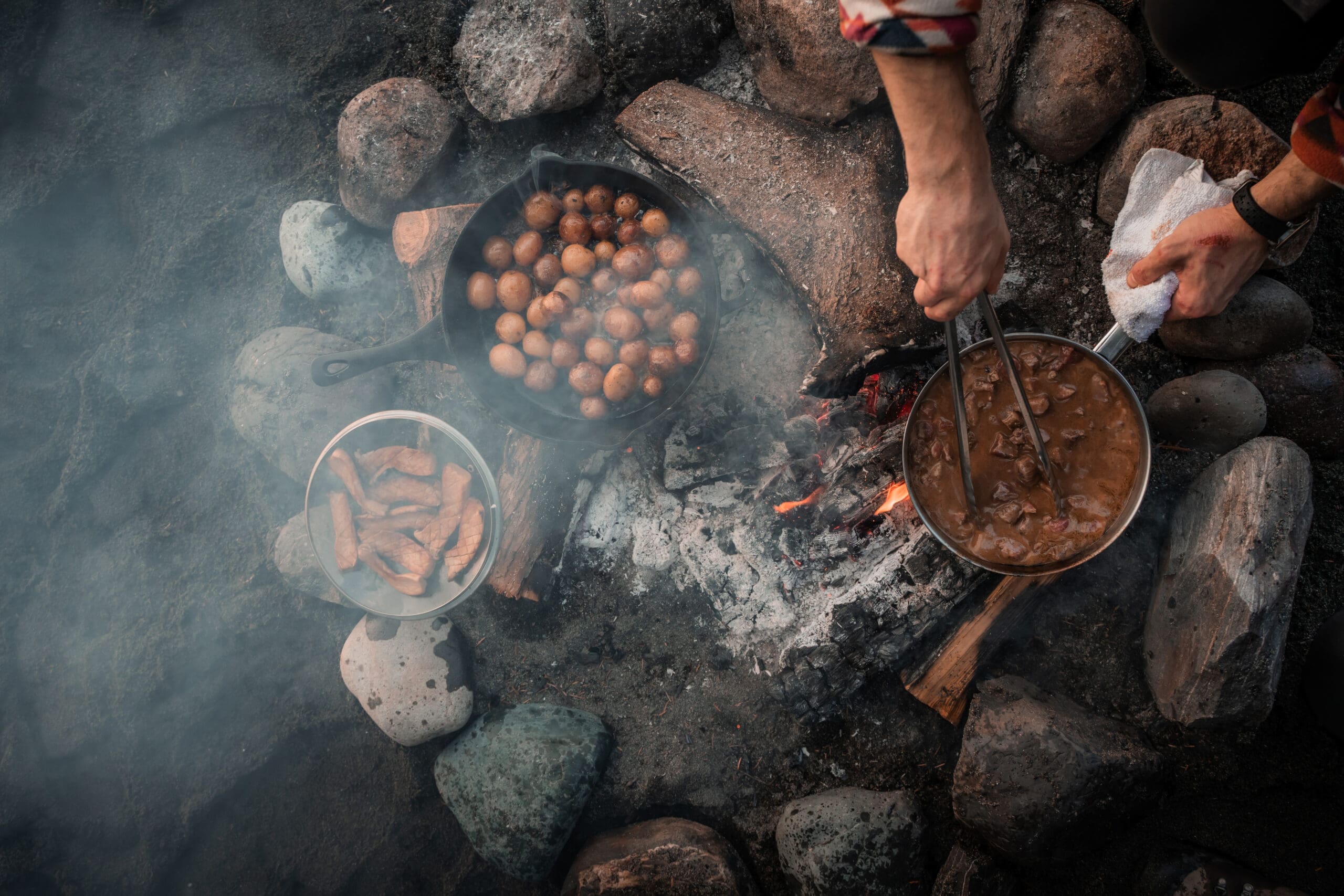
At a festival known for fast bites and constant movement, Chef Colton Armstrong-Ashley is inviting guests to do the opposite—slow down, step into the forest, and gather around the fire. As co-founder and chef of Savour the Wild, Colton is redefining what a food festival experience can be, transforming two Culinaire booths into a sensory installation rooted in the landscapes and waters of British Columbia. In collaboration with Finest at Sea and Divers Catch BC, the experience centres on BC uni and geoduck, cooked entirely over open flame and shared with intention. We caught up with Colton to talk about cooking with presence, the power of fire, and why some of the most meaningful meals happen when we slow down and listen to the story behind the food. —Noa Nichol
You’re deliberately slowing people down at a festival built for movement. Why was creating stillness around fire such a critical part of this experience?
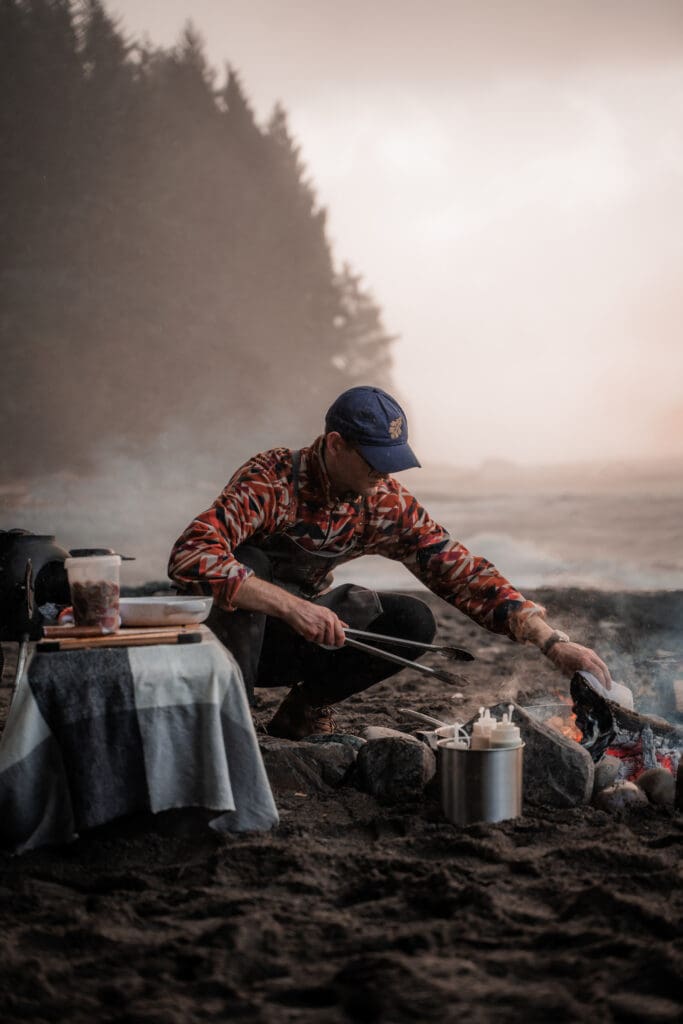
Our goal is to anchor the guest in experiencing the food together. By deliberately slowing the pace, we’re giving people the opportunity to stand still and take a moment “elsewhere” to really engage with what we are sharing. Uni and geoduck are unfamiliar to many guests, and they aren’t ingredients meant to be rushed. Creating stillness allows people the time to engage with the dish, the fire, and each other, and to experience what’s being shared in a more thoughtful and memorable way.
Cooking entirely over live fire is both ancient and risky. What does fire give you as chefs that modern kitchens never could—and what does it demand in return?
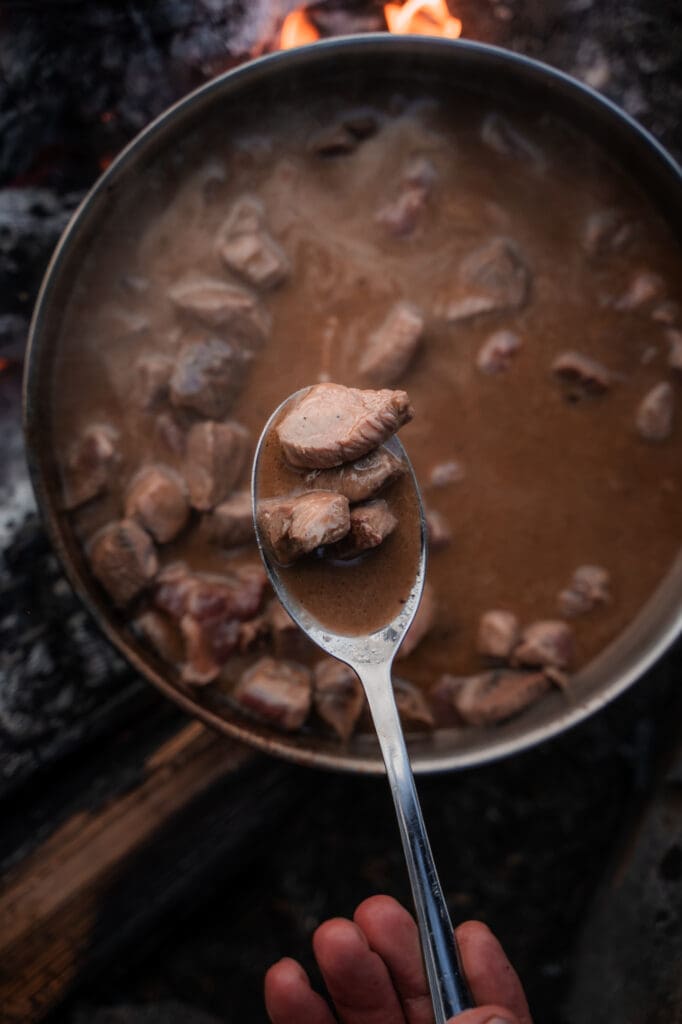
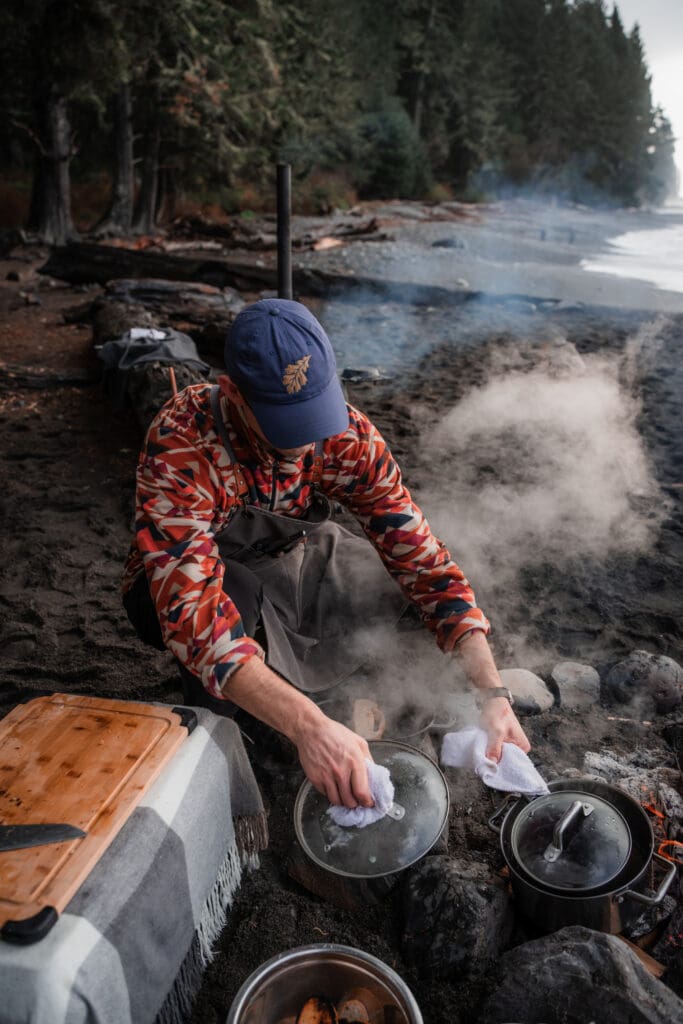
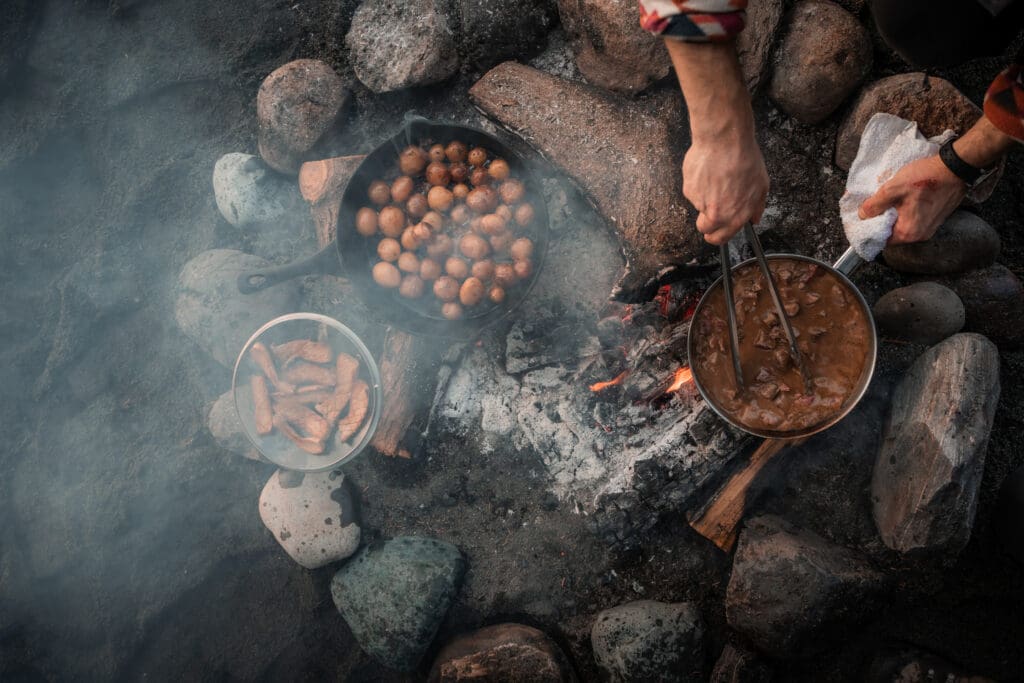
Fire is as much a part of the flavour and the story of the dish as it is a tool for cooking. There’s a school of thought in modern cookery that centres on control and mastery over nature, and that isn’t something I fully align with. Cooking over live fire feels like the opposite. There is so much variability that you need to surrender to, accomodate, or leverage when cooking with fire, it becomes a partner in the process. It demands attention, patience, and often acceptance.
BC uni and geoduck aren’t just luxury ingredients—they’re deeply regional. How did working with Divers Catch BC shape the way these dishes came together?
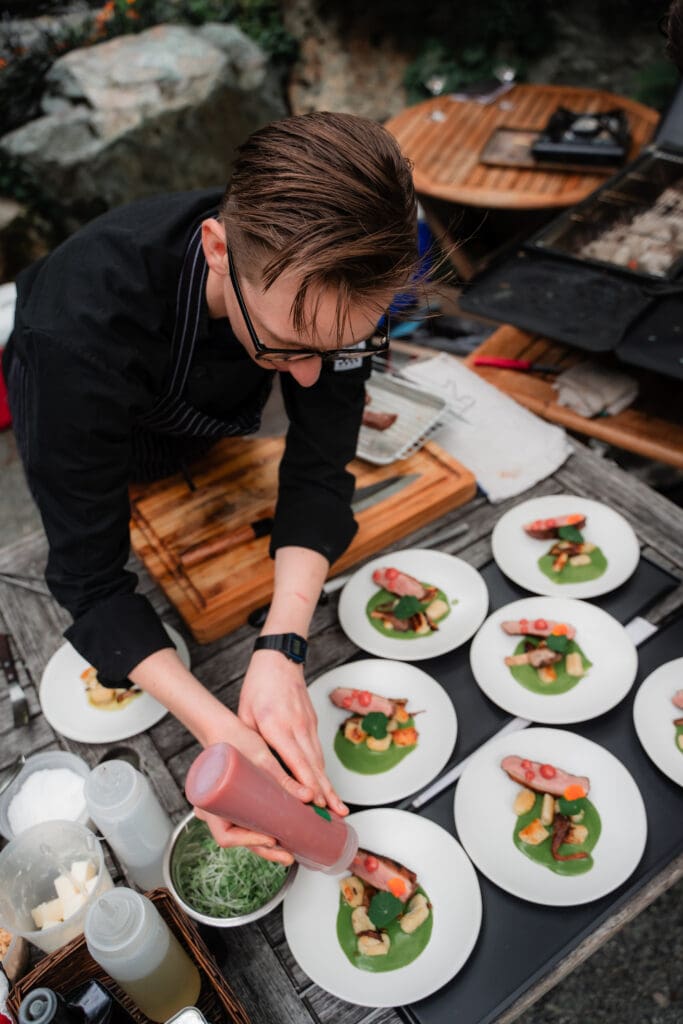
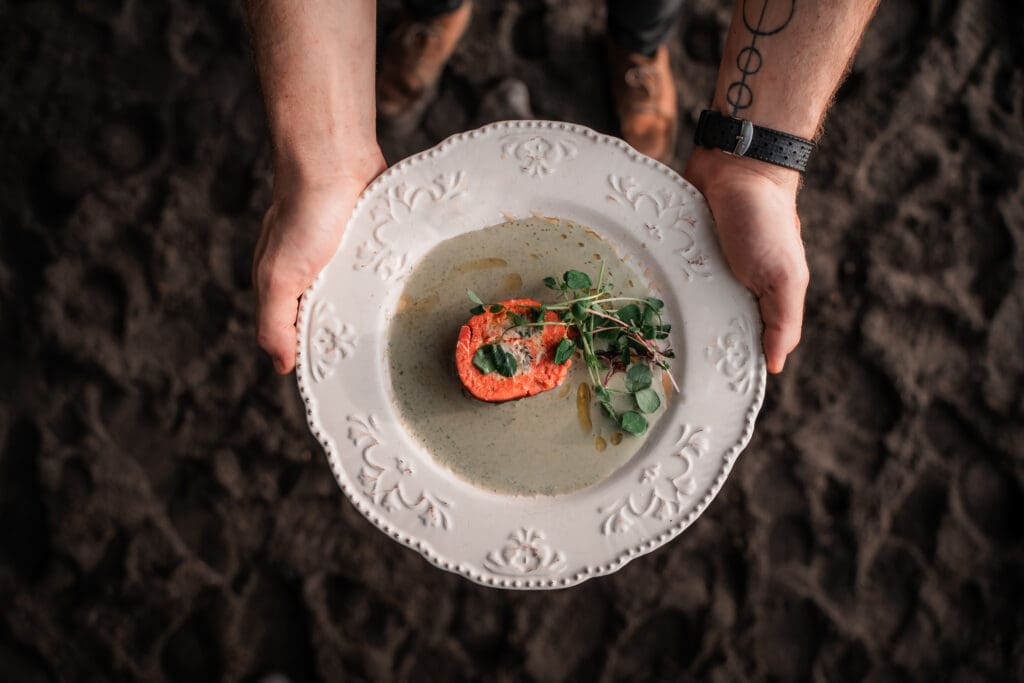
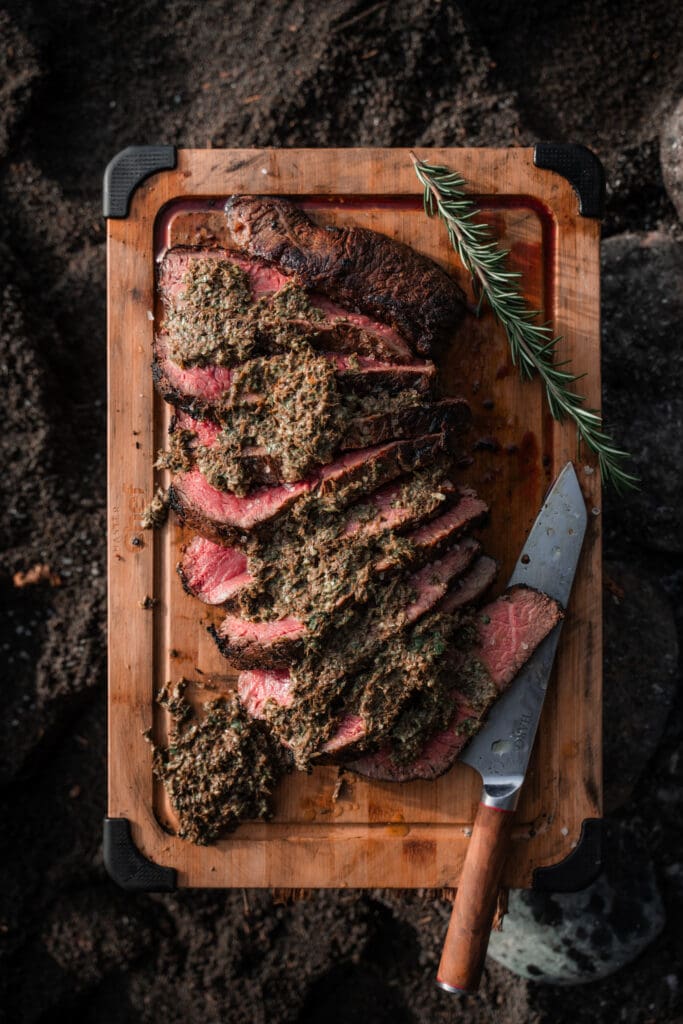
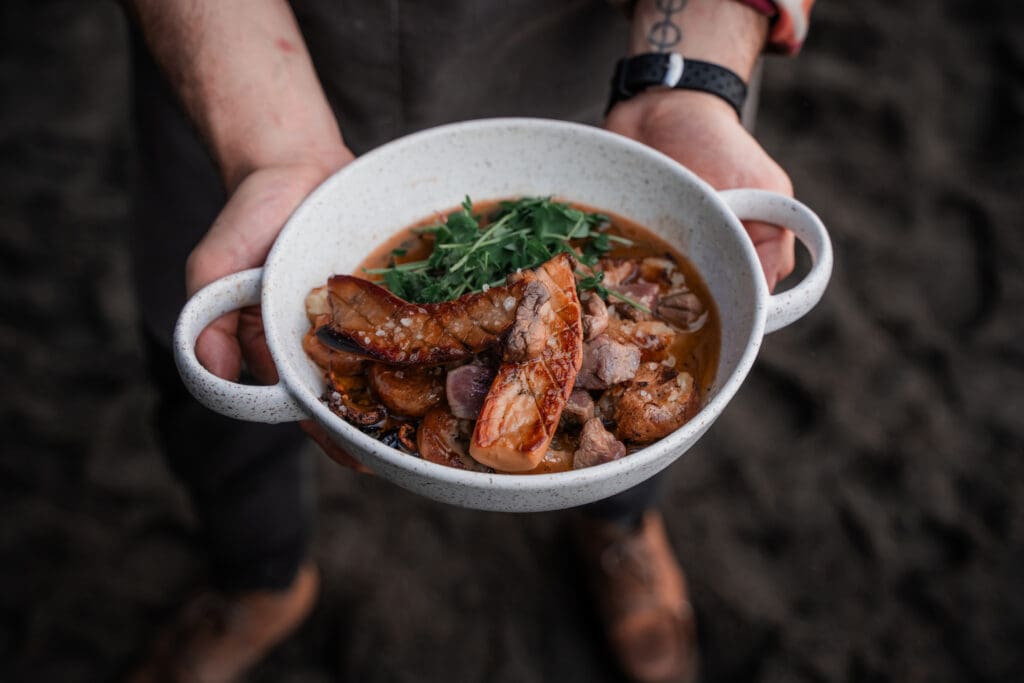
The dish composition started with Uni and geoduck and ended with striploin. Working with Finest at Sea and Divers Catch BC, our first goal was to demonstrate a variety in how these ingredients can be expressed. We wanted to challenge the guest, and by extension other chefs, to explore dynamic preparations and use these products as a part of the mosaic, rather than the single focus.
Guests aren’t just tasting—they’re watching, feeling heat, hearing stories. How important is that multi-sensory immersion to how you want people to understand the food?
I cannot resist the “in a fast moving world” trope. My biggest passion outside of learning more about the cookery itself is in creating moments, especially slow moments of understanding. I want people to take the time to think about, celebrate, and respect where their food comes from. The multi-sensory experience exists to evoke our beautiful coastline, along with acknowledging the bare simplicity of how food can be transformed over fire. My hope is that people come together in our little coastal forest scene, share a moment, then feel enabled to create their version of it. The more people get out and engage in celebrating our land, the more they’ll be inspired to respect it.
Striploin with uni and scallop mousse is a bold pairing. How do you decide when to push boundaries versus letting ingredients speak quietly for themselves?
We’re very aware that these ingredients aren’t familiar to most guests, so it felt important to anchor the dish with something recognizable like striploin. That familiarity creates a point of entry, allowing people to engage more openly with the uni and scallop mousse rather than feeling overwhelmed by it.
For me, pushing boundaries isn’t about excess, but about expanding how ingredients can be used. Uni, in particular, is impactful both in flavour and in our local ecosystem. By using it as an accent rather than the sole focus, and doing so at a higher volume, we can celebrate its character while also supporting more consistent local harvest. The hope is that this approach encourages both guests and other chefs to think differently about how these ingredients can live on the plate and how we can work more thoughtfully with what our environment gives us.
Fire forces you to relinquish total control. Has cooking this way changed how you think about precision, ego, or perfection as chefs?
Cooking around a fire, specifically in what I do outside, has become my favourite medium for creating meals. While the challenges of cooking over a campfire and on a live-fire grill in a restaurant are much the same, the context and environment are entirely different. Having a campfire, outside, and next to the long table has allowed guests a chance to engage more with the long process of cooking, to ask questions as we go. It has forced me to see what I once saw as “imperfection” as a nuance, as having reason and impact. Colours can be unpredictable, there are hot spots and cold spots, ash falls where it falls, even rain can enter a dish. You can either be defeated by it or learn to understand it and taste it.
You’re turning two booths into a forest-like installation. How does the Pacific Northwest landscape influence not just flavour—but pacing, presentation, and energy?
The Pacific Northwest shapes every aspect of the experience, not just flavour but how we move, gather, and eat together. When we cook outdoors, guests have to buy into the environment as part of the meal. Rain is always a possibility, so we respond by building a bigger fire, standing closer together, and cooking food that’s meant to warm and comfort.
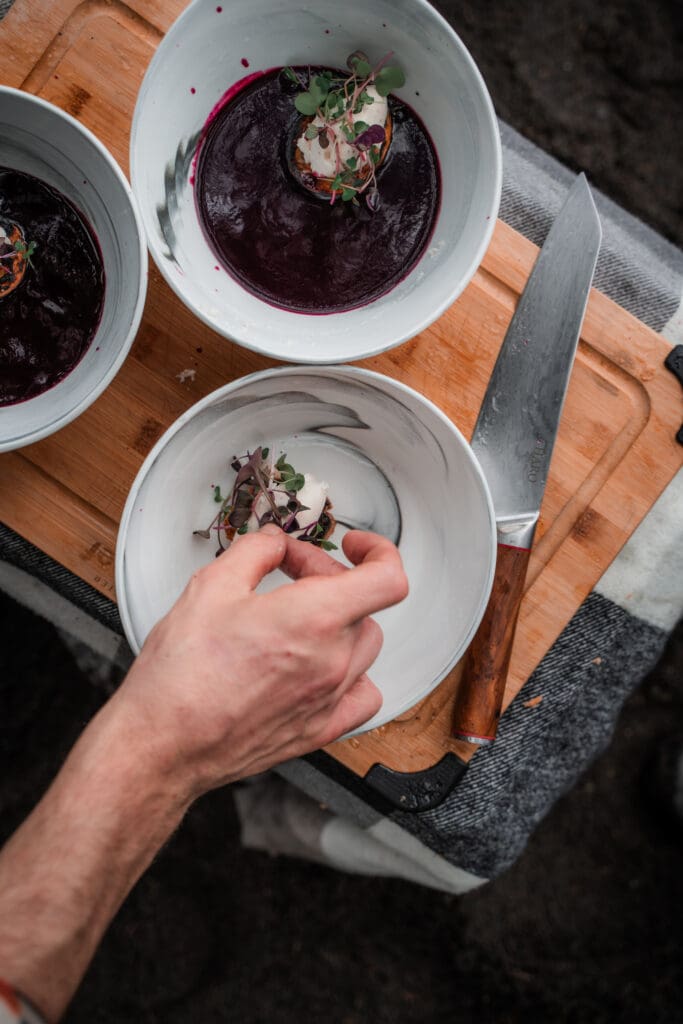
I still think about an outdoor dinner where heavy rain fell into a blueberry soup, splashing bright purple up onto the rim of the bowl. At first, I was frustrated that what I thought was a perfect presentation was being altered beyond my control. Over time, I realized that moment was exactly the point. The rain became part of the dish, part of the story, and part of the place we were in. That acceptance of the environment is central to how the Pacific Northwest informs our pacing, presentation, and energy.
In a world of fast tastings and Instagram bites, what do you hope guests carry with them after spending time at your fire instead of racing to the next booth?
I want guests to look each other in the eyes after they’ve taken a bite and express whatever they’re experiencing. Whether it reflects well on my cookery or not, having them take a moment to explore how it tastes, contemplate the texture, the terroir of the sea… whatever stands out. A win for me is someone thinking about where the ingredients came from, how it shaped them, and how they’ve changed between the sea and their plate.
There’s an intimacy to gathering around flames. Do you see this experience as hospitality, performance, ritual—or something else entirely?
Simply put, it’s an opportunity to connect around something central. Waxing poetic: A fire needs to be tended, managed, and respected. It gives back, and it’s shockingly easy to recreate as a moment or power. It’s a reminder, hopefully, to get outside and share time.
If this live-fire moment had one message for BC’s food culture right now, what would you want it to say about how we eat, gather, and honour our ingredients?
The philosophy I’m developing for myself around food is one of respect and curiosity. I want to understand where our ingredients came from, how I impact those environments, and how they in-turn shape our foods. I want to better manage my expectations of what ingredients I should have access to at different times in the year. As a country, we’re really engaged in a push to buy Canadian products. I’d like to move the needle forward on buying local products, wherever local may be. Doing this well requires taking the time to think about your food, looking at the land around us, and accepting what it wants to produce as opposed to what we can make it produce.
share:

February 3rd, 2026 at 2:02 am
Really inspiring conversation — makes me want to try more of their bold dishes.