

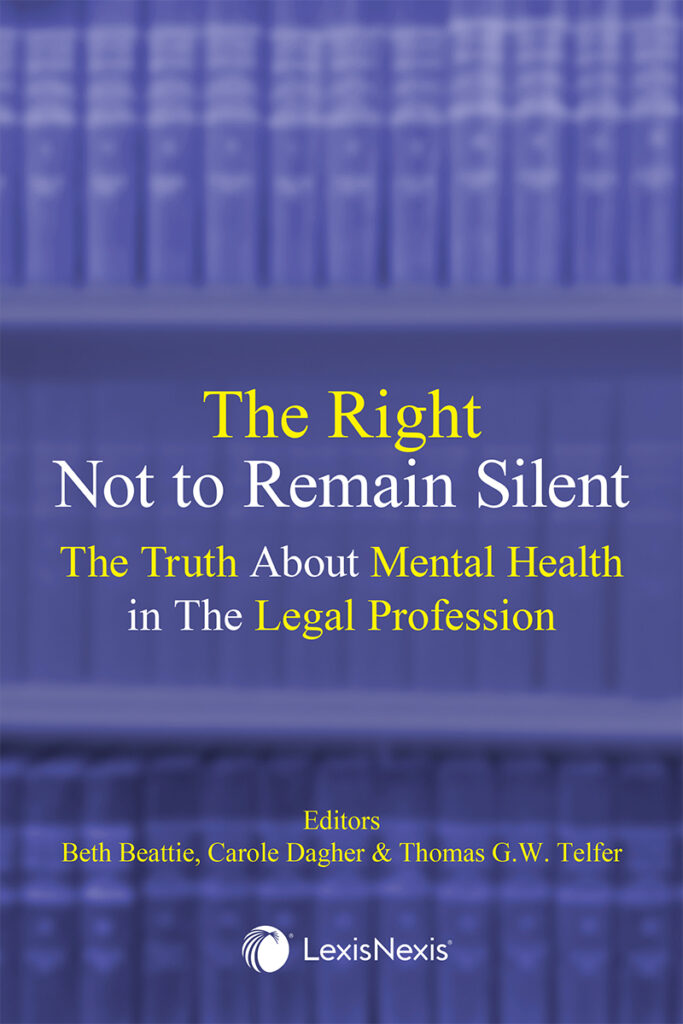
The Right Not to Remain Silent: The Truth About Mental Health in the Legal Profession is a new book, set to be released on April 30, 2024, just ahead of Mental Health Week in Canada. Comprising of 18 true and unique stories authored mostly by members of the legal community who have courageously navigated their careers while managing mental health challenges, this book promises to shine a much-needed spotlight on the perception of mental health within the legal profession and beyond. The candid memoirs included in the book cover a wide range of topics, from bipolar, depression and anxiety to addiction and grief, providing readers with invaluable insights and practical solutions. All royalties are being donated to Centre for Addiction and Mental Health (CAMH). We chatted with one contributor, Courtney Wilson, a defence lawyer at Rachlin & Wolfson LLP, to learn more. —Noa Nichol

What inspired you to share your personal story of battling anorexia in “The Right Not to Remain Silent”? What message do you hope to convey to readers through your memoir?
Sharing my personal battle with anorexia through “The Right Not to Remain Silent” was driven by a deep-seated conviction that our stories of vulnerability can catalyze change and foster a more compassionate environment. My journey through the shadows of this eating disorder, intertwined with the demanding nature of the legal profession, revealed a profound disconnect between the appearance of success and the reality of internal struggle. I wanted to bridge this gap, to show that behind the facades of professional achievement often lie battles with significant mental health challenges. By sharing my story, I hope to validate the experiences of others who suffer in silence, encouraging them to seek help and advocate for systemic changes within our industry. The narrative aims to dismantle the stigma associated with mental health issues, particularly eating disorders, by illustrating that these challenges do not discriminate based on professional success or personal strength.
In your experience, how has the legal profession’s perception of mental health, particularly eating disorders, impacted individuals seeking support and treatment?
The legal profession traditionally values resilience, often at the expense of vulnerability. This cultural expectation can significantly impact individuals struggling with mental health issues, particularly eating disorders, which are frequently misunderstood as mere issues of self-control rather than serious mental health conditions. The fear of being perceived as weak or incapable can deter legal professionals from seeking the support they desperately need. In my experience, this environment fosters a culture where mental health issues are hidden rather than addressed, perpetuating cycles of suffering and decreasing overall productivity and well-being in the workplace. By confronting these perceptions openly, I aim to shift the narrative towards understanding and empathy, encouraging a more supportive approach to mental health in our profession.
You mentioned that your professional aptitude was better appreciated following your weight loss. How do you navigate the intersection between societal perceptions of physical appearance and professional competence in the legal field?
The intersection between societal perceptions of physical appearance and professional competence has been a troubling aspect of my career in law. As I lost weight, I noticed a stark increase in the recognition and validation of my professional capabilities. This experience highlighted a pervasive issue in many professional environments: the undue emphasis on appearance as a proxy for capability. Navigating this reality has involved a deliberate effort to redirect conversations from appearances to achievements and advocating for others whose contributions are overlooked due to superficial judgments. My aim is to foster a professional culture that values diversity in appearance and recognizes talent and competence as independent of physical attributes.
As I recover from my eating disorder, I’ve come to realize that my earlier views linking my professional worth to my appearance were heavily influenced by the disordered thinking that once controlled my mind. Now, with more experience in my role as an insurance defence lawyer, I’ve observed that in the courtroom, my appearance doesn’t shield me from criticism nor does it guarantee praise; I’ve faced both in equal measure, independent of how I look.
Could you elaborate on the systemic obstacles you’ve encountered in accessing mental healthcare for eating disorders within the legal community? How do these barriers contribute to the perpetuation of shame culture?
Systemic obstacles in accessing mental healthcare, especially for eating disorders, significantly hinder the ability of individuals in the legal profession to seek the help they need. The lack of specialized resources, extensive wait times for treatment, and inadequate insurance coverage pose daunting challenges. These issues are exacerbated within the high-pressure environment of the legal field, where the stigma surrounding mental health issues is prevalent and the culture prizes endurance and resilience.
For me personally, these systemic barriers became painfully apparent during my time in law school when I first sought treatment for my eating disorder. After recognizing the severity of my condition, I was referred, on an urgent basis, to an in-person eating disorder treatment facility, only to be confronted with an initial wait time that extended several months. This delay was not just a mere inconvenience; it was a critical period during which my condition worsened without the necessary medical intervention. The long wait times are often due to a scarcity of facilities equipped to address specific needs associated with eating disorders, compounded by a high demand for such specialized services. After the outbreak of COVID-19, just as I was about to enter the program, the facility shut down, compelling me to begin anew my urgent search for the help I desperately needed.
The experience of waiting for treatment was isolating and disheartening. In a professional setting like law, where admitting to any form of vulnerability can be seen as a weakness, the fear of judgment and professional repercussions can deter individuals from even acknowledging their struggles, let alone seeking help. This creates a culture of shame and secrecy, where many prefer to suffer in silence rather than risk their professional reputation.
My advocacy now focuses on dismantling these systemic barriers by calling for increased resources dedicated to mental health, specifically for eating disorders. This includes advocating for more specialized treatment facilities, shorter wait times, and broader insurance coverage that adequately meets the needs of those with eating disorders. Additionally, I push for better training in mental health awareness within the legal community to foster an environment that supports mental health parity. By shifting workplace policies to encourage openness and provide support, we can begin to change the culture in legal environments—one that currently contributes to the problem rather than offering solutions.
“The Right Not to Remain Silent” aims to shed light on the prevalence of mental health challenges in the legal profession. What changes do you believe are necessary within the legal industry to better support individuals struggling with mental health issues?
The legal industry needs a multifaceted approach to better support individuals struggling with mental health issues. First, there should be a systemic implementation of comprehensive mental health policies that include regular screenings, confidential counseling services, and emergency mental health support. Firms should also invest in training leaders and managers to recognize signs of mental distress and respond appropriately. Beyond structural changes, there is a need for a cultural shift towards normalizing mental health discussions and removing the stigma associated with seeking help. This can be encouraged through leadership by example, where senior professionals share their experiences and advocate for mental health openly.
How do you envision dismantling the shame culture tied to eating disorders within the legal community and beyond? What steps can individuals and organizations take to foster a more supportive and understanding environment?
Dismantling the shame culture tied to eating disorders requires a concerted effort to educate and raise awareness about the complexity and severity of these disorders. Organizations should lead by establishing clear policies that address mental health issues with the same seriousness as physical health concerns. They can also create and support peer support networks, offer regular mental health training sessions, and promote a work-life balance that allows employees to prioritize their health. On an individual level, fostering a supportive environment involves being an ally to colleagues who might be struggling—listening without judgment, offering support, and respecting their privacy. It’s also crucial for individuals to challenge the myths and misconceptions surrounding eating disorders by sharing accurate information and personal stories that humanize the issue. This combination of organizational commitment and individual action can significantly weaken the foundations of shame culture in the workplace.
Your memoir touches on the theme of resilience and overcoming personal struggles. What coping mechanisms or support systems have been instrumental in your journey towards recovery?
My journey towards recovery from anorexia has been marked by resilience, fueled by a range of coping mechanisms and a robust support system. Therapy has been a cornerstone of my recovery, providing a safe space to understand and work through the underlying issues contributing to my disorder. Engaging regularly at the outset of my treatment with a dietitian has also helped me rebuild a healthy relationship with food.
Beyond professional help, the support from my family and friends has been indispensable. They’ve provided emotional grounding and a sense of normalcy amidst my struggles. Sharing my experiences through writing and speaking engagements has also been therapeutic, allowing me to process my feelings and connect with others facing similar battles.
After completing my memoir, I received a new diagnosis of ADHD, following a previous misdiagnosis of Bipolar Disorder II. The medications prescribed for Bipolar Disorder II were not only ineffective but also adversely affected both my physical and mental health, further worsening my eating disorder. However, once I began treatment specifically for ADHD, I gained a new perspective on my struggles with food. I realized that my problematic eating behaviors were significantly driven by an underlying lack of impulse control, which the ADHD medication helped to mitigate.
With the correct medication, I am now significantly better at managing the compulsions to starve myself to a breaking point and subsequently binge and purge, a destructive cycle that has persistently troubled me despite treatment. This newfound control has been a significant turning point in my ongoing battle with eating disorders.
Reflecting on my childhood, the irony of this late diagnosis becomes painfully clear. I exhibited symptoms of ADHD from a very young age, but these were overlooked or misinterpreted. Had my ADHD been identified and treated early on, it’s possible that the trajectory of my mental health would have been markedly different. The coping mechanisms I developed in the absence of proper treatment led directly to the eating disorder that has become a persistent part of my life—a condition I now accept I will likely manage indefinitely.
As Mental Health Week approaches, what advice would you offer to fellow legal professionals who may be hesitant to seek help for their mental health concerns?
As Mental Health Week approaches, I want to address my fellow legal professionals directly: it is okay not to be okay. If you are struggling, I urge you to view seeking help not as a sign of weakness, but as a critical step towards personal and professional sustainability. Start by consulting with a mental health professional, which can often be facilitated through your employer’s employee assistance program. Engage in open dialogues about mental health with your peers to break down the stigma and build a supportive network. Remember, your mental health is just as important as your legal expertise; taking care of it enhances your ability to think critically, act decisively, and advocate effectively. By prioritizing your mental health, you set a powerful example for others in our profession, helping to cultivate an environment where everyone can thrive without fear of judgment.
share:

August 12th, 2025 at 3:55 am
처음엔 믿을 만한 사이트 찾는 게 진짜 어렵더라고요. 저는 운 좋게 신규가입 보너스 주는 사이트에서 시작했는데, 리스크 없이 체험할 수 있어서 괜찮았어요. 먹튀
August 13th, 2025 at 3:41 am
처음엔 믿을 만한 사이트 찾는 게 진짜 어렵더라고요. 저는 운 좋게 신규가입 보너스 주는 사이트에서 시작했는데, 리스크 없이 체험할 수 있어서 괜찮았어요. 먹튀
August 14th, 2025 at 7:11 am
처음엔 믿을 만한 사이트 찾는 게 진짜 어렵더라고요. 저는 운 좋게 신규가입 보너스 주는 사이트에서 시작했는데, 리스크 없이 체험할 수 있어서 괜찮았어요. 먹튀
August 14th, 2025 at 9:20 am
처음엔 믿을 만한 사이트 찾는 게 진짜 어렵더라고요. 저는 운 좋게 신규가입 보너스 주는 사이트에서 시작했는데, 리스크 없이 체험할 수 있어서 괜찮았어요. 먹튀
August 15th, 2025 at 5:42 am
처음엔 믿을 만한 사이트 찾는 게 진짜 어렵더라고요. 저는 운 좋게 신규가입 보너스 주는 사이트에서 시작했는데, 리스크 없이 체험할 수 있어서 괜찮았어요. 먹튀
August 20th, 2025 at 4:55 am
처음엔 믿을 만한 사이트 찾는 게 진짜 어렵더라고요. 저는 운 좋게 신규가입 보너스 주는 사이트에서 시작했는데, 리스크 없이 체험할 수 있어서 괜찮았어요. 먹튀
August 21st, 2025 at 7:30 am
" cnfans Spreadsheet Recommendation! DENIM TEARS' Indigo Memory' Best Batch🌊
August 21st, 2025 at 2:55 pm
처음엔 믿을 만한 사이트 찾는 게 진짜 어렵더라고요. 저는 운 좋게 신규가입 보너스 주는 사이트에서 시작했는데, 리스크 없이 체험할 수 있어서 괜찮았어요. 라이브스코어7m
August 25th, 2025 at 8:30 am
cnfans Ralph Lauren Spreadsheet 2025 Summer First Release! Ralph Lauren Polo Series "Legendary White" Best Batch?? "Golden Weight 230g" lives up to its reputation, perfectly balancing breathability and drape. Collector's edition batch.
September 4th, 2025 at 3:29 am
* 새로운 즐거움이 가득한 게임의 세계로 초대합니다. 입장하기
September 5th, 2025 at 1:53 am
* 화려한 스킬, 압도적인 전투를 경험하세요. 스킬 보기
September 5th, 2025 at 1:55 am
* 자동 전투 시스템, 편리하게 게임을 즐기세요. 자동 전투
September 5th, 2025 at 11:56 am
The must-have McQueen white sneakers are available at cnfans McQueen Spreadsheet. Not only are they affordable, but they are also of excellent quality. Hurry up and add them to your favorites before they sell out!
September 5th, 2025 at 11:57 am
cnfans Ralph Lauren Spreadsheet 2025 Summer First Release! Ralph Lauren Polo Series "Legendary White" Best Batch?? "Golden Weight 230g" lives up to its reputation, perfectly balancing breathability and drape. Collector's edition batch.
September 5th, 2025 at 7:53 pm
승리의 주인공은 바로 당신! 입장하기
September 5th, 2025 at 7:53 pm
최고의 그래픽과 사운드로 몰입감을 높여보세요. 바로 플레이
September 5th, 2025 at 10:24 pm
당신의 운명을 바꿀 게임, 바로 여기 있습니다. 지금 시작하기
September 5th, 2025 at 10:25 pm
지루한 시간을 한방에 날려줄 마법 같은 게임. 바로 접속
September 6th, 2025 at 1:13 am
당신이 꿈꾸던 게임이 현실이 됩니다. 지금 도전
September 6th, 2025 at 1:13 am
당신의 손안에서 펼쳐지는 행운의 세계. 바로 플레이
September 6th, 2025 at 5:19 am
멈출 수 없는 재미와 흥분. 바로 플레이
September 6th, 2025 at 10:57 pm
멈출 수 없는 재미에 푹 빠져보세요. 지금 참여
September 7th, 2025 at 3:39 am
슬롯볼과 카드 게임의 환상적인 조합. 바로가기
September 7th, 2025 at 3:40 am
당신의 행운을 시험할 완벽한 기회. 게임 참여
September 7th, 2025 at 12:44 pm
당신의 운과 실력이 만나 최고의 보상을 만들어냅니다. 지금 도전
September 9th, 2025 at 9:20 am
쉽고 재미있는 게임으로 하루를 마무리하세요. 입장하기
September 9th, 2025 at 9:26 am
당신의 두뇌를 깨우는 전략의 승부사. 게임 시작
September 9th, 2025 at 3:51 pm
끝없이 펼쳐지는 즐거움의 세계. 당신이 원할 때 언제든 즐길 수 있는 최고의 게임입니다. 바로가기
September 9th, 2025 at 11:22 pm
긴장감 넘치는 게임과 통쾌한 보너스가 기다려요. 바로 플레이
September 9th, 2025 at 11:23 pm
당신의 행운을 믿고 베팅하세요. 당신의 직감이 승리로 이어지는 순간을 경험하세요. 지금 시작하기
November 24th, 2025 at 7:45 am
It’s powerful and brave to see legal professionals opening up about real struggles, from bipolar and anxiety to addiction and grief. Mentorship, peer support, and access to proper treatment, like effective bipolar disorder treatment are vital if we are going to shift the culture in the legal profession. Let’s hope this book and these conversations help break down stigma and encourage more lawyers to seek the support they need.