
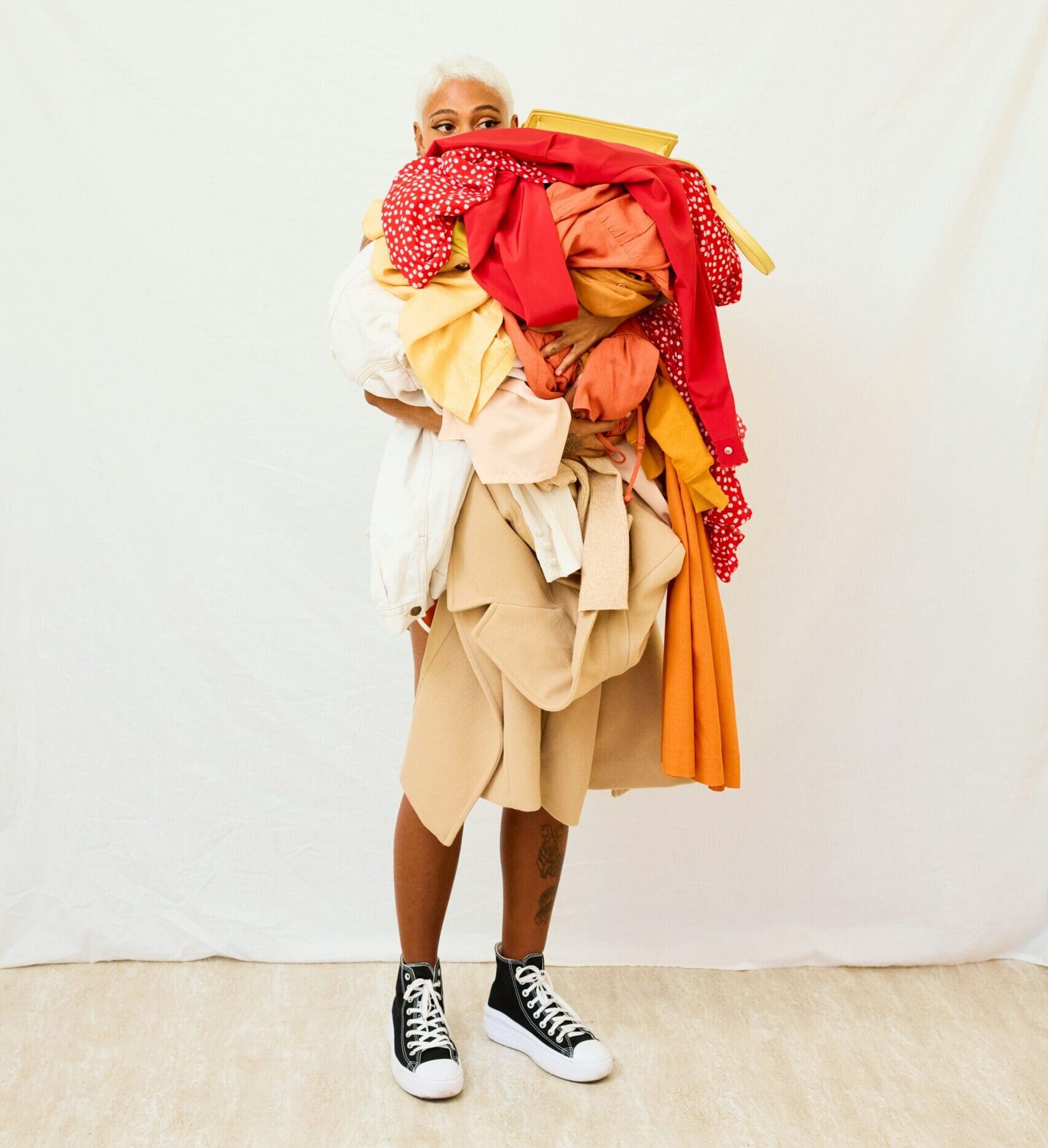
Have you ever noticed how people care about sustainability one minute—then brag about how cheap their outfit was the next?
Fast fashion brands have perfected this contradiction. Their glossy ads, plastered across billboards and social media, promise you can look runway-ready in a $59.95 lined blazer or a bikini made from “recycled fibers” for just $11.99.
These ads make me want to put needles in my eyes. And I’ll tell you why.
The Myth of “Sustainable” Fast Fashion
Sustainability in fashion is a gimmick—a marketing ploy designed to make you feel like you’re making an ethical choice, even when everything in your gut is saying: How can a $59.95 blazer be fair trade, use eco-friendly fabrics, and uphold ethical labor standards?
It can’t.
These prices aren’t sustainable in the fashion game. The truth is, being truly sustainable is hard—it requires effort, investment, and, let’s be honest, money. So if you’re even trying, good on you.
Vivienne Westwood said it best: Buy less, choose well, make it last.
The Disposable Mindset
We buy to soothe. Shopping triggers emotion—a high, then a low. And that cycle? It’s intentional.
Fast fashion is no different from fast food—cheap, convenient, and everywhere. You buy it, wear it once, toss it, and move on. Who cares? It was the price of two lattes.
Once upon a time, lending a sweater to a friend meant you expected it back. It was expensive. You cared about it. Now? Not so much.
How We Got Here
The reason fast fashion exists? Geopolitics.
Over 25 years ago, the World Trade Organization (WTO) removed import quotas, allowing an unlimited flood of cheaply made goods into North America—aka the biggest consumer market in history.
What happened next? A race to the bottom. The cheaper, the better. Ad agencies fed us a new mindset: Look how smart you are! You bought 12 items for the price of two!
And we did.
Multiply that by 400 million people buying 100 pieces a year for 25 years—my calculator doesn’t even go that high. And these are conservative numbers I’m pulling from my head.
Remember the ‘90s sweatshop scandals? Nike found in Lower East Side sweatshop! Kathy Lee Gifford brand caught using child labor!
I don’t know if those sweatshops really existed, but in my 30 years in manufacturing—including 12 in NYC—I never found one. Funny thing is, those investigative reports vanished once the WTO deal was finalized and brands started outsourcing production offshore.
The Cycle of Fast Fashion
We all want to do good. We all want to help the planet. But life happens.
- As teens, we thrift—because it’s cool, fun, and creative.
- In our early 20s, we need professional clothes, so we dabble in fast fashion.
- By our late 20s and 30s, we’re saving for mortgages, weddings, babies—shopping sustainably is a distant dream.
Fast fashion isn’t going away—because, frankly, we can’t afford for it to.
An Alternative: Waste Up
There are brands trying to change the game. My favorite? Mine.
I founded Waste Up to challenge the waste cycle. Instead of overproduced fast fashion being shipped overseas or burned, we intercept it. We take unsold inventory, repurpose it into new textiles, and manufacture locally—where the excess originated.
The result? Capsule collections made from fabric that would otherwise end up in landfills.
Sounds simple? It’s not. And the only way to scale it is to get fast fashion brands on board.
The Real Solution: Actionable Sustainability
Fast fashion brands already have sustainability funds. The missing piece? You.
If consumers start demanding real sustainable products, brands will respond. But sustainability can’t just be a buzzword—it has to be an actionable solution.
Some Final Thoughts Before You Shop:
- Less is more.
- Buying 12 items for the price of two doesn’t make you smart—it makes you gullible.
- Fashion is made by people. What you’re willing to pay determines whether those workers are exploited.
I’ve owned factories for 20 years. Let me tell you—factory work is a skilled trade. And when done domestically, workers earn a living wage.
Vivienne Westwood was the OG of sustainability before it was trendy.
The question is: Will fast fashion ever change? Maybe. But only if we make it. What happened next? A race to the bottom. The cheaper, the better. Ad agencies fed us a new mindset: Look how smart you are! You bought 12 items for the price of two! (and you really only used 1). —Liza Deyrmenjian, Owner & Dean of The Cut Design Academy
share:

December 19th, 2025 at 9:15 pm
어제 친구들과 회식 자리로강남가라오케추천다녀왔는데, 분위기도 좋고 시설도 깨끗해서 추천할 만했어요.
December 19th, 2025 at 9:16 pm
요즘 회식 장소 찾는 분들 많던데, 저는 지난주에강남가라오케추천코스로 엘리트 가라오케 다녀와봤습니다.
December 19th, 2025 at 9:18 pm
분위기 있는 술자리 찾을 땐 역시강남하퍼추천확인하고 예약하면 실패가 없더라고요.
December 19th, 2025 at 9:19 pm
회사 동료들이랑강남엘리트가라오케방문했는데, VIP룸 덕분에 프라이빗하게 즐길 수 있었어요.
December 19th, 2025 at 9:20 pm
신논현역 근처에서 찾다가강남룸살롱를 예약했는데, 접근성이 좋아서 만족했습니다.
December 19th, 2025 at 9:21 pm
술자리도 좋지만 요즘은강남셔츠룸가라오케이라고 불릴 만큼 서비스가 좋은 곳이 많더군요.