
When it came time for Skechers to open its first-ever Performance store—complete with half-courts to test out the brand’s basketball, pickleball and running kicks—it didn’t do so in a major retail hub like London, or New York, or Los Angeles or even Toronto. Instead, it chose Edmonton.
Of course, there is something to be said for the fact that West Edmonton Mall—where the store is located—is the second-largest shopping mall in North America (you haven’t lived until you’ve been to the water park). Still, it was a bold move. Edmonton has a population of just 1.087 million; Canada’s retail centre of Toronto, meanwhile, has 3.026 million people, and is usually seen as the best fit for brands that want to make a splash in the country. But is that always the case? Perhaps there’s something to be said for the revenue potential in smaller Canadian cities. Perhaps Skechers is onto something.
“Toronto, and the GTA in general, still has by far the highest retail spend compared to other cities or areas in Canada,” says Graham Heuman, retail insights lead at retail consulting firm J.C. Williams Group, which has offices in Toronto and Saint John. “I think it would be hard to argue it is not the retail capital of Canada, but that doesn’t necessarily mean that it is the best option for a retailer opening a store. Such density can also cause difficulties in differentiation.”
It makes sense: a bigger city offers more sales opportunities, but on the flip side, it also means much stiffer competition.
“Smaller cities can offer a larger market share for retailers as compared to larger cities, but it is a balance: 90 per cent of a $1 million market is not as good as one per cent of a $100 million market,” Heuman says. “It really depends on the type of retailer and the overhead they can take on. The rent can be much higher in large cities, but the revenue can go hand-in-hand. The smaller cities, however, can also typically get more parking.”
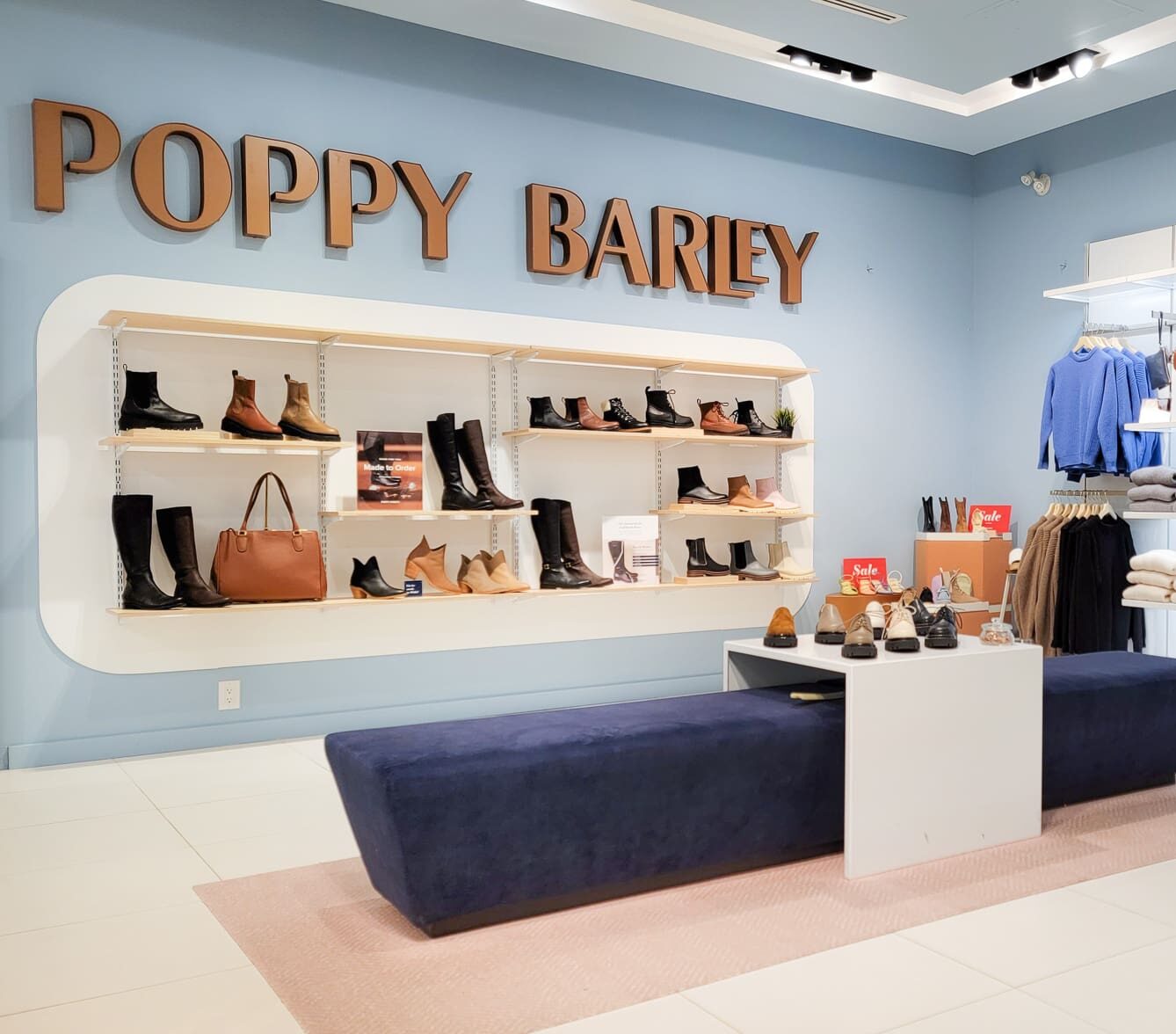
For Edmonton-based fashion brand Poppy Barley, the original intention was to focus on ecommerce—but cofounder and co-CEO Justine Barber says that they quickly noticed customer demand for a physical store. Poppy Barley opened its first brick-and-mortar in its hometown in 2017, which tripled its revenue in the city.
“Having a fashion brand in Edmonton means that we are exceptionally embraced by Edmontonians, but we don’t have a lot of similar local companies to easily form business friendships and collaborations with,” says Barber. “One upside is that we get to recruit some exceptionally talented people who want to work in fashion and live in Edmonton; however, we also have a small talent pool to draw from. This includes adjacent businesses like models, product photographers and ecommerce specialists.”
Poppy Barley, which now also has stores in Calgary and Vancouver, uses a slow-and-steady expansion strategy.
“We have a growth model where we start with growing brand awareness to grow online sales, supported by wholesale accounts and Poppy Barley-hosted pop-ups (two-to-five-day shopping events where we fly a team and samples in) to grow in a new city before adding a retail location,” Barber explains. “We do great business in our pop-ups in cities like Saskatoon, Regina and Winnipeg, and our pop-ups boost online sales.”
Despite its current focus on smaller cities, though, Barber says Poppy Barely does have plans to open eventually in Toronto. It is, after all, still Canada’s retail hub, and where many of the country’s success stories began—including jewelry brand Lisa Gozlan. The company opened its first store in Toronto’s swish Yorkville neighbourhood, followed by locations in Palm Beach, Vancouver and Mississauga.
“We prefer to test markets before establishing permanent stores,” shares co-founder Lisa Gozlan. “This approach involves analyzing customer data and social media feedback to identify potential retail locations. Through our own trunk shows and partnerships with major retailers like Holt Renfrew, we gain valuable insights into customer preferences and high-traffic areas for potential expansion. After this, we take the time and research to know where to place the brand in new cities; brand association is everything, and location is always the most important decision.”
Vancouver fans of the brand may have noticed that its Kitsilano store opened rather quietly back in November. That, says Gozlan, was intentional.
“We prioritized opening in time for Black Friday and the holiday season to serve our customers during our busiest period,” she says. “Our initial plan was a spring opening, which would have allowed for better focus and settling in. We always try to put the customer first, so as much as an event is important, being able to service our customers faster remains top priority.”
Don’t worry, though: Gozlan says that events and activations at the brand’s West 4th location will pick up as time goes on. And at the end of the day, no matter what city you’re in, the best plan is an intentional one.
“Our goal has always been to expand within Toronto and Canada strategically,” says Gozlan, “without oversaturating the market.” —Sara Harowitz
share:

September 23rd, 2025 at 11:53 pm
Excellent post, simple, clear, and very informative, thanks for sharing.
December 19th, 2025 at 6:20 am
Hello. I don’t usually write reviews, but this time the mood and the fatigue lined up. Small business always seems to live on the edge of absurdity. Customers want simplicity, the market demands complexity, and you’re stuck in between, like squeezing through narrow shelves in a cramped warehouse. I came across this product recommendation quiz making platform one day, because a marketing acquaintance was grumbling about life in a group chat while everyone complained about falling conversions and a general sense of pointlessness. I took a look and the tool turned out to be a life savior! It adds structure where there’s usually chaos. The result is predictable: the number of abandoned carts decreased twofold.