
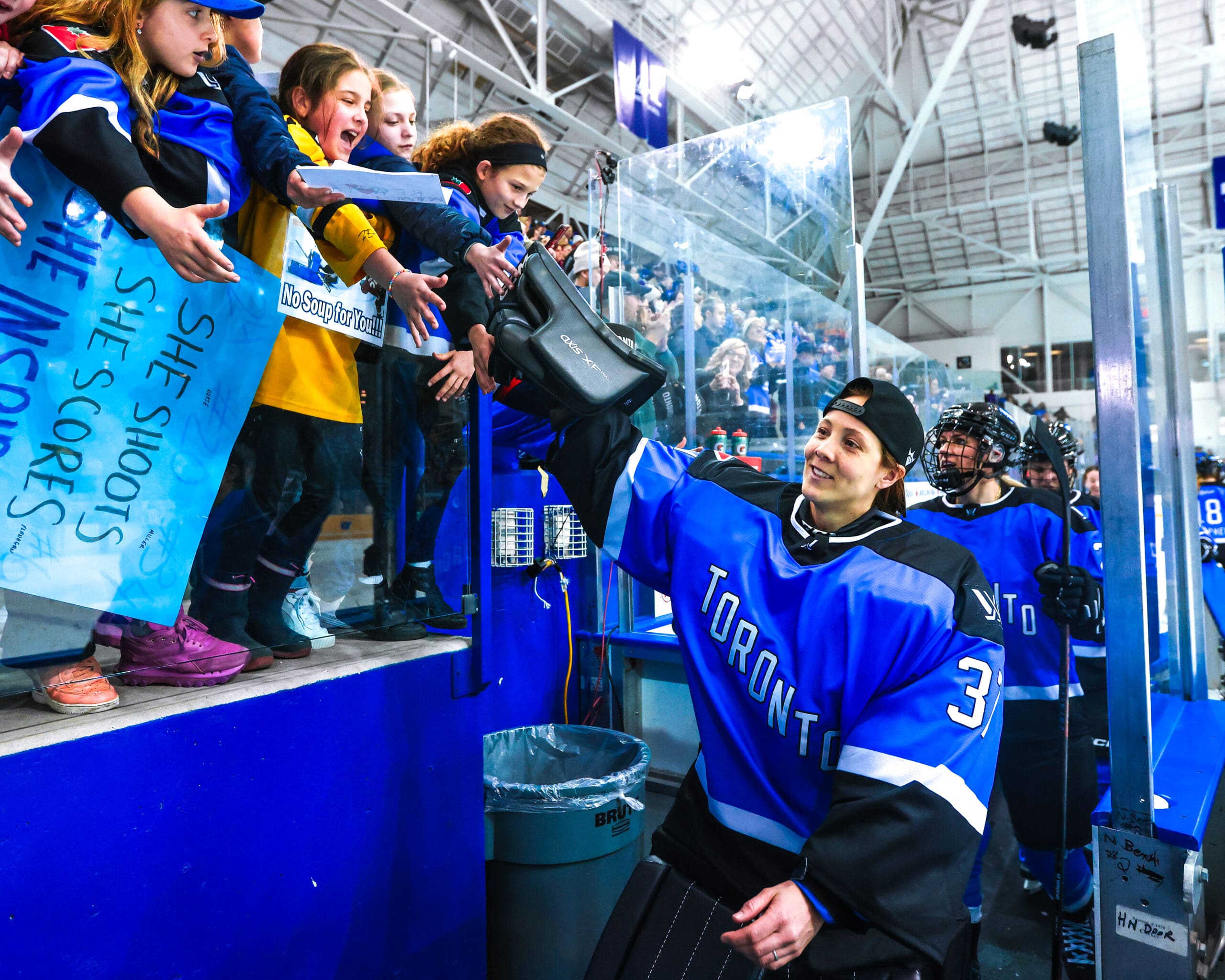
This September 27, over 150 teams will flood the streets for Road Hockey to Conquer Cancer—and former PWHL Toronto Sceptre goalie and Mississauga firefighter Erica Howe is front and centre. In our Q&A, Erica opens up about her cancer diagnosis at 32, the locker-room and fire-hall communities that carried her through treatment, and why she’s lacing up to raise funds for Princess Margaret’s life-saving early-detection research. Read on for honest stories, hard-won leadership lessons, and why this one-day fundraiser still matters more than ever. —Noa Nichol
Can you tell us about the moment you were diagnosed and how you processed that news — emotionally and practically — while balancing life as a firefighter and an athlete?
When I received the call that I had breast cancer, I was two hours into a 24-hour shift at the fire hall. I had so many questions swirling through my head. I told my mom, my best friend, and my fire crew right away. Then I stayed for the rest of the shift — grasping onto anything that felt “normal” because my world had just been turned upside down. The first two months after diagnosis were the hardest. I had no clear plan, no official pathology yet, no answers. My wife and I would go on long walks in the middle of the night when we couldn’t sleep, trying to soothe the stress and uncertainty. During that time, I often reflected on losing my dad to glioblastoma when I was 16. What helped me back then, and again now, was putting one foot in front of the other. I leaned into routine. I went to work, I moved my body when I could, and I spent time with friends and family. Those moments helped me feel grounded. I also drew on my time as a pro goalie, that mindset of focusing on the here and now. It helped me navigate the turbulence one moment at a time. One positive that came out of that period was clarity about what matters most to me: connection, movement, purpose.
You’ve credited your wife, PWHL teammates and Mississauga Fire colleagues as crucial supports. Can you share one or two specific moments of care that really got you through treatment?
I’ve had so many moments of kindness and support throughout treatment — meals dropped off, care packages, thoughtful texts, all things that made my life easier, but two moments really stand out. First, because of the nature of my job, I couldn’t work through treatment, and I didn’t have nearly enough sick time saved up. Without hesitation, my fellow firefighters stepped up and donated their own vacation and time to cover my time off. At first, it was hard to accept that kind of help, but once I realized what I was up against with cancer treatment, it was one of the biggest gifts anyone could have given me. It lifted a huge weight and allowed me to focus fully on getting better.
The second moment was when I chose to cut my hair short in preparation for chemo. I had shared with my close friends how nervous I was. For me, losing my hair felt like the first visible sign that I wouldn’t look or feel like myself for a while. With just a couple of days’ notice, my firefighter crew and closest hockey friends organized a full event. We played a hockey game, and then surrounded by teammates, family, PWHL players and staff, and fire chiefs, I had one of my teammates, CJ Jackson cut my hair. Many of the guys and one of the girls shaved their heads in support. That day said everything: “We’ve got you. Whatever you’re facing, you’re not doing it alone.” It felt like a treatment kickoff party.
How did being part of the Toronto Sceptres locker room and doing small tasks during recovery help your mental health and sense of purpose?
Being a very active person, I found it tough when treatment took many of my usual routines off the table. The Sceptres gave me a place to go, to contribute, to be around the game, to feel like myself. Even if I wasn’t playing, I could take care of gear, watch practice, talk hockey. It gave me purpose. As an athlete, I’m very task-oriented, so having structure and being part of a team again helped my mental health more than I can explain. It got me out of the house, gave me something to look forward to, and reminded me that I still had value and a role. The Sceptres welcoming me with open arms honestly may have saved my life.
Why is October’s Breast Cancer Awareness Month and focus on early detection so important to you, and how do you think research — like the Princess Margaret’s multi-cancer blood test — will change outcomes for people your age?
October as Breast Cancer Awareness Month is deeply personal to me. Catching cancer early can literally save lives. Earlier detection means people my age, who are still building careers, families, lives, can start treatment sooner and have better outcomes with fewer long-term side effects. It’s about saving lives and preserving quality of life. Knowing the researchers at The Princess Margaret are working on advancements in early detection like a multi-cancer blood test gives me so much hope. It will be a game-changer for understanding cancer in the future.
Road Hockey to Conquer Cancer is a huge community event. What does participating in this fundraiser — and seeing teams like Mississauga Fire and the PWHL show up — mean to you personally?
It means everything to me. Throughout my treatment, I felt such gratitude for all the people, patients, research, and fundraisers that came before me, the ones that gave me access to better care and better options. Now, being part of Road Hockey to Conquer Cancer is my way of paying that forward. I hope that the next person diagnosed has even more treatment options and a brighter future as a result of the work being done by The Princess Margaret. Seeing Mississauga Fire and the PWHL show up in force is incredibly emotional. Both communities have had my back all year and seeing them come together to raise funds and awareness just confirms how lucky I am to be part of them. It’s a reminder that I’m not alone, and that together, we can create real change and provide real hope.
As someone who’s both a professional athlete and a firefighter, how do you see leadership and teamwork translating from the rink and the fire hall into advocacy work for cancer research?
Being a goalie taught me a lot about leading from behind and about doing everything I can to support the team and make a difference, even when I’m not in the net. Becoming a firefighter took that mindset to a whole new level, where preparation, communication, and trust can be the difference between life and death. Now, I carry those same principles into advocacy. Whether it’s speaking out, raising funds, or encouraging someone to get checked, it’s all about being a good teammate in this bigger fight. If my experience can help someone down the road, I’ll do whatever I can to make that impact.
What would you say to other young people who might be nervous about getting checked or speaking up about symptoms — what motivated you to advocate for early detection?
Don’t wait. I know it can feel scary or uncomfortable. I almost didn’t speak up about my lump because I didn’t want to be a nuisance. But with encouragement from teammates, I got it checked out, and that decision likely saved my life. Speaking up about symptoms is not a weakness, it’s one of the strongest things you can do. That’s what drives my advocacy now. If sharing my story encourages even one person to get checked early, it’s worth every second.
Looking ahead, how do you hope your story and involvement with Road Hockey and The Princess Margaret will influence future research, community support, or the next generation of athletes and first responders?
I hope my story helps build stronger community connections and inspires more people to get involved, whether that’s through fundraising, early detection, or supporting someone going through cancer. When people feel a personal connection, they’re more likely to act. I also hope to use my voice to help push research forward and advocate for access to early detection tools. And I want young athletes and first responders to know: your health matters. Take care of yourself, listen to your body, and don’t ignore warning signs. We’re tough, but tough doesn’t mean silent.
share:

September 29th, 2025 at 9:00 am
Erica’s story is so powerful — it shows how much strength can come from community, teamwork, and routine. I love how she leaned on movement and small tasks to stay grounded during recovery. As a coach, I’ve seen how even simple strength and mobility work can make a huge difference for athletes during tough times. For swimmers especially, structured dryland programs
provide that balance of fitness, resilience, and mental focus both in and out of the pool. Thank you for sharing such an inspiring journey — it’s a reminder that movement and support truly change lives.