
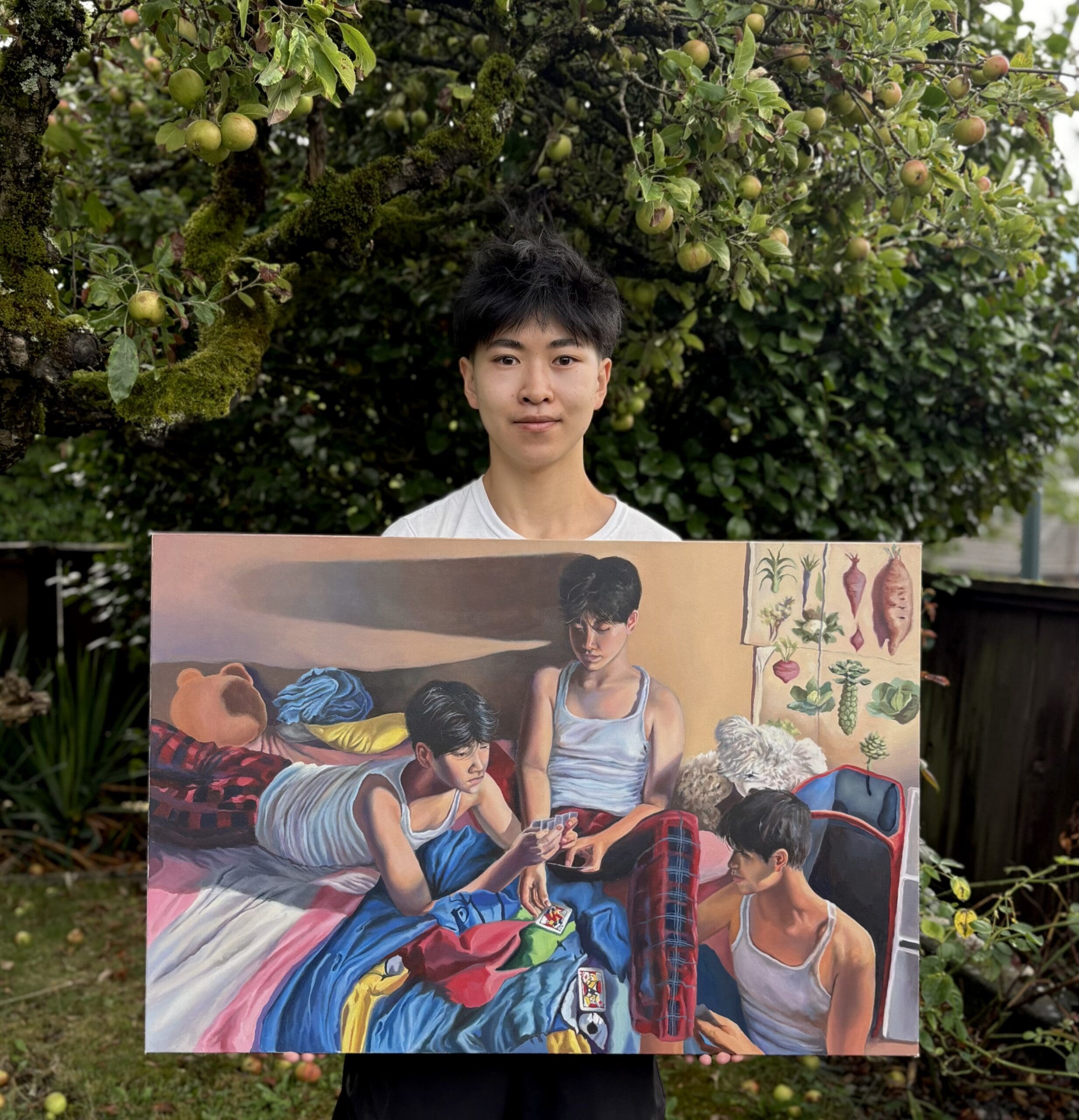
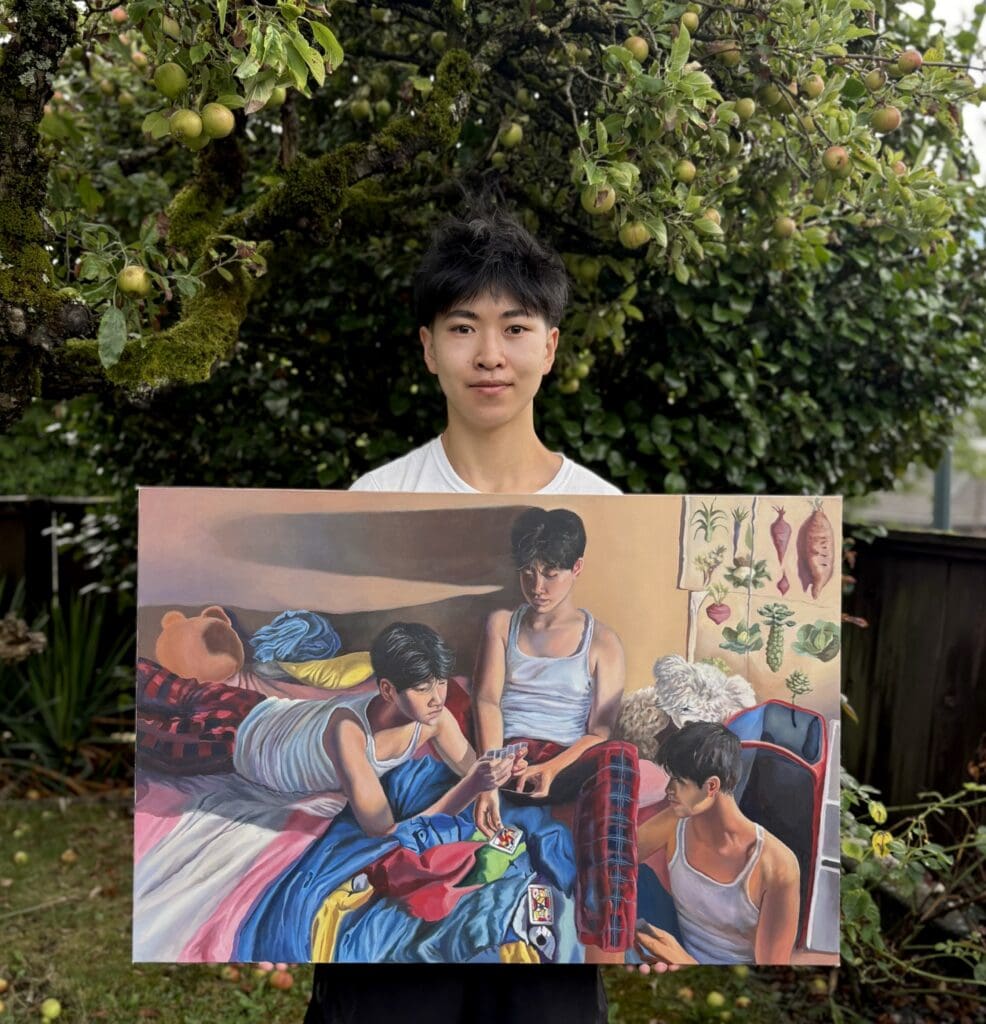
Vancouver Grade 12 student Winston Li turned heads this year by reimagining Alex Colville’s haunting imagery in his winning piece Playing Cards, selected from nearly 500 national entries in the Art Canada Institute’s Student Challenge. Now showcased at Art Toronto 2025, Li’s work is the kind of confident, curious art the Student Challenge aims to spark in classrooms across the country. We sat down with Sara Angel, Founder and Executive Director of the Art Canada Institute, to talk about this year’s winners, why arts education matters more than ever, and how the Challenge is helping Canada’s young artists find their voices. —Noa Nichol
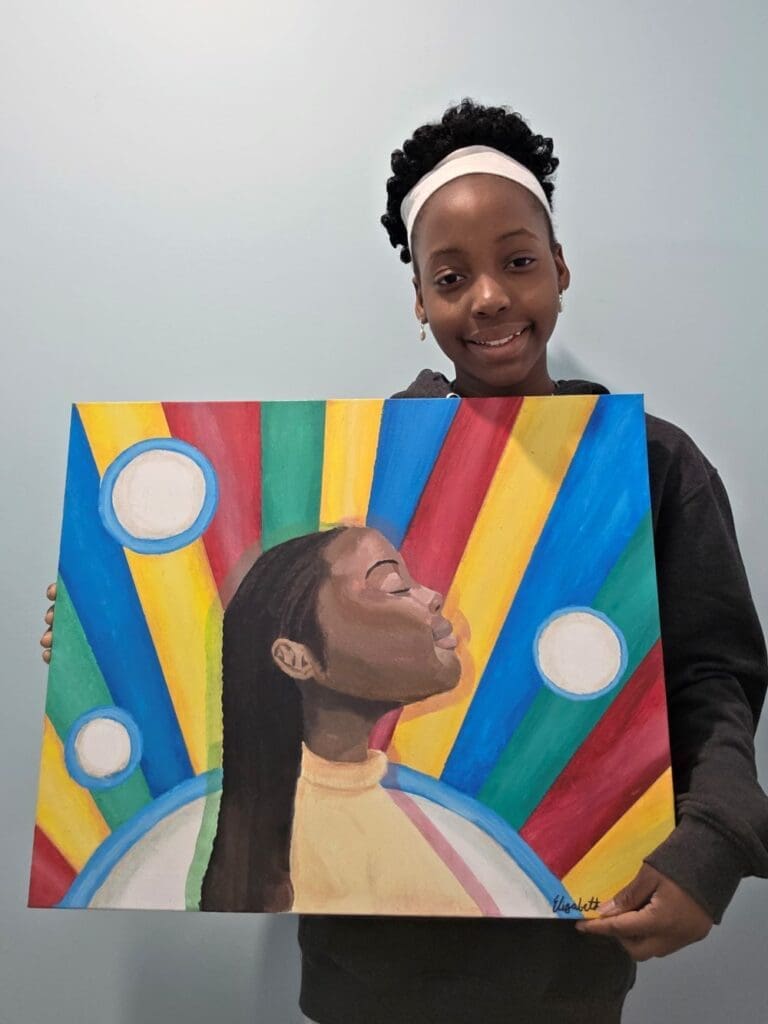
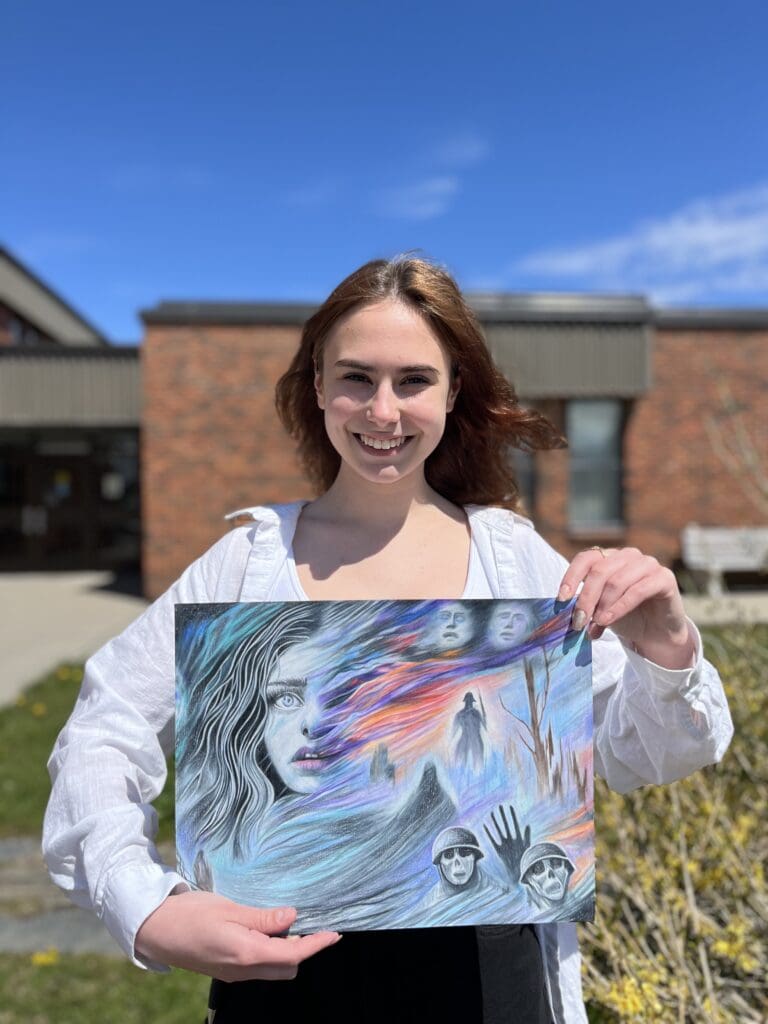
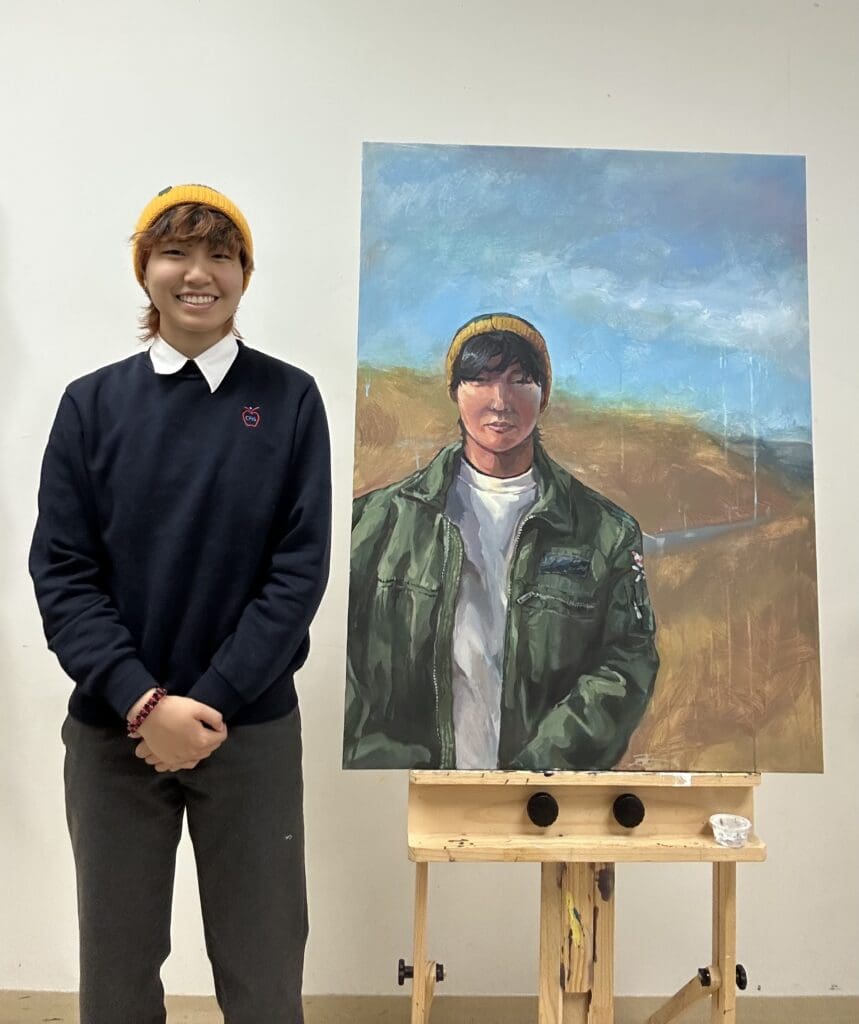
The Student Challenge asks young artists to “converse” with Canada’s masters—how do you see Winston’s work continuing that conversation for a new generation?
What struck us right away was Winston’s confidence. He wasn’t copying Colville, he was engaging him in conversation—responding to the artist’s compositional precision, narrative ambiguity, and emotional restraint with a voice that feels fresh and fearless.
Winston’s work captures the same psychological tension that defines Colville’s paintings—the sense that something significant is about to happen, or has just happened—but he reframes that tension through a contemporary lens. His imagery feels cinematic and immediate, drawing from the world around him rather than replicating Colville’s. There’s a quiet intensity to his approach, but also a willingness to experiment, to ask what stillness and suspense might mean today.
That’s exactly what the Student Challenge hopes to spark: reinterpretation that renews the language of Canadian art. By encouraging students to look closely and respond creatively to the country’s artistic legacy, the Student Challenge invites new generations to see that art history is a living dialogue that evolves with every fresh perspective.
What surprised you most about the overall quality and themes in this year’s record-breaking nearly 500 submissions?
This is the fifth year of the Canadian Art Inspiration Student Challenge, and every year we are blown away by the passion, imagination, and originality of Canada’s young artists. What began as a way to connect students with our country’s artistic heritage has become a vibrant showcase of emerging talent from across the country.
Each year, the submissions reveal something remarkable: we’re looking at a snapshot of the next generation of Canadian artists—students who are not only technically skilled but also deeply thoughtful about the world around them. Their artworks speak to pressing issues such as identity, environment, community, and belonging, showing that art continues to be a powerful way to process and reimagine our shared experiences.
The Student Challenge is meant to be a catalyst for students to discover and appreciate art in Canada. Whether they’re sketching, painting, sculpting, or experimenting with digital media, the students learn that art is a tool for exploration and expression.
Ultimately, the Challenge reminds us that the future of Canadian art is in good hands. These students aren’t just learning from the past—they’re shaping the future. When classrooms have access to the right tools and inspiration the results are extraordinary.
How does the Challenge’s bilingual, classroom-ready approach change the way teachers introduce Canadian art history to teens?
It gives teachers real tools to inspire their students to get excited about Canadian art. By offering accessible, bilingual materials that connect directly to curriculum goals, the Student Challenge helps teachers bring art history off the page and into the lived experience of their students. Whether it’s through the Student Challenge, teacher resource guides, or the Art Canada Institute’s free online art books, Canadian art becomes something that sparks curiosity, creativity, and critical thinking.
Teachers across the country have told us that the Challenge transforms the way their classes engage with art. Instead of memorizing the names of artists or the titles of artworks, students begin to see themselves as part of a larger story: one that includes artists from diverse backgrounds, communities, and regions who shaped—and continue to shape—how we see Canada. The bilingual nature of the program ensures that this learning is inclusive and accessible, opening doors for both English and French classrooms to participate equally in national conversations about culture and identity.
Most importantly, it gets students genuinely excited about learning who Canada’s artists are and what they represent. When teens realize that art can reflect their own experiences—rural or urban, contemporary or traditional—they respond with enthusiasm and pride. The Challenge becomes more than an assignment; it’s an invitation to look at Canada’s art, and themselves, in a new light.
Art Toronto is an intense, grown-up space. What do you hope student winners like Winston feel when their work hangs alongside professional galleries at the fair?
We hope they feel pride and belonging. Standing among professionals at Canada’s leading art fair sends a powerful message: that their ideas, perspectives, and creativity have a place in the national conversation about art. Art Toronto can be overwhelming, but it’s also a moment of recognition and validation that their voices matter and their creativity enriches how we think about Canadian art today.
For students who want to pursue a professional career as an artist, the experience introduces them to the ecosystem that is the Canadian art world: art isn’t just something to study in school, it’s something they are already helping to shape. To stand in that space, see their work hanging alongside professional galleries, and realize, I belong here—that’s a transformative feeling. It’s the kind of moment that can ignite a lifelong connection to art, both as creators and as cultural citizens who see themselves reflected in Canada’s evolving artistic story.
Winston chose psychological tension as his lens—are you seeing more students tackle difficult moods and stories, rather than pretty or literal subjects?
More and more, we’re seeing students use their art to explore complex emotions and themes that resonate today. Students like Winston are drawn to Canadian art that challenges them to think deeply and to translate feelings like uncertainty, isolation, and resilience into visual form. This shift provides a fascinating lens on the challenges this generation faces as they come of age in a world shaped by social upheaval, climate anxiety, digital saturation, and questions of identity and belonging. Their art reflects both personal introspection and collective experience; it captures what it feels like to navigate an era defined by rapid change and emotional complexity.
We’ve seen pieces that are moody, symbolic, and layered with meaning—images that might be unsettling or ambiguous but are also deeply sincere. That’s the most exciting part: students are realizing that art doesn’t have to comfort or decorate; it can question, reveal, and even unsettle. It’s that emotional honesty and willingness to engage with discomfort that make their work feel so vital, and it’s exactly the kind of artistic courage the Challenge hopes to nurture.
Can you share a behind-the-scenes moment from the jury process—one decision or conversation that stuck with you?
Each year, ACI brings together an inspiring mix of professional voices from across Canada’s art community—artists, curators, and educators who are passionate about nurturing young talent. Past jurors have included practicing artists such as Ken Lum, Edward Burtynsky, and Karen Tam, and curators such as Sarah Milroy (McMichael Canadian Art Collection) and Emma Hassencahl-Perley (Beaverbook Art Gallery). Their diverse perspectives make the selection process so rewarding.
What role do programs like the Student Challenge play in expanding whose stories and styles become part of Canada’s visual canon?
They open the door. Because the Challenge is national, free, and bilingual, it reaches classrooms and communities that might otherwise be left out. It gives every student, no matter where they live or what resources they have. A chance to add their perspective to Canada’s cultural story.
For young artists watching Winston’s path from classroom entry to national spotlight, what practical advice would you give about turning a school project into a career moment?
Take your creativity seriously, even when you’re starting small. Every major artist began by experimenting in a classroom or sketchbook. Stay curious, keep making, and don’t be afraid to share your work. Opportunities like this one often start as school projects, but they can become defining moments.
Looking ahead, how will the Art Canada Institute build on this momentum—any plans to amplify student work beyond Art Toronto or connect winners with mentors and galleries?
Art Toronto is only the beginning. Our goal is to expand how student creativity is seen, supported, and celebrated year-round. We are exploring ways to feature student work more prominently across ACI’s digital platform, through online exhibitions, social media spotlights, and features in our bilingual education newsletter that reaches teachers across the country.
We’re also looking to strengthen mentorship opportunities for winners of the Student Challenge, for example, by connecting them with professional artists and/or curators who can help them navigate their next steps.
At the same time, we want the Student Challenge to be better known across Canada, not just within the education and art communities. These students’ accomplishments deserve national attention. By sharing their work more broadly we hope to inspire pride and curiosity in audiences who might not yet see themselves as part of the art world.
Ultimately, the Challenge has always been about connection: between students and Canadian art, between classrooms and communities, and between emerging and established creators. As it continues to evolve, we hope it becomes both a celebration of student achievement and a national platform for creative discovery—one that shines a spotlight on the next generation shaping Canada’s cultural future.
share:

November 1st, 2025 at 12:07 am
작지만 확실한 행복, 69티비
잠깐의 여유 시간에 들어가도 충분히 즐거워요.
무료웹툰으로 힐링하고, 명품레플리카로 스타일 감상하고,
해외골프여행으로 상상 속 여행을 떠나보세요.
https://69intv.com