
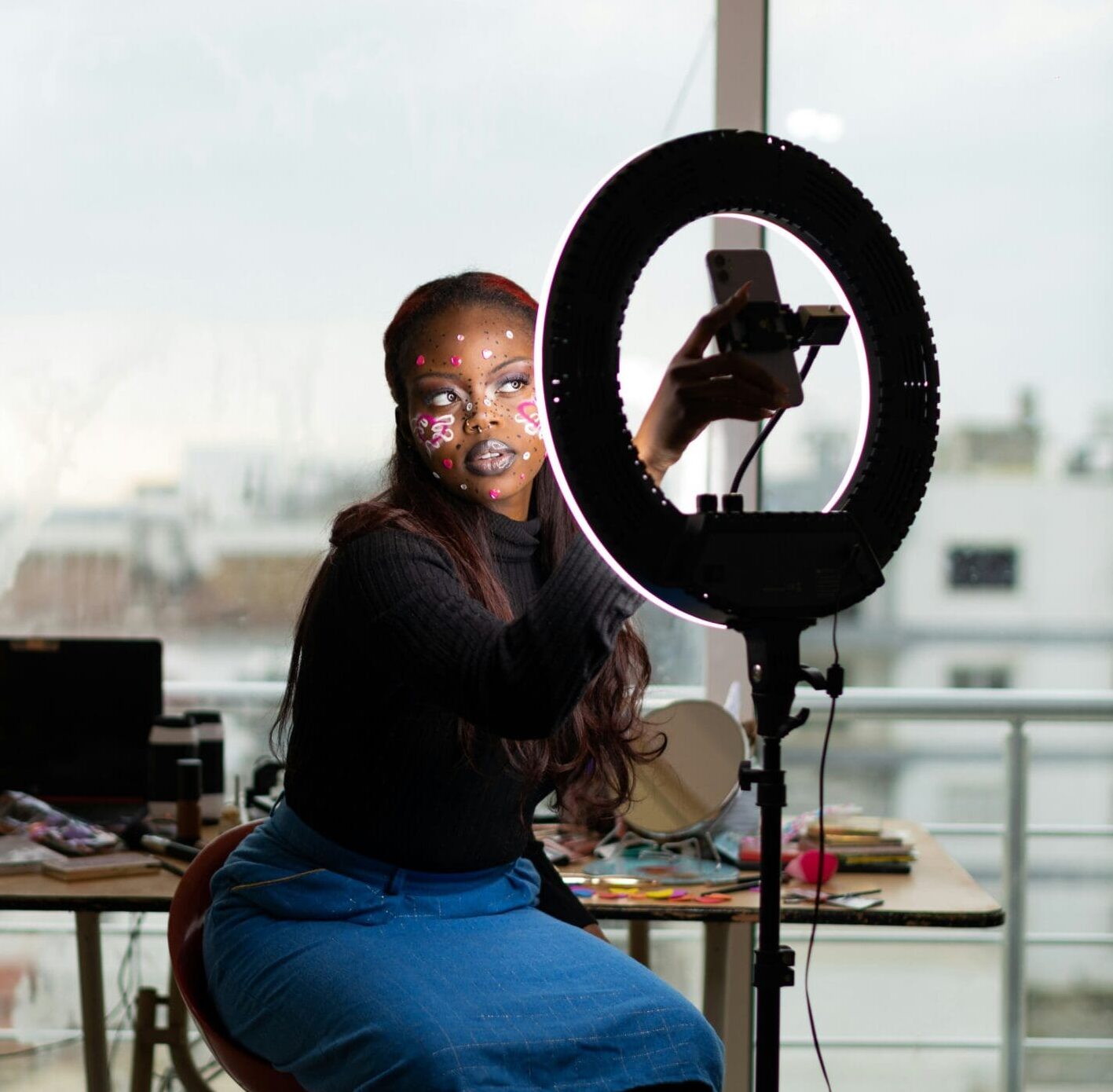
Makeup can make or break on-screen authenticity—and artists have too often been asked to “wing it” when it comes to darker skin tones. The Canadian Film Centre’s Makeup Intensive (running until November 21) is changing that—offering hands-on on-set training, mentorship from industry leaders, and real collaboration opportunities to emerging Black, Indigenous, and racialized makeup artists. Below, find out why representation behind the camera matters as much as in front of it—and how this initiative is building practical pathways into film and TV. —Noa Nichol
Monica Chau, Resident, 2025 CFC Makeup Intensive
I was drawn to the CFC Makeup Intensive because it combined my career goals of working in makeup with my love of watching films. I grew up experimenting with makeup all throughout high school until I started to professionally pursue it 7 years ago. At the same time, I was borrowing movies from the library every Friday night to watch by myself at home and knew I wanted to be involved with filmmaking somehow. One lesson I learned is that oftentimes, less is more. I come from the beauty and fashion makeup world so I have to remember to take a step back and realize I’m not making someone look the most beautiful or glamorous they can be, I’m creating a character.
We had a class with the incredible Sandra Wheatle and she taught us the importance of undertones and various techniques in approaching darker skin tones. It was amazing to watch her cover tattoos so effortlessly while she taught us her tips and tricks. She challenged us by making us get involved with hands-on practice on the models so that we got practical experience and personal advice. It was an honour to learn from her.
I think the biggest barrier would be more of a mental barrier of trying to navigate my place in predominantly white spaces. As a Chinese Canadian, I have always felt a little out of place when I felt I was not working with a diverse team. However, I do think it has made me want to prove myself even more to justify my belonging. This program has made me realize that there is still so much work to be done to diversify the industry, but I know I am not alone in sharing this sentiment and that gives me comfort in knowing that.
I loved working on the shoot for “Now Cry” because I felt that the makeup team and the director really worked on story telling through the makeup in a collaborative way. I got to practice makeup techniques that I learned in school that I have not had the chance to use yet in real life like painting on swollen, red puffy eyes and creating tears. Across all the shoots so far, I have learned the most just from being on set – learning how the shoot days work and how every person’s roles make it all possible.
My advice would be to get as much practice as you can get on all different ethnicities, skin colours, skin types, and ages as you can. Since working on clients in a retail space for several years, this type of practice has been the most valuable because I see all kinds of people with different features and have learned how to approach every single person differently. Additionally, working with all types of personalities has prepared me for the realities of working on set as making a film is such a collaborative effort. Challenging yourself to do something you are scared of or are not comfortable with is the most rewarding learning experience once you have done it!
Jessica Carter, Make-up artist, Mentor, 2025 CFC Makeup Intensive
My inspiration is to help to give what I didn’t always have as a going artist. Someone that can answer questions about how to navigate a career and what goes into being a good artist but also a strong, resilient person that can withstand the pressures of this industry.
I encourage people to look around at their surroundings. Every tree is different, every plant and each one is beautiful in its uniqueness. Being able to do everyone’s makeup is more that just matching skin, it’s social justice, it’s about equity. I really get participants to learn and understand colour theory, keep practising on people that don’t look like you!
I recall having some amazing products on set, it was a show with a predominantly Black cast. The makeup artist who I was working with refused to try them because in her mind they would be very heavy. The makeup that she was doing the cast looked grey. She came to me asking for help and I was finally able to help her see that deeply melanated skin didn’t need to be plastered with makeup and hidden. That she needed to address her biases towards skin tones and products. In the end she tried the products I recommend and was very happy with better results!
We need more paid mentorship and outreach. And we need to ensure that when a BIPOC actor expresses concern about their makeup or hair that they are met with compasión and the willingness to actívely solve the issue. I think that when producers hire, take a look around, does your crew reflect Toronto? Also be diligente in researching the artist you hire. Ask for references and confirm who actually did the BIPOC cast, it’s not always the HOD. Be conscious of the possibility that Black people’s hair may take a little more time to process. Build it into the callsheet, without issue.
share:

November 16th, 2025 at 5:44 am
Thank You
November 16th, 2025 at 5:45 am
Good article and useful information