
I wasted three years and thousands of dollars before figuring out why coffee tables matter so damn much. They’re not just places to put your beer – they’re the actual center of how a living room works.
After ditching my old cluttered IKEA monstrosity for something sleek and simple, my whole apartment suddenly made sense. Not just looks-wise either. The way I used the room completely changed.
This whole experience sent me down a rabbit hole researching minimalist coffee table bases and what actually deserves precious real estate in our homes.
The Architectural Foundation
The best minimalist coffee tables work like mini architectural statements. Clean lines, real materials, precise proportions – stuff that catches your eye without screaming for attention. I’ve tried tables with all kinds of geometric bases.
Hairpin legs looked cool but wobbled. X-frames collected dust in weird places. My current table uses a matte black steel frame that makes the wooden top look like it’s floating.
When shopping for a base, I learned to check how it handles light. Does it cast cool shadows? Does it look good from every angle? My first “minimalist” table looked great head-on but terrible from the couch – lesson learned.
Curated Technology as Functional Art
Technology doesn’t have to ugly up your carefully designed space. While checking desktop vaporizer reviews for my partner’s birthday last month, I stumbled across designs that actually look like sculptures.
The higher-end models use walnut, brushed aluminum, and glass that fit right in with nice furniture. Nothing like the plastic eyesores from five years ago. These new ones follow the same design principles as fancy Scandinavian furniture.
Same with wireless chargers and small speakers – they finally come in versions that don’t look like they belong in a 14-year-old gamer’s bedroom. The trick is finding tech that does its job while adding to your room’s vibe instead of fighting against it.
Vessels That Frame Empty Space
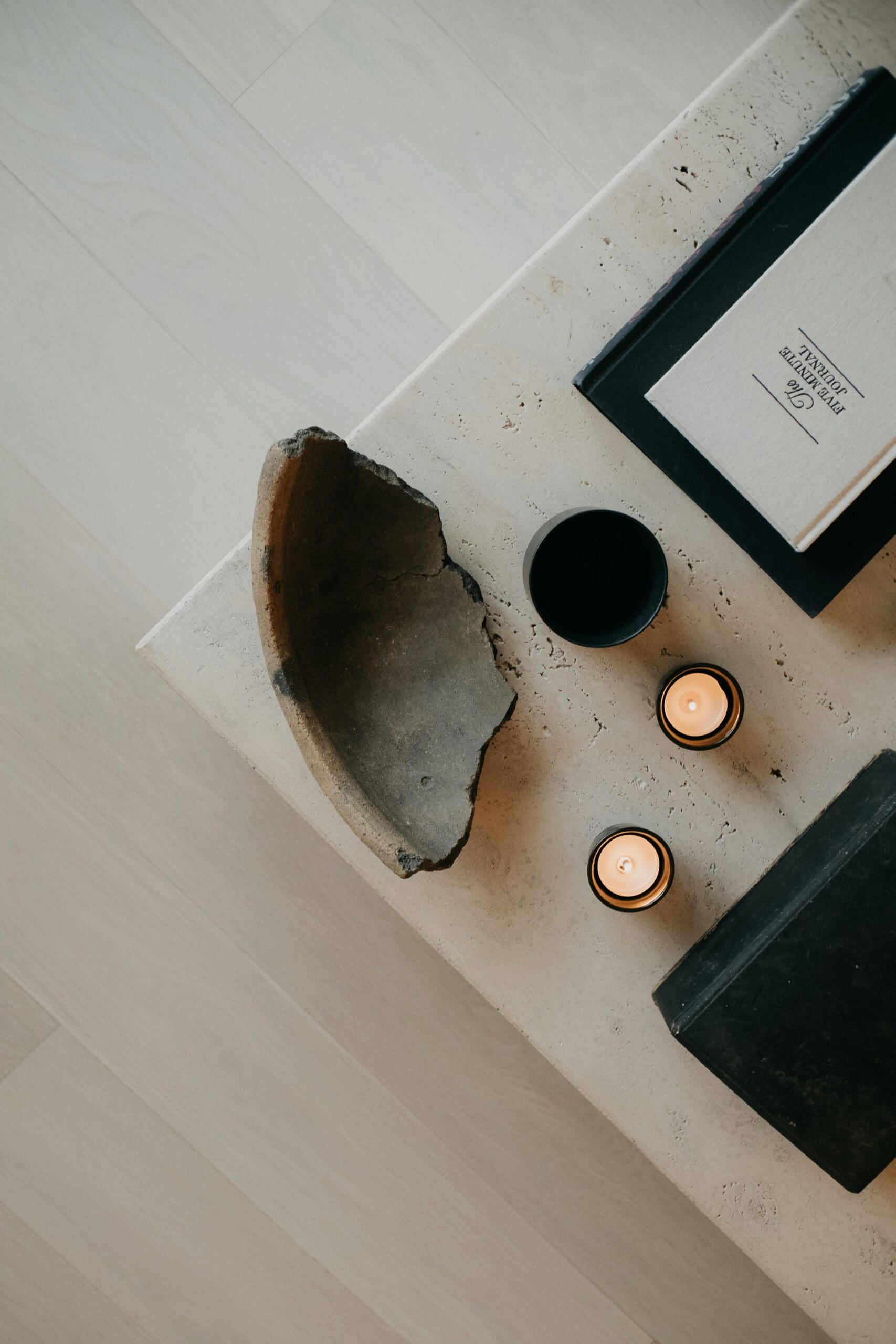
Minimalist design treats empty space as important as physical objects. The containers on your coffee table should respect this balance. After tons of trial and error, I’ve found that groups of three items at different heights work best. Right now I’ve got a tall skinny ceramic vase, a medium brass bowl, and a low concrete planter.
The empty space between them creates this visual conversation that’s just as important as the objects themselves. I look for vessels with simple shapes and subtle textures rather than busy patterns. Materials that age well make static objects feel alive.
My brass bowl started shiny but developed this amazing patina that changes depending on the light. The vessels themselves don’t need extra decoration – their shape and material already do the heavy lifting.
Books as Horizontal Architecture
Books are coffee table classics for good reason. They create horizontal planes that balance out vertical stuff in your arrangement. The minimalist approach isn’t about ditching books but being super selective. I rotate between three to five volumes that match what I’m into that season.
The key is picking books whose spines, covers, and sizes actually contribute to your overall aesthetic. Right now I’ve got this book on Japanese concrete buildings, a collection of black and white landscape photos, and a thin volume of nature poetry.
These books beg to be picked up while still looking cohesive together. Their different sizes create rhythm across the table without looking like a messy stack.
Natural Elements That Introduce Movement
Even hardcore minimalist spaces need something organic to feel alive. A single architectural plant brings movement to your arrangement. I killed three fiddle leaf figs before realizing sculptural succulents and small bonsai trees work better for minimalist setups.
Plants with strong structural qualities rather than bushy foliage maintain clean lines while softening the overall vibe. Similarly, a small stone or piece of driftwood with interesting texture creates a focal point that connects your sterile interior to the natural world.
These elements should be chosen for their shape and texture rather than sentimental value. Their natural irregularity provides contrast to the precise geometry of minimalist furniture without messing up the underlying order.
Conclusion
The minimalist coffee table isn’t about emptiness but intentional curation. By picking a strong architectural base and carefully arranging a few objects, you create a focal point that elevates your entire living space. This approach transforms the coffee table from a junk collector into a dynamic display that evolves with your interests.
The discipline of maintaining this minimalist approach creates unexpected benefits beyond just looking good. My carefully considered coffee table arrangement has influenced decisions throughout my home, making me think twice before bringing in new stuff.
It’s become this daily practice of curation that extends to other parts of my life. The objects we put in the center of our living spaces reflect and shape our relationship with all our possessions.
share:

Be the first to comment