
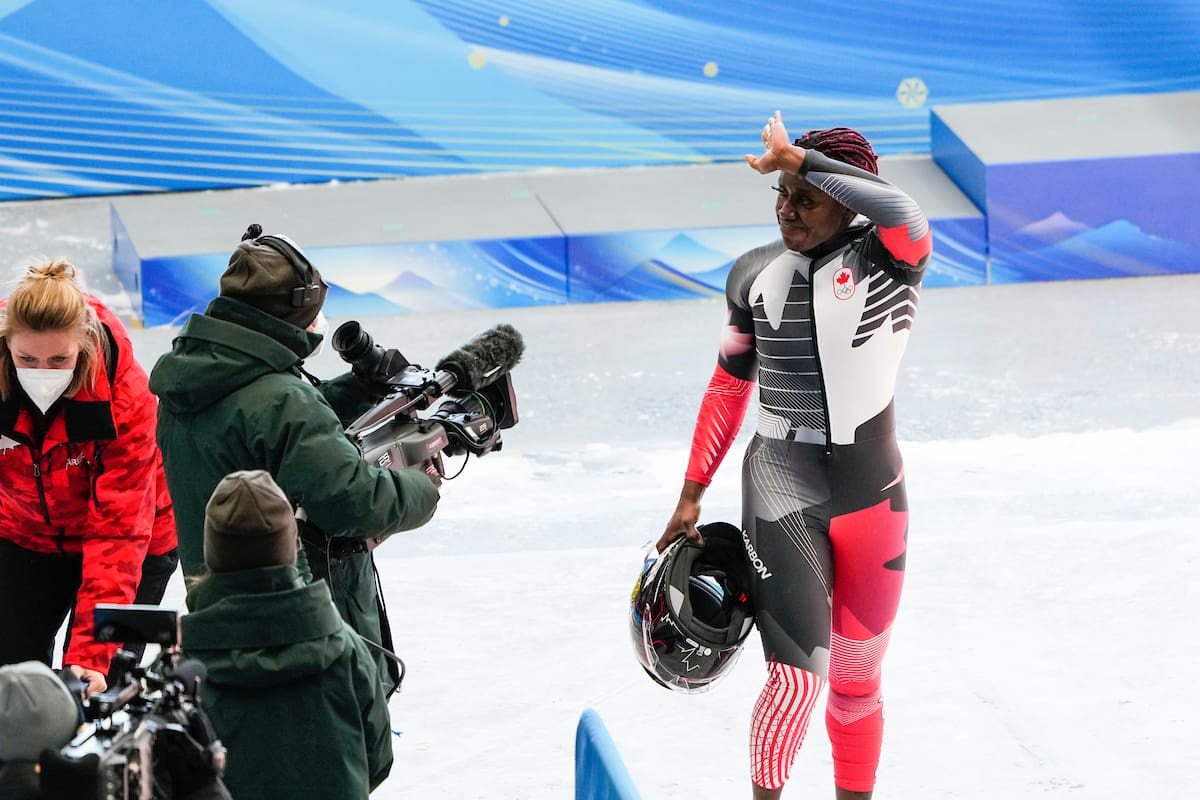
As the world gears up for the Milano Cortina 2026 Olympic Winter Games, Team Canada is marking the 100-day countdown with a powerful new chapter of its Brave is Unbeatable campaign—spotlighting one of Canada’s most inspiring Olympians. Cynthia Appiah, a force in monobob with seven World Cup medals and a top-four finish at this year’s World Championships, lends her voice and her story to a campaign narrated by Andre De Grasse, celebrating courage in all its forms. We sat down with Cynthia to talk about her Olympic journey, what bravery means in sport, and how she’s preparing to charge into the next Games with determination, heart, and unstoppable momentum. —Noa Nichol
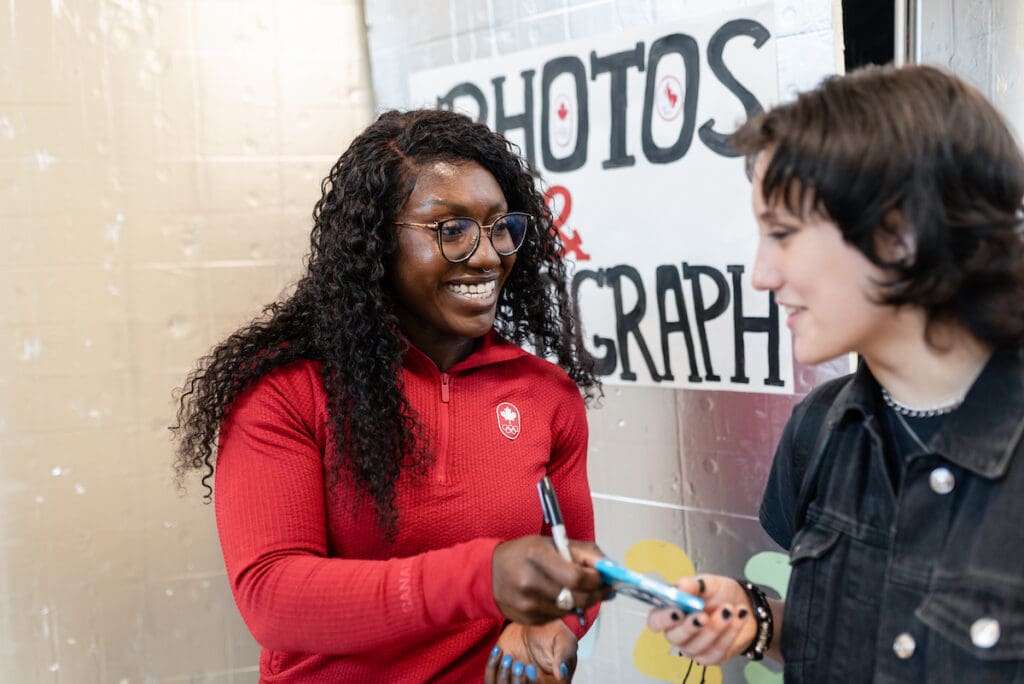
In the Brave is Unbeatable film you talk about bravery—what’s one moment on the track that felt terrifying in the moment but later became your proudest “brave” memory?
My first World Championships as a pilot was a bunch of emotions. I was crashing almost every run and on the cusp of not qualifying for the competition. I did end up making it but I was ball of nerves, convinced that I would crash out in the race again. But I had a group of supporters who believed in me (namely my coaches and friends) and that gave me the confidence to take on the track. I ended up finishing in 5th place and had so much belief in my abilities as a new driver
Monobob is such an intense, single-operator event—what’s your go-to ritual or mantra in the moments between the start gate and the finish line?
Right before I start my run, I tell myself: “Focus. Execute. Confidence.” Monobob is lonely in the best way—you’re the engine, the pilot, the decision-maker. So I do one deep breath, relax my shoulders, and commit to the run like it’s the only one that exists.
With 100 days to Milano Cortina, how do you balance pushing fitness gains with avoiding burnout—any guilty-pleasure recovery treats you swear by?
I’m a big believer in structured intensity—push hard when it’s time to push, then actually rest when it’s time to recover. Sleep is my number one tool, and I guard it religiously. I also have a bunch of recovery tools like a massager, my Normatec, massage gun, red light therapy belt, etc.
And guilty pleasure? I have a terribly bad sweet tooth. I love all kinds of treat. Donuts, candy, bubble tea, etc. If recovery included a loyalty punch card, I’d be elite status.
Tell us about the weirdest or most memorable thing you’ve ever done to fine-tune sled setup or aerodynamics—did it actually work?
Bobsledders are basically part-time mechanics and scientists. I’ve definitely spent an embarrassing amount of time lying on the floor beside my sled, angling my head around like: “If I were the air, where would I go?”
I’ve taped things, untaped things, tested tiny changes in runner polish—you name it. Did all of it work? Honestly… sometimes the placebo is half the performance. Also never doubt the power of duct tape!
Andre De Grasse narrates your chapter in the campaign—what was it like hearing your story told by another Canadian Olympic superstar?
Andre is such a force in Canadian sport, so hearing my story in his voice was surreal. It reminded me how interconnected we all are as athletes—we come from different disciplines, but we share the same grit, pressure, hope, and joy. Having him narrate my journey felt like a nod of respect that I’ll carry with me for a long time.
If you had to design a “Cynthia Appiah” pre-race playlist or snack box, what three things absolutely must be on it?
Playlist: A mix of powerful, high-energy artists: Lady Gaga, “Clarity,” Sabrina Carpenter, Fefe Dobson, Coleman Hell — anything that gets my adrenaline going and puts me in race-mode. And definitely some Afrobeats.
Snack box:
- A protein bar.
- Trail mix.
- Sour candy (non-negotiable).
- A banana because my coach will ask if I ate something “responsible.”
Young athletes watch Olympians and dream—what’s one practical piece of advice you wish someone had told you when you were starting out?
Don’t wait for perfection before you take the leap. Start messy. Learn on the fly. You build belief by doing, not by waiting until you feel “ready.” And surround yourself with people who push you but also remind you to celebrate the small wins.
Milano Cortina is a new chapter—what’s one quirky thing you’re packing in your suitcase that has nothing to do with training but everything to do with feeling at home?
Not necessarily quirky but moccasins. I bought them from a small Indigenous company, are uniquely handmade and quintessentially Canadian. As I spend more and more time in Europe for bobsleigh, nothing reminds me more of the comforts of home than my moccasins
share:

Be the first to comment