
Just mentioning a knitfluencer can spark excitement. “Just look how cute,” my friend said, pointing excitedly at an Instagram post of a speedo-clad Tom Daley. The British Olympic-medal diver, and yes, knitter, has parlayed 3.8 million Instagram followers into a show, Game of Wool: Britain’s Best Knitter, that’s basically The Great British Bake-Off, but knitting.

Knitting—as a hobby, trending fashion, and platform—has clearly exited your grandmother’s crafting circle, and stitched and purled its way into mainstream fashion.
“In an age where you can buy literally anything, I think to be able to come back to something tangible like making things yourself is really special,” says Elise Michie a knitter and the founder of Sunday Fibre Co., an online shop for her hand-dyed yarn. Her Instagram page of the same name presents her beautiful yarns, all creatively packaged into colourways inspired by Wes Anderson movies, The Beatles and the 1970s.
Trends are fleeting, but knitting’s popularity has risen steadily. The pandemic provided a bump at a time when people were looking for meaningful ways to while away the hours. “It was kind of an underground community,” says Michie. “But when people were at home and wanting to make their own sourdough bread and to learn how to knit, this is when my business exploded.”
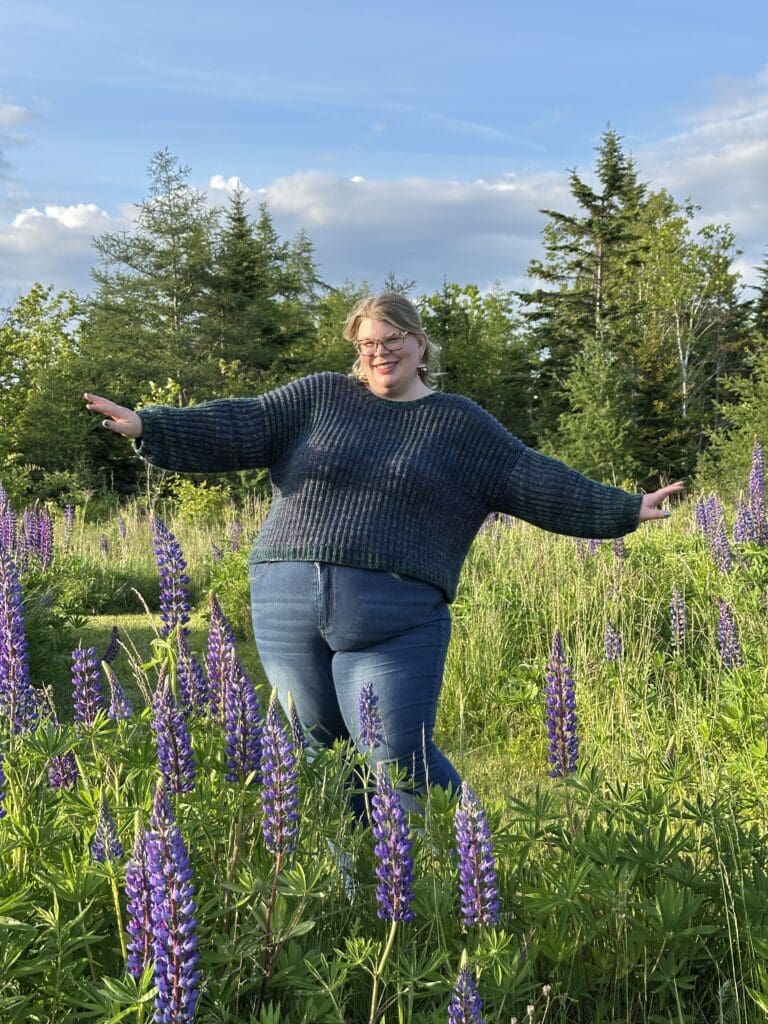
For others, it’s more than a way to keep idle hands busy—it’s a way to create representation. Plus-size knitter Whitney Swinimer was inspired to knit by a vest in The Hunger Games movie but soon found a larger purpose. “I came to knitting as a way of making clothing that would fit in my body, rather than having to make my body fit the clothing that I bought from stores,” she says. “If I wanted to see more plus-size representation, I had to do it myself. And over time, it started to build.”
Community is a common theme among the knitters we spoke to—after all, they all exist in the centre of a larger online group. But this solitary craft has always held a sense of community for those who assemble both online or in real life.
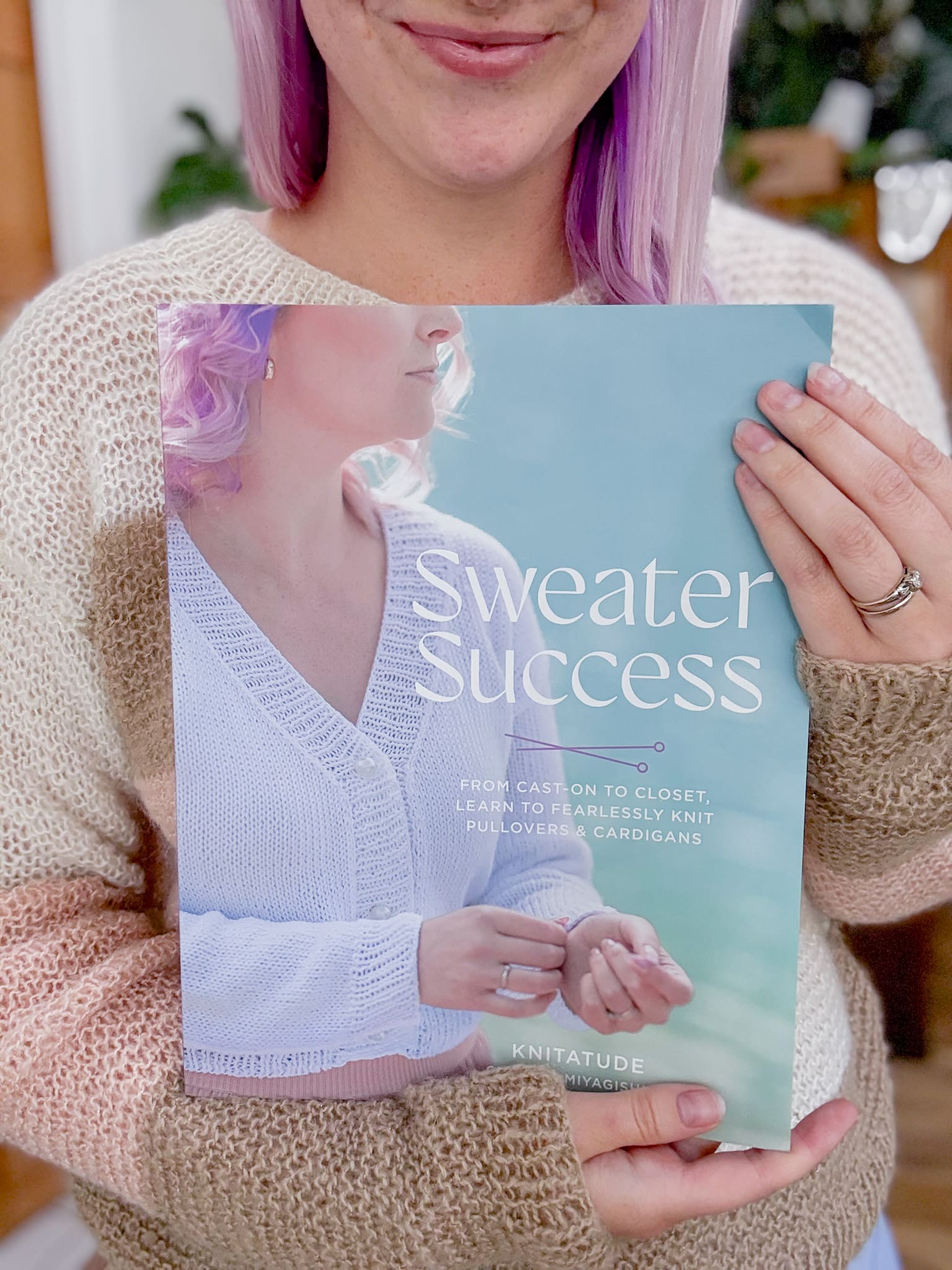
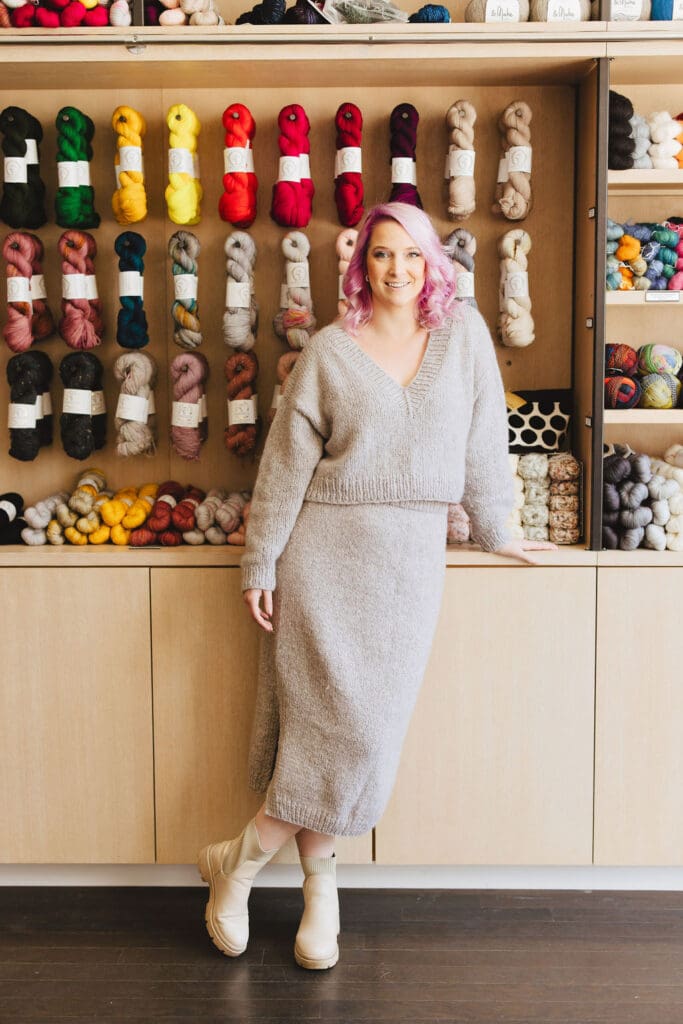
Calgary-based knitter Chantal Miyagishima has nearly a quarter of a million followers on her Instagram @knitatude, but she was still inspired to take her online community into the real world. “I was driving my husband up the wall. He was like, ‘I don’t give a shit about all these yarns,’” she says. So Miyagishima did what any self-respecting knitter would do: “I started up a knit night.”
These groups go by many names, such as Stitch ’n’ Bitch, where like-minded fibre artists gather to discuss patterns, snags (literal and figurative), and of course, gossip. “I think people go into crocheting or knitting, and they think that it’s going to be solitary, but social media has brought so many people together,” says Miyagishima.
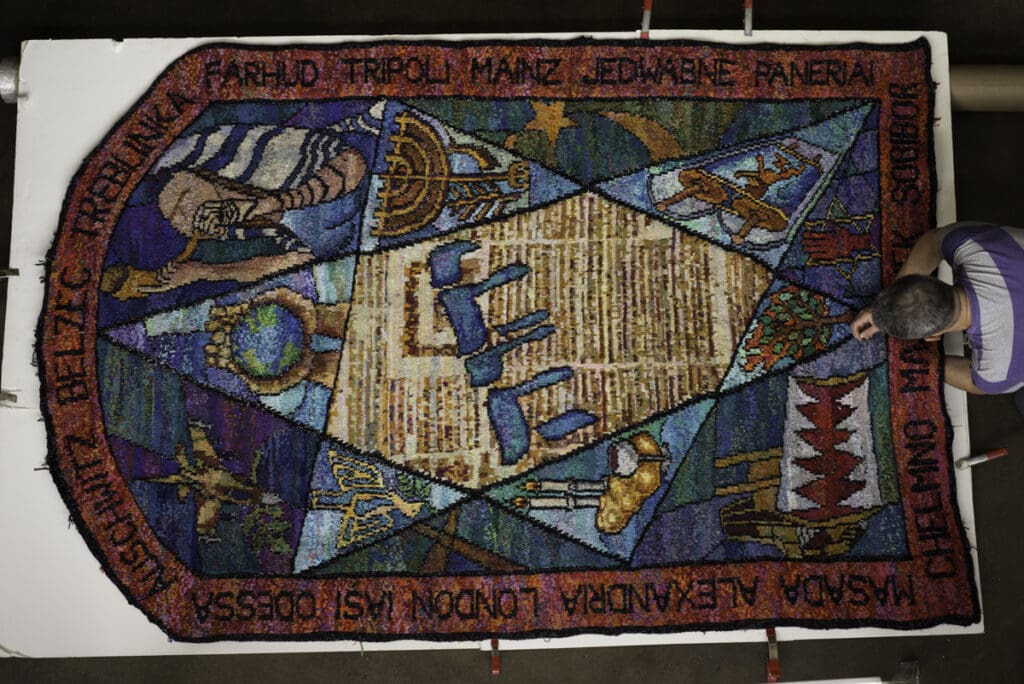
Take Kirk Dunn, for instance. The fibre artist makes his work a point of connection, while challenging the ideas of what knitting is for—and can accomplish. “I don’t just knit to wear or look at it. I’m interested in trying to say something,” he says. “I’ve heard craft described as a gentle art of protest.” His projects include a large-scale fibre art project, Stitched Glass, that connects the three Abrahamic faiths through “stained glass” panels. The project took 15 years, inspiring his play The Knitting Pilgrim about faith, failure and the artist experience.
Dunn is also a skilled “yarn bomber,” a form of fibre graffiti, where public objects like trees and park benches get their own cozy sweater. Sometimes it’s done for fun, other times it’s a statement. “There’s a very, very good one of a tank on display somewhere, and the yarn bombers just covered it in pink yarn.”
In that way, knitting can attempt to change the future, and in other moments look over a shoulder into the past. The Cowichan sweater has been crafted by Coast Salish knitters since the late 19th century and is famous for its quality and unique design. A combination of Coast Salish weaving and European knitting, the iconic pattern features traditional figures like thunderbirds and whales.
Kari McLay is the director of community engagement and fund development at the Victoria Native Friendship Centre (VNFC), and their Instagram @knit_with_purpose highlights the beautiful work of the Coast Salish knitters who keep the craft the alive. “It’s very important to us to not only continue the sweaters themselves as iconic cultural treasures,” says McLay. “It’s a way of life.”
Not to mention trendy. “People from all over the world, the United States, they know them. They recognize them,” says McLay. “We’re selling them online and shipping them to socialites and celebrities in New York City.”
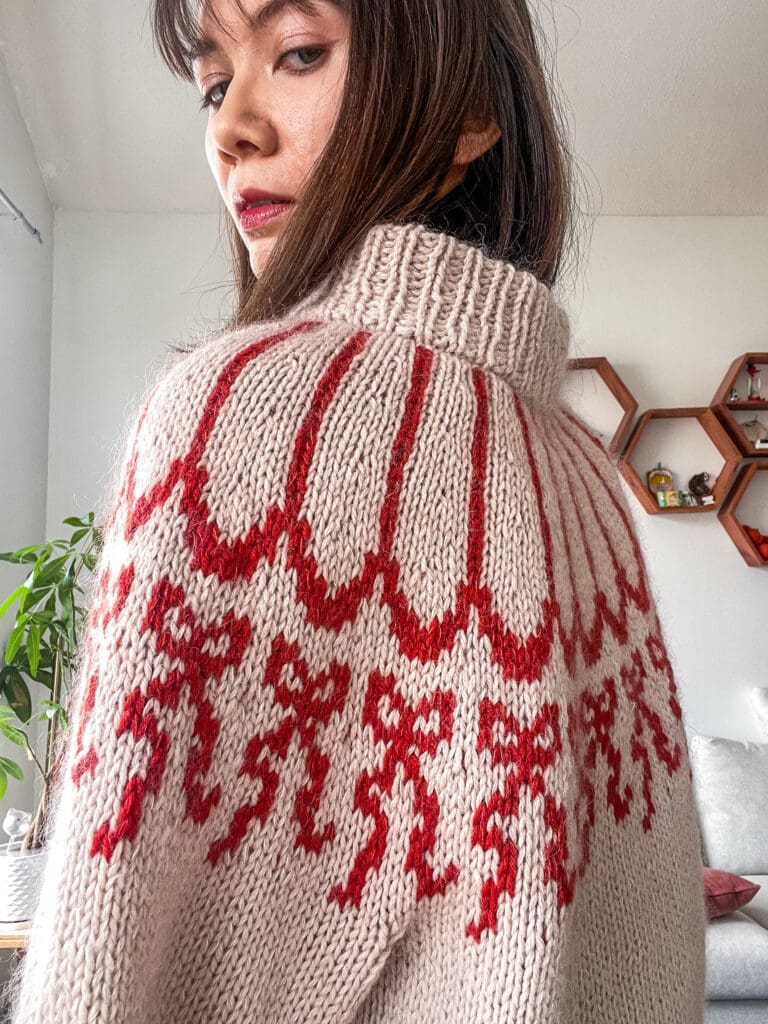
Knits have been a fixture of mainstream style for years now, and they’re not going anywhere. Arielle Berze of @thechicnarrative is popular for her handmade fashions and styling. By email she predicted that “florals and colourwork” are trending, alongside “more textured and intricate patterns.” She notes that “argyle and jeweled accents were seen on runways this year, as well as draped knits with scarves attached to cardigans and coats.” But she adds, “I haven’t seen these make it into the knitwear designers’ radars yet.”
But in classic minimalism-maximalism style, two opposing looks have risen to the top: classic Scandinavian knits in neutral colours, and offbeat designs in kaleidoscopic hues.
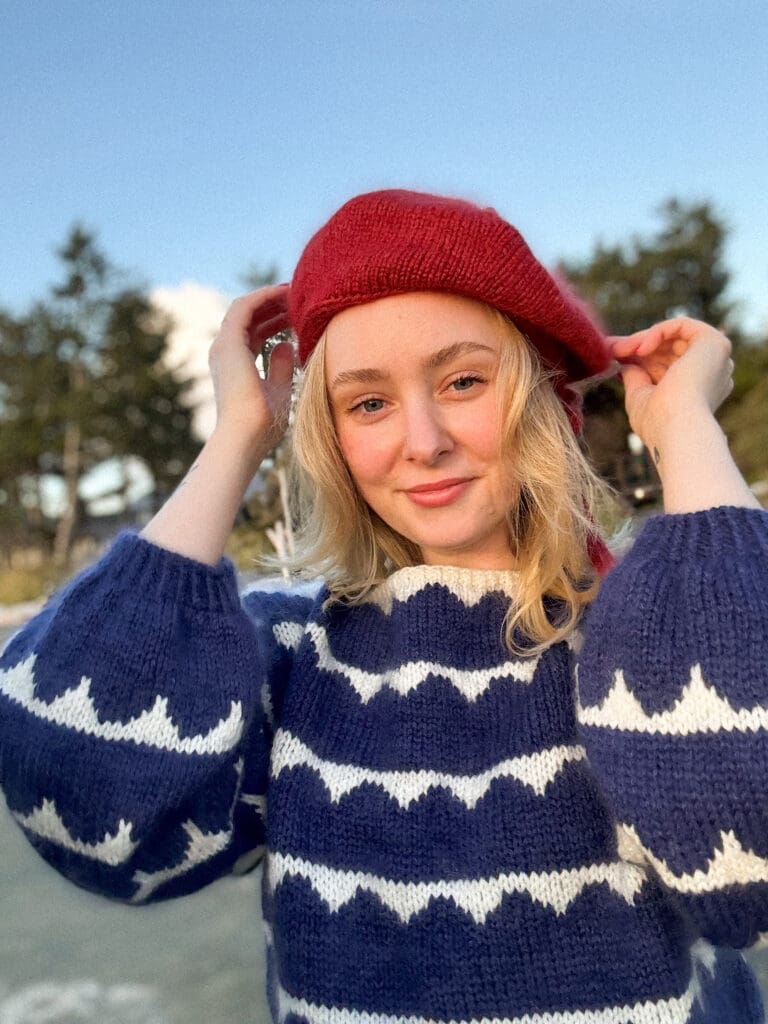
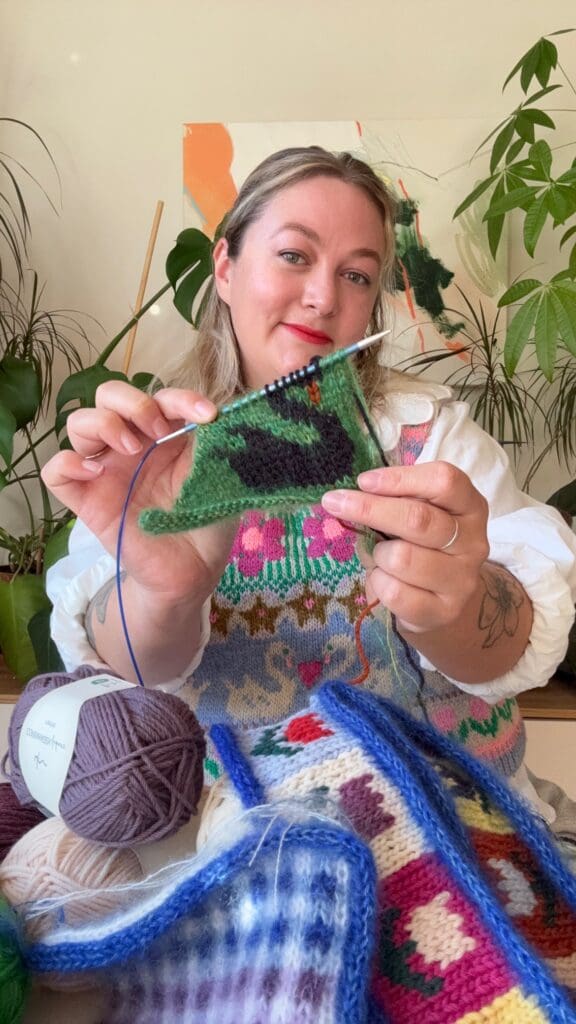
Falling firmly in the latter camp is Erin Guimond, @pickyfemme. Her pieces are full of geometric patterns, animal faces, and blocky florals—sometimes all in the same sweater. “Knitting is a really cool way to make something that no one else could ever have, because it has your hands and your style,” says Guimond. “The trend that I’m seeing is people making things that you could never buy in a store, you could never really dream up, except in your own mind.”
Guimond’s pieces owe their prismatic colourways to her use of scraps and thrifted yarn, dovetailing with larger trends around sustainability and secondhand shopping. “I try really hard to use what I have and not to buy things without intention. And so for me, sustainability is kind of around using what you have as opposed to buying more,” says Guimond. Plus it adds a degree of difficulty she enjoys.
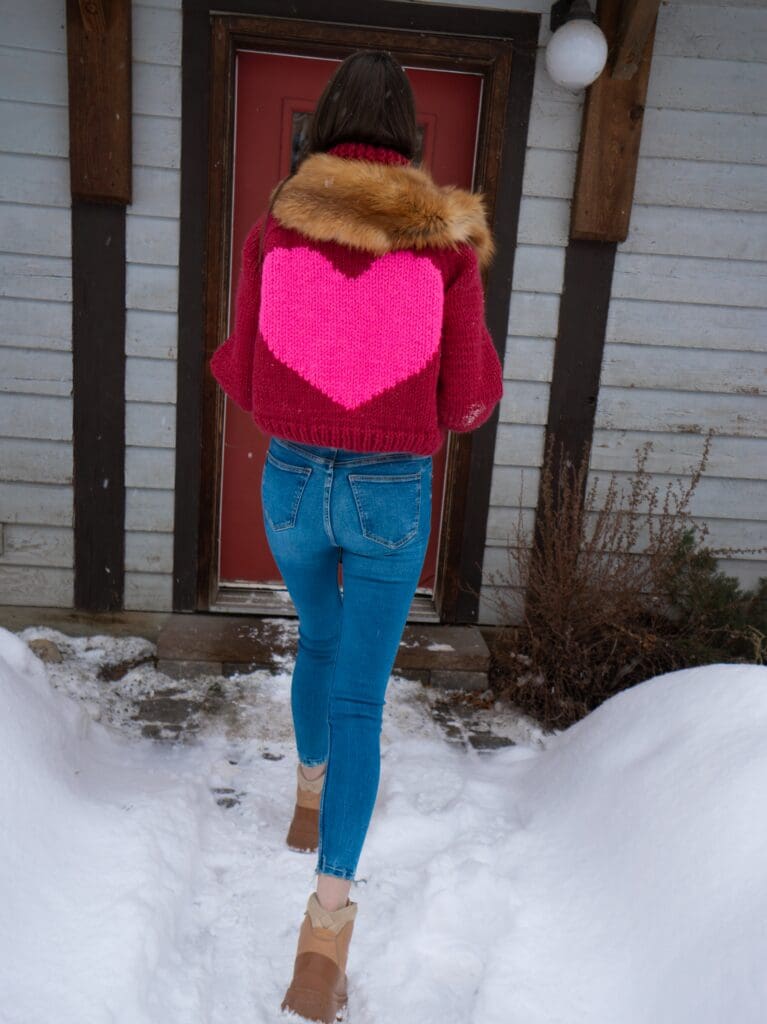
South van der Lee is the president of GOGO Sweaters, a Banff-based company started by her mother in the late seventies. “There’s super chunky, there’s appliques, there’s words and images,” says van der Lee of the fun, off-beat designs. But the No Waste line has a little something extra. They’re made from yarn scraps for pieces studded with rainbow hues. Plus, with the exception of very few sweaters, all are made to order, reducing waste. “It’s not like to be sustainable then you’re sacrificing the look or design of the item.”
Like all handmade pieces, they’re an heirloom that can be passed down, and in GOGO’s case, the wool is biodegradable. “I would die if someone put a GOGO in a landfill,” she says. “But honestly, if that happened, it wouldn’t be the worst thing.”
She’s not alone. “I think, secretly, every single knitter is against fast fashion, whether they realize it or not,” says Miyagishima. “And there’s really nothing like that feeling of like popping your head through the top of the sweater that you’ve created yourself, which is such a beautiful moment.”
share:

Be the first to comment