
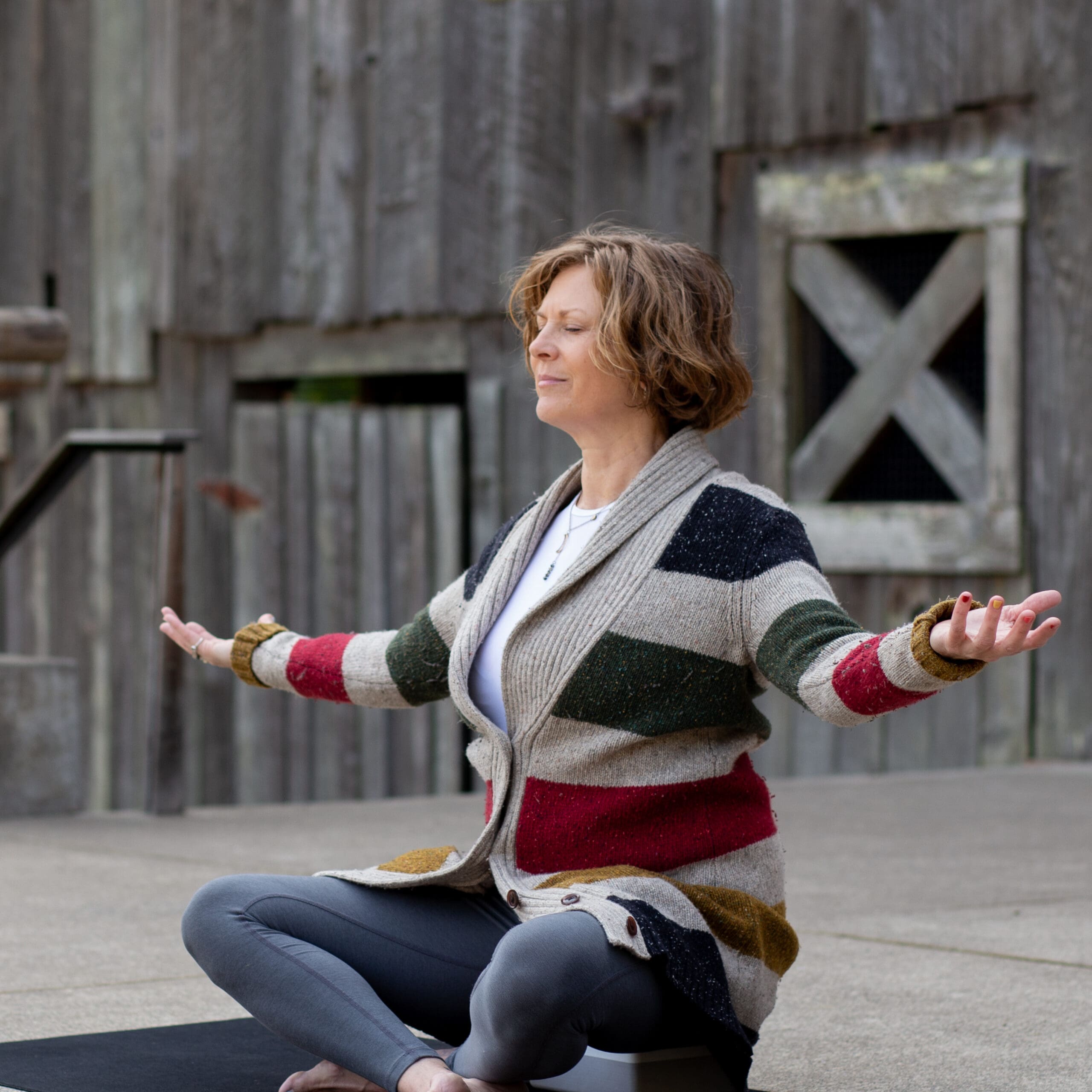
Even when life looks full on the outside, many of us quietly carry stress, burnout, and a sense of disconnection. In this heartfelt Q&A, we sit down with wellness coach, author, retreat founder, and ecotherapy guide Carrie Asby to explore how nature, self-love, and simple daily rituals can gently restore our nervous systems—and help us return to who we truly are. With a philosophy rooted in presence over perfection, Carrie is redefining what it means to heal, lead, and live in alignment in a fast-moving world. —Noa Nichol
1. You talk a lot about “rituals, not routines.” What’s the difference — and why can a two-minute ritual shift an entire day?
A routine is something you do automatically. A ritual is something you do with intention — and intention is what changes your internal state. Even a two-minute ritual interrupts autopilot and tells your nervous system, “You’re safe enough to slow down.”
When someone begins their morning with a simple practice — feeling their breath, stepping outside, placing a hand on their heart — they’re not just starting the day.
They’re telling their body, “I’m here. I’m listening. I matter.”
Rituals anchor you. Routines simply move you forward.
2. Ecotherapy sounds dreamy, but also mysterious. What’s one simple, everyday way someone can practice “nature as medicine” without leaving their neighborhood?
Touch one living thing every day.
It could be a tree on your block, a houseplant, a blade of grass, or even sunlight on your skin. Slowing down to actually notice nature — its texture, temperature, shape, or scent — immediately activates your parasympathetic nervous system.
Nature as medicine isn’t about escaping to the mountains.
It’s about remembering that the Earth is always right beside you.
3. You say self-love is activism. That’s bold — can you walk us through how caring for ourselves actually ripples outward into our families, workplaces, and communities?
When we take care of ourselves, we change the way we show up. We communicate with more patience. We set healthier boundaries. We make decisions from clarity rather than reactivity.
Self-love creates emotional steadiness — and steady people make steady families, steady teams, and steadier communities. It’s not self-indulgence. It’s responsibility.
A regulated, self-loving person creates fewer ripples of harm and more ripples of compassion. That’s activism on a human scale.
4. Many people feel disconnected even when life looks good on paper. What’s the first gentle step someone can take when they feel “off,” but can’t put their finger on why?
Sit in stillness for one minute and ask, “What’s here right now?” — without judgment.
Not “What’s wrong?”
Not “How do I fix this?”
Just the gentle noticing of what’s present.
Most people sprint past their own inner signals. Slowing down without judging what arises lets the nervous system catch up and intuition speak. When you stop trying to diagnose and simply notice, the real guidance starts to surface.
5. Weather is never perfect — yet nature is your go-to healing tool. How do you help clients embrace the outdoors even when it’s messy, cold, or inconvenient?
I remind clients that nature isn’t supposed to be perfect — and neither are we.
Cold air wakes the senses. Rain softens the mind. Wind clears stagnant energy. Messiness is part of the medicine.
My dad always said, “There is no such thing as poor weather — only being poorly prepared.” He was right. When you dress for the elements, nature becomes far more inviting.
Five minutes outside in “imperfect” weather can shift your state more than an hour indoors trying to calm down. Nature regulates us because it’s real.
6. You’ve studied everything from chakras to ecotherapy to neuroscience. What’s one concept from your training that you wish everyone knew?
That your breath is the quickest, simplest, and most effective way to stay present, calm, and clear.
One breath can settle your nervous system.
One breath can interrupt spiraling thoughts.
One breath can bring you back into your body and out of overwhelm.
Your breath is always available, always free, and always powerful.
7. Your retreats focus on “coming home to yourself.” What does that actually feel like — and how does someone know when they’re inching closer?
It feels like becoming lighter — mentally, emotionally, and energetically. It’s the moment you stop performing and start allowing. You feel freer. More authentic. More like the truest version of yourself.
It shows up in subtle ways: less tension in your body, more honesty in your decisions, a softness in how you speak to yourself. You stop pushing and start listening. You stop abandoning yourself to meet expectations and start choosing what aligns with your truth.
You know you’re getting closer when you feel more at peace — even before anything around you changes.
8. Small rituals can be powerful. What’s one under-one-minute practice people can do today to regulate their nervous system?
Place one hand on your heart, one on your belly, and take a slow breath — in through the nose, out through the mouth — with the exhale longer than the inhale.
That longer release signals safety to your body. The exhale is what naturally lowers your heart rate, creating an immediate sense of calm. And if you let out a soft sigh, it triggers an even deeper letting go. Your tension melts. Your mind clears.
One breath, done well, can start a reset.
9. In your experience, what’s the sneakiest energy-drain people don’t realize is sabotaging their calm — and how do they reclaim it?
One of the sneakiest energy-drains is expectations — the ones we place on ourselves, on others, and on the world around us.
Expectations pull us out of the present moment and into a future that doesn’t exist yet. They create pressure, disappointment, and a constant low-level anxiety that many people don’t realize is coming from the stories they’re holding.
Reclaiming calm starts with letting them go. When people release expectations, they soften into the present — where reality actually lives.
10. Your book is all about mindful morning rituals. But be honest: what’s your morning ritual on the chaotic days when nothing goes as planned?
On chaotic days, I return to the absolute minimum: one breath outside.
I step out the door — no matter how rushed I feel — and let the air touch my skin. Then I take one grounding breath and ask myself for more compassion. That simple pause creates a shift within; transforming negative energy into positive.
Some mornings are messy, but the ritual still works because it’s not about perfection. It’s about presence — and kindness toward yourself when things fall apart.
share:

December 11th, 2025 at 12:22 am
Nhờ GSE mà mình mới biết nhiều chương trình chất lượng cao khi du học Hà Lan. Thông tin bổ ích.
December 11th, 2025 at 2:22 am
thanks
https://www.univ-msila.dz/site/shs-ar/
December 14th, 2025 at 11:42 pm
Nếu mẹ nào thích đồ chơi Montessori hoặc sách vải cho bé thì Cửa hàng mẹ và bé Hà Nội là thiên đường lựa chọn – hàng về liên tục và đa dạng lắm.