
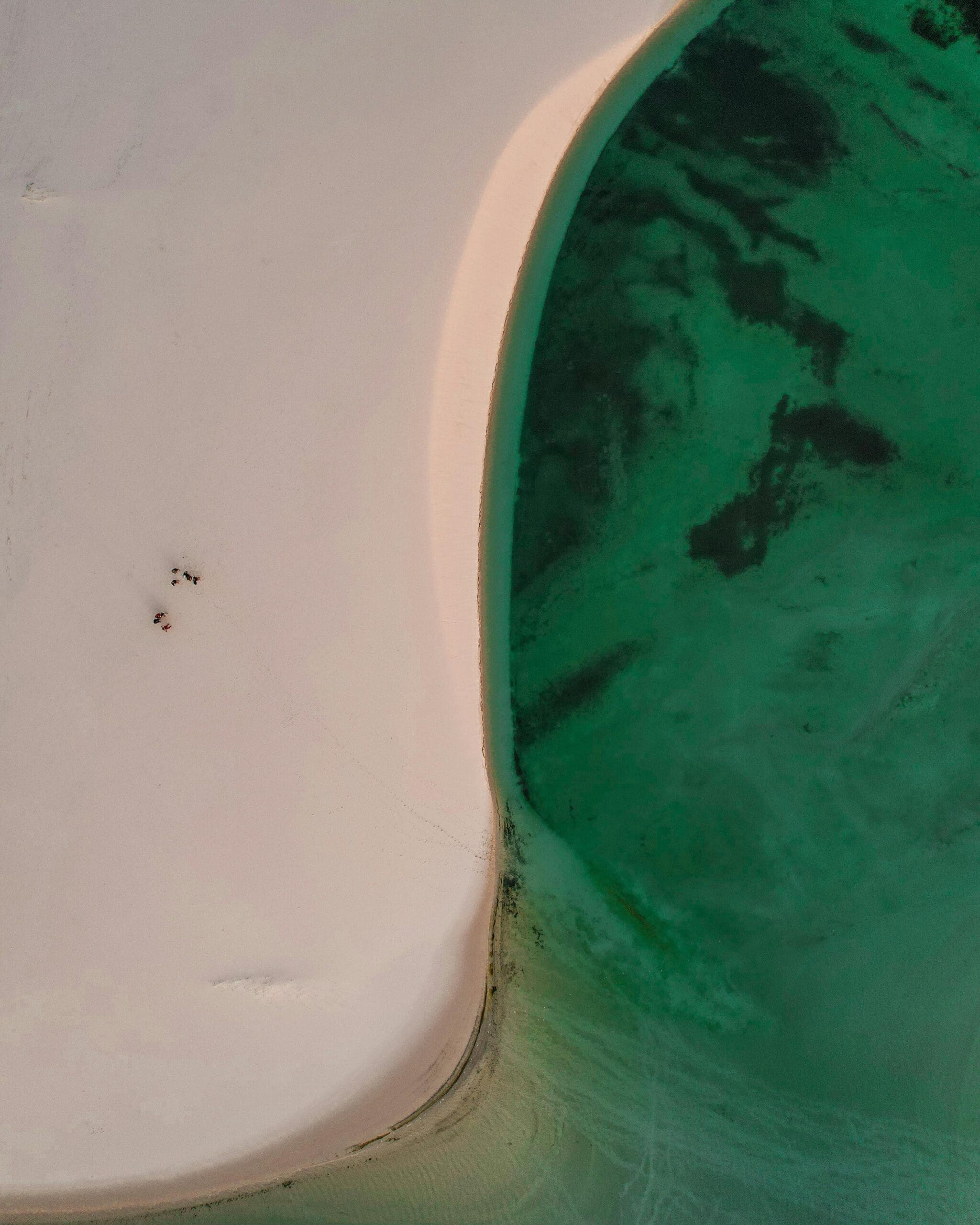
There’s a reason beaches live rent-free in our collective imagination—but some shorelines go far beyond the expected pale beige. Across the globe, nature has been quietly experimenting with color, creating beaches streaked in pink, black, red, green, and even purple. Whether shaped by volcanic activity, coral fragments, minerals, or microscopic organisms, these beaches feel otherworldly, cinematic, and utterly unforgettable.
If you’re building a travel wish list that prioritizes awe over predictability, consider this your guide to the world’s most remarkable colored sand beaches—and why they look the way they do. —Vita Daily
Green Sand
Papakōlea Beach—Hawaii, USA
One of only four green sand beaches on Earth, Papakōlea gets its olive hue from olivine crystals formed by volcanic eruptions thousands of years ago. The beach sits inside a collapsed cinder cone, making the journey in as memorable as the destination.
Why it’s special: The sand literally sparkles in the sun—and it’s a geological rarity.
Pink Sand
Pink Sands Beach—Bahamas
Soft blush tones stretch for miles along this Caribbean icon, created by crushed coral and tiny red foraminifera shells mixing with white sand. The effect is subtle but undeniably romantic.
Why it’s special: The color intensifies at sunrise and sunset, making it one of the most photogenic beaches on the planet.
Black Sand
Reynisfjara Beach—Iceland
Jet-black volcanic sand meets roaring Atlantic waves, framed by basalt columns that look sculpted by hand. Reynisfjara is dramatic, moody, and powerful—less lounging, more jaw-dropping.
Why it’s special: It feels raw and elemental, like standing on the edge of the world.
Red Sand
Red Beach—Greece
Backed by rust-colored cliffs, Santorini’s Red Beach glows in deep terracotta tones thanks to iron-rich volcanic rock eroding into the shoreline.
Why it’s special: It’s a bold contrast to Santorini’s iconic white-and-blue palette—and proof the island has many moods.
Purple Sand
Pfeiffer Beach—USA
When the light hits just right, streaks of violet and lavender appear in the sand at Pfeiffer Beach, caused by manganese garnet deposits washing down from surrounding cliffs.
Why it’s special: The color appears and disappears depending on tide and sunlight—blink and you might miss it.
White Sand (Almost Unreal)
Hyams Beach—Australia
Often cited as having some of the whitest sand in the world, Hyams Beach reflects light so intensely it can look otherworldly.
Why it’s special: The sand is so fine and bright it feels like stepping onto powdered sugar.
Orange-Gold Sand
Ramla Bay—Malta
Ramla Bay’s warm orange-red sand stands out against turquoise Mediterranean waters, created by high iron content in the soil.
Why it’s special: It feels like a sun-soaked secret, far from Malta’s busier beaches.
Greenish-Black Sand
Punaluʻu Beach—Hawaii, USA
While technically black sand, Punaluʻu often takes on a greenish cast thanks to mineral composition and surrounding vegetation.
Why it’s special: It’s also a popular resting spot for Hawaiian green sea turtles.
Why Colored Sand Beaches Matter
These beaches aren’t just visually striking—they’re reminders of Earth’s deep history. Each color tells a story of volcanic eruptions, coral ecosystems, erosion, and time. They invite us to slow down, look closer, and appreciate that nature doesn’t just do neutral.
If your next trip needs a little more wonder—and a lot less predictability—skip the beige and follow the color.
share:

Be the first to comment