
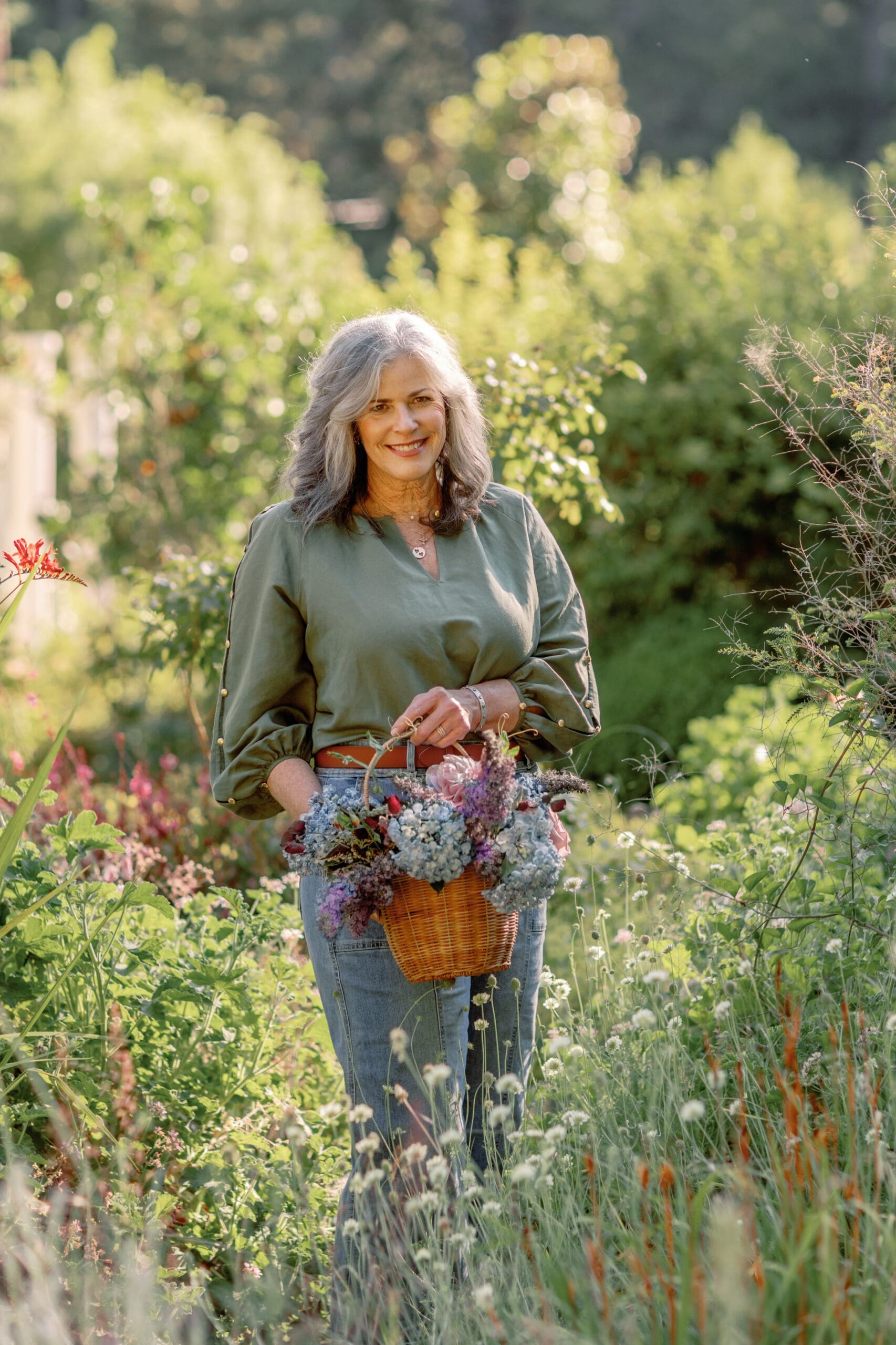
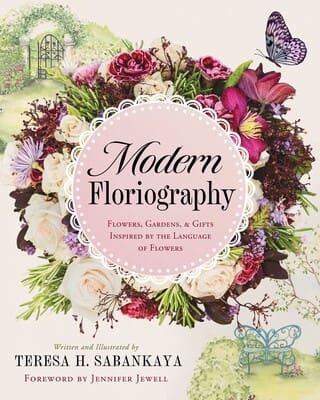
In an era of emojis, DMs, and AI-assisted everything, expressing real emotion can still feel surprisingly hard. Enter Teresa Sabankaya—pioneer of the Slow Flower Movement and author of the beautifully illustrated Modern Floriography. In her work, flowers become a language of their own, offering a poetic way to communicate love, grief, gratitude, and connection when words simply don’t cut it. Rooted in history yet refreshingly modern, Teresa’s approach invites us to slow down, shop locally, and rediscover how a simple stem can say exactly what we mean. —Noa Nichol
In an age of texts, emojis, and AI-generated words, why do you think people are craving more tactile, symbolic ways to express emotion—and why do flowers still resonate so deeply?
It is human nature to desire personal interaction with others. But increasingly we are isolated from this by means of texts, emojis, AI assisted words and even feelings. Thus, we repress and dampen down our natural desire and instinct to share our own words, passions, and thoughts with others. Flowers have a way of connecting us together through their beauty and representation of unaltered nature. And with floriography, they offer a beautiful way of letting us convey deeper, personal reflections and messages to others. Because a flower is familiar to us all, they are a nurturing balm for our hearts, minds, and souls, and provide respite in a hurried and sometimes impersonal world.
Modern Floriography reintroduces an ancient practice through a contemporary lens. What drew you to revive the language of flowers now, and what felt missing from how we communicate today?
It’s not always a good thing to go back to the way things once were, but I feel a floriography revival is pertinent in today’s world. I think the way we connect with others should be more intimate and offer greater depth and meaning, especially while we are becoming desensitized as a culture. Our depth of feelings and emotions have been tempered down due to worldly adversities that we’re forced to turn a blind eye to.
As a culture, I believe it’s essential to practice an artform such as floriography—creating messages with flowers—so that we do not lose our capacity as humans to reach deeper into emotions, to give thought and care to all our emotions, and especially to share this with others.
You’ve said flowers can say what words cannot. Can you share a moment—personal or professional—where a floral gesture spoke more powerfully than language ever could?
When my mother passed away my daughter gave me a beautiful posy with a sentiment tag that deciphered all the flowers it included along with their meanings in the language and symbolism of flowers. It was one of the most profound moments of my life. In times of grief especially, spoken words cannot carry the weight of the unspoken, eloquent language of flowers. The depth of meaning, thoughtfulness, and the idea that she took the time to select specific flowers to capture her own feelings as well as healing wishes for me, coupled with the beauty of the arrangement during such a hard time had an astounding effect on me. It as a feeling that you could not achieve with a card, words, or even flowers given without the use of floriography.
There’s renewed fascination with Regency-era romance and floriography thanks to pop culture moments like Bridgerton. What parts of historical floriography are most misunderstood, and what truths have endured?
I believe floriography throughout the Regency-era was not meant for romantic conveyances only, as is so often thought of when we think of floriography. And the flowers that are so flamboyantly and beautifully displayed and used as personal embellishments in the Bridgerton series are certainly meant for romance, yes, but I believe other messages and statements were critically important in the social ranks of society throughout Regency-era. For instance, social stance was of the utmost importance, and the flowers on display at social events, and worn as embellishment were always selected and incorporated according to one’s social rank. One would not even be able to approach another if the flowers they wore weren’t of the same stature and level as your own. They were a secret sign that said, ‘I am of the same ranking as you, so we can mingle!’
Yet even with flowers’ importance as emblems of social ranking, one truth that has endured throughout time is that courtesy must come from the heart, and there is nothing better than a flower to tell a heart’s story.
As a pioneer of the Slow Flower Movement, you’ve long connected flowers with place, season, and ethics. How does sustainability deepen the emotional meaning of a floral message?
A flower’s meaning and symbolism should certainly be tied to its origins, and specifically where and how it was grown into be. Was it grown with a delicate hand and a respectful practice of care, protecting, and nurturing of the earth? If a flower’s meaning is beauty, then how could it be if its origin and method of production is the opposite of that? Each flowers beauty and meaning are profound, and a flower’s sense of place is vehemently exhibited in this beauty, form, and it’s structural traits, so a departure from sustainability in a flower represents a departure from a familiar place, or a special memory that flower evokes in you. Because even though a flower itself is ephemeral, the beauty of its representation of a place or time is endless…sustainable. The beauty of a flower and its sustainability are tied together. I believe they naturally go hand in hand.
Your book encourages readers to begin simply—at a farmers’ market or grocery store. What do you hope people discover about themselves when they start choosing flowers with intention?
How easy it is to be creative! We have a world of symbolism with unique and sincere messages all around us in our gardens, flower markets, nurseries, parks, roadsides…everywhere! And the more we use all this in floriography, the better we’ll get at it. Who wouldn’t feel good about choosing their gift of flowers with intention when this will undoubtedly bestow the most heartfelt messages to others? And even to yourself, because practicing floriography as gift to yourself is one of the most accessible, beautiful, and effective forms of self-help there is. So go ahead, buy yourself a bunch of sweet peas and enjoy their ‘delicate pleasures’.
Modern Floriography blends design, history, and self-reflection. How do you see flower arranging as both a creative practice and a form of emotional literacy?
Floriography is synonymous in that it is both a creative practice, and an expression of emotional literacy. Beauty and creativity combined with expression are the purest form of emotional literacy that a person can possess, and I believe that anyone can acquire it if they aren’t born with it, and it is certainly a desirable attribute to seek in others too. Using floriography by arranging beautiful flowers that are chosen with intent to convey one’s emotions and to empathize with others’ emotions requires us to ponder our own feelings and emotions, leading us to recognize where we may need some clarification or additional work on our own feelings. This is most certainly a form of emotional literacy for both the giver and the receiver of the floriography gift.
You illustrate the book yourself, adding another layer of intimacy. How did the visual storytelling shape or deepen the meanings behind each floral symbol?
My hope is that some of the flowers, plants, and trees that are illustrated are familiar to the reader, and that once their meanings and symbolisms are discovered, then they will become valued and utilized as gifts to others, and also to take refuge in them in the form of their own sentiment and floriography gardens. Virtually every plant, tree, and flower we see in the world holds symbolic messages and useful sentiments in the language of flowers. My intent with Modern Floriography is to illuminate all the possibilities, and with the illustrations of these sentiment gardens, designed to impart specific meanings and sentiments, I hope, implores the reader to make use of the copious sentiments that are available to us.
Many people feel intimidated by floral design or symbolic gestures. What would you say to someone who worries they’ll “get it wrong” when communicating through flowers?
Floriography should be enjoyable, after all you are using a beautiful, natural medium charmingly put together to convey a heartfelt message to another person. Regardless of the occasion or sentiment, or whether the flowers’ sentiments are for sorrow, joy, or congratulations, your message will not be misconstrued. The beauty of the flowers (or a plant, or even a garden!) will be honored as the thoughtful gesture that it is. Flowers are a messenger of the heart, and your efforts to choose what you feel right are valued and cherished by the recipient.
If readers take away just one idea from Modern Floriography, what do you hope they understand about love, loss, and the quiet power of intention?
Receiving a floriography gift from another person is certainly a leveled up floral gift that will never be forgotten. But I want readers to remember that floriography can be a therapeutic process for the giver too.
When we practice floriography, the creative art of compiling messages with intention through flowers, it will often bring to light something within ourselves that needs attention too. The simple act of putting together a bouquet of white roses for a friend who’s lost a pet may invoke a memory of sorrow or grief within you, causing you to explore your own losses and a spark curative process with you. By bringing this awareness to the forefront, you are invited to reconcile this, allowing you to move through another level of healing. All the while you are creating something so heartfelt and meaningful for another person. Floriography is a win-win!
share:

Be the first to comment