
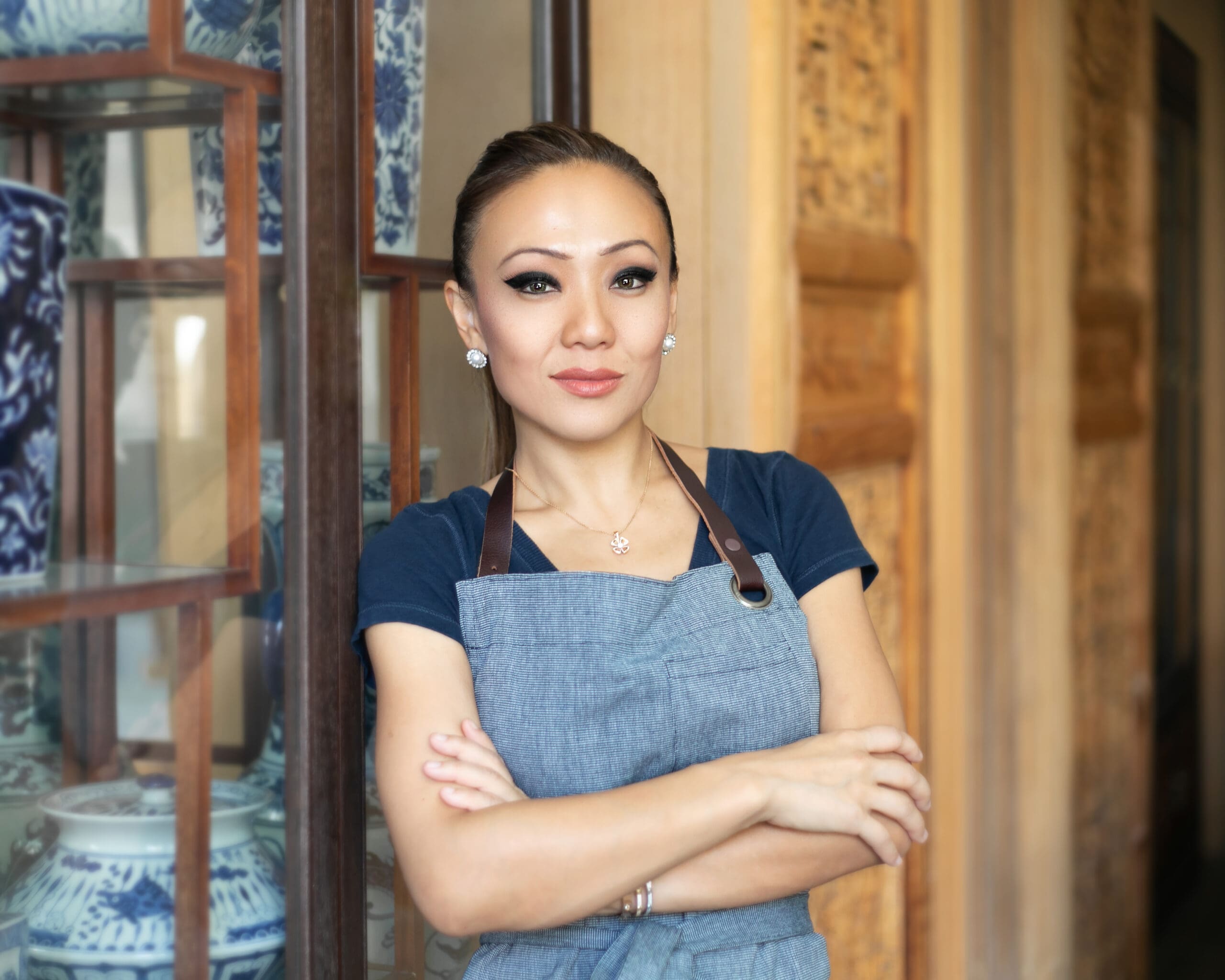
For decades, the vibrant energy of San Francisco’s Chinatown has been anchored by one name: House of Nanking. Now, as we celebrate the 15-day Lunar New Year festival, two-time Chopped champion and culinary queen Kathy Fang is stepping out of her family’s world-famous kitchen to share the real story behind the restaurant’s iconic lines.
In her first-ever cookbook, House of Nanking, Kathy bridges the gap between the corporate world she left behind and the Le Cordon Bleu training she brought home to her father, Peter Fang. From the immigrant “leap of faith” that shaped SF’s dining scene to modernizing 100 generational recipes for the home cook, Kathy invites us behind the wok to discover how tradition, family, and fierce ambition created a Chinese American empire. —Noa Nichol
The Kitchen Classroom: You famously grew up in the legendary House of Nanking kitchen. What is the one “unwritten rule” of the kitchen your father, Peter Fang, taught you that you still follow to this day?
Tradition and innovation can live in one place, it’s all about balance, you can’t have one without the other. We apply this to the way we create dishes at our restaurants.
The Le Cordon Bleu Twist: You left the corporate world to train at Le Cordon Bleu before returning to the family business. What is one classic French technique you secretly use to level up a traditional Chinese family recipe?
I learned the classic duck confit cooking method from culinary school and applied it to our eggrolls, a classic Chinese appetizer where we fill it with pork confit instead of duck confit. In Chinese cooking, rarely do you cook protein completely submerged in fat, especially pork. This twist has really elevated our eggroll game and customers immediately understand by reading the description how succulent and moist this eggroll will be.
Lunar New Year “Must-Haves”: We are right in the middle of the 15-day Lunar New Year celebration. If you had to pick one recipe from your 100+ collection that represents “good luck and big flavor” for 2026, which would it be?
The explosive eggrolls! Eggrolls are to be eaten during lunar new year as they represent bars of gold and prosperity. You want a to usher in the new year with bounty and luck. The flavors of these eggrolls are explosive because of the filling. The recipe in the book follows a traditional Shanghainese eggroll filling, moist juicy pork with winter bamboo shoots and napa cabbage. It’s explosive because of how juicy the filling is.
The “Culinary Queen” Pantry: San Francisco Magazine crowned you the “culinary queen”. What are three “powerhouse” ingredients you think every home cook should grab from a Chinese grocery store to instantly upgrade their weeknight meals?
- Soy sauce: the backbone of umami depth, adding instant savory complexity to marinades, stir-fries, and sauces with a single splash.
- Lao Gan Ma: a cult-favorite chili crisp packed with crunchy aromatics and fiery heat that instantly elevates anything from noodles to eggs to a simple bowl of rice.
- Shaoxing wine: a fragrant, slightly sweet rice wine that tenderizes proteins and adds a subtle nutty warmth that makes stir-fries taste unmistakably “restaurant-quality.”
Wok Wisdom for Beginners: Your book teaches readers of all levels how to wok cook with confidence. What is the biggest “wok myth” you’re hoping to debunk for home cooks who are intimidated by high heat?
One of the biggest myth is that you need a blazing commercial wok burner to get good results. Cooking out of a wok is all about managing the heat you have, not the heat you wish you had, and it’s completely doable at home. The “wok hei” obsession leads people to think their food will always be inferior, but the real secret is a screaming hot dry wok before adding oil, cooking in small batches, and keeping things moving. This can get you 80% of the way there on a home stove.
The Generational Leap: The book covers three generations of Fang family cooking from Canton to Shanghai. How has the “Fang family flavor” evolved from your grandfather’s era to the modern dishes you and your father serve at Fang Restaurant today?
The Fang family flavor hasn’t so much evolved as it has endured. My grandparents were just as innovative in their time, so rather than a generational leap, what’s been passed down is something more like a common thread: the way we approach a dish, how we think about flavor and texture, the instinct to create. We’ve always been willing to go off-script. We create our own sauces that don’t exist anywhere in Chinese cuisine and apply them to traditional dishes.My grandmother did exactly that when she added Worcestershire sauce to her curry soup because she felt it brought something unconventional but delicious to a classic Chinese dish. That kind of fearless intuition is the Fang flavor. People always say our food tastes unlike any other Chinese restaurant, and that’s why. It’s not a recipe or a technique you can write down. It’s a sensibility, and it came from my grandmother and grandfather.
The Iconic Line: House of Nanking is famous for its massive lines out the door. If you could go out and hand-deliver one specific snack from the book to the people waiting in line right now, what would it be?
The shrimp packets! I still vividly remember the first time my Dad made this dish. You won’t find it in any Chinese restaurant, and it blew me away, just as it did every one of his customers. Crispy wonton skins filled with tender shrimp, sweet fresh peas, and juicy zucchini, served with an addictive peanut sauce that’s creamy, sweet, a little spicy, and finished with just the right acidic tang. Every bite is an explosion of flavor and texture.
A Legacy in Print: This is the first-ever collection of recipes and stories from your family’s restaurant. Beyond the food, what is the one “immigrant story” or family memory in this book that you hope resonates most with the next generation of Asian American chefs?
There’s a story in the book about how Tsingtao beer bottles bought a family a minivan. A dishwasher at House of Nanking asked my father to save every empty bottle after each dinner shift. At the time, people would drive up to the restaurant and compete for recyclables because of the cash return value. My father agreed, and her family, a husband and two young kids came every single night for years to collect them. Then one day, when the children were much older, they walked into the restaurant and showed my father the minivan they had bought from all those years of savings and thanked my Dad for helping them accomplish this goal of theirs.
I didn’t have words for it then, and I’m not sure I do now. What I do know is that moment never left me. It showed me what immigrant families are truly made of, that quiet, unrelenting grit that goes unnoticed on a larger scale, and a kind of hard work that never asks for recognition or applause.
That’s the reason I wrote this book. My parents’ generation built something real through blood, sweat, and tears, not for accolades, but because that’s simply who they are. And because of them, we get to take chances, earn platforms, and have a seat at the table. Honor that. That’s what legacy means to me, not just my family’s, but the legacy Chinese food has built over generations, one quiet sacrifice at a time.
share:

Be the first to comment