
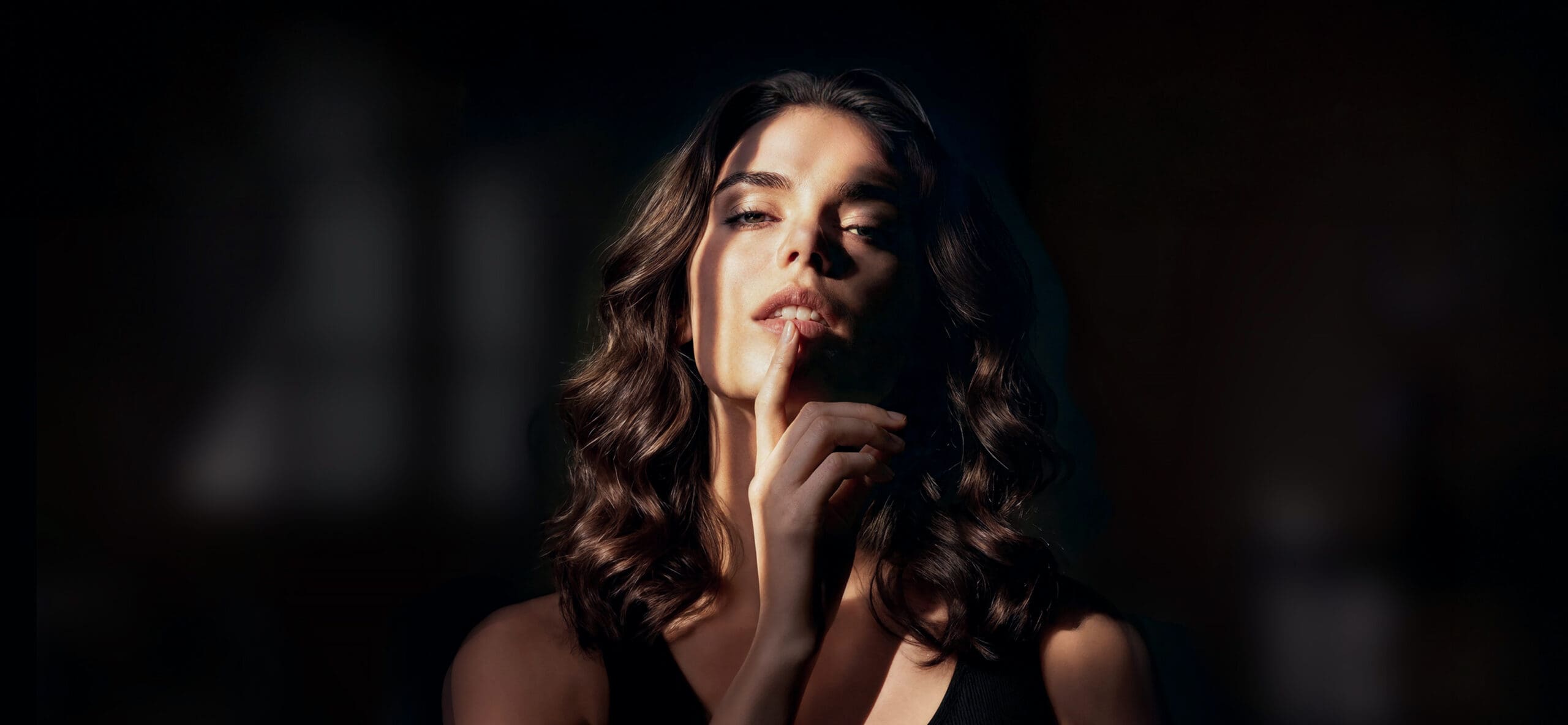
For the past decade, our romantic lives have been lived out loud—documented through selfies, screenshots, and “receipts” designed for public consumption. But as digital exhaustion sets in, the pendulum is swinging back toward the private. Modern daters are increasingly looking to disconnect their romantic pursuits from the prying eyes of coworkers, family, and social networks, ushering in a new era where intentionality is born from anonymity.
Leading this cultural shift is a surprising veteran: Ashley Madison. The Canadian tech pioneer is officially shedding its “affair” label to reposition itself as the premier destination for privacy-led dating with its new identity, “Where Desire Meets Discretion.” With over half of its new members now identifying as single, the platform is evolving to meet a growing demand for ethical, discreet connections in an overexposed age. We sat down with Chief Strategy Officer Paul Keable to discuss why discretion is the gateway to more honest relationships and how new data reflects a North American move away from public-first dating behavior. —Noa Nichol
The Brand Rebrand Challenge: Ashley Madison has spent two decades as the global face of infidelity. How do you convince a “privacy-seeking single” that the platform is now a sophisticated sanctuary for discretion rather than just a legacy site for affairs?
For two decades, Ashley Madison became shorthand for one very specific use case, but the world of dating, and the way people want to show up online, is changing dramatically. What we’re seeing now is a growing population of adults who value privacy in their personal lives, whether they’re single, separated, or simply not interested in broadcasting their romantic lives to their entire social network. Our rebrand is about reframing Ashley Madison as a platform built for those people. Discretion isn’t just a feature here, it’s really the foundation and has always been. For those singles seeking privacy, that means a space where they can explore connections without the performative pressure that comes with traditional dating platforms.
The “Digital Exhaustion” Pivot: You’ve noted that the pendulum is swinging away from “broadcast dating.” Is this shift toward discretion a sign that we’ve reached “peak transparency,” and are we witnessing the permanent death of the public-first dating profile?
I do think we’ve reached a point of peak transparency online. For years, dating apps encouraged people to turn their personal lives into public-facing profiles tied to their other social channels, music tastes, and mutual friends. What we’re seeing now is a backlash to that model. The recent YouGov study that we commissioned found that 48% of North American adults say they actively try to keep most aspects of their life private, signaling that people are tired of feeling like their dating life is content. The shift toward discretion reflects a broader cultural moment where people are reclaiming the right to keep parts of their lives private. That doesn’t mean public profiles disappear entirely, but I do believe discretion will increasingly become a premium (and expected) feature of digital relationships.
Data as a Roadmap: With 57% of new members identifying as single in 2025, the community clearly moved before the branding did. What specific “single person behavior” did you see in the data that finally triggered the decision to officially shed the “affair” label?
The biggest signal was behavioural. When we saw that more than half of new members identified as single, we started analyzing how they were actually using the platform. These users weren’t necessarily seeking affairs, they were seeking autonomy and privacy. They valued the ability to explore connections without their profile appearing to coworkers, friends, or family. That told us the community had already evolved beyond the legacy perception of the brand.
The Privacy Paradox: In an era of “receipts,” TikTok “West Elm Caleb” investigations, and screenshots, how can a platform truly guarantee discretion? What is the “tech-stack” behind this new era of privacy that differentiates you from mainstream apps?
True discretion isn’t just about hiding a profile, it’s about designing a platform where privacy is embedded in every layer of the product. That includes things like robust identity protection, limited discoverability, and secure messaging environments. The difference between us and mainstream apps is that we didn’t retrofit privacy onto a public-first system. Ashley Madison was built around anonymity and user control from the beginning, which allows us to continually evolve that tech stack as privacy expectations grow.
Ethical Discretion vs. Secrecy: You are moving toward a framework of “ethical discretion.” How do you define the line between a healthy desire for privacy from coworkers/family and the potential for deceptive behavior that dating apps are often criticized for?
Ethical discretion is really about respecting the fact that adults deserve autonomy over their personal lives. Privacy doesn’t automatically equal deception. Many people simply don’t want their dating activity broadcast to their professional networks, family members, or social media followers. Our role is not to judge how people structure their relationships, it’s to provide a platform that allows them to explore connections on their own terms.
The Competitive Landscape: Mainstream apps are trying to build “Incognito Modes” as add-on features. Why is a “discretion-first” foundation—something Ashley Madison was built on—superior to a “privacy-patch” on a public-first app?
When privacy is an add-on feature, it often sits awkwardly within a platform that was designed for visibility and social discovery. That’s why you see “Incognito Modes” or hidden profiles positioned as premium upgrades. A discretion-first platform works differently. Everything from how profiles appear to how communication happens is built with controlled visibility in mind. That fundamentally changes the experience because users know the environment was designed with their privacy as the starting point, not an afterthought.
Cultural Stigma and Gen Z: Younger daters are notoriously vocal about “authenticity.” How does Ashley Madison’s new identity, “Where Desire Meets Discretion,” bridge the gap between being authentic to oneself while remaining invisible to the public?
Authenticity doesn’t necessarily mean broadcasting every aspect of your life. For younger generations especially, authenticity often means being honest with yourself about what you want, even if that doesn’t fit traditional relationship norms. Our new tagline, “Where Desire Meets Discretion,” speaks to that. It acknowledges that people can be authentic in their intentions while still wanting control over who sees that side of their life.
The “Social Network” Leak: Many adults fear their dating life bleeding into their professional LinkedIn circles or family Facebook groups. Do you see Ashley Madison becoming a “dark social” alternative for high-profile professionals who feel they have too much to lose on Tinder?
One of the biggest concerns many people have today is having their personal life suddenly become visible across their professional or family networks. On other platforms, those worlds can easily intersect. What we’re seeing is that professionals, executives, and people with public-facing careers increasingly want a clear boundary between their dating life and their public identity. A discretion-first environment gives them that separation.
The Canadian Context: Canadian daters are reportedly “exhausted” with the current state of apps. Beyond just privacy, how does the experience of a discreet platform foster more “honest interactions” compared to the performative nature of mainstream swiping?
Canadian daters, like many globally, are feeling fatigue from swiping. When interactions become gamified and highly visible, they can start to feel performative. On a discreet platform, the dynamic shifts. People tend to communicate more directly about what they’re looking for because there’s less pressure to craft a profile for public approval. That can lead to more honest conversations and more intentional connections.
The 2030 Vision: If 2026 is the year of repositioning, where does the “Privacy-Led Dating” category go from here? Will “public dating” eventually become the niche, while discreet platforms become the global standard?
We believe privacy-led dating is still in its early stages. As people become more conscious of their digital footprint, platforms that give users greater control over their identity and visibility will become more attractive. By 2030, I wouldn’t be surprised if discretion becomes a baseline expectation rather than a niche feature. Public-first dating platforms may still exist, but they’ll likely need to evolve significantly as users increasingly prioritize privacy, autonomy, and control over how they present themselves online.
share:

February 27th, 2026 at 11:13 am
Love this deep dive into how privacy is becoming a dating luxury – after years of oversharing and digital performance, the shift toward intentional connection really resonates. It’s interesting to see how discretion is now a value rather than a vulnerability. It reminds me of how some premium social experiences – like a night out at Sapphire New York – thrive on exclusive, controlled environments where people feel freer to be themselves without the pressure to broadcast every detail https://www.nysapphire.com/
June 5th, 2026 at 3:04 am
I’ve noticed that many mainstream apps collect way too much data or make your profile public by default, which can feel invasive. That’s why I’ve started looking for platforms that are more transparent about how they handle personal information and allow you to control what you share. When I was researching options that focus on safer, more discreet dating experiences, I found https://latin-dating-sites.org/ to be a helpful resource for finding reputable sites that actually value user privacy. It’s not an app itself, but it lists platforms that have clear policies and genuine users