
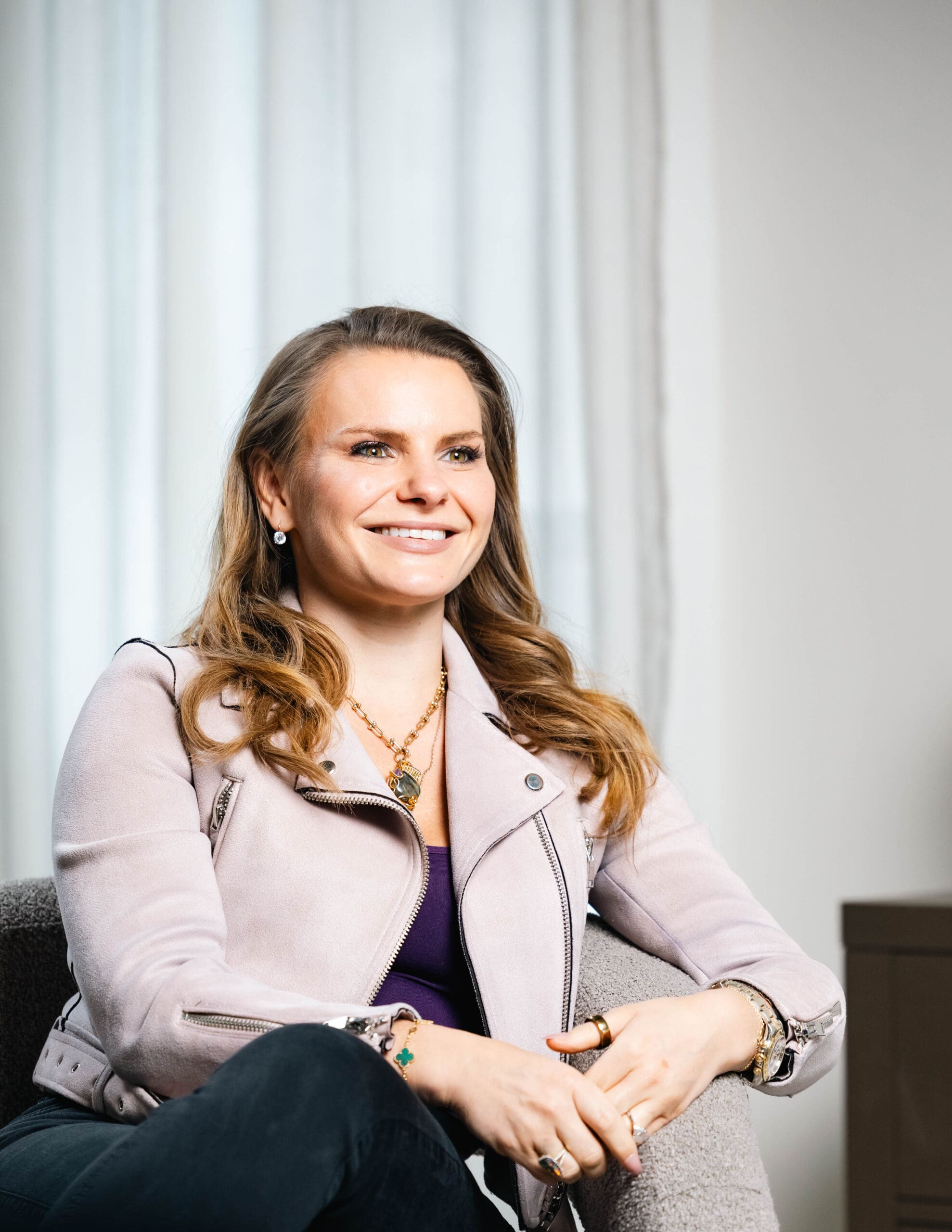
Canada’s premier digital hormone platform, Science&Humans, has just named tech titan and Dragons’ Den star Michele Romanow as its 2026 brand ambassador and investor. Known for backing disruptive industries, Romanow is now turning her venture-capital lens toward a long-overlooked sector: modern, science-driven hormone care for women.
We sat down with Michele to discuss her mission to normalize conversations around menopause, PCOS, and endometriosis, and how becoming a mother at 40 shifted her perspective on healthcare innovation. From virtual care platforms to evidence-based clinical protocols, she’s helping Science&Humans challenge outdated systems and empower women to take control of their own health journeys. —Noa Nichol
The Investment Thesis: You’ve built a career backing disruptive companies that challenge the status quo. What was it about the Science&Humans digital platform that made you want to step in as both an investor and brand ambassador for hormone health?
Science&Humans stood out to me because it combines real clinical expertise with a digital platform that actually improves access to care. Too many patients feel dismissed, stuck on waitlists, or forced to navigate fragmented systems. This platform delivers science-backed, personalized care through a modern virtual model. As both an investor and ambassador, I saw an opportunity to help scale a platform that could redefine hormone and metabolic care across Canada.
The Motherhood Shift: You recently became a mother at age 40. How has that personal milestone shifted your perspective on the specific healthcare gaps women face as they navigate different hormonal stages?
I’ve had lots of my medical issues not taken seriously, and I’ve always believed in proactively advocating for yourself. Women’s health issues are frequently ignored, and the gaps are glaring. Postpartum is the biggest hormone shift humans experience, yet the care drops off once the baby is born. Menopause is barely mentioned to medical students, but 1 billion women worldwide are experiencing menopause right now. The system treats a woman’s hormonal journey like a series of unrelated accidents rather than a predictable, 30-year evolution.
We shouldn’t have to advocate just to get basic answers about our bodies, but I also understand it’s a complicated challenge to solve. This is why I’m investing in Science&Humans – because we have to bridge these gaps with science and tech so my daughter and the next generation of women won’t have to navigate these hormonal shifts in the dark.
Normalizing the “Taboo”: Hormonal challenges like perimenopause, PCOS, and endometriosis are often undertreated and understudied. How do you plan to use your platform to normalize these conversations and move them from “whispered topics” to the boardroom?
Conditions like perimenopause, PCOS, and endometriosis impact millions of women, yet they’re still discussed in whispers. By speaking openly about it, as a founder, investor, and new mom, I want to help bring these conversations into the mainstream. Platforms like Science&Humans also help normalize the conversation by centering hormone health as a legitimate medical discipline, backed by science and diagnostics.
Challenging Outdated Systems: You’ve stated that women’s health has been underserved for too long. What are the biggest “outdated standards” you see in traditional Canadian hormone care that digital innovation is finally starting to fix?
One of the biggest issues is fragmentation, meaning patients bounce between specialists without anyone looking at the whole picture. Another challenge is access. Waitlists and geographic barriers mean many Canadians simply don’t get care when they need it. Hormones affect multiple systems in the body, but traditional care often treats symptoms in isolation. Science&Humans takes a more integrative approach, using diagnostics and personalized treatment plans based on each patient’s biology.
The Power of Virtual Care: Science&Humans uses a virtual care platform to connect patients with specialists. As a tech entrepreneur, why do you think a digital-first approach is the key to making evidence-based hormone therapy more accessible for busy Canadian women?
A virtual care model removes friction, allowing patients to complete assessments, review lab results, and speak with clinicians from anywhere. Women and moms everywhere are just time-strapped. Science&Humans combines online health assessments, diagnostic bloodwork, and virtual consultations with licensed clinicians, making care significantly more accessible. Technology doesn’t replace doctors, but removes barriers between patients and the specialists they need.
Individualization vs. Standardization: The platform focuses on individualized treatment rather than standardized prescribing. Why is “data-driven” and “personalized” care so critical when it comes to the complex science of hormones?
Hormones are incredibly complex, in which two people can have the same symptoms but completely different underlying causes. That’s why standardized prescribing doesn’t work well in hormone medicine. Science&Humans uses advanced diagnostics and data to tailor treatment plans to each patient’s biological profile. Personalized care leads to better outcomes because you’re treating the root cause rather than masking symptoms.
The “Dragon’s” Advice: What would you say to other female entrepreneurs or ambitious women who are struggling with symptoms of hormone imbalance but feel they have to “power through” to stay at the top of their game?
Stop. Do not power through and compromise your health. It’s not the badge of honour you think it is. Think of this as a health puzzle that you need to solve – the solution is out there, and with platforms like Science&Humans, you can get that help faster. I’ve experimented with many solutions to medical problems and explored much of Eastern and Western medicine. It’s so important to understand all your individual issues and options.
Building the Future of Healthcare: Science&Humans Co-Founder Hira Siddiqui mentioned that you represent the future of healthcare: “informed, ambitious, and unwilling to accept outdated standards”. What does your ideal version of a healthcare system for women look like in the next five years?
An ideal system for women in the next five years is proactive instead of reactive and one that recognizes hormone health as foundational to long-term wellbeing. I believe platforms like Science&Humans represent the future, combining clinical expertise, diagnostics, and digital access to support patients continuously, not just during appointments.
A Broader Cultural Shift: Beyond the technology, you are hoping to create a cultural shift where hormone health is openly discussed. What is the one thing you want every Canadian woman to know about her hormone health today?
Canadian women should understand that while hormonal changes are normal, suffering through them isn’t. If something feels off, you deserve evidence-based care and answers. The biggest shift happening right now is that women finally have more tools, more data, and more specialized care options than ever before.
The Next Chapter: With the X-Games and other tentpole moments on your horizon, how do you stay physically and mentally optimized? Does your own hormone health routine play a part in your high-performance lifestyle?
Staying physically and mentally optimized starts with data over guesswork. I have multiple devices tracking everything, which is both good and bad. I prioritize sleep and high-intensity movement. But the real game-changer has been realizing that hormone health is the silent driver of high performance. With science-backed tools and platforms like Science&Humans, I’m working to move from being reactive to proactive. If my hormones are balanced, I’m making better decisions, and I have the capacity to be present as a mother and a founder. You wouldn’t run a company without looking at the metrics; you shouldn’t run your life without looking at your hormonal data.
share:

March 16th, 2026 at 12:47 pm
Wow, Michele Romanow as Science&Humans’ ambassador? I never saw that one coming. Her focus on issues like menopause and PCOS is exactly what we need! Can’t believe how these topics are nearly whispers, especially postpartum care.