
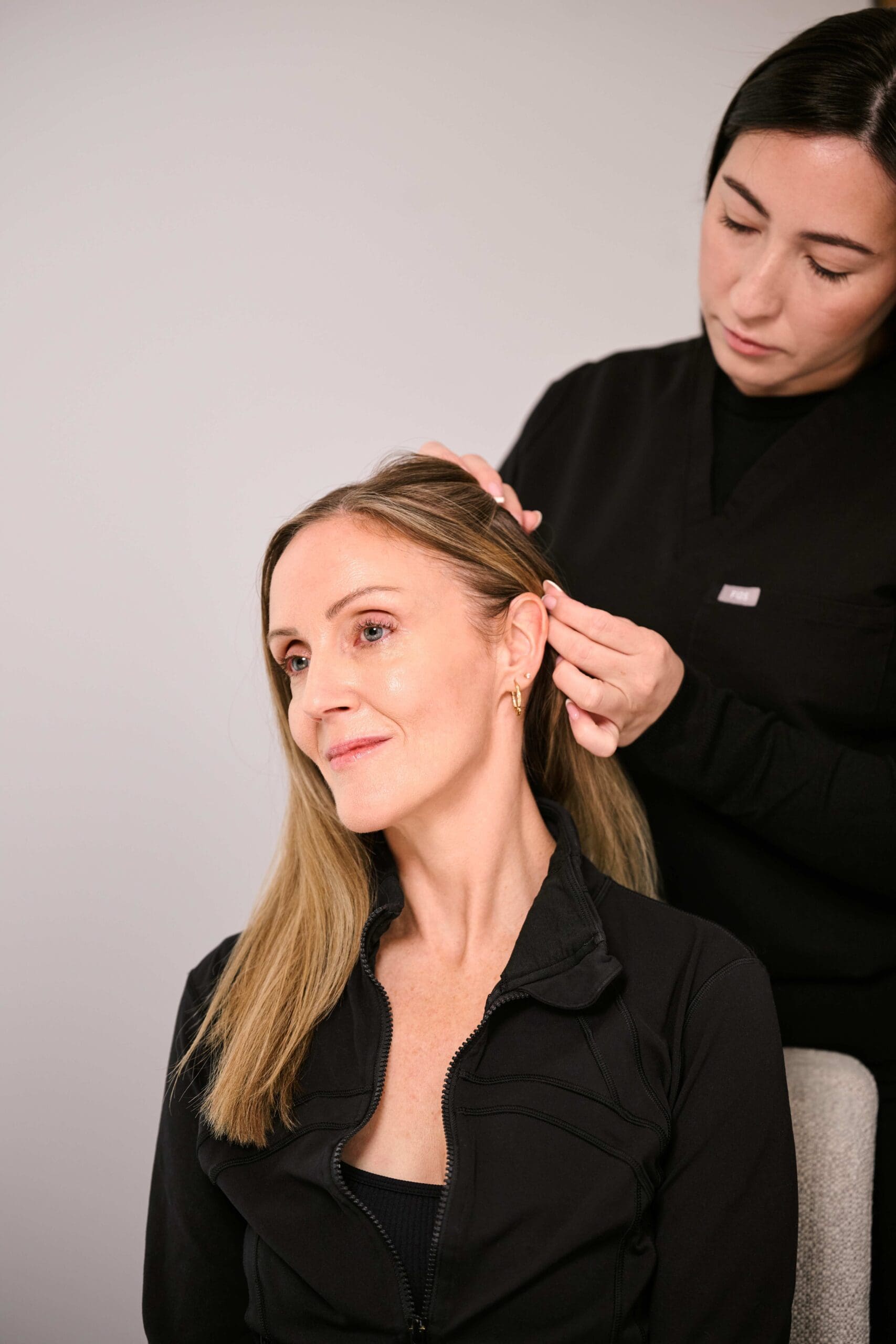
For many women, hair thinning can feel both deeply personal and frustratingly complex. Unlike the more visible patterns of male hair loss, female hair thinning often shows up subtly—through a widening part, overall density loss or increased shedding in the shower. The good news: a new generation of treatments is shifting the conversation from resignation to regeneration.
In clinics across Canada, physicians are increasingly turning to regenerative approaches that focus not only on the hair itself but on the health of the scalp and follicle environment. Among the most promising: microneedling paired with exosome-based therapies, which aim to stimulate dormant follicles and restore healthier hair growth cycles.
According to Dr. Jacky Lo, a general practitioner with a focus in aesthetic medicine at Dermapure Vancouver, the first step is understanding that hair loss in women is rarely caused by just one factor. “Most of the women I see for hair loss are in their 30s to 50s, but what’s changed is that many are noticing it earlier and seeking help sooner,” says Lo. “The most common underlying cause is still female pattern hair loss, which tends to show up as overall thinning or a widening part rather than a receding hairline. What’s different now is that hair loss is often not just one issue—it’s layered.”
Stress, illness, rapid weight loss, hormonal changes and nutrient deficiencies can all disrupt the hair-growth cycle. “Hair is highly sensitive to internal stress,” Lo explains. “Physical or emotional stress can push more hairs into the shedding phase, which is why many women notice increased hair loss after illness, surgery or major life changes.” Because of this complexity, diagnosis is critical. Physicians typically begin with a detailed medical history and scalp exam, sometimes supplemented by blood work to assess factors like iron levels or thyroid function. “Overall, the goal is to identify not just what type of hair loss is present, but why,” he says. “That’s what guides an effective, personalized treatment plan.”
One factor that often surprises patients is the importance of scalp health. “The scalp is foundational—healthy hair can’t grow from an unhealthy scalp,” stresses Lo. Conditions like seborrheic dermatitis, inflammation or buildup from oils and styling products can disrupt the hair cycle and worsen shedding. Once these underlying issues are addressed, newer regenerative treatments can help support follicle recovery. And, among the most promising developments is the use of exosomes—microscopic particles that act as cellular messengers.
“Exosomes are best thought of as tiny ‘messengers,’” Lo explains. “They carry signals between cells that support processes like repair and regeneration. In hair loss, the idea is that these signals can help create a healthier environment for weakened follicles and support the hair growth cycle.”
Because exosomes are applied topically in Canada, clinics often combine them with microneedling to improve delivery. “Microneedling creates very small channels in the scalp, which can help improve delivery of topical treatments to the level of the hair follicle,” says Lo. “It may also stimulate local blood flow and activate natural repair pathways, further supporting hair growth.” While regenerative treatments are gaining traction, he says they work best as part of a comprehensive plan: “Treatments like exosomes are best viewed as part of a broader strategy. If there’s a hormonal component or nutritional deficiency, those need to be addressed as well. The best outcomes come from a personalized, evidence-based approach.”
At the product level, companies like Functionalab are developing exosome-based formulations designed specifically for scalp health and hair density. “Exosomes are tiny messengers released by cells that carry growth signals and bioactive compounds,” explains Functionalab scientific director Nathalie Pelletier. “In scalp treatments, they help stimulate hair follicle stem cells, support repair and regeneration, and create a healthier environment for hair growth.”
Functionalab’s formula, she adds, uses plant-derived exosomes combined with growth factors and targeted actives to support multiple aspects of the hair cycle: “Our formulation was designed to target the root causes of hair thinning. It helps wake up hair follicles and restart natural growth signals, strengthen hair at the root to reduce shedding, and support a healthy scalp environment.”
In clinical settings, like at Dermapure locations, these products can be paired with procedures such as microneedling or scalp JetPeel to enhance absorption. “After microneedling, the exosomes are applied directly to the scalp where the treatment helps enhance their absorption,” Pelletier explains. “The combination can help stimulate follicle activity, support scalp health and strengthen hair.”
Patience, however, remains essential. “Hair follows a natural growth cycle, so results take time,” she says. “With consistent use, some patients may begin noticing early improvements after the first month, but fuller results typically develop over several months.”
For Dr. Lo, the shift toward regenerative hair treatments reflects a broader change in how medicine approaches hair loss: “The earlier we intervene, the more hair we can preserve. Hair restoration is really about preserving follicle health and supporting the growth cycle over time.” And for women navigating hair thinning? That approach offers something that has long been missing from the conversation: hope grounded in science. —Noa Nichol
share:

Be the first to comment