
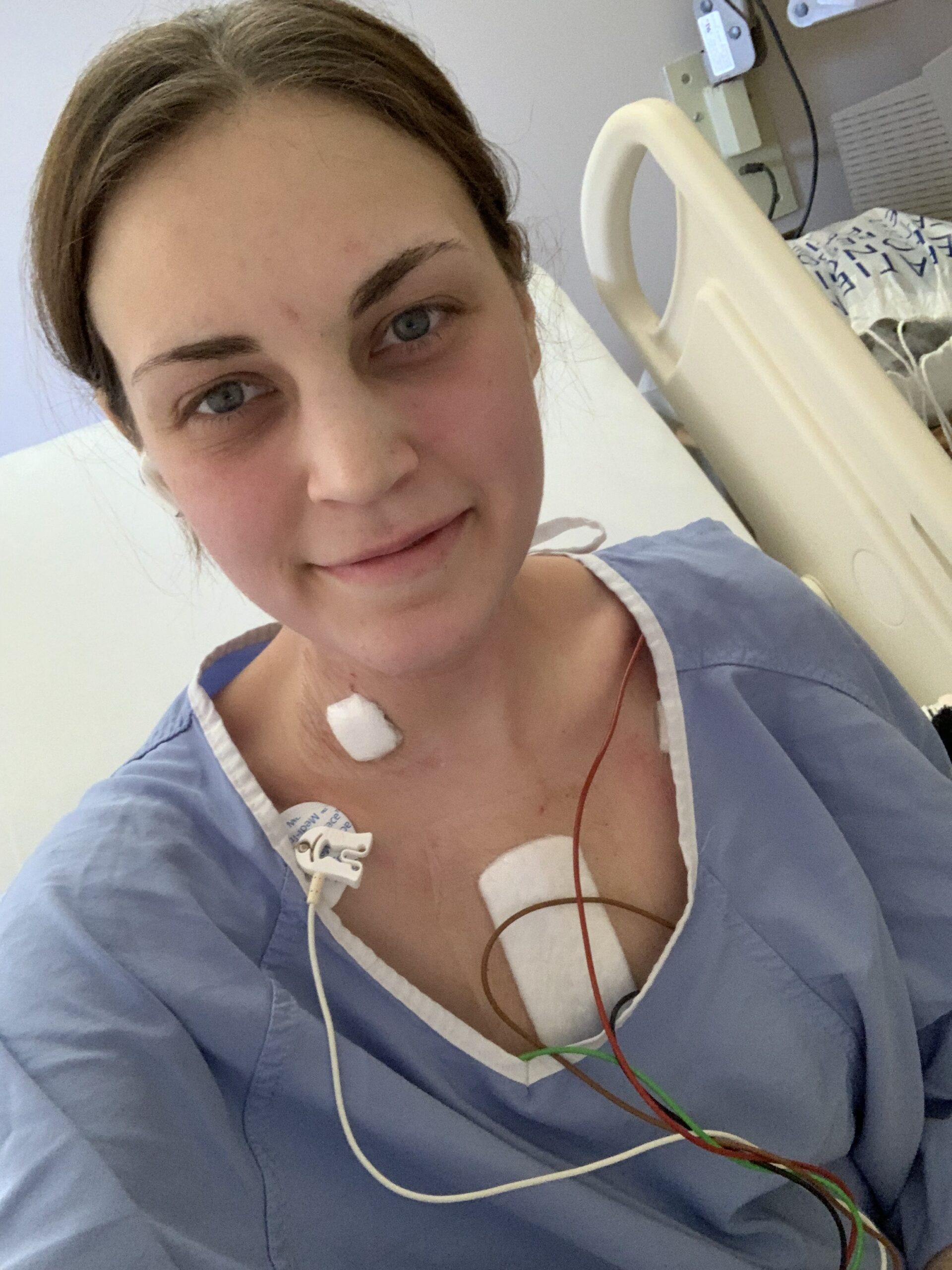
At just 23, Jenny Milne was in peak physical shape—until subtle symptoms turned into a life-altering diagnosis that’s far too often overlooked in young women. As Heart Failure Awareness Week approaches, her story is a powerful reminder that this condition doesn’t discriminate by age. We sat down with Jenny, alongside Dr. Margot Davis, President of the Canadian Heart Failure Society, to talk early warning signs, misdiagnosis, and what every woman should know about protecting her heart. —Noa Nichol
Jenny Milne (Patient Story)
You were a competitive figure skater in peak condition—what was the moment you realized something wasn’t right with your body?
I never noticed growing up as a figure skater that I was short of breath more so than my teammates -I always thought I had asthma like my dad and brother. In hindsight, doctors are pretty sure it was a slow progression of heart disease that my body was adapting to until it couldn’t anymore at the end of 2020. There were a lot of things that didn’t feel right; however, it wasn’t until I was being worked up to remove my gallbladder that my shortness of breath was getting so bad, as well as I was starting to notice swelling in my legs, and that’s when I went back to my GP, and he started to look at my heart.
Your symptoms were initially misdiagnosed. What was that experience like, and how did it impact your path to getting the correct diagnosis?
It was terrifying and isolating as it was all in 2020/2021- right in the middle of COVID. The doctors did their best; however, I do believe I wouldn’t have been as sick if it had been caught sooner. I did listen to my body when the shortness of breath got worse to the point I would have to take breaks every 5ft. I called my GP to schedule an in-person appt and then turned to Dr. Google to research if it’s not asthma, what it could be – turns out, a heart issue was the first answer that popped up. I did not know the extent of what I was about to go through. I am very grateful to my GP and his internal medicine practice within his clinic. Once my internal medicine doctor recognized the enormity of my disease, he was quick to refer me to my cardiologist and to work with them while I was under their care in my local hospital.
Heart failure is often seen as something that happens later in life—how did that misconception affect the way your symptoms were perceived, both by others and by yourself?
This goes back to the misdiagnosis; if they had taken the time to listen to my heart and investigate the free fluid they found in my abdomen when they looked at my gallbladder via ultrasound, my heart failure could have been caught sooner rather than 4 months later. It was such a shock to everyone. For one, I was super healthy, or so we thought, I would go to the gym almost every day pre-COVID, as well as walking, hiking and camping. I was frequently told I didn’t look sick, which made everything feel more isolating and diminishing of how I was feeling. I found that in certain situations, because of my age, it was assumed that I wasn’t understanding or absorbing the intense information that was coming at me about my condition, itt was the complete opposite. As much as I strive to have a positive attitude, one of my coping mechanisms is to joke and laugh, and being 23 years old in heart failure at the time felt like one massive joke. When I am told about things to do with my health, I am a sponge and can usually say verbatim what was relayed to me.
Looking back, what do you wish you had known—or been told—earlier in your journey?
It’s not normal to be breathless. I dismissed severe shortness of breath, thinking it was my asthma.
I also wish I had been told to take my time to allow myself to grieve. I didn’t realize that it was possible to grieve your own life, the new normal is a real thing, and that is really hard to wrap your head around in general. being young to the equation and very overwhelming. I wish I had been told that okay to ask for help and to seek professional help if you need it. There are lots of peer-to-peer support groups as well, which helped me immensely in my journey.
Now on the other side, what does reclaiming your life “on your own terms” look like today, and what would you say to other young women who may be dismissing their symptoms?
This is a great question. There are a few things. The first is to start advocating for awareness and prevention for other young people. I am very passionate about raising awareness that heart failure is not an older man’s disease. It can reach young people and, more importantly, young women. The second is reducing stigma. As women, we tend to dismiss fatigue, brain fog or palpitations as a normal symptom; however, it could have underlying meanings not just the stress of daily life. The final thing is to always overreact when it comes to abnormal symptoms. It’s a good idea to go to the doctor regularly (yearly) to check your baseline numbers, i.e., cholesterol and other bloodwork, blood pressure and more!
Dr. Margot Davis (Expert / Medical Insight)
Why is heart failure still so widely misunderstood as an “older person’s disease,” and how is that perception changing?
Heart failure remains more common in older adults, but it’s rising noticeably among younger people while rates in older groups stay relatively stable. As a result, a growing share of heart failure patients are younger, making it especially important for young adults, particularly those with risk factors, to understand their risk, recognize early warning signs, and take preventive steps sooner rather than later.
Are we seeing a real increase in heart failure among younger women, or is it more a matter of improved awareness and diagnosis?
While advances in diagnostic testing can sometimes help us to make the diagnosis of heart failure earlier, the real driver of the rising rates of heart failure in younger women is the increase in rates of other conditions that have been linked to a higher risk of heart failure. Conditions like high blood pressure, diabetes, and obesity can all lead to heart failure, and unfortunately, each of these risk factors is more common now in younger patients than they were even ten years ago.
What are the key symptoms women—especially younger women—should never ignore?
Important symptoms that may be due to heart failure include unusual fatigue, shortness of breath, and swelling of the legs or abdomen.
Why are women’s heart symptoms so often misdiagnosed or overlooked, and what needs to change within the healthcare system?
There are many reasons that women with heart disease are less likely to be diagnosed than men. First of all, women may have different symptoms compared with men, but our understanding of “typical symptoms” is still shaped by early studies that almost exclusively included men. Similarly, women and men may have different results on tests when they have heart disease, but our definitions of normal and abnormal are often based on what’s normal in men. There is also good evidence that there is still gender bias in medicine, with women, especially young women, being taken less seriously when they report their symptoms. Finally, due to social constructs around gender, women may be less likely to report their symptoms or seek help in the first place. Fortunately, there is a lot of interest in this area, and important research is being done, and that’s why the Canadian Heart Failure Society is dedicated to providing research and education to all Canadians, including cardiovascular professionals, to close this gender gap and improve outcomes for women with heart disease.
For women who are otherwise healthy and active, what proactive steps can they take when it comes to heart health, prevention, and early detection?
Being healthy and active is important, but there are other important steps to take to reduce your risk of heart disease. Women need to know their personal risk, pay attention to subtle symptoms, and push for proper evaluation because heart issues often show up differently and get missed. Ask your primary care clinician to measure your modifiable risk factors, like blood pressure, cholesterol, and blood sugar, and then discuss how these fit together with other risk factors like family history and pregnancy history to calculate your overall risk.
share:

May 7th, 2026 at 11:07 pm
https://about.me/spin189