

From mental health and addiction recovery to augmented reality time capsules and music accessibility, this year’s Canadian winners of Apple Worldwide Developers Conference’s Swift Student Challenge are proving that the next generation of tech innovators is thinking far beyond Silicon Valley buzzwords. Selected from a global pool of winners across 37 countries and regions, these five Canadian students created original app playgrounds using Apple’s Swift coding language—each rooted in deeply personal stories, real-world impact, and a desire to solve meaningful human problems through technology. Ahead of WWDC26, we caught up with Anthony Qiu, Anushka Punukollu, Avni Kapoor, Prabhsimran Shergill, and Daniel Eskandar to talk about creativity, coding, and the ideas shaping the future of tech in Canada. —Noa Nichol
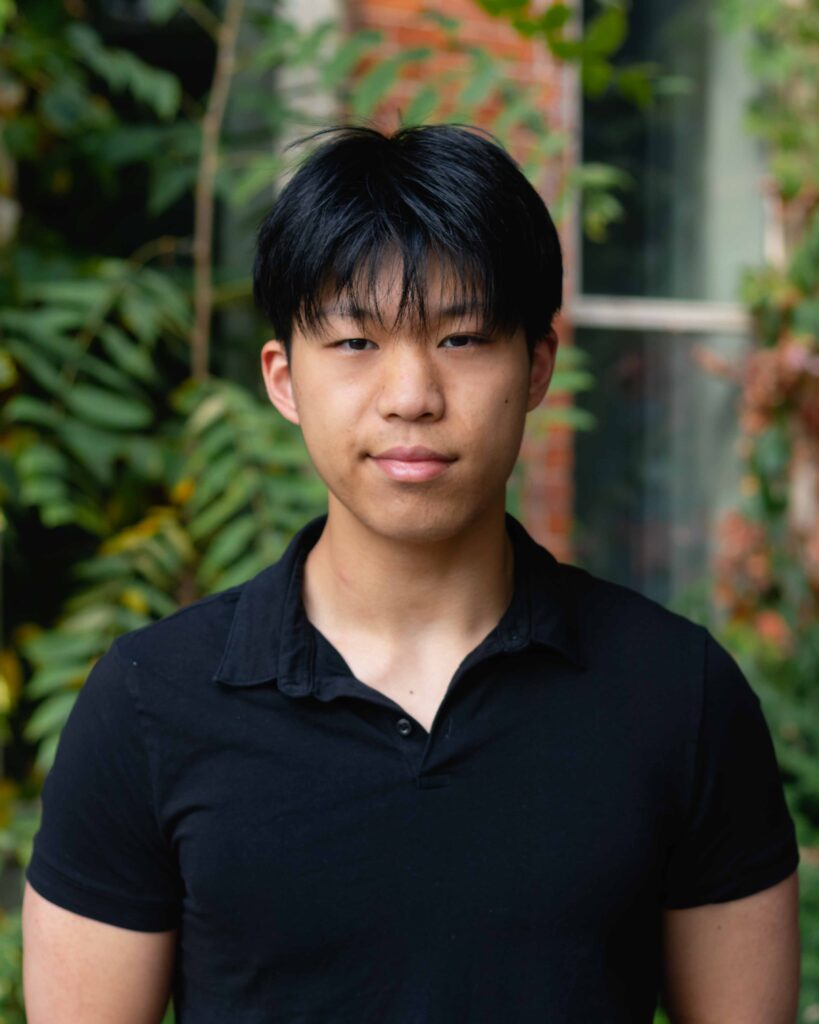

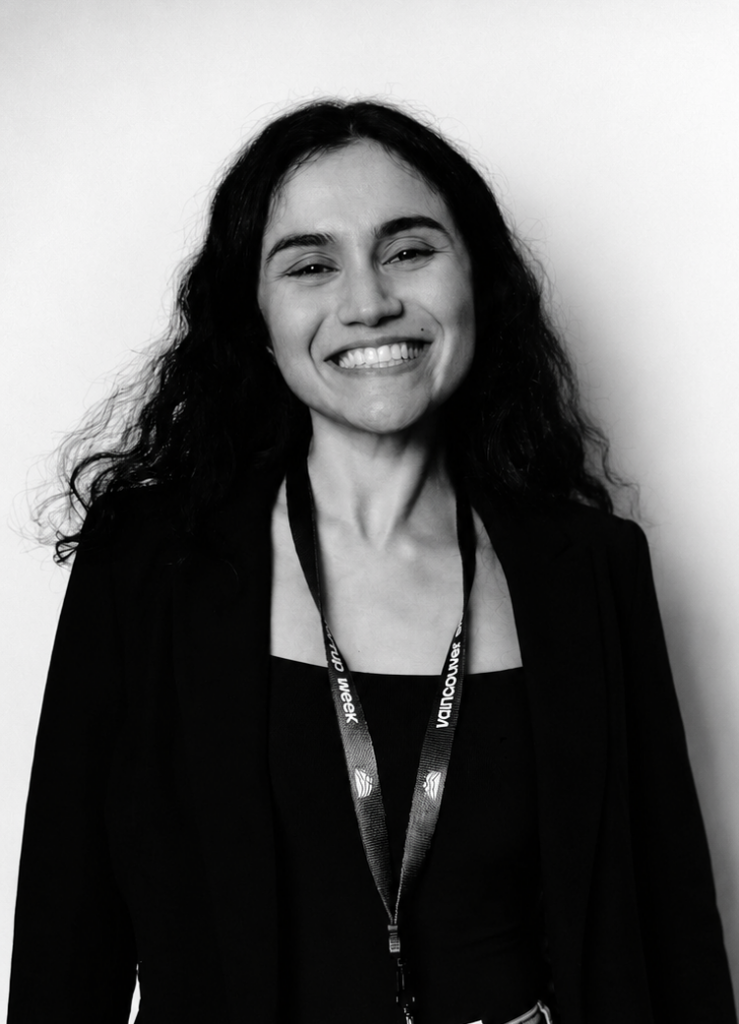

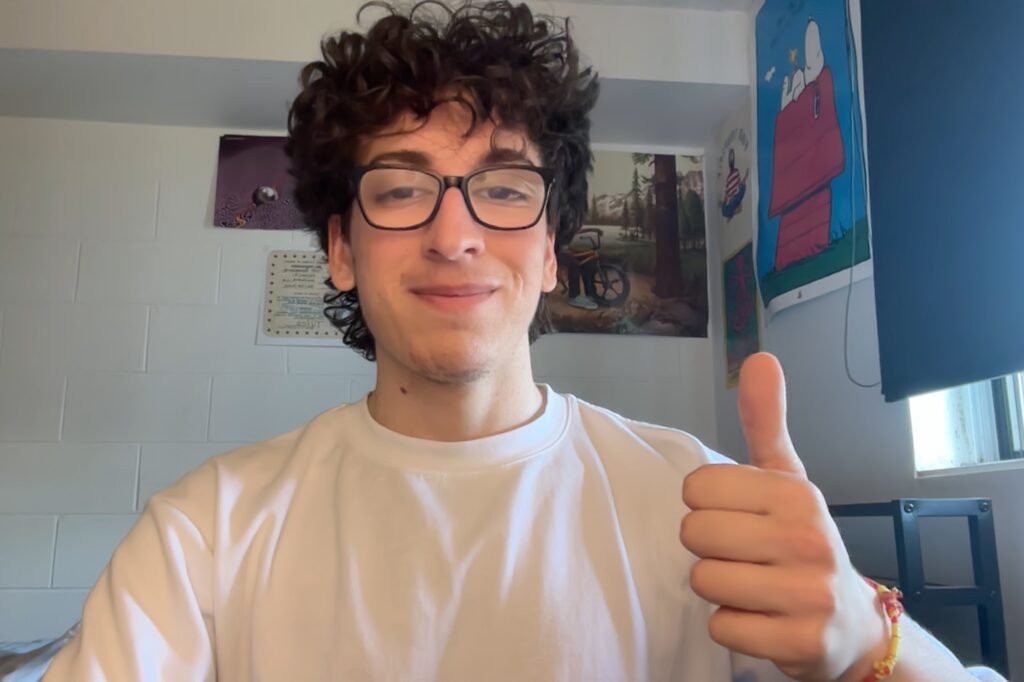
Anthony Qiu — Creator of Epoch
What inspired you to turn memory-keeping into an augmented reality experience rather than a traditional journaling app?
I was inspired by the feeling of opening a real time capsule in person: the suspense, the excitement, and uncovering something you left for your future self. Apple’s AR features felt like the perfect fit since it made it much more alive than a traditional journal. You physically rediscover the memory rather than it just being read back to you.
Epoch allows users to “bury” digital memories in physical locations. What do you think we lose when memories exist only in endless camera rolls?
When memories only live in an endless camera roll, I think they lose a lot of context and intention, becoming buried amongst thousands of other moments. Epoch lets you gather and organize the pieces that together makes a memory meaningful like the location, your thoughts, photos, audio, video, drawing board etc so opening it later feels more like returning to a complete moment.
Your app feels nostalgic and futuristic at the same time. Were there any films, games, or technologies that inspired its emotional tone?
Epoch was mostly inspired by real life time capsules, but with a much lower barrier to entry. I wanted to preserve the nostalgia, mystery and satisfaction of leaving something for yourself in the future. Using technology and AR made it easier, personal and magical.
How did you approach designing an app that encourages people to slow down and preserve moments more intentionally?
I designed Epoch to make creating a capsule feel more deliberate. I really wanted the user to put more thought and creativity into each capsule. One of my favourite features is the drawing board, where you can create anything from a vision board to a photo collage. I wanted to encourage users to pause and think about what is actually worth preserving.
WWDC celebrates innovation, but Epoch also feels deeply personal and emotional. Why is technology at its best when it connects to human feeling?
Technology is at its best when it helps us feel something more deeply, not just to do something faster. For me, Epoch uses innovation in service of emotion to help people hold onto important moments, revisit who they were and feel connected to places, people and versions of themselves over time.
Anushka Punukollu — Creator of Dextera
Your grandfather’s love of music helped inspire Dextera. What has it meant to transform a personal family connection into accessible technology?
I remember breaking the first electric keyboard my grandfather gave me when I was a kid, and I like to think of Dextera as a gift back for everything he’s given me. He always encourages me to play and try things even if I am not initially good at them, especially when it comes to music. Building an app for others who might have lost that same mobility due to injury or age made me realize how many factors you need to consider when designing something. It was very exciting to show the final product to him and others I met along the way, and to see how helpful it can be in practice after weeks of research and programming!
Dextera combines hand-tracking technology with music in a really human way. Why was accessibility such an important starting point for you?
I believe accessibility is a huge part of building meaningful technology. One of music’s most defining traits is that anyone, anywhere in the world, can enjoy it, so the technology surrounding it should reflect that same openness. People have different strengths, abilities, and ways of interacting with the world, and technology should adapt to them rather than forcing everyone into the same interaction model. Accessibility also pushes you to design from another person’s perspective and focus on simplicity instead of creating overly complex tools that aren’t easy to use. When you consider how people move, communicate, and experience technology differently, you can create more intuitive interactions for everyone.
Many assistive technologies can feel clinical or intimidating. How did you ensure Dextera still felt joyful and creative?
I put the human experience at the center of Dextera from the start, which meant avoiding anything that felt overly clinical since patients already experience that when they go to the hospital. I ended up spending a lot of time researching colours to land on shades of purple that were vibrant without being overwhelming as a first-time user. Additionally, I had my family and best friend test the app during development to gather honest feedback and refine details I might have missed!
Music has a unique emotional power. What does it mean to help someone reconnect with songs they thought they might never play again?
It is a privilege. Music is a huge part of people’s lives and cultures, taking everyone back to memories and different moments, so being able to restore that connection through technology is very meaningful. Getting to make someone feel a little less frustrated and a bit more excited to start their day or do their hand exercises is part of the reason I enjoy programming in the first place!
You first got into coding during the pandemic. Did you ever imagine that curiosity would eventually lead you to being recognized globally by Apple?
Before the pandemic, I never really saw programming as something I would pursue seriously, and definitely not something that would eventually lead to me being recognized by Apple. However, as I started learning, I became excited by how quickly technology evolves and how it pushes communities forward. Over the last few years, my curiosity has led me to learn new languages, frameworks, and ideas emerging across the industry. Being recognized by Apple was especially meaningful because I’ve always admired their attention to detail and dedication to building great products, so having my work recognized by them was even more rewarding!
Avni Kapoor — Creator of Pause
Pause tackles doom-scrolling with something deceptively simple: one thoughtful question a day. Why did simplicity feel so important?
Because complexity is part of the problem. Most apps pile on features to keep you engaged longer, to give you more reasons to stay. I wanted to do the opposite and create something so minimal that it almost feels like it shouldn’t work. One question is small enough that you can’t talk yourself out of it. It’s not a journaling app or a wellness platform. It’s just a pause. That constraint was intentional, and I think it’s what makes it feel different. If it asked too much, people would skip it. Keeping it to one question means almost anyone can show up for it.
As someone studying both Computer Science and Cognitive Science, how do you think technology shapes the way we think and feel emotionally?
Technology doesn’t just respond to how we think, it trains it. Infinite scroll conditions us to expect constant novelty, which makes sustained focus feel harder and quiet moments feel uncomfortable. Cognitive science shows that reflection is where a lot of meaning-making actually happens, but we’ve slowly engineered it out of our evenings. I think about that intersection a lot when I’m building something. Whether what I’m creating sharpens the people using it or slowly dulls them. That question has become a kind of personal design standard for me.
Many apps compete for more attention. Yours encourages people to reclaim it. Did that feel radical in today’s tech landscape?
Honestly, yes, a little. The default assumption in app design is that more time on your product means it’s working. Pause is designed to take about two minutes and then get out of your way entirely. That felt strange to build at first, almost counterintuitive. But I kept coming back to the belief that there’s real space for tools that respect your time rather than consume it. Winning the Swift Student Challenge made me feel like that instinct was worth trusting, and that other people were quietly looking for something that asked less of them.
You’ve described scrolling as creating “mental fog.” What habits or boundaries have personally helped you reconnect with yourself offline?
Mostly just noticing the moments when I reach for my phone out of habit rather than intention, boredom, waiting, the couple of minutes before sleep. Pause came directly out of trying to intercept that specific moment. Replacing the bedtime scroll with something that actually asks something of me, even just a single question, changes the whole texture of the night. I also started leaving my phone outside my room, which sounds small but shifts more than you’d expect. It creates just enough friction that you have to choose to go get it, and most of the time you don’t.
What do you hope users discover about themselves in the quiet moment before they instinctively open another app?
That they have more to say than they thought. Most of us don’t give ourselves the chance to finish a thought before the next thing starts. We’re always mid-scroll, mid-story, mid-something. I hope Pause is the moment that shows there’s something worth listening to in there, a real opinion, a memory, something you’ve been turning over without realizing it. You don’t need an algorithm to hand that to you. It was already yours. I think a lot of people have lost the habit of accessing it, and I wanted to build something that helps bring it back, one night at a time.
Prabhsimran Shergill — Creator of Rana
Rana was inspired by your uncle and your family’s experience with addiction. What was it like building something so deeply personal?
Rana is named after my uncle — his nickname — and it grew out of watching addiction touch my family in deeply personal ways. Building it was healing. I never start by thinking about the technology — I start with the problem and the person who needs help. I always put myself in the shoes of the end user, not the developer. That mindset became the foundation of the entire app. The simulator feature, which shows users the real effects of different substances, was driven by one goal: protect the next generation before they ever have to learn the hard way.
Your app supports both people struggling with substance use disorder and the people who love them. Why was it important to address both experiences?
Addiction doesn’t just affect one person — it ripples through everyone who loves them. Sometimes the person struggling can’t take the first step alone, and the people supporting them need more than just willpower. With my background in psychology from the University of Ottawa, I designed Rana to serve both sides — because sometimes the most powerful thing you can give a supporter is the right tool at the right time.
Addiction is often surrounded by stigma and silence. How can technology help create more compassion and accessibility around recovery?
In Punjabi culture, there’s this strange contradiction where drugs are glorified in music while families suffer in silence. I wanted technology to break through that. Rana connects people to local recovery resources based on where they live, and future updates will include things like voice reminders from loved ones and smart location-based nudges. My next focus is Punjab, India — my home state — and I plan to offer the app free to local police for community outreach. As a proud Punjabi Canadian, I’m determined to make sure the next generation doesn’t fall into the same cycle.
Rana combines practical tools like Naloxone training with emotional support features like journaling. Why did you want recovery to feel holistic rather than clinical?
Recovery is more than medicine — it’s emotional, it’s psychological, it’s deeply human. Rana reflects that. Every feature was designed by thinking like the person who needs it, not the person building it. In an emergency, nobody is going to search through an app — so you can simply tell Siri what’s happening and get life-saving Naloxone instructions instantly, while 911 is called on speaker. For everyday support, there are two ways to check in: writing freely about how you feel, or a guided check that asks simple questions — are you hungry, angry, lonely, or tired? Both can be shared with a doctor or loved one. Add in breathing exercises, mood tracking, and a feature that helps supporters figure out if they’re truly helping or accidentally making things worse, and you have a tool that meets people wherever they are in their journey.
What do you hope someone feels the first time they open Rana during a difficult moment?
Hope. That one word is the whole point. I want someone to open Rana and feel like they’re not alone — that something is there to listen, to guide them, or to help them be there for someone they love. That’s everything.
Daniel Eskandar — Creator of Frail
Frail makes physics feel immersive and emotional rather than intimidating. Why did you want people to feel science instead of simply learn it?
Because feeling it is what actually challenges you to think deeply, and that is exactly what physics is. Physics is simply thinking deeply about what seem to be intuitive concepts. I mean it doesn’t take genius to say if an object moves it will continue moving until you ask why. I can tell someone the gravitational constant is 6.674 × 10⁻¹¹ and they’ll forget it by tomorrow. But if I let them pull a slider and watch a universe collapse, watch stars never ignite, watch atoms fail to hold, that stays. The number becomes a consequence. I wanted people to feel the weight of how precise everything had to be for any of this to exist. That’s not something you can feel from a formula. You have to experience it breaking.
Growing up in Chris Hadfield’s hometown clearly sparked something in you. How did space first capture your imagination?
Growing up in the GTA, Chris Hadfield would call into our school assemblies from the International Space Station. He’d play guitar in zero gravity and answer questions from a bunch of kids in Ontario who had no business talking to someone in orbit. That made space feel close. Not distant and theoretical, but close. My family spent a lot of time at the Ontario Science Centre’s space exhibit. Space didn’t capture my imagination so much as it never let it go. This interest only deepened when I started taking more complex physics courses at the University of Waterloo.
Your app explores how changes in the universe affect everything around us. What fascinates you most about that interconnectedness?
The thing that genuinely keeps me up at night is that the constants aren’t derived from anything. We don’t know why gravity is the value it is. We don’t know why the speed of light is what it is. These things just are and they happen to be exactly right. Change any one of them by a fraction and there are no stars, no atoms, no chemistry, no you. That fragility is what fascinates me. Not that the universe is grand and vast but that it’s delicate. I like to say it’s suspiciously precise.
Physics is often taught through formulas and theory. How did you approach making it feel cinematic, visual, and alive?
I asked myself what each constant actually does and then built a way to break it. Gravity, I let you watch a gas cloud fail to collapse into a star. Light speed, I zoomed into a carbon atom and let you destabilise it. Time, I let you accelerate a character named Alice toward the speed of light and watch her age slower than her twin Bob in real time. Every lesson is a slider and a consequence. The visuals came from that instinct, if the physics is dramatic, the rendering should be too. The supernova in the final section uses a real Hubble Space Telescope photograph. Nothing I could generate would be more cinematic than what actually happened.
Many people say they “aren’t science people.” What do you hope Frail unlocks for users who may have never connected with physics before?
I hope it unlocks the feeling that this story belongs to them. Physics and STEM have an intimidation problem, not because the ideas are inherently hard but because of how they’ve been gatekept. Equations on a blackboard, dense textbooks, the unspoken message that this is for a certain kind of person. The goal was for anyone to show up and have the universe talk to them, no equations or prerequisites needed. If someone finishes it and thinks “I never knew I cared about this” then I achieved my goal. The universe is unreasonably precise and we are a product of that precision.v
share:

May 31st, 2026 at 8:04 am
balmoral house provides student accommodation with convenient access to Melbourne universities, public transport, and city amenities.