
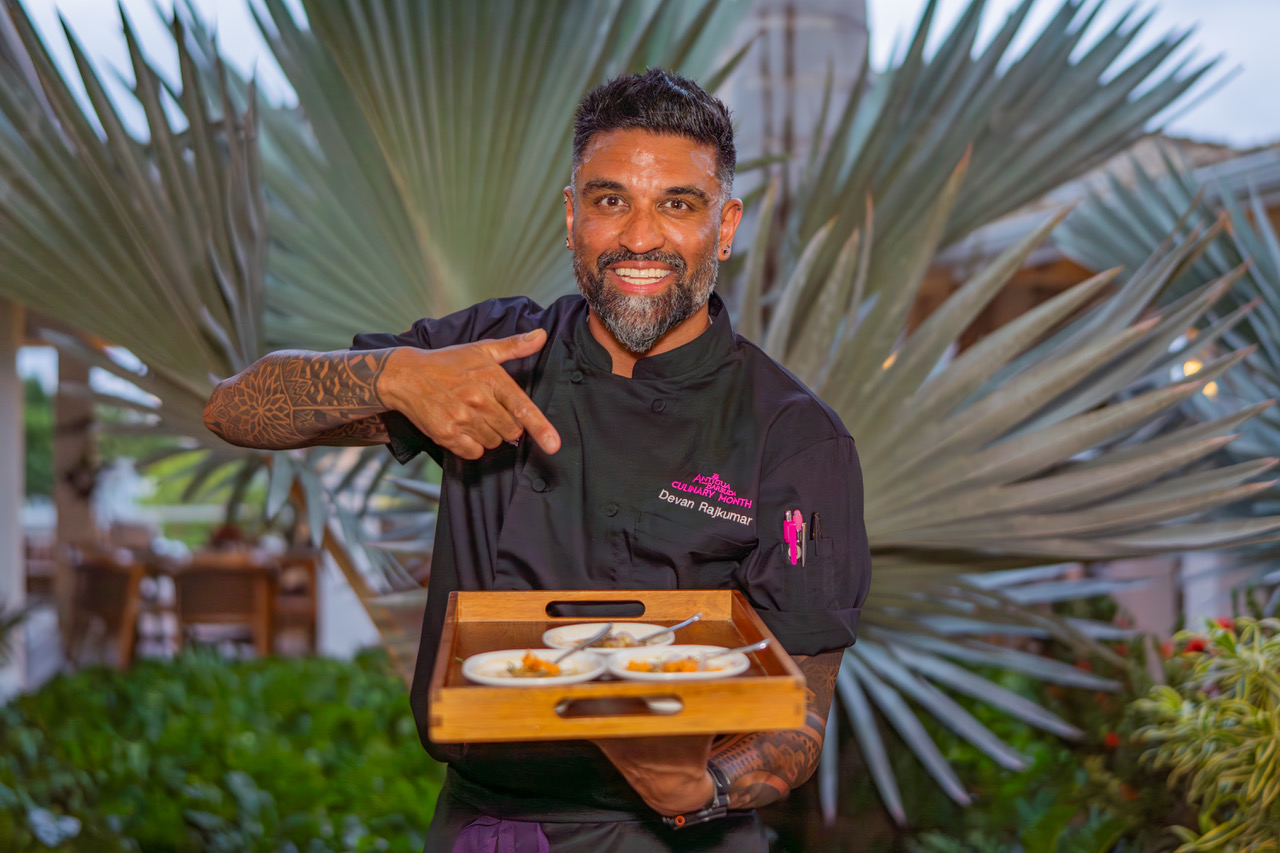
When Canadian chef, TV personality, and author Devan “Chef Dev” Rajkumar travelled to Antigua and Barbuda for the finale of the destination’s Culinary Month, he discovered that the islands offer far more than postcard-perfect beaches. From beachside cookouts and vibrant local ingredients to the warmth of the people and a food culture deeply rooted in place, the experience revealed a delicious side of the Caribbean that many travellers overlook. We caught up with Chef Dev to talk about the flavours that surprised him, the dishes he’ll never forget, and why Antigua and Barbuda deserves a spot on every food lover’s travel list. —Noa Nichol
As someone with deep Caribbean roots, what was it like stepping into Antigua and Barbuda’s Culinary Month and seeing the region’s diverse food cultures celebrated in one place?
My Caribbean roots run deep, so stepping into Antigua and Barbuda’s Culinary Month felt less like attending an event and more like being part of a family reunion. Seeing so many Caribbean cultures represented through food, each with its own unique flavours, traditions, and stories, was incredibly inspiring. What made it even more special was being invited as a chef from outside Antigua and Barbuda to be part of the celebration. It was a tremendous honour, especially considering so many of the participating chefs are people I’ve admired for years and who have helped elevate Caribbean cuisine on the world stage. To be included alongside some of my culinary heroes was both humbling and rewarding, and a powerful reminder of how vibrant, diverse, and exciting Caribbean food truly is.
You cooked alongside Wild Tamarind Executive Chef Amalin Raj during the grand finale beachside cookout. What did that collaboration teach you about the unique flavours, ingredients, and traditions that define Antigua and Barbuda’s food scene?
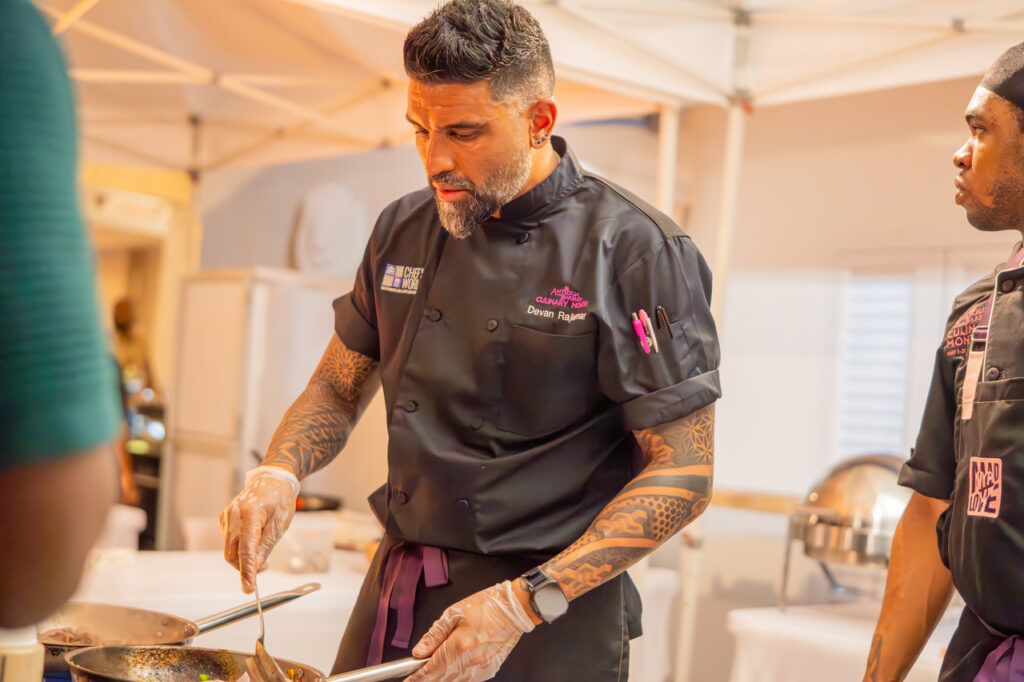
Cooking alongside and getting to hang out with Chef Amalin Raj was one of the highlights of my trip. What impressed me most was how thoughtfully he embraced the local ingredients and the spirit of Culinary Month. Seeing him create a fish Wellington stuffed with plantain and callaloo, served alongside breadfruit gnocchi and a scotch bonnet beurre blanc, was incredible. It was a beautiful example of how Antigua and Barbuda’s flavours and traditions can be celebrated through refined, modern cooking without losing their identity. His dishes showcased the creativity, pride, and abundance of the island, and it was inspiring to see local ingredients elevated in a way that still felt deeply connected to place.
Many travellers think of Antigua and Barbuda for its beautiful beaches. After this experience, why do you believe its culinary culture deserves to be just as much of a draw?
The beaches are absolutely breathtaking, but the food is what keeps you talking about Antigua and Barbuda long after your tan fades. Anyone can take a photo of turquoise water, but food is how you connect with a destination on a deeper level. It’s the fish pulled from the sea that morning, the local fruit bursting with flavour, the roadside spots, the family recipes, and the people behind them. As someone who travels the world chasing great food, I can tell you the most memorable moments rarely happen on a beach chair. They happen around a table. Antigua and Barbuda has all the natural beauty you’d expect from a Caribbean paradise, but its culinary culture has the same soul, the same vibrancy, and just as many stories worth discovering.
Your cooking style is known for bold, vibrant flavours. Were there any local ingredients or cooking techniques you discovered in Antigua and Barbuda that you’re excited to bring back into your own kitchen?
Absolutely. One of the ingredients that really stood out to me was breadfruit. Growing up in a Guyanese household, breadfruit was something we ate often, but usually in the form of chips. Occasionally we’d have thicker pieces roasted or baked, but for me, breadfruit was always a humble, everyday ingredient. Seeing it transformed into something as elegant as breadfruit gnocchi was a great reminder of just how versatile Caribbean ingredients can be. I was also blown away by the quality of the seafood and the way local chefs balanced bold flavours with restraint, allowing the ingredients to speak for themselves. As someone known for big flavours, that’s a lesson I’m always happy to be reminded of. I left Antigua and Barbuda with a renewed appreciation for ingredients I grew up with and plenty of inspiration that will undoubtedly find its way onto future menus.
You’ve travelled extensively and explored street food and regional cuisines around the world. What makes the dining experiences in Antigua and Barbuda feel so deeply connected to the island’s people, history, and sense of place?
I’ve been fortunate to eat my way through dozens of countries, from street stalls in Southeast Asia to fine dining restaurants around the world, and the destinations that stay with you are the ones where the food feels connected to the people and the place. That’s exactly what I experienced in Antigua and Barbuda. Everywhere I went, there was a story behind the food, whether it was a chef showcasing local ingredients, a fisherman bringing in the day’s catch, or a family recipe that had been passed down through generations. Nothing felt manufactured or created for tourists. The food reflected the island’s history, culture, and way of life. You can taste the African, Indigenous, European, and wider Caribbean influences, but more importantly, you can feel the pride. That’s what makes a dining experience memorable. It’s not just what’s on the plate, it’s the people behind it.
Culinary tourism is having a major moment right now, with travellers looking for more authentic experiences. For someone planning a summer escape, what’s your perfect food-filled day in Antigua and Barbuda—from breakfast through sunset cocktails?
My perfect food-filled day in Antigua and Barbuda starts with a traditional breakfast of saltfish and chop-up, a strong cup of coffee, and plenty of fresh tropical fruit, especially the island’s famous Antigua Black pineapple, which may be one of the sweetest pineapples I’ve ever tasted. I was also lucky enough to visit during mango season, and let’s just say I showed absolutely no restraint. The mangoes were so good I think I ate five in a row at one point. From there, I’d spend the morning exploring local markets, meeting farmers and fishers, and tasting whatever is fresh and in season. Lunch has to be fresh seafood, whether it’s grilled lobster, conch, or a whole snapper caught that morning, enjoyed beachside with an ice-cold drink. Throughout the day, I’m making sure to sit down for Antigua and Barbuda’s national dish, fungie and pepperpot. As a Guyanese chef, I have to point out that their pepperpot is completely different from the pepperpot I grew up eating. I first learned that from Antiguan Chef Claude Lewis when he prepared it at the James Beard Platform last November while we were promoting Culinary Month 2026. Unlike Guyana’s rich, dark cassareep-based pepperpot, the Antiguan version is a hearty vegetable stew, and it’s a perfect example of how one dish can tell completely different stories across the Caribbean. As the sun begins to set, I’m grabbing a mocktail by the water before settling in for a long dinner that celebrates the incredible seafood, produce, and culinary talent found across the islands. For me, the perfect day isn’t just about eating great food, it’s about connecting with the culture, the people, and the flavours that make Antigua and Barbuda so special.
share:

Be the first to comment