
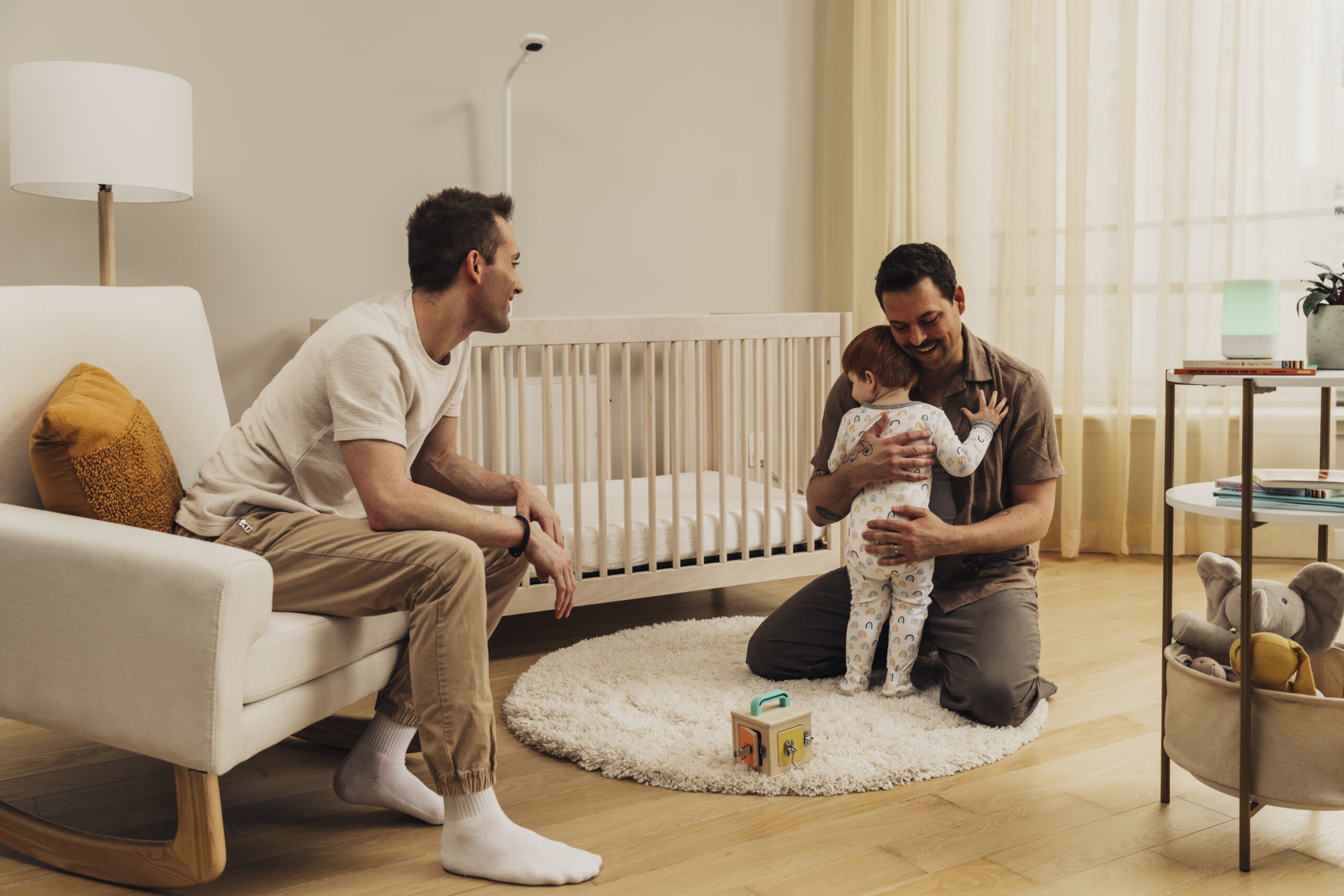
For decades, the image of early parenthood has often centred on one exhausted parent carrying the invisible weight of knowing everything—when the baby last ate, how long they slept, whether that cry means hunger or overtiredness—while the other parent waits to be told how to help.
But according to new insights from Nanit, that dynamic may finally be changing.
The 2026 Nanit Parent Report found that nearly half of active users engaging with their baby’s sleep and development insights are dads, suggesting a meaningful shift in how modern families approach caregiving. Rather than acting as assistants, fathers increasingly want to participate fully in the emotional and cognitive work of parenting.
“For generations, one parent often became the keeper of all the baby’s information, which quietly cast the other as a helper rather than an equal,” says Dr. Natalie Barnett, Vice President of Clinical Research at Nanit. “When both parents can open the same app and see the same sleep patterns and milestones, technology like Nanit dissolves that gatekeeping.”
The result? A more balanced partnership.
“It tells us that modern fathers don’t want to be assistants waiting for instructions,” Barnett explains. “They want their own direct relationship with their baby’s care and development. Engaging with sleep and development insights is dads opting into the cognitive work of parenting, not just the physical tasks.”
That shared visibility can have a profound effect on family dynamics. Nearly 70 per cent of mothers surveyed said real-time access to information allowed them to trust their partner more or step away without guilt.
“So much early parenting stress comes from information asymmetry—one parent knowing and the other guessing,” says Barnett. “When both partners can see the same real-time data, there’s nothing to defend or report back, which replaces suspicion and guilt with a shared, factual starting point and a sense of ‘we’re in this together.’”
Beyond easing tension between partners, the shift appears to be building confidence in fathers themselves. More than half of dads surveyed reported feeling significantly more confident since becoming parents.
“Confidence is what lets a parent be calm and present, and calm presence is the foundation of attunement,” says Barnett. “That responsive, unhurried back-and-forth is precisely what builds secure attachment.”
The findings also highlight a conversation that’s long overdue: paternal mental health.
“Many dads are quietly navigating real postpartum anxiety and depression, identity shifts, and a feeling of being on the sidelines—all while being told, often implicitly, to be the steady one,” Barnett says. “Paternal mental health is under-screened and under-discussed, and naming it openly is one of the most important things we can do for whole-family wellbeing.”
While some parents worry that technology could make raising children feel overly clinical, Barnett believes the opposite is true when used thoughtfully.
“Data should inform intuition, not replace it,” she says. “We frame insights as a reassuring starting point that helps parents trust their own read of their baby. We want data to be empowering and to give parents confidence.”
Perhaps what these findings reveal most clearly is that modern fatherhood is evolving.
“I do think we’re witnessing a genuine cultural shift,” says Barnett. “Emotional involvement and nurturing are increasingly seen as strengths rather than departures from masculinity. Dads showing up hands-on, tracking, soothing, and talking openly about the hard parts is quietly rewriting what it means to be a capable father.”
Because in 2026, parenting isn’t about one person carrying the invisible load while the other lends a hand. It’s about building a team—one that learns, worries, celebrates, and grows together. —Noa Nichol
share:

June 9th, 2026 at 8:59 pm
What a wonderful article! The Scandinavian approach to hands-on learning is so refreshing. Getting kids involved in woodworking and practical crafts instead of screen time is exactly what we need more of. Thanks for sharing!
June 10th, 2026 at 8:30 pm
I also found this_resource really helpful.
June 11th, 2026 at 1:17 am
I also found check it out really helpful.
June 12th, 2026 at 8:45 am
I also found Zimage AI AI really helpful.
June 13th, 2026 at 6:37 am
I also found this Facefusion AI tool really helpful.
June 13th, 2026 at 12:33 pm
This is such an insightful piece on how technology can ease the mental load in new parent partnerships. With AI-generated 3D models now making creative tools more accessible than ever, it is inspiring to see how digital tools are empowering families to share responsibilities more effectively. Hy 3D Hy 3D has been at the forefront of making 3D design intuitive and collaborative for everyday users.
June 15th, 2026 at 5:41 pm
I also found Samaudiolab really helpful.
June 16th, 2026 at 12:01 am
I also found https://pika-labs-ai.com really helpful.
June 16th, 2026 at 12:07 pm
I also found Omni Gemini really helpful.
June 17th, 2026 at 1:09 am
I also found image-to-stl.com really helpful.
June 17th, 2026 at 11:56 pm
I also found this tool really helpful.
June 18th, 2026 at 1:10 pm
I also found this AI 3D Modeling app really helpful.
June 18th, 2026 at 8:07 pm
I also found Aivideoonline AI really helpful.
June 19th, 2026 at 9:32 am
I also found the Samaudiotool tool really helpful.
June 19th, 2026 at 4:20 pm
I also found https://fruit-love-island.com really helpful.
June 19th, 2026 at 4:21 pm
Great article on how tech is easing the mental load for new parents. Shared parenting really does benefit everyone, and I found https://fruit-love-island.com a useful resource for tips on building that partnership.
June 20th, 2026 at 12:02 pm
Tech has fundamentally reshaped how modern parents divide responsibilities, and it is exciting to see tools that make the invisible mental load visible for both partners. When you are juggling sleepless nights with career demands, having apps that coordinate schedules and task assignments can be the difference between feeling overwhelmed and working as a true team. For creative families, services like AI Logo Generator even help capture your family brand in a fun, personalized way that kids absolutely love.
June 20th, 2026 at 11:58 pm
I also found AI for Animation AI really helpful.
June 21st, 2026 at 11:56 am
I also found Framepack AI tool really helpful.
June 21st, 2026 at 11:58 pm
I also found an AI tool I’ve been using really helpful.
June 22nd, 2026 at 11:29 am
I also found an AI tool really helpful.
June 24th, 2026 at 3:14 pm
This article raises an important point about how technology is reshaping parenting dynamics. The mental load of managing a household deserves more recognition, and tools that make visible contributions that were often hidden before are genuinely helpful for modern families. It is encouraging to see platforms like Grok Imagine AI pushing the boundaries of how AI can assist with creative tasks and daily decision-making.
June 25th, 2026 at 7:30 am
I also found Qwenimaging really helpful.
June 25th, 2026 at 6:37 pm
I also found ai-watermark-remover.net really helpful.
June 26th, 2026 at 5:35 pm
I also found the Wanxaivideo tool really helpful.
July 1st, 2026 at 1:12 am
I also found this resource really helpful.
July 1st, 2026 at 9:35 pm
I also found grabcad.site really helpful.
July 2nd, 2026 at 2:11 am
I also found this resource really helpful.
July 2nd, 2026 at 2:30 am
This article raises a great point about how technology can redistribute household responsibilities. For couples navigating modern parenting challenges, I also found this resource helpful in understanding how digital tools can foster collaboration rather than dependency.
July 2nd, 2026 at 6:38 pm
I also found Yeggi really helpful.
July 3rd, 2026 at 2:50 am
I also found myminifactory.pro really helpful.
July 4th, 2026 at 6:01 am
I also found image-to-3d.com really helpful.
July 4th, 2026 at 9:02 pm
I also found Z Image Turbo really helpful.
July 5th, 2026 at 12:30 am
I also found https://thingiverse.app really helpful.
July 6th, 2026 at 6:20 am
I also found this AI Art Generator app really helpful.
July 6th, 2026 at 11:27 pm
I really appreciate how this article highlights the practical ways technology can ease the mental load of parenting. Having a centralized space to organize family schedules, meal plans, and to-do lists makes such a difference in reducing that constant mental juggling. I also found printables.cloud really helpful for finding ready-made templates that streamline daily routines even further.
July 7th, 2026 at 6:44 pm
This is such a refreshing take on how technology can genuinely support modern parenting rather than just add more screens to the mix. I love that you highlighted shared calendars and task apps as tools for actually dividing the mental labor — it’s something I’ve seen work well in my own circles. For anyone interested in how AI is reshaping family workflows behind the scenes, I’ve found some great reads over at https://animatediff.net.
July 8th, 2026 at 6:45 pm
This is such a refreshing take on how technology can lighten the mental load in parenting. The shift toward shared digital tools really does help both partners stay on the same page without constant check-ins. I have been tracking a similar trend over at make-ai-video.com and the overlap with family coordination tools is surprisingly strong.
July 9th, 2026 at 6:00 am
I also found AI 3D model generator really helpful.
July 10th, 2026 at 9:27 pm
I also found Aibestfinder really helpful.
July 11th, 2026 at 5:13 am
This article beautifully captures how technology can ease the mental load of parenting. I also found crayo-ai.net really helpful. complementing these ideas with practical AI-driven solutions for modern families.
July 12th, 2026 at 1:25 am
I also found Deepfacelab really helpful.
July 13th, 2026 at 12:55 am
I also found this tool really helpful.
July 13th, 2026 at 8:43 am
Bài viết rất ý nghĩa và giúp mình hiểu thêm về những người phụ nữ đã góp phần thay đổi lịch sử phát thanh. Cảm ơn bạn đã chia sẻ câu chuyện truyền cảm hứng. Mình cũng thường theo dõi xổ số miền nam mỗi ngày.xổ số miền nam
July 13th, 2026 at 8:44 pm
As a parent of two young kids I have been exploring how AI tools can help with the invisible workload of managing schedules and routines. Your article’s point about “shared cognitive labor” really resonates. I also found Motion Control AI great for understanding how intelligent automation is reshaping everything from home management to robotics.
July 14th, 2026 at 12:01 am
It’s refreshing to see tech framed as a partner in easing the mental load rather than just another distraction. The idea of using shared apps or calendars to make household responsibilities more visible is something my partner and I have found genuinely transformative. I also found https://muse-video.pro really helpful.
July 16th, 2026 at 1:49 am
I also found check it out really helpful.
July 16th, 2026 at 1:51 am
It’s refreshing to see tech framed as a way to lighten the mental load in parenting rather than add to it. The invisibility of all those small tasks really resonates. I also found aivideomemegenerator.com really helpful for keeping things creative at home.
July 16th, 2026 at 1:51 am
It’s refreshing to see tech framed as a way to lighten the mental load in parenting rather than add to it. The invisibility of all those small tasks really resonates. I also found aivideomemegenerator.com really helpful for keeping things creative at home.
July 16th, 2026 at 1:52 am
This article makes a great point about how shared digital spaces can ease the invisible workload that often falls on one partner. We have been using a simple shared notes app for meal planning and it genuinely made a difference in how we communicate daily tasks. For a lighter creative break we also use <a href="https://aivideomemegenerator.com/\naivideomemegenerator.com to make silly videos with the kids.
July 16th, 2026 at 1:53 am
This article makes a great point about how shared digital spaces can ease the invisible workload that often falls on one partner. We have been using a simple shared notes app for meal planning and it genuinely made a difference in how we communicate daily tasks. For a lighter creative break we also use aivideomemegenerator.com to make silly videos with the kids.
July 16th, 2026 at 1:53 am
This article makes a great point. Shared digital spaces really help with the invisible workload. Our family uses aivideomemegenerator.com for fun creative breaks with the kids.
July 16th, 2026 at 1:53 am
This article makes a great point about shared digital spaces easing the invisible workload. We use aivideomemegenerator.com for creative breaks with the kids.
July 17th, 2026 at 3:59 am
I also found Perchance AI Image really helpful.
July 19th, 2026 at 3:21 am
I also found the Seedance 2 tool really helpful.
July 19th, 2026 at 5:42 pm
I also found this tool really helpful.
July 19th, 2026 at 5:42 pm
It’s refreshing to see the mental load finally getting the attention it deserves. We’ve been using this tool to turn family notes and reminders into quick songs that the kids actually remember—it’s become our little shortcut for making chores feel lighter for everyone.
July 20th, 2026 at 5:38 am
I also found 3DTRELLIS really helpful.
July 21st, 2026 at 5:50 am
I also found an AI tool I’ve been using really helpful.
July 21st, 2026 at 12:31 pm
I also found aiphotoonline.com really helpful.
July 21st, 2026 at 12:32 pm
Great article! I especially appreciate the point about how shared digital calendars and task apps can make the mental load feel so much lighter. I also found aiphotoonline.com really helpful for managing family schedules too.
July 22nd, 2026 at 2:23 am
I also found AI Hairstyle Changer really helpful.
July 22nd, 2026 at 5:21 pm
I also found Music Generatorai really helpful.
July 23rd, 2026 at 5:31 am
I also found Stl Viewer really helpful.
July 24th, 2026 at 8:04 am
This is a really thoughtful piece on how technology is reshaping the parenting dynamic — it resonates deeply with my experience as a dad navigating the mental load alongside my partner. One tool that has been surprisingly useful in our workflow is hy-3d.com, an open-source AI that generates 3D assets from text or photos in seconds. It has helped my kids bring their imaginative ideas to life for school projects, turning abstract concepts into tangible 3D models they can hold and explore. The fact that it is free and open-source makes it feel like a natural extension of the collaborative, partnership-driven parenting approach the article champions.
July 25th, 2026 at 6:32 am
I also found the Vaceit tool really helpful.
July 25th, 2026 at 12:12 pm
I also found Aiphotoassistant really helpful.