
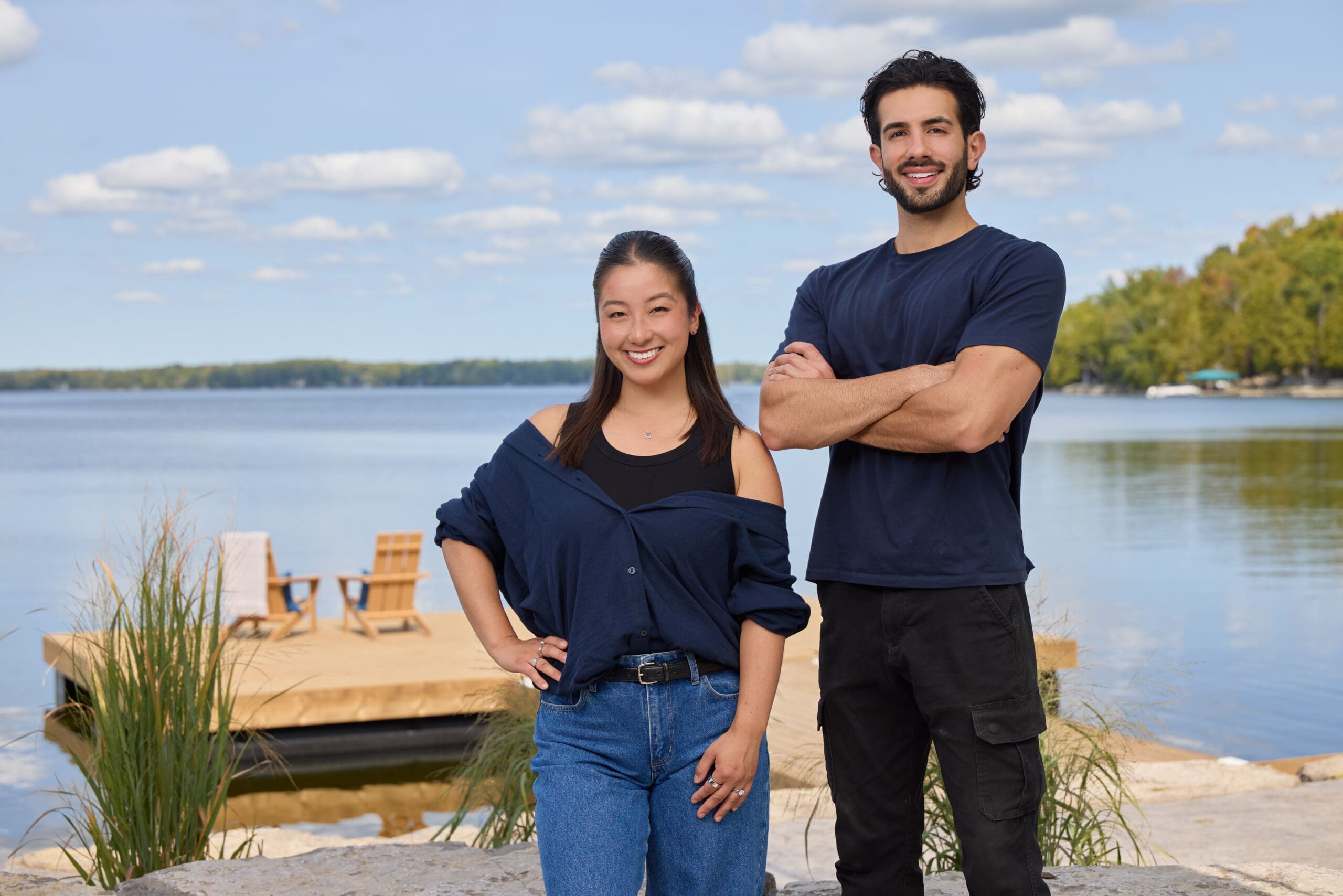
The stakes are higher than ever as Home Network’s Renovation Resort returns for its third season on Sunday, April 5 at 9 p.m. ET/PT on Home Network and streams on STACKTV. This year, real estate expert Scott McGillivray and builder Bryan Baeumler are heading to the lake to oversee the transformation of a long-neglected resort into a premier vacation destination. Four elite contractor-designer duos are moving in for an eight-week battle, competing for a life-changing $100,000 prize and the ultimate bragging rights.
We’re sitting down with this season’s competitors to go behind the scenes of the build. From blending Japanese Minimalism with entrepreneurial grit to bringing a “Modern-Funk” Bahamian flair to the Canadian lakeside, these teams are sharing what they learned about themselves under pressure and why they’re obsessed with the art of the renovation.
- Tatianna and Thomas (Vancouver): Co-workers who merge Red Seal craftsmanship with a “Modern-Organic” aesthetic.
- Marcy and Melissa (Niagara): Sisters who pair design finesse with hands-on execution in a “Rustic Coastal” style.
- Chalon and Liz (Texas): Friends bringing “Modern-Funk” design and sharp business acumen to the competition.
- Taylor and Mehrdad (Vancouver): A duo pairing “Japanese-inspired Minimalism” with serious grit.
First up: our interview with Taylor and Mehrdad below! —Noa Nichol
The Shoreline Signature: This season, you’re tasked with transforming a neglected resort into a premier vacation destination. How did you translate your specific design aesthetic—whether it be Modern-Organic, Rustic Coastal, Modern-Funk, or Japanese-inspired Minimalism—into a lakeside retreat that feels both luxury and functional?
One thing we really focused on in this design is how much humans naturally love to be immersed in nature. With a lakefront property surrounded by greenery, we wanted the interiors to reflect and mirror the outdoors, so that the experience inside feels like a continuation of the landscape outside. I (Taylor) brought in textures and materials inspired by the natural surroundings like wood, stone, and layered organic elements so the space feels both connected to the environment and luxurious. The goal was to create a retreat where guests feel like they’re fully immersed in nature, but in a way that’s comfortable, functional, and distinctly elevated.
The Duo Dynamic: From co-workers and sisters to long-time friends, every team brings a unique personal history to the construction site. What was the most surprising thing you learned about your partner’s “entrepreneurial grit” or “design finesse” while working under the eight-week pressure cooker?
What surprised us most was how quickly our dynamic evolved under pressure. You think you know someone, especially when you’ve worked together in the past, but the eight-week timeline really strips things down to instinct and execution.
What surprised me (Mehrdad) most was just how much goes into the design stage. As contractors, our role is to execute, deliver on time, on budget, and with a high level of craftsmanship. We don’t always see the depth of work happening behind the scenes. Watching Taylor operate was eye opening. The level of thought, detail, and constant analysis that goes into every decision, balancing aesthetics, function, and constraints really changed my perspective. It wasn’t just about making something look good; it was about making every element work together seamlessly under pressure. It gave me a whole new appreciation for her talent and for the design process as a whole.
The “McGillivray & Baeumler” Factor: Scott McGillivray and Bryan Baeumler are titans of the renovation world. Without giving away any spoilers, what was the most valuable piece of “tough love” or expert advice you received from them that completely changed how you approached a specific challenge?
There were a few moments where we were stuck trying to optimize part of the build. Everything was taking longer than it should, and we were overthinking the process. That’s when Scott McGillivray and Bryan Baeumler dropped a small, seemingly minor piece of advice, nothing flashy, just a tweak in approach. But the expert feedback completely changed how we worked. Suddenly, tasks that had felt slow or complicated flowed seamlessly, and we realized how much efficiency comes from the little adjustments you don’t always notice. It was a great reminder that in construction and building, small technical insights when applied thoughtfully can have a huge impact on momentum and on the final outcome.
The Resort Evolution: Renovating a resort is a different beast than a standard home flip. What do you love most about the “vacation destination” aspect of home renovation, and how did you ensure your space offered that “wow factor” needed to compete for the $100,000 prize?
What we loved most about renovating this resort-style space is that it’s all about the guest experience. Every decision—from the layout to the finishes, lighting, and textures—was made with one goal in mind: to create a space where anyone who walks in feels immediately welcomed, comfortable, and impressed. Inclusion was a key factor in designing the lake house, and we can’t wait for everyone to experience it!
To deliver that “wow factor,” we focused on blending the indoors with the natural beauty of the lake. Designing a lake house means keeping the surrounding environment front and center, so we layered textures, materials, and elements that echo the lakefront setting. I love creating immersive spaces, and working with the lakeside views and natural porphyry was a lot of fun.
The goal was simple: when someone steps inside, they should feel like they’ve arrived somewhere special—a place they want to savor, remember, and share with friends and family. We designed every detail from the guest’s perspective, imagining what we ourselves would hope for if we were visiting this home.
The DIY Takeaway: For the Vita Daily readers currently staring at their own “neglected” spaces at home, what is one professional secret or mindset shift you gained on the show that every DIYer should adopt before picking up a sledgehammer?
If there’s one professional takeaway every DIYer should adopt, it’s this: respect the time a project takes. Start by making a solid plan, design it according to your skill level, and allocate enough time to do it properly. Rushing leads to mistakes, frustration, and corners being cut. When you give yourself the time to plan and execute thoughtfully, even a neglected space can be transformed into something that looks intentional, polished, and built to last.
share:

Be the first to comment