
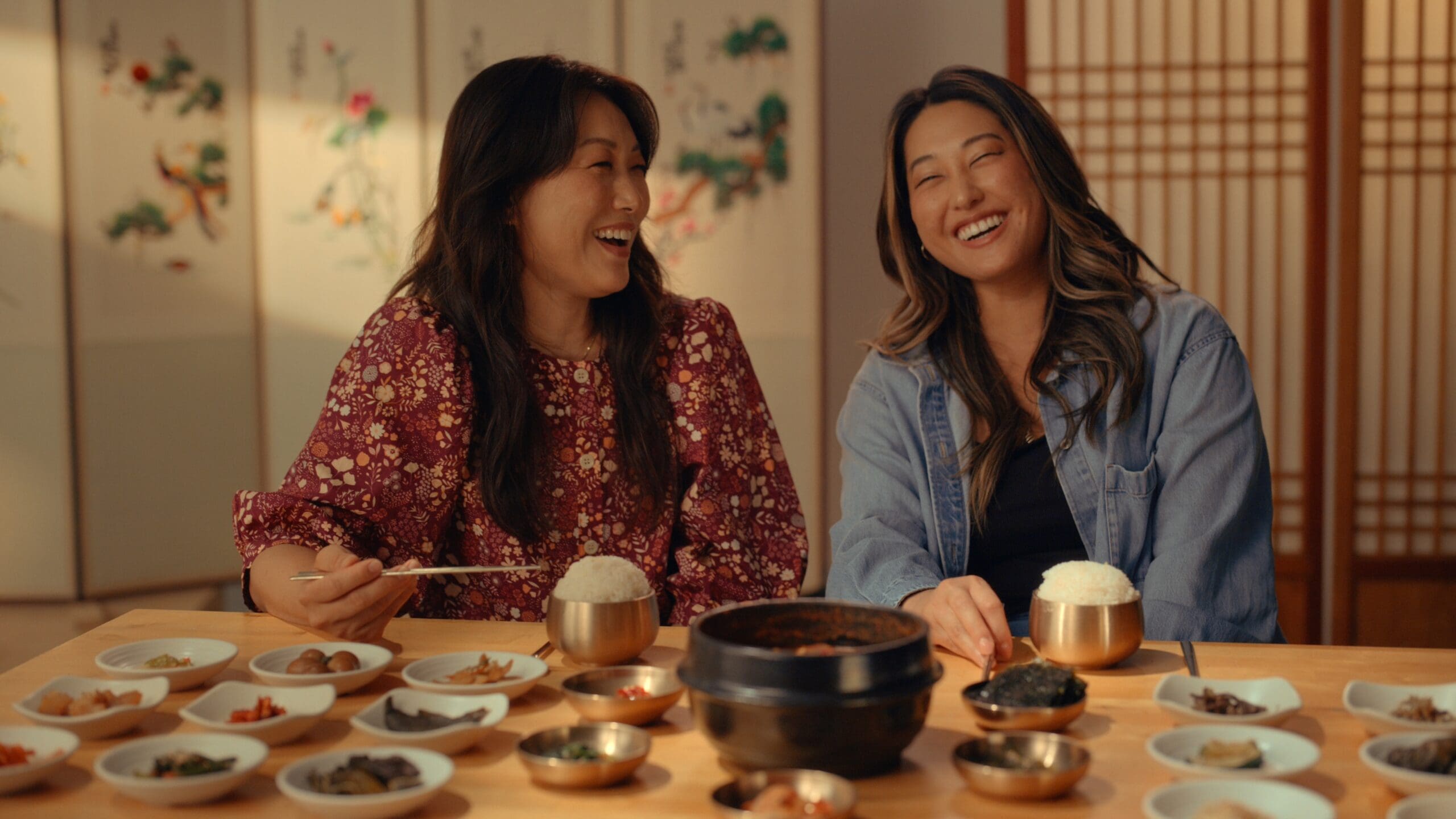
What if your favourite dishes held the key to protecting the planet? In Our Ocean Table, filmmaker Sonya Lee and journalist Hannah Sung blend culture, cuisine, and conservation in a deeply personal docuseries that explores the connection between Korean food traditions and ocean sustainability. Launching this May across Canada, the series is as thought-provoking as it is mouthwatering—and we caught up with the duo to talk storytelling, heritage, and why what’s on your plate matters more than ever. —Noa Nichol
Let’s start with the obvious—what was the most unforgettable (or slightly chaotic) seafood moment you had while filming?
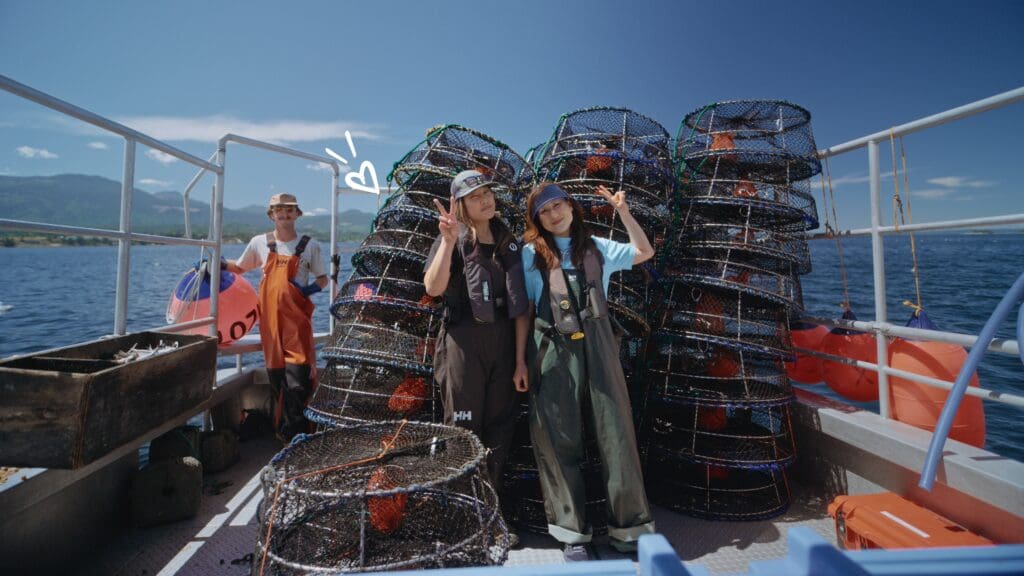
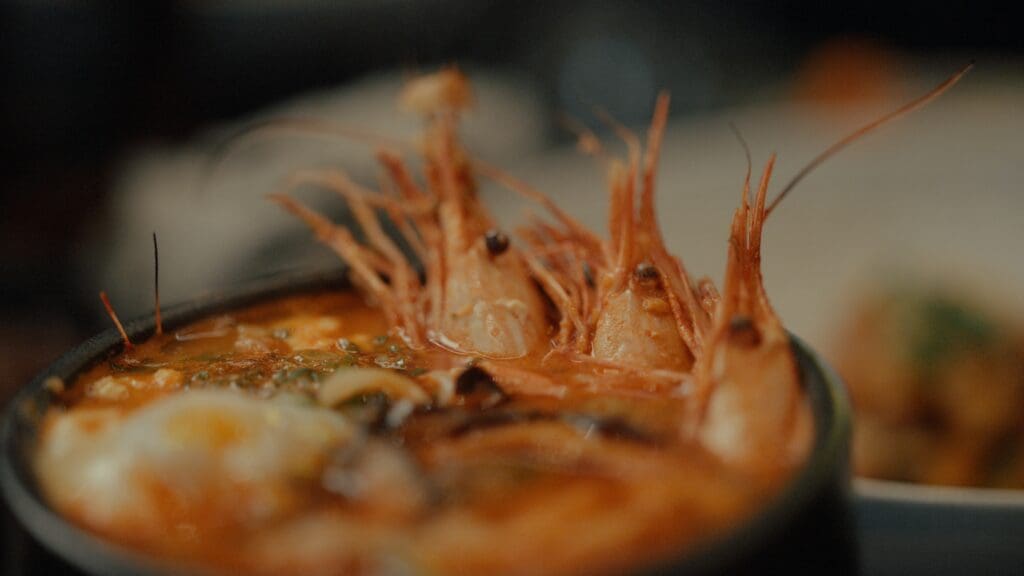
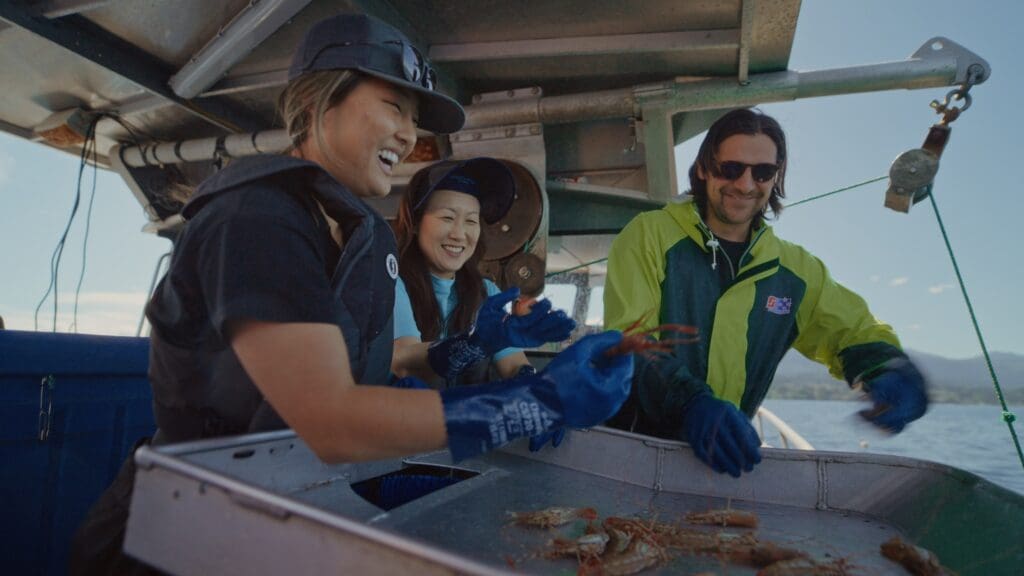
S: I think being on Fraser’s prawn fishing boat was pretty memorable! I love seeing how fishers work and when we let them go non-filming pace, it was very very fast and efficient. We got to see a ruby octopus and Hannah got to throw it back!
H: I was amazed to witness the hand-picking effort of their process, harvesting only mature spot prawns and throwing everything else back. Each spot prawn gets measured! That was unforgettable.
This series blends culture, food, and conservation—what dish or ingredient surprised you most in terms of its connection to the ocean?
S: I think one of the most unexpected for me was the oysters we culture on the west coast of Canada are native to Japan and Korea. The taste is definitely familiar to me and my family. My mom puts oysters in our kimchi. Hannah aptly named them immigrant oysters.
H: I love seaweed and there are so many types, prepared in so many ways. I had no idea that there is research into kelp as feed for cattle. That’s something I learned on a farm in Calgary with the team.
Be honest: who’s the more adventurous eater between the two of you—and what was the “I can’t believe I’m eating this” moment?
S: I would say I’m pretty adventurous but Hannah was game to eat everything! We both used to be vegetarians so I think it’s sometimes hard to eat animals.
H: There’s a moment that you see in the trailer where I am a bit squeamish. It’s not that I was nervous to eat a raw spot prawn – it’s that I wasn’t expecting to be asked to snap off its head. They are not small! Overall, I might need a second but I’ll try anything at least once.
You both connect through Korean culture—how did food become the gateway into deeper conversations about identity and the ocean?
S: We actually connected through our love of the k-pop band BTS over instagram many years ago. When I was starting to think about this idea of connecting Korean food to the ocean Hannah was my first call to help me make the cultural links to Korean-Canadian experiences.
H: Food is a natural connection to our land and water. I experience the west coast every summer, eating oysters off the beach near Fanny Bay, but it was through this journey with Sonya, and speaking with some incredible Korean Canadian chefs, that I was able to learn more and make more connections to my own cultural history.
If you had to describe Our Ocean Table as a meal, what would it be—spicy, comforting, unexpected, or all of the above?
S: Comforting with a twist? We wanted to start with familiar dishes to Koreans and people who like Korean food and dive deeper. Pun intended.
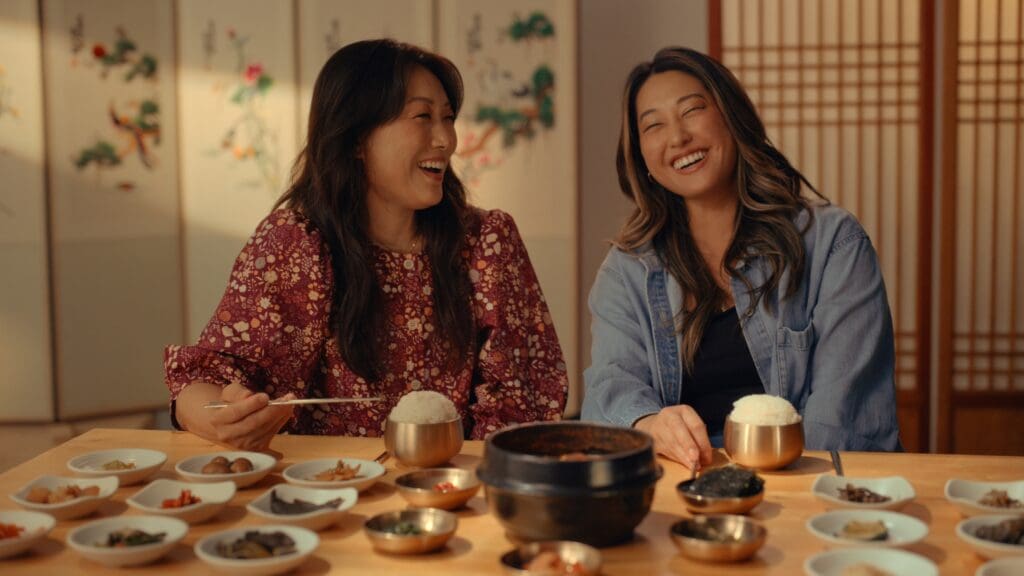
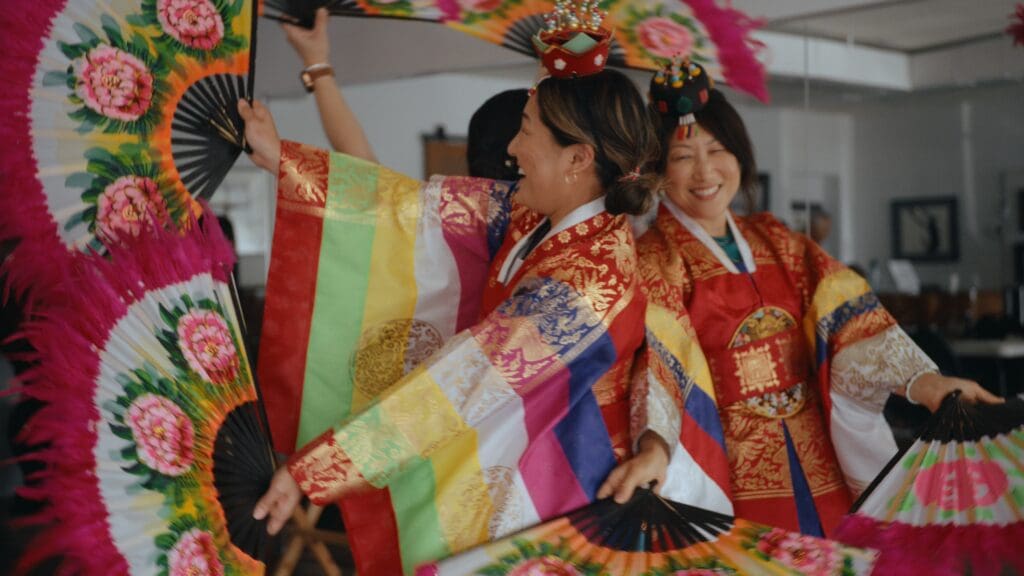
H: It would be a full bapsang – a big, Korean spread with tons of dishes, big and small. Everything belongs on this table, no gatekeeping or purists about what is Korean food. Food is food and when we come together to eat, we learn more about the food and each other.
There’s something very emotional about seafood tied to heritage—did you have a moment on this journey that felt especially personal or grounding?
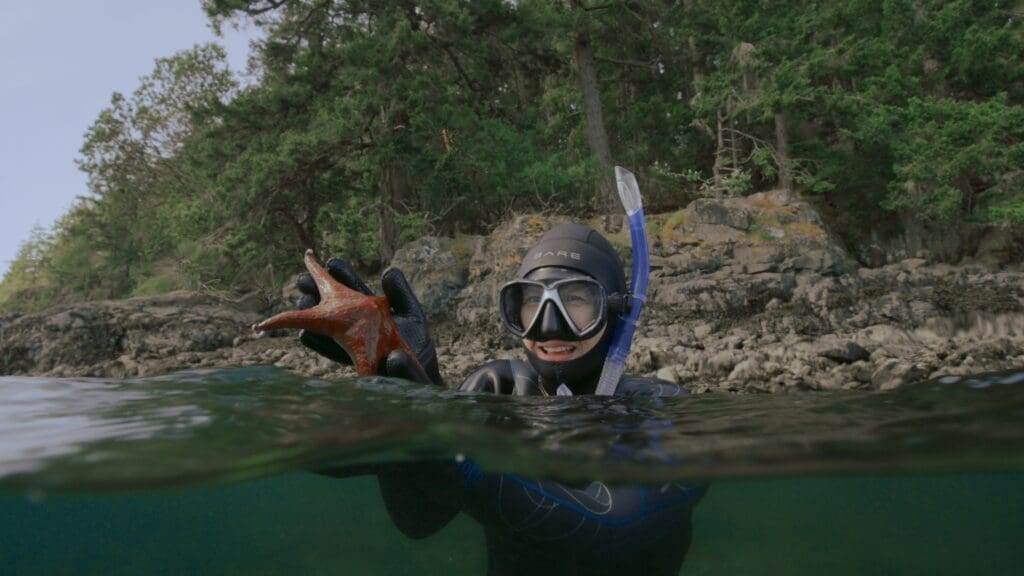
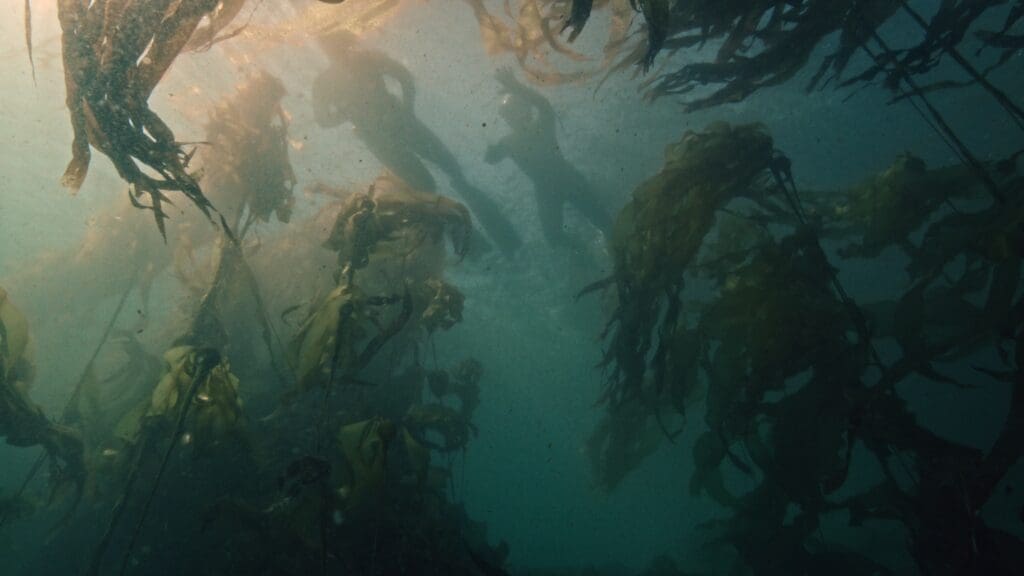
S: There are these freediving grannies on Jeju island in Korea called haenyeo and they are my personal heroes because they have throughout history protected Korean identity, provided for the families while sustainably harvesting from the ocean. Hannah and I got to go freediving together and have our haenyeo moment and that was very special for me to be in the water with another Korean woman for the first time.
H: I agree the haenyeo are my heroes, too, for their collective activism, their unflagging spirit, their ability to hone a skill over a lifetime and the way they very physically demonstrate that to survive, we need each other and the good health of the ocean. They are the epitome of the power of women working together. As for our free dive, I have never even put on a wetsuit before! Going under with Sonya was the best.
For viewers who love seafood but haven’t thought much about sustainability, what’s one simple shift they can make right away?
S: I don’t ever want to say don’t eat seafood. I want all of us to figure out how to eat it forever. But being more mindful about when we are eating it I think is the first step. I think frozen shrimp are often pretty bad. Farmed salmon…not my favourite for many reasons. Go for wild caught salmon if you have to eat salmon.
H: Learn about your own favourite seafood. It’s too easy to start and stop all your thoughts at a menu or the package at the store. Seafood is part of global supply chains and if you have a favourite food, just learn about it. You’ll find that it affects the way you eat. After learning about labour abuses with shrimp, for example, I find I can’t buy it and eat a drastically reduced amount.
Filming in and around the ocean isn’t always glamorous—any behind-the-scenes moments that didn’t quite go as planned?
S: Hannah really enjoyed getting into her freediving suit 😉
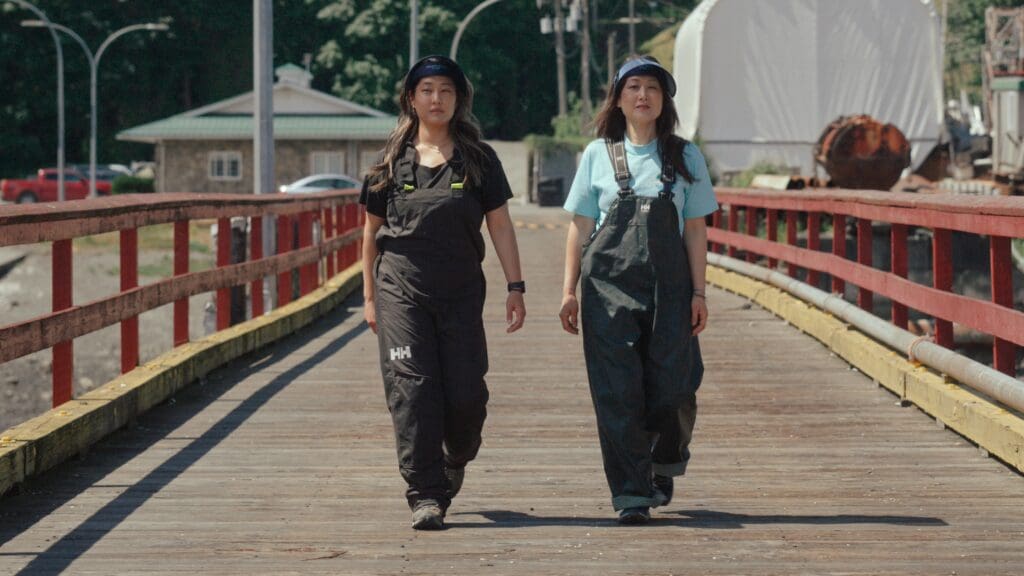
H: Ask me why I was wearing a winter toque on the beach in May. Or about the shoot where we went crabbing in a downpour. Weather doesn’t go according to plan!
Between prawn fishing, oysters, and kelp—what ingredient do you think deserves a major glow-up in how we see (and eat) it?
S: I think kelp! It is a sustainable industry, it instantly adds lots of umami to your dish!
H: Definitely kelp. We talk a lot about farming the land in Canada but I want to hear more about sustainably farming kelp!
After making this series, has the way you order at a restaurant—or even cook at home—completely changed?
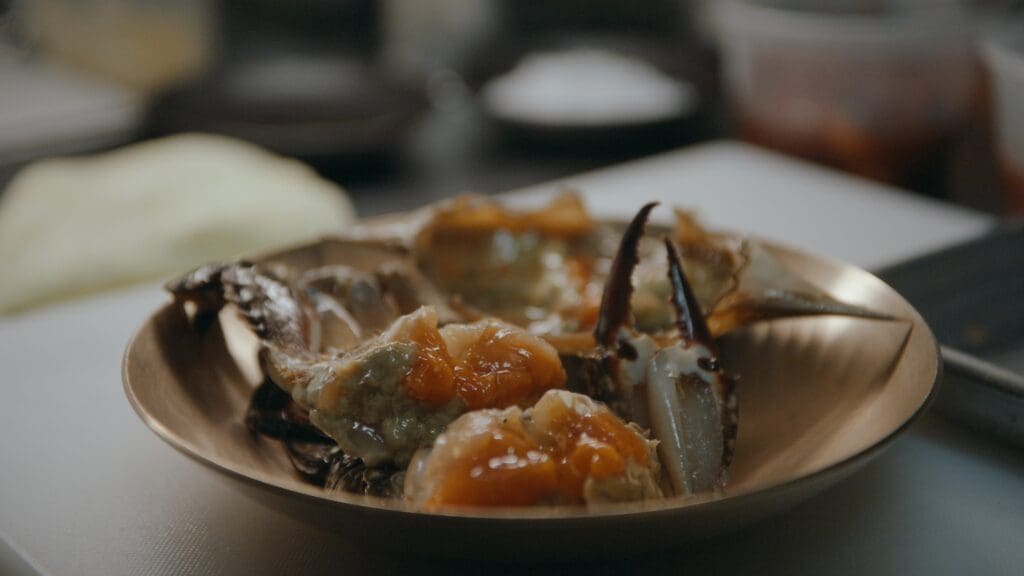
S: I started looking at Korean tables and Korean food in more detail and I like to keep track of how many seafood ingredients are on the table or in a certain dish. There are usually a lot. A lot of sneaky ones like anchovy broth, fish sauce, shrimp paste, dried fish and the list goes on
H: I wouldn’t say my perspective has changed so much as it has evolved. I’m really grateful to the people in restaurant kitchens who feed all walks of life, sometimes giving Canadians their first experience of Korean food and culture. The chefs we met are amazing. Being both Canadian and Korean myself, I love that food is a way that we can all learn more about the history, culture and ocean life that goes into our favourite dishes.
share:

Be the first to comment