
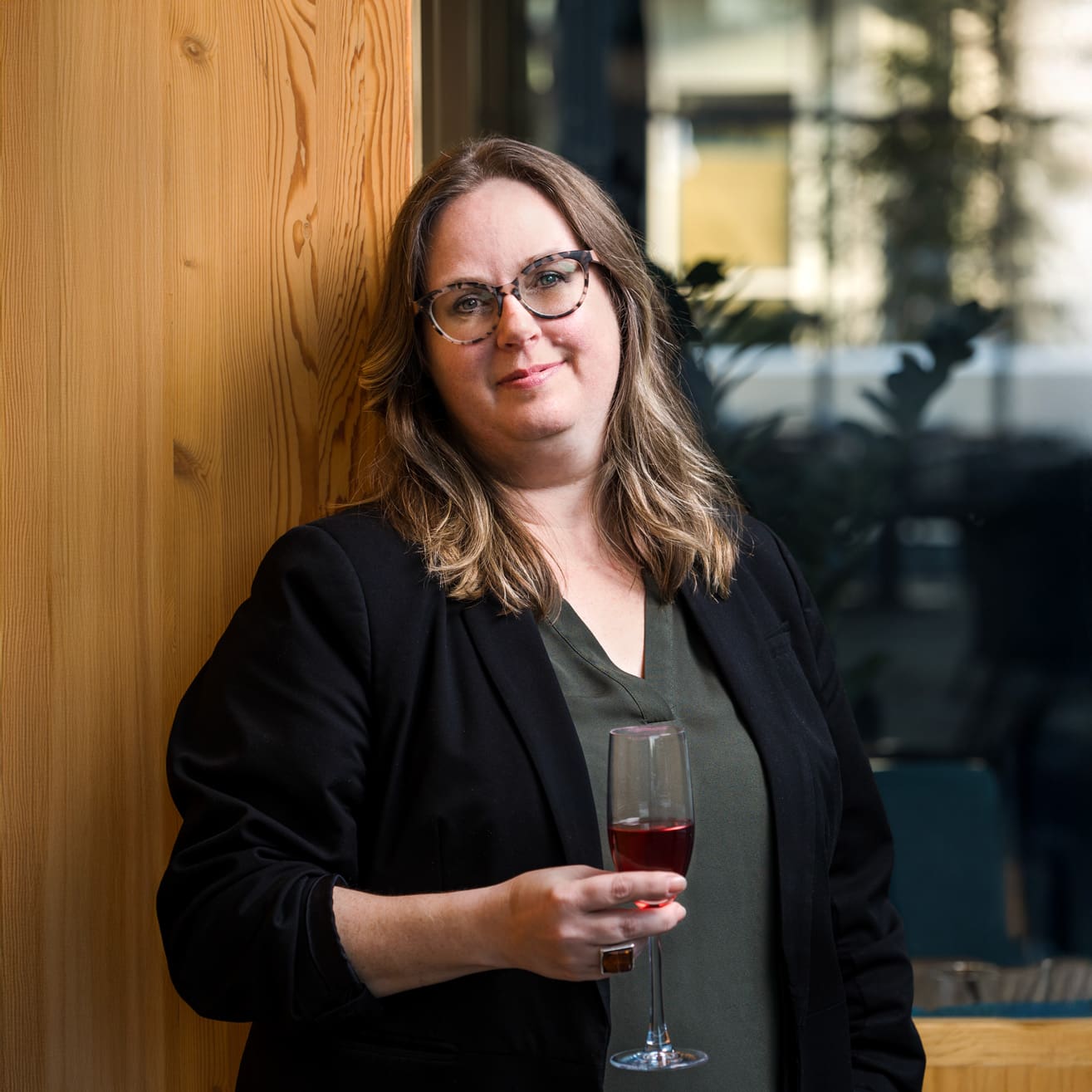
International Women’s Day is more than a date on the calendar; it is a moment to recognize the grit, creativity, and community-building power of the women who feed our city. In an industry historically defined by masculine tropes, Vancouver’s female chefs, restaurateurs, and culinary innovators are rewriting the recipe for success—prioritizing sustainability, mentorship, and the preservation of diverse cultural legacies.
This week, we are pulling up a chair with the trailblazers who have turned Vancouver into one of the world’s most exciting food destinations. From the executive chefs leading high-pressure kitchens to the visionary artisans behind our favorite local brands, these women share their raw truths on entrepreneurship, the importance of “seat-at-the-table” advocacy, and the flavors that remind them of home. Join us for a series of intimate conversations that celebrate the hands that cook, lead, and inspire. —Noa Nichol
Margot Baloro, General Manager, Wildlight Kitchen + Bar
The Hall of Fame Perspective: As a BCRFA Restaurant Hall of Fame inductee, you’ve seen the industry through many lenses. How has your definition of “great leadership” evolved from your early management days to leading the team at Wildlight?
I would say I have changed my perspective on leadership to include more empowerment. I’ve shifted from an ‘I’ll just do it myself’ to an ‘I should let them try it and learn something new’ perspective. Of course, in my earlier days I experienced it all. Crazy rushes, short staffing, low on inventory, up against the wall stuff, and it felt like survival mode was the norm. But now, I find I can usually plan better. I’m not always right, but if I am in touch with my team, I can figure out how to better place people in a service to make sure to get the best from them. I observe people in service and make better decisions next time. I take time to give thoughtful feedback, and I communicate better with my team so they know what to expect. I have to be consistent and keep my cool, or they won’t. I understand my job is to set the vision of the restaurant, set the tone of a service, and not just do it all myself. I have always found if I give a little more responsibility, people always rise to the occasion. You can’t do it alone, so you take care of your people. Also, I have always led by example and it’s necessary as much now as it ever has been.
Sustainability as a Gift: You recently completed Sustainable Business Leadership studies at BCIT. In the spirit of “Give to Gain,” how does prioritizing a sustainable restaurant culture “give back” to the long-term health of the Vancouver dining scene?
I love this question because I think working in restaurants and in hospitality gives people such an incredible perspective on service, and how to navigate any job where you’re dealing with people. Giving students and younger staff the chance to learn the skills you can learn here inside a restaurant setting is a true gift. Younger people learn skills like multi-tasking, intuition, problem solving. Hospitality teaches you patience, getting along with different teams, and confidence. In turn, I believe Vancouver’s dining scene would not be the same without the leadership of those teams.
Sometimes, I feel warm, genuine, and thoughtful service is the hardest skill of all. You either have it, or you don’t. But you can cultivate it. Choosing the right people for your team is step one. Then you make sure the team culture is positive. Feedback must be frequent and come from a place of understanding. Managers have to be engaged with staff to show them a different perspective and it is something you only get through experience. You have to make sure they understand what you need from them, but also make sure they feel you consider what they need to be just as important.
Happy staff always means happy guests.
The Power of Mentorship: You are involved with Les Dames d’Escoffier and Restaurant Culture Shift. What is the most rewarding “gain” you’ve experienced personally from mentoring young women entering the front-of-house world?
Watching staff evolve, literally grow into their roles, and extend their participation through training and constant guidance is my jam. I live for that stuff. I have been mentored by legends in our industry, and my success was cultivated by people who believed in me. To be able to give that back is truly the most rewarding part of my job. To also let them go into the world and leave us, is equally as rewarding, which is kind of funny to say. But there are people who know what they want from this type of job, and they get it to reach other goals. That has been the most surprising feeling.
I learned a long time ago that change is inevitable. If we can decide to embrace change, then it’s empowering because it can lead to exciting things, whether it’s in the world of wine, culinary, or business ownership.
West Coast Roots: Having moved from the Prairies in the late ’90s, you’ve helped shape iconic Vancouver brands like Forage. What “Pacific Northwest” value do you think is most important to protect as the city’s culinary reputation goes global?
Ah! The Prairies are an incredible place to grow up. I have so much appreciation for the Prairies. You can’t beat the big sky full of possibilities. However, the Pacific Northwest is my chosen home. The ocean, the mountains, the rain, all are so inspiring and feel special. In Metro Vancouver the most important aspect of food is its provenance. The fishers, foragers and farmers need to be supported. Those that respect the land, waters and forests where our food grows are great stewards and make decisions that last for the long term.
Small farms that operate like co-ops, and grow what brings the whole ecosystem into harmony should be celebrated. Foragers who only take what’s needed and leave what will sustain the environment should be applauded. Celebrate the fisheries who operate responsibly, and who are low waste. Guests should ask questions. Chefs have known this for years. You have to protect food and food systems. The best way to do that is to go to the source, learn all you can about them, and make the right choices based on supporting our food system in the long term. I think Metro Vancouver and BC restaurants have done an amazing job of this. Some who do it best have struggled in the last year. Choose to dine at restaurants who take care of the local producers and who make great choices on who they buy from.
The 2026 Goal: With Wildlight celebrating its third year, what is one bold legacy you hope to leave for the next generation of GMs?
The best GMs are coaches. They don’t wield power, they guide, they support, and they are in service to the staff who are in service to the guests. Period. You have to invest time in your people. A lot of experienced GMs have left the restaurant industry. New ones are coming into their own. I would challenge them to change the game. To create safe environments where mental health is priority. I would say they should spend as much time as they can talking to their staff and creating trust with their teams. They need to make breaks a priority, for themselves and their teams, so no one burns out. They should prioritize inclusivity, diversity of ideas, and make sure everyone finds success every shift. I know it’s a lot of emotional labour to manage a team of people, but after all, what are we here for if not to share our collective experience.
share:

Be the first to comment