

In honour of Indigenous women reshaping industries and uplifting communities, we’re spotlighting three powerful changemakers whose work spans tourism, sustainability, aviation, and cultural preservation. From the pristine coastlines of B.C. to the vineyards of the Okanagan, Trish McPhail, Savannah Swaisland and Alison Evans are blending Indigenous knowledge with modern entrepreneurship to accelerate action and create lasting impact. Through mentorship, representation, and storytelling, these women are building a future where Indigenous voices are not only heard—but celebrated. Dive into our Q&A series to learn how they’re creating space, shifting narratives, and inspiring the next generation of leaders. —Noa Nichol


Trish McPhail, Kitasoo and Heiltsuk First Nations, Spirit Bear Lodge
How does Spirit Bear Lodge integrate Indigenous perspectives into hospitality and tourism?
Spirit Bear Lodge is Indigenous owned (by the Kitasoo Xai’xais First Nation) and Indigenous lead. We are happy to have local members on our staff overseeing the day to day operations. This allows one on one connections with our Guests giving time and space for staff to share Traditional Stories and Language, and talk about the history of the Territory.
What systemic challenges do Indigenous women continue to face in corporate leadership, and how can businesses do better?
There are many systemic hurdles in place for Indigenous Women in Corporate Leadership, one of the biggest challenges is that we are often seen through a stereotypical lens. By offering training and mentorship where needed will open doors as well as accepting lived experiences as knowledge/expertise that it equates to being experts in that field. Often the lived experiences are not seen as relevant and without a formal education to back it up, there is a wage gap on top of the longtime gap of men being favoured as the leaders in the corporate world. If more companies embraced the strengths and leadership skills of Indigenous Women, there would be more balance in many levels of their companies because women drive innovation and lead with compassionation and collaboration while helping to break down gender barriers which result in maximizing potential for staff and companies alike.
You’ve spoken about honouring the sacrifices of Indigenous ancestors—how does that drive your work in advocacy and representation?
Our Ancestors survived horrendous circumstances and made endless sacrifices to survive and ensure that our beautiful way of being, and our culture survives, because of their resilience I am inspired to keep going with my chin up. It is important that we step up and help other Indigenous Peoples find success in a world that was designed to keep us down. Seeing and learning about Indigenous success is as important as learning about the generational trauma of Indigenous Peoples and the Cultural Genocide that are the darkest chapters of Canadian history. We are still here, in diversity we find strength and together we rise.
What industries or sectors do you believe need more Indigenous representation, and how can we work towards that?
Everywhere, every sector and industry should be striving to build successful relationships with the First Nations and the Indigenous Peoples whose Territory they live on, and they all should offer equity in their hiring practices.
What does true reconciliation look like in the tourism and hospitality industries?
Reconciliation in the tourism and hospitality industry looks different on many levels, we can start the wave of change that is needed by increasing Indigenous staff and by looking at businesses that have long profited without supporting the First Nations and Indigenous Peoples where their businesses operate. We can strive to revitalize local cultural preservation in workplaces by working closely with local First Nations and by offering what they wish to share such as traditional storytelling, learning local languages and local dialects and by highlighting and normalizing Indigenous success.
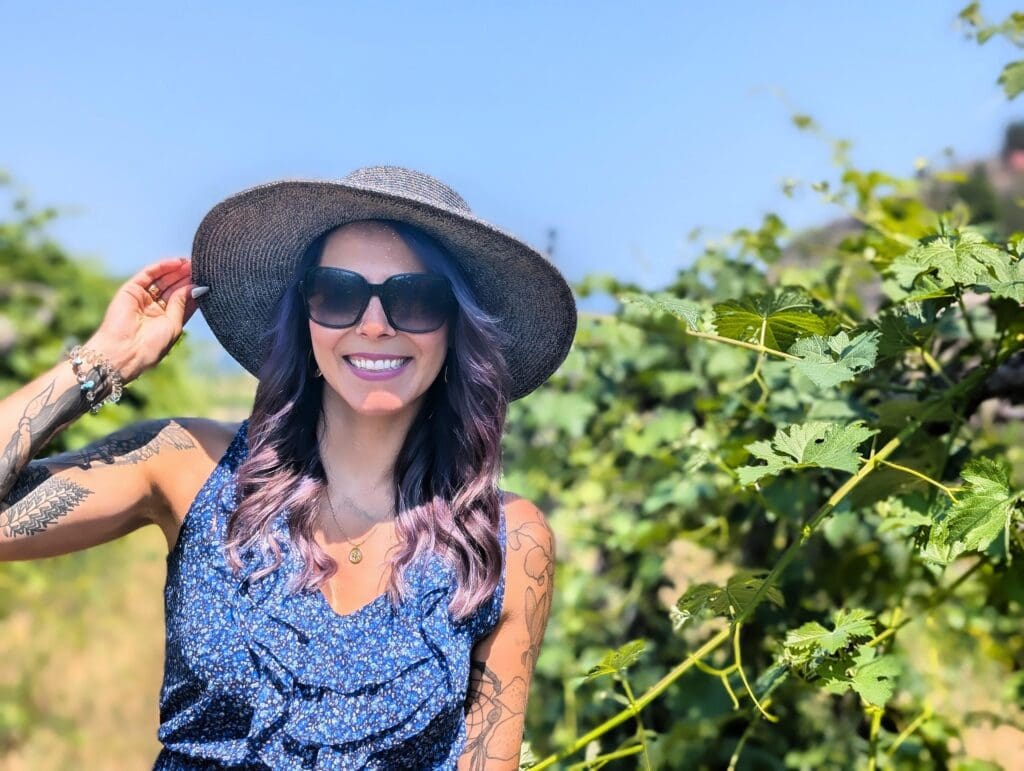
Savannah Swaisland, Red River Métis, Grape Savvy Wine Tours
Grape Savvy Wine Tours blends wine, land, and culture—how do you incorporate Indigenous perspectives into the guest experience?
Grape Savvy Wine Tours weaves Indigenous perspectives into the guest experience by honoring the deep connections between wine, land, and culture on Okanagan Indigenous territory. As a proud Métis-owned business operating on the unceded lands of the Syilx (Okanagan) people, we recognize that wine tourism is not just about the product—it’s about place, history, and stewardship. We are the first business in the Okanagan to be developing and launching the regions first ever Indigenous Experience Tours which will partner with, and highlight many other indigenous owned businesses to create market ready, authentic all-inclusive packages for both locals and tourists to enjoy.
Currently, Grape Savvy Wine Tours is redefining wine tourism by blending authentic Indigenous experiences with the region’s world-class wine culture. More than just a wine tour company, Grape Savvy is a testament to the power of Indigenous entrepreneurship, cultural preservation, and sustainable tourism. We believe that wine tourism can be more than just tastings—it can be an opportunity for storytelling, education, and economic empowerment. Whether through vineyard sit-down tastings, owner meet-and-greets, or curated large-group experiences, guests are invited to explore not just the wines of the region, but also the history, traditions, and sustainable practices that each individual establishment embodies.
For Indigenous communities, land stewardship isn’t just a practice—it’s a way of life. Grape Savvy Wine Tours weaves these teachings into its experiences, ensuring that visitors leave with more than just a great glass of wine—they leave with an understanding of the land’s history, the people who have cared for it, and the importance of honoring those traditions moving forward.
At a time when travelers are seeking more authentic, meaningful experiences, Indigenous tourism offers a unique opportunity for education, connection, and reconciliation. Grape Savvy Wine Tours stands as a shining example of how wine, culture, and community can come together to create something truly special.
For those looking to experience the South Okanagan in a new and meaningful way, Grape Savvy Wine Tours offers an unforgettable journey—one where every sip tells a story, and every stop is a step toward honoring the past while celebrating the future.
How has your Métis heritage influenced the way you approach sustainability and business in the Okanagan?
My Métis heritage deeply influences the way I approach sustainability and business in the Okanagan, shaping my values of resourcefulness, respect for the land, and community-driven entrepreneurship.
The Métis people have historically thrived as innovators and stewards of the land, blending Indigenous knowledge with European trade and exploration. My ancestors, including Peter Fidler and John Peter Pruden, who were key figures in the fur trade and early mapping of Western Canada, demonstrating adaptability and a deep understanding of the environment. Their ability to work in harmony with nature, utilizing resources efficiently while ensuring sustainability for future generations, is something I carry forward in my own business practices.
In my work with Grape Savvy Wine Tours, I integrate these values by prioritizing partnerships within the community and promoting sustainable tourism. The Métis concept of “wahkohtowin” (a Cree word meaning interconnectedness) guides my approach, recognizing that economic success should also nurture relationships—with the land, the community, and future generations.
Additionally, my family’s history of reclaiming our Métis identity, after generations of forced assimilation and discrimination, strengthens my commitment to authenticity and cultural preservation. By sharing my story and creating meaningful experiences, I aim to inspire others—particularly women entrepreneurs—to embrace their heritage, start where they are, and build something meaningful with the resources available to them.
Ultimately, my Métis ancestry reminds me that true sustainability is about more than just environmental responsibility; it’s about resilience, adaptability, and ensuring that our businesses and communities remain vibrant for generations to come.
What role do you think Indigenous tourism plays in economic empowerment and cultural preservation?
Indigenous tourism is a powerful driver of both economic empowerment and cultural preservation, allowing Indigenous entrepreneurs to create meaningful experiences while sharing their stories, traditions, and deep connection to the land. In 2023, the sector generated approximately $3.7 billion in revenues, directly adding $1.6 billion to Canadas GDP, and supported over 34,700 jobs across the country .Indigenous tourism plays a crucial role in economic development, offering opportunities for entrepreneurs to reclaim space in industries where their voices have often been underrepresented.
Grape Savvy Wine Tours is at the forefront of this movement, creating a platform for Indigenous voices in the wine and hospitality industries while also supporting other local businesses. Through our hop-on-hop-off trolley experience, private wine tours, convention, wedding and event transportation, Grape Savvy provides an essential service that connects visitors with top tourism destinations in the South Okanagan. Grape Savvy Wine Tours is committed to building a business that not only thrives economically but also uplifts Indigenous culture, ensuring that our stories, traditions, and deep-rooted respect for the land continue to be shared with visitors from around the world. Indigenous tourism is about more than just business—it’s about legacy, empowerment, and connection and recent numbers support its positive economic impact in the Canadian tourism sector.
As an entrepreneur, what challenges have you faced in the industry, and how have you navigated them?
As a female entrepreneur in the male-dominated transportation industry, and as an Indigenous woman, I have faced significant challenges that tested both my resilience and identity. From the start, navigating the industry’s complex and often rigid licensing requirements was a major hurdle. Just weeks before Grape Savvy Wine Tours’ inaugural launch, we were audited and found to have been issued the wrong license, forcing us into a stressful, time-sensitive battle to correct the mistake made by the B.C Transportation Branch. On top of that, securing the required intercity bus permit meant proving an “urgent public need,” a process that demanded extensive evidence of how our service would benefit the community. Fortunately, from day one, Grape Savvy was able to demonstrate its positive economic impact, filling a critical gap in local transportation, supporting responsible tourism, and creating new opportunities for businesses in the region.
However, the challenges didn’t stop there. On the eve of our launch, disaster struck—our vehicle was vandalized, and a fire broke out. What was supposed to be a moment of celebration and excitement turned into a crisis. As an entrepreneur, I’ve learned that setbacks like these are not just tests of business acumen but of personal resilience. Rather than allowing these obstacles to define our journey, we pushed forward, repaired the damage, and refused to let adversity deter our mission.
Beyond the industry barriers, one of the deepest challenges I’ve faced is tied to my own identity. As a Metis woman, I’ve had to fight not just for my place in business but for the right to even identify as Indigenous. Straddling two genealogic worlds, I’ve encountered moments where I’ve had to justify my identity, prove my connection to my culture, and push back against the expectations of what it “should” look like to be an Indigenous entrepreneur. That in itself has been a barrier—one that has made me even more determined to create spaces where Indigenous identity is acknowledged, respected, and empowered.
Being an Indigenous woman in business means constantly proving yourself in spaces where representation is lacking. But it also means carrying the strength, ingenuity, and perseverance of my ancestors. It means building something bigger than just a business—it’s about creating opportunities, breaking barriers, and inspiring other women to step into industries where they are underrepresented.
Through all the challenges—licensing setbacks, industry roadblocks, personal struggles, and even acts of destruction—Grape Savvy Wine Tours has not only survived but thrived. Our success stands as proof that with resilience, community support, and a clear vision, we can overcome any obstacle and make lasting impacts in our communities.
What future opportunities do you hope to see for Indigenous women in business and tourism?
I hope to see more opportunities for Indigenous women to lead, innovate, and thrive in the business and tourism industries. Indigenous women bring a unique perspective, deep cultural knowledge, and a strong connection to the land, all of which can create meaningful and authentic experiences for visitors.
In tourism specifically, I hope to see more Indigenous women owning and operating businesses that share our stories, traditions, and ways of life in an authentic way. Tourism is a powerful tool for cultural exchange, and when Indigenous women are at the forefront, it allows for a deeper, more meaningful connection between visitors and the land they are exploring.
I also hope for stronger networks of mentorship and collaboration, where Indigenous women can support one another in business growth, skill development, and building sustainable enterprises. Having role models and a community of support makes a significant difference in navigating entrepreneurship.
Most importantly, I want to see a future where Indigenous women feel empowered to take up space in any industry they choose, knowing their voices, ideas, and contributions are valued. By creating space for Indigenous-led experiences and businesses, we not only strengthen our communities but also bring a richer, more diverse perspective to the tourism industry.
Alison Evans, Hagwilget Village First Nation, Gulf Island Seaplanes
As a co-owner of Gulf Island Seaplanes and a proud member of Hagwilget Village First Nation, how do your cultural roots shape the way you approach leadership and decision-making in your business?
As co-owner of Gulf Island Seaplanes I am in a position to influence decisions within our company that uphold the values that I feel strongly towards. I look at leadership as an opportunity to learn more through conversation and curiosity with our staff and others in the business. I believe more in a circular system of leadership not necessarily a top down approach so including our staff in major decisions is not uncommon. I believe that respect in relationships is everything, so building trust and a connection with our staff and customers is incredibly important to me.
Gulf Island Seaplanes is not only expanding its routes but also leading with a strong commitment to sustainability. Why is environmental responsibility such a key pillar for your company, and how does it align with Indigenous ways of doing business?
Indigenous values emphasize respecting the land and waters, and while aviation has environmental challenges, we are always looking for ways to operate responsibly, reduce our footprint and support conservation efforts. At GIS we want to consider the impact on future generations so we aim to make decisions based on ensuring stability and growth in ways that offer opportunities in a sustainable way.
What challenges have you faced as an Indigenous woman in the aviation and tourism industries—and what have been your proudest milestones so far?
In a mainstream business such as aviation the focus is often on profit, which is of course important, but Indigenous leadership often emphasizes community, sustainability and long term stewardship so finding ways to align these values while running a successful aviation company has been a learning process. I am most proud of promoting strong Indigenous representation and I take pride in showing that we belong. I hope that our success inspires more Indigenous entrepreneurs, pilots, and aviation professionals to enter the field.
You’ve spoken about the importance of mentorship, investment, and purposeful inclusion of Indigenous women in economic planning. What would meaningful support for Indigenous women in business look like to you?
Indigenous women in business need to be seen and heard. This means featuring Indigenous women leaders in media, conferences and policy discussions, not just as a diversity checkbox but as respected experts in their fields. Indigenous women often face systemic barriers to funding so flexible financing options along with considering the need to incorporate Indigenous values to support work-life balances, such as support for childcare solutions, flexible timelines, and culturally appropriate networking spaces.
Looking ahead, what is your vision for Gulf Island Seaplanes and for the role of Indigenous women in shaping the future of Canadian industries—from aviation to tourism and beyond?
Looking ahead, my vision for Gulf Island Seaplanes is to continue growing as a trusted, community focused and sustainable aviation business that connects people, strengthens regional economies, and supports Indigenous participation in the industry. The future of aviation must align with sustainability and as an industry this needs to be a priority.
Canada as a whole will benefit from inviting more Indigenous influence to the table because meaningful Indigenous inclusion means a more sustainable, inclusive and resilient Canadian economy.
share:

November 20th, 2025 at 5:37 am
Thank you for the information in this post. I really benefited a lot.
December 2nd, 2025 at 11:30 pm
I am a student at the Faculty of Mathematics and Computer Science, University of M’sila.
January 21st, 2026 at 11:16 pm
어제 친구들과 회식 자리로강남가라오케추천다녀왔는데, 분위기도 좋고 시설도 깨끗해서 추천할 만했어요.
January 21st, 2026 at 11:17 pm
요즘 회식 장소 찾는 분들 많던데, 저는 지난주에강남가라오케추천코스로 엘리트 가라오케 다녀와봤습니다.
January 21st, 2026 at 11:17 pm
분위기 있는 술자리 찾을 땐 역시강남하퍼추천확인하고 예약하면 실패가 없더라고요.
January 21st, 2026 at 11:18 pm
회사 동료들이랑강남엘리트가라오케방문했는데, VIP룸 덕분에 프라이빗하게 즐길 수 있었어요.
January 21st, 2026 at 11:19 pm
신논현역 근처에서 찾다가강남룸살롱를 예약했는데, 접근성이 좋아서 만족했습니다.
January 21st, 2026 at 11:20 pm
술자리도 좋지만 요즘은강남셔츠룸가라오케이라고 불릴 만큼 서비스가 좋은 곳이 많더군요.