
Perimenopause is often described as one of life’s most confusing and unpredictable stages. For many women, it can feel like uncharted territory—physically, emotionally, and mentally. But Nastasia Liavas, Vice President of Fitness Services at Fitness World Canada, wants to flip the script. With a focus on strength, resilience, and holistic well-being, she believes fitness can be one of the most powerful tools for navigating this transition.
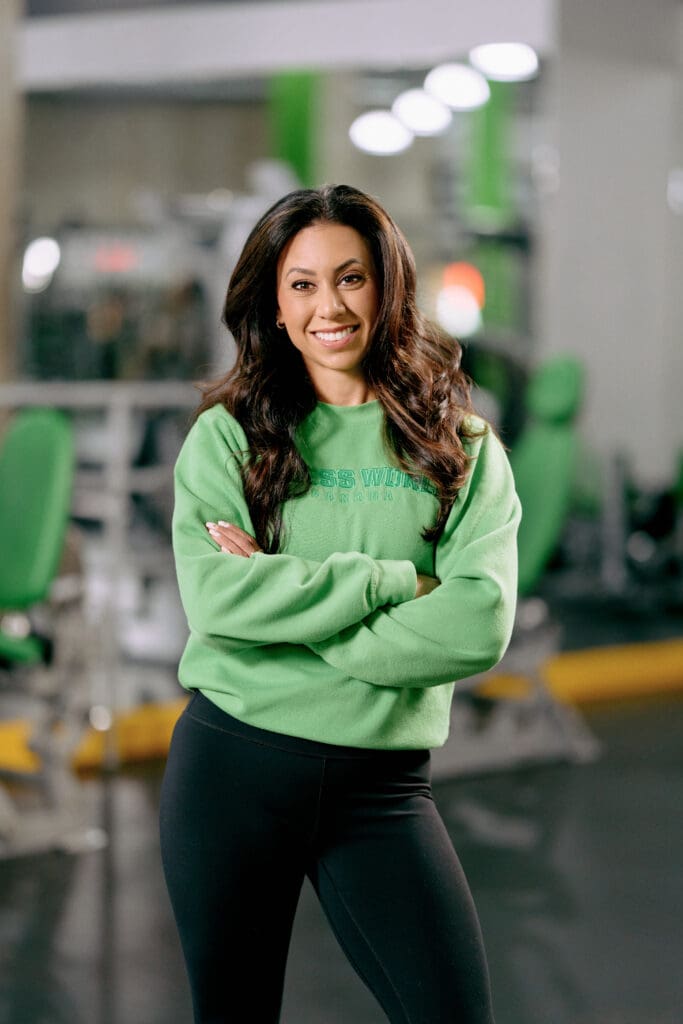
“Historically, our industry has been more focused on the outward appearance of fitness benefits—weight loss, how we look in our clothes, and how we feel about our physique,” Nastasia explains. “Naturally, with the focus being external, there was little conversation about the internal benefits of fitness.”
That’s changing, she says. “One of the biggest shifts is the realization that 100% of women will go through hormonal changes in life, including perimenopause and menopause. We now have nationally recognized certifications and published, verified research to educate fitness professionals. It’s given us a much more powerful platform to learn, educate, and help women through these changes.”
Strength Training as a Game-Changer
If there’s one thing Nastasia wants women to know, it’s that strength training can be life-changing during perimenopause. “It is becoming more publicized, but many women still don’t realize strength training is one of the most powerful tools in navigating menopause,” she says.
When hormones shift, bone density decreases, muscle loss accelerates, and metabolism changes dramatically. “Strength training combats osteoporosis and joint pain, mitigates fat gain, and preserves muscle mass,” Nastasia explains. “It really tackles almost every challenge of menopause at once.”
She’s quick to debunk the idea that weight gain at this stage is simply caused by age. “The truth is, most weight gain is a result of losing muscle mass. Preserving muscle is the best way to regulate hormones and keep your body feeling young and agile.”
Movement as Medicine
Beyond the physical benefits, movement can be an anchor during this stage of life. “Exercising and lifting weights help regulate stress hormones like cortisol and stabilize blood sugar, which improves sleep quality,” Nastasia says. “It’s very common for women to have disrupted sleep during these stages. Movement boosts your energy, creates better blood flow and oxygen flow, and helps you get through the day with less fatigue.”
Her advice? Aim for consistency. “I highly encourage women to get in four to five days of exercise per week. That doesn’t mean extreme exercise for hours—some days might be 30 minutes, some a brisk walk, others an intense weight training session. The body thrives on predictability, and consistency helps hormones regulate more effectively.”
And the emotional benefits shouldn’t be overlooked. “My favourite part of exercise is the way it makes me feel emotionally. Strength training and cardio release endorphins, reduce anxiety, and give us a lifted mood and sense of well-being. That alone improves sleep.”
Redefining Progress
Nastasia admits she’s had to adjust her own workouts with age, work, and life responsibilities. “When I was younger, I worked out for one hour six days a week. My body simply cannot accommodate that anymore. Now I exercise four days a week for 45 to 50 minutes—and it’s the sweet spot that allows me to stay consistent and recover properly.”
At first, she admits, she struggled. “I felt like I wasn’t doing enough. But I’ve realized that balance allows for longevity. The most important thing is to find a rhythm you can commit to and that your body feels good about.”

Self-Care Beyond the Gym
For Nastasia, self-care is as much about what happens outside the gym as in it. “Sleep is always a priority for me. I set boundaries around bedtime and create a consistent wake-up schedule. When I wake up refreshed, I make better choices throughout the day.”
Stress management is another non-negotiable. “After being sick and going through anxious times, I’ve learned to regulate my cortisol. I exercise in the morning, journal, meditate, and when faced with stress, I take two minutes to breathe and re-center.”
And nutrition? “I don’t measure or weigh my food—I eat intuitively, but I prioritize protein to maintain muscle mass. I take supplements to support gut health, bone density, and my nervous system. When I make strong nutrition choices, my sleep improves, my hormones regulate, and my energy levels rise.”
The Power of Community
One of the most underappreciated tools, Nastasia says, is community. “I love group fitness and our fit-fam community because this is where women meet. Standing next to another strong, hard-working woman motivates me—it makes me feel supported and keeps me coming back. No matter what you’re doing, find your tribe. Women stick together, and that consistency is powerful.”
Advice for the Overwhelmed
For women just entering this stage, Nastasia’s message is clear: “Advocate for yourself. Don’t rely on just one doctor. I have a team of practitioners from both eastern and western medicine, and the combination has been brilliant for me.”
Most importantly, she emphasizes individuality. “There isn’t one way to handle menopause. What works for your friend might not work for you. Be curious, do your research, ask questions, and integrate different practices until you find what feels right.”
At the end of the day, Nastasia wants women to feel empowered, not defeated. “Menopause doesn’t have to take control of you—you can be in the driver’s seat. With fitness, self-care, and community, you can feel stronger at every stage of life.” —Noa Nichol
share:

September 12th, 2025 at 6:02 am
Reading this post really struck a chord with me. When I hit my early 40s, I noticed how strength training wasn’t just about looking a certain way—it was about feeling grounded, energized, and resilient. That article highlights exactly that: keeping muscle, protecting bone health, and balancing mood and sleep. I also remember trying a program inspired by skinnyfit , because I wanted supplements and protein shakes that supported strength without exaggeration or hype. What feels most human is realizing we’re all adjusting, learning, and growing—even when things inside are shifting. This is a beautiful invitation to respect our bodies at every stage.