
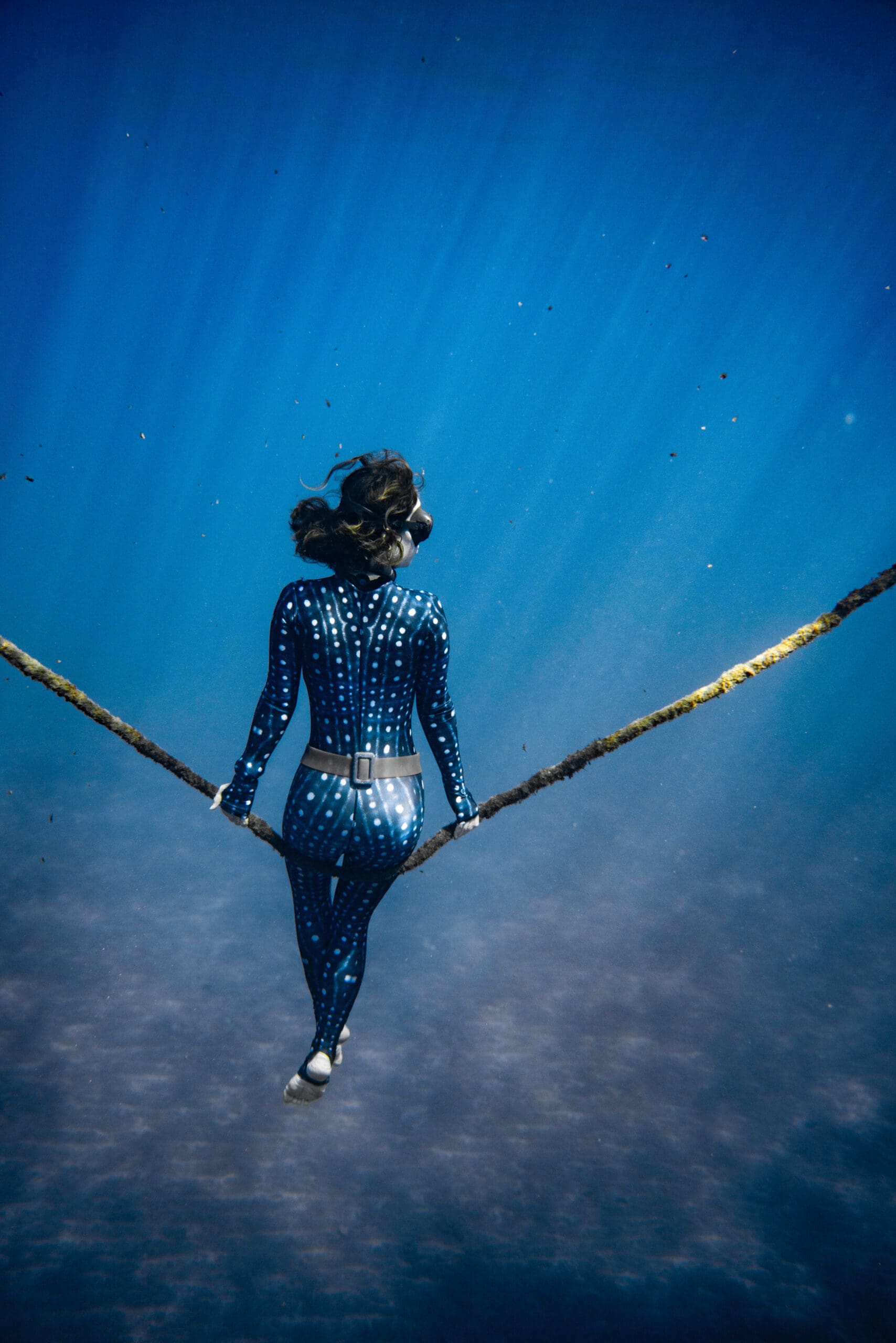
Ranked 9th in the world and a U.S. record breaker, Natalie Bruce knows what it means to trust the body—and the breath—completely. In 2024, she made history as the first American woman to swim 200 metres on a single breath, a milestone that captures both the physical and deeply meditative nature of freediving. From discovering the sport in Thailand to recovering from injury and setting her sights on 2026, Natalie shares what it’s like to free-fall into the depths, find calm under pressure, and experience a kind of peace she describes as underwater yoga. —Noa Nichol
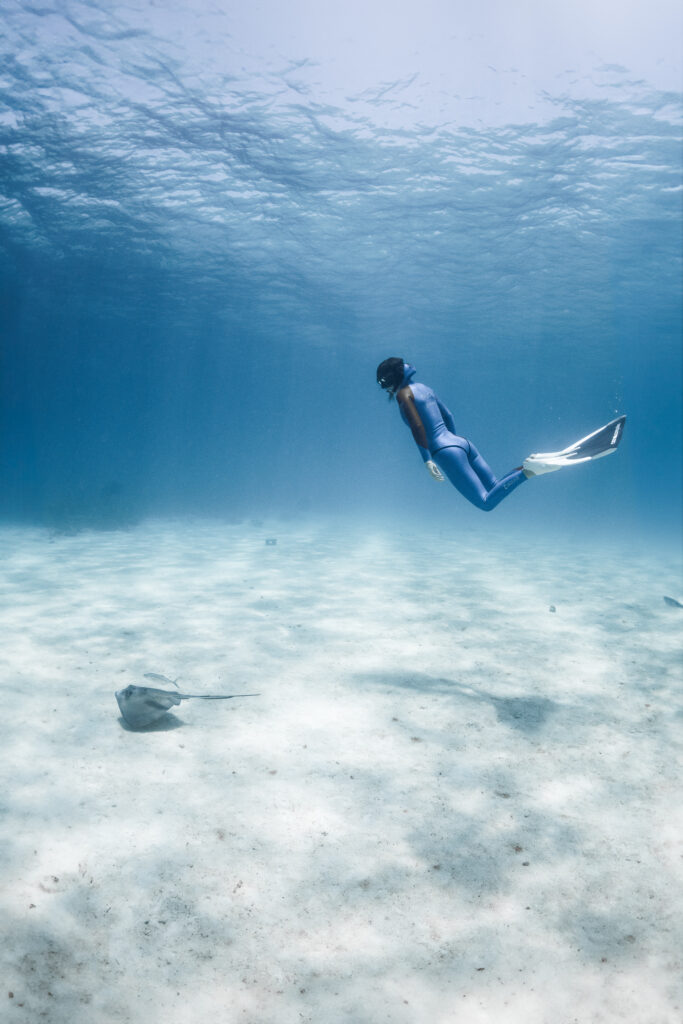
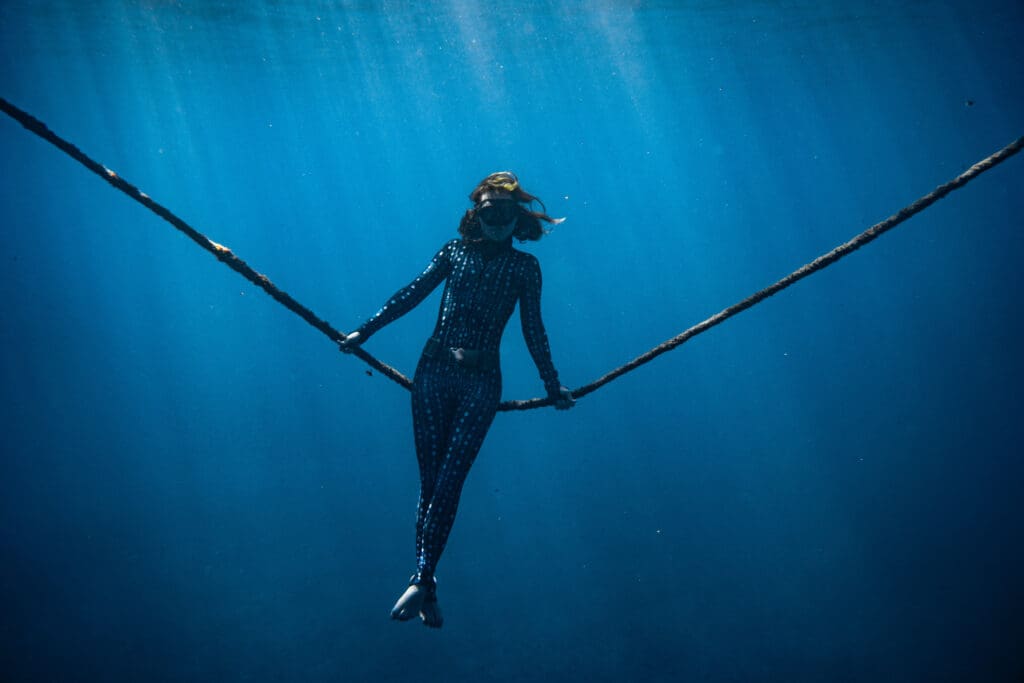
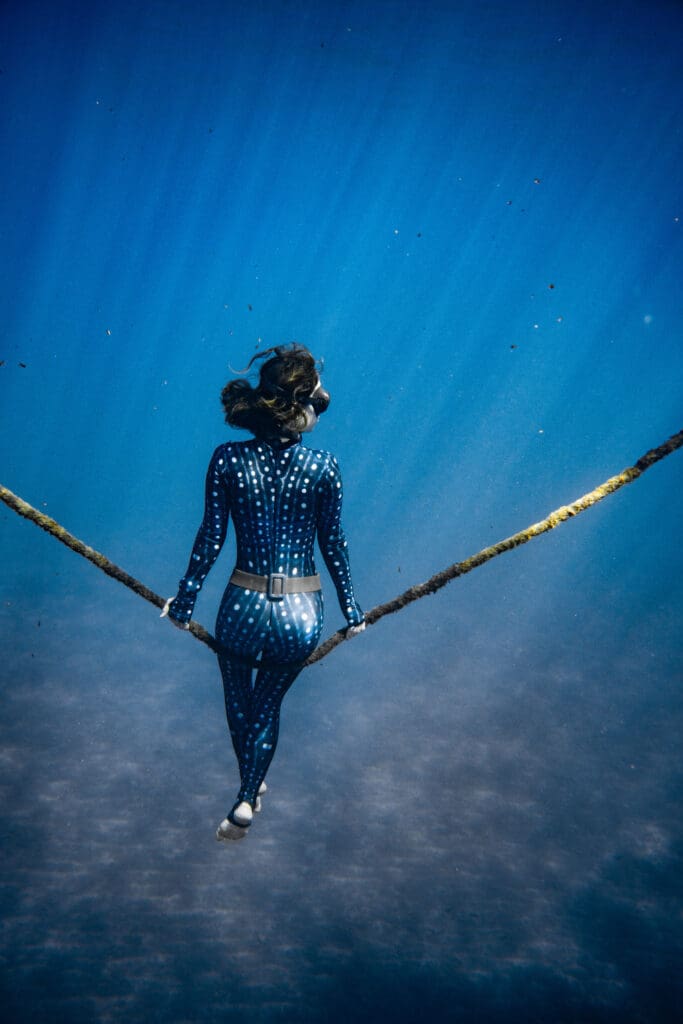
You made history as the first American woman to swim 200 meters on a single breath. What did that moment feel like in your body—physically, mentally, and emotionally—when you surfaced?
Honestly, the first thing I felt was relief, like, okay I can breathe now. When I come up from a dive, it takes a moment to register what just happened. I am so focused during the dive that I am not thinking about records or anything for that matter. I am just just in the moment, one kick at a time. Physically, my body’s buzzing but heavy, and mentally it takes a beat to catch up. Emotionally, there’s a wave of gratitude for my training, my team, my body, and the just opportunity that I have to dive.
Freediving is often described as a sport of stillness rather than force. How has learning to slow down and surrender shaped your relationship with your body?
Freediving has taught me how to settle back instead of pushing through. In most sports or fitness, you are taught to push yourself through discomfort. With freediving, it is the opposite. The focus is a relaxed nervous system, a low heart rate, and energy efficiency. When things start to feel uncomfortable, I cannot force my way through it. I have to settle back into the sensations, fully allow them to be there, and trust my body to experience them without reacting. This is something I try to practice every day, not just during dives.
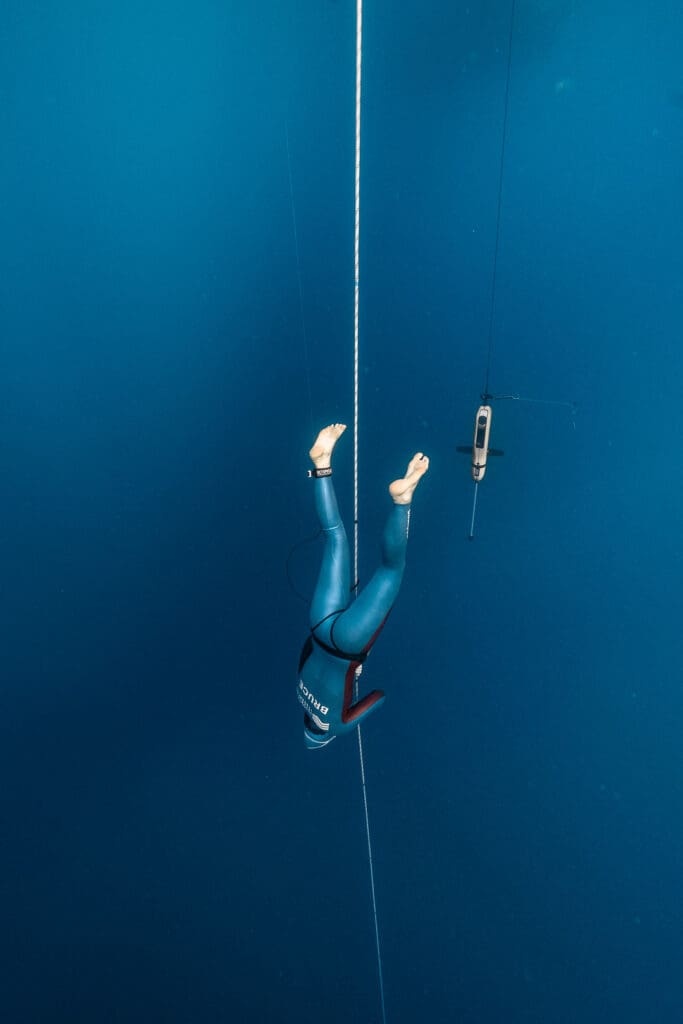
You’ve spoken about the ‘sinking’ phase of a dive as deeply calming—almost meditative. Why do you think free-falling into depth can feel so peaceful rather than frightening?
The first thirty meters of a deep dive require a lot of mental focus. Everything before freefall is preparation. By the time I enter freefall, my mind is already so focused and settled that there is not much room for thoughts anymore. At that point, it is just me, my body, and the sensation of sinking down. It feels peaceful because everything unnecessary falls away. It is a really beautiful feeling, like I am touching the truest part of myself.
After an injury sidelined you, what did recovery teach you about listening to your body—especially as an elite athlete used to pushing limits?
The injury highlighted some weaknesses and imbalances in my life that needed attention. It forced me to go back to the basics, to the foundation. I found myself asking questions like, why am I doing this, and what’s the point of it all?
It also taught me that preparing my body is just part of the game. So many things need to align for a dive. I can’t just force myself through. It’s about how well I can listen, adjust, and learn from each experience. In the end, I am really grateful for the setback because it gave me the chance to slow down, notice what matters, and come back stronger and more aware.
Many people chase wellness through constant stimulation and effort. What does freediving reveal about rest, breath, and presence as pathways to well-being?
That’s very true. A lot of people ask me “how do I rest or recover better” and expect a checklist of things to tick off to feel accomplished. It makes sense because this is how our culture runs, by doing. But I think there’s a lot to be said about not-doing. Freediving has taught me that slowing down, focusing on the breath, and being fully present is not something you do, it’s something you practice.
It’s in those quiet, still moments that the body actually recalibrates, the mind clears, and you find a deeper sense of balance. Presence and breath shape how you move, think, and feel. The more I practice them, the more I see that wellness isn’t about pushing harder, it’s about trusting your body and allowing space for it to recover and grow.
You’ve compared freediving to underwater yoga. Can you explain how breath, alignment, and mental focus come together during a dive?
I practiced yoga for many years before I started freediving. I was drawn to it because it helped me get in touch with my body, which I had always had a somewhat poor relationship with. I realized quickly how difficult it was to actually stay focused on the sensations in my body. When things got uncomfortable, I found myself trying to distract my mind or fixate on something else. That’s when I really noticed the Monkey Mind at work.
When I started freediving, I realized it wasn’t all that different. Breath, alignment, and focus are still the foundation, but now I’m moving through water instead of holding poses. The difference is that in freediving, there’s no room to escape. You have to trust your body completely to hold your breath. It’s a more intense environment than the yoga mat. That practice of presence, of quieting the mind and listening to the body, is where the real work and the real beauty happens.
Your love for freediving began years ago in Thailand. What was it about your first experience underwater that made you realize this would become more than just a hobby?
I did my first freediving course at this place called Sail Rock, which is basically a pinnacle in the middle of the Gulf of Thailand with a beautiful reef. After the first day, I remember surfacing feeling calmer and deeply connected with the ocean. I just felt this deep sense that I was doing exactly what I was supposed to be doing. From then on, I never questioned it, and it has kept evolving ever since.
As someone who travels the world to dive in different waters, how does each environment—oceans, cenotes, pools—change your experience of depth and connection?
Each trip is different. I’m with different people, and each body of water shapes a unique experience. Oceans, cenotes, pools – they all feel different, and each environment brings its own challenges and lessons. Every training cycle pushes me in new ways and gives me opportunities to grow, both as a diver and as a person.
Freediving requires immense trust—in yourself, your training, and your instincts. How has that trust carried over into your life above water?
Freediving requires immense trust in yourself, your training, and your instincts. It has allowed me to trust in myself more, in others, and in life. Having a deeper awareness and connection to myself has opened me up to new experiences and helped me face challenges feeling a little more calm and clear, without thinking I have to have all the answers.
Looking ahead to 2026, what are you most excited to explore next in your freediving journey—new depths, new records, or a deeper sense of peace?
I can never really plan for new records — I just have to see how things unfold. This year, I’m excited to be organizing two major pool competitions here in the US, one in Colorado at high altitude and one in the Bay Area in California, as part of my efforts to grow the sport. I’m also looking forward to investing a bit more energy into depth diving and seeing where it takes me. I have a feeling this will be a good year!
share:

January 26th, 2026 at 2:46 am
When choosing an online psychic reading, users benefit from detailed comparisons. Review sites highlight differences in advisor experience, formats, and long-term pricing. This clarity allows users to select platforms that fit both their emotional needs and budget.