
The average American spent $624 on wellness app subscriptions in 2023, according to a report by the Global Wellness Institute. That number includes meditation apps, breathwork courses, digital therapy platforms, and guided journaling subscriptions. Here is the part that stings: roughly 87% of those subscriptions go unused after the first three months. Not cancelled. Just unused. Still quietly billing your credit card while you scroll past the app icon every morning.
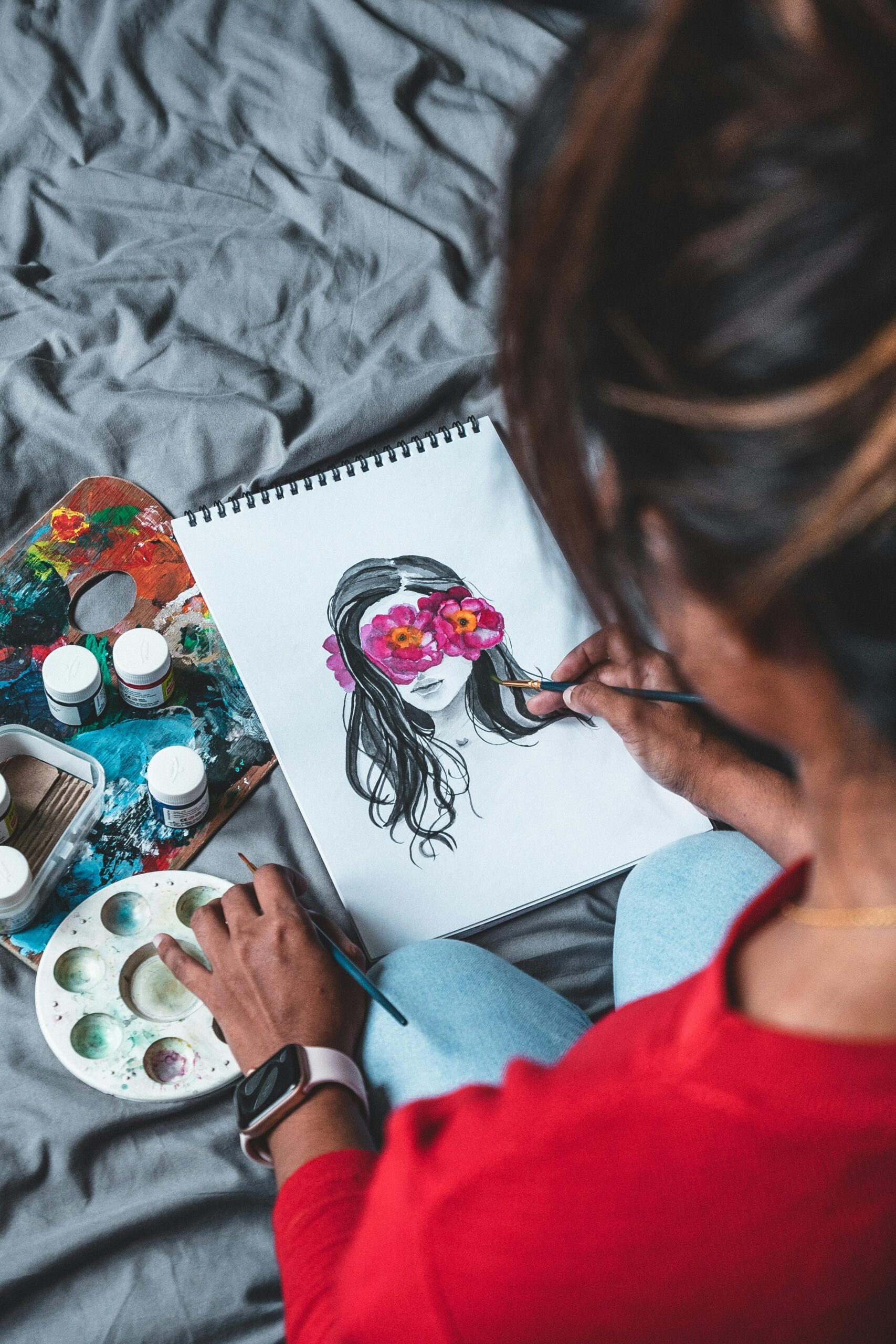
Meanwhile, a growing body of neuroscience research points to something far cheaper, far older, and far more effective at producing measurable calm: putting paint on paper with your own hands. Not digitally. Not through a screen. Actual pigment, actual water, actual paper. The kind of activity your nervous system was built for but that modern wellness culture somehow forgot to include in its monthly pricing tiers. Watercolor painting, specifically, has emerged in clinical research as one of the most accessible forms of what psychologists call “active meditation,” and the barrier to entry is so low it’s essentially lying on the ground.
This isn’t an argument against therapy or meditation. Both are genuinely useful. This is an argument against the assumption that wellness has to be a recurring charge, a login, and a pair of noise-cancelling headphones. Because the evidence suggests that a portable watercolor set and ten free minutes might do more for your cortisol levels than a $14.99/month guided breathing app you stopped opening in February.
The neuroscience of wet paint on paper (and why your phone can’t replicate it)
In 2020, researchers at Drexel University published a study in the journal Art Therapy that measured cortisol levels in participants before and after 45 minutes of art-making. Cortisol dropped in 75% of participants, regardless of artistic skill level. The researchers noted something interesting: the effect was strongest in participants who used fluid media like watercolor, as opposed to collage or digital drawing tools. The unpredictability of watercolor, the way pigment bleeds and blends on wet paper, appears to engage the brain’s default mode network in ways that structured, screen-based activities do not.
Dr. Girija Kaimal, who led the Drexel study, has since expanded her research to compare art-making with passive screen-based relaxation (watching calming videos, using meditation apps). Her 2023 follow-up found that hands-on creative activities produced longer-lasting reductions in self-reported anxiety. The calming effect of a meditation app peaked during the session and faded within 20 minutes. The calming effect of painting persisted for several hours. The working theory is that tactile engagement, physically moving a brush, mixing water and pigment, watching color spread, activates sensorimotor networks that screens simply cannot reach.
This matters because most of us are already drowning in screen time. Adding another screen-based solution to a screen-based problem is a bit like treating a sunburn with a heat lamp. Your nervous system is craving something analog, something with texture and unpredictability. Watercolor is almost comically good at delivering both.
Why “beginner” is the point, not the problem
There’s a stubborn cultural myth that creative activities only “count” if you’re good at them. This myth keeps millions of adults from picking up a brush. But the Drexel research specifically controlled for skill level and found no correlation between artistic ability and stress reduction. The cortisol drop was the same whether participants had formal art training or hadn’t painted since primary school. Your brain doesn’t care if the painting is gallery-worthy. It cares that your hands are moving, your eyes are tracking color, and your prefrontal cortex is getting a break from problem-solving and scheduling.
Beginner watercolor painting is actually better suited to this purpose than advanced practice. When you’re learning, your brain enters a state of relaxed attention, focused enough to stay present but not so focused that it triggers performance anxiety. It’s the same state that experienced meditators spend years trying to access. A complete beginner with a simple pocket watercolor set can stumble into it on the first try. The medium itself helps: watercolor is inherently forgiving. You add too much water, and the paint does something unexpected, and you work with it. There’s no undo button, and that turns out to be the whole point.
The cost math that wellness brands hope you never do
Let’s run the numbers honestly. A premium meditation app costs between $70 and $170 per year. A popular therapy-adjacent journaling app runs about $120 annually. A single sound bath session in a major city averages $35 to $50. Stack two or three of these together, as many wellness-minded adults do, and you’re looking at $300 to $500 per year on digital tools designed to calm you down.
A beginner watercolor painting kit, the kind that includes pigments, paper, and a brush in one compact unit, typically costs between $25 and $45. No subscription. No renewal. No login. Tobios Kit’s pocket-sized watercolor set, for example, clips everything into a single unit small enough to carry in a jacket pocket, with a digital guide included for people who genuinely don’t know where to start. That’s a one-time purchase that provides months of use before you’d even need to think about refilling paint. Compare that with $14.99 every month for an app that sends you guilt-inducing push notifications about your missed meditation streak, and the math becomes a little embarrassing for the subscription model.
Making it stick when every other wellness habit hasn’t
The reason most wellness habits fail isn’t motivation. It’s friction. You need your phone charged, your headphones paired, a quiet room, and 15 uninterrupted minutes to use a meditation app “properly.” Those conditions exist maybe twice a week for most working adults. A portable watercolor set removes almost all of that friction. You can paint on a park bench during your lunch break. You can paint at a coffee shop while waiting for a friend. You can paint on a train, at a kitchen table after dinner, or in a hotel room at 11pm when your brain won’t quiet down. The setup time is essentially zero. The cleanup is closing the kit.
This is what makes tactile creativity a more sustainable wellness practice than anything that requires a screen, a subscription, or a specific environment. You don’t need to be in a mindset. You don’t need to have already meditated today. You just need a few minutes and a willingness to put color on paper and see what happens. The research says your nervous system will handle the rest. And unlike that $624 in annual wellness subscriptions, you’ll actually have something to show for it: a small, imperfect, completely yours record of the moments you chose to slow down.
share:

May 5th, 2026 at 6:30 am
VITA Magazine’s take on watercolor painting completely changed my perspective—it’s the most affordable and effective stress-reliever I’ve ever tried.
Our experience with Ashirwad Minerals has been nothing short of excellent. Their attention to detail and commitment to quality is clearly visible in their products. When searching for reliable Calcite Powder Manufacturers in India we came across their name and decided to try their services. The outcome has been highly satisfying with noticeable improvement in our product efficiency. I would highly recommend them to anyone looking for premium calcite powder and professional service.
May 7th, 2026 at 11:06 pm
SPIN189 https://about.me/spin189