
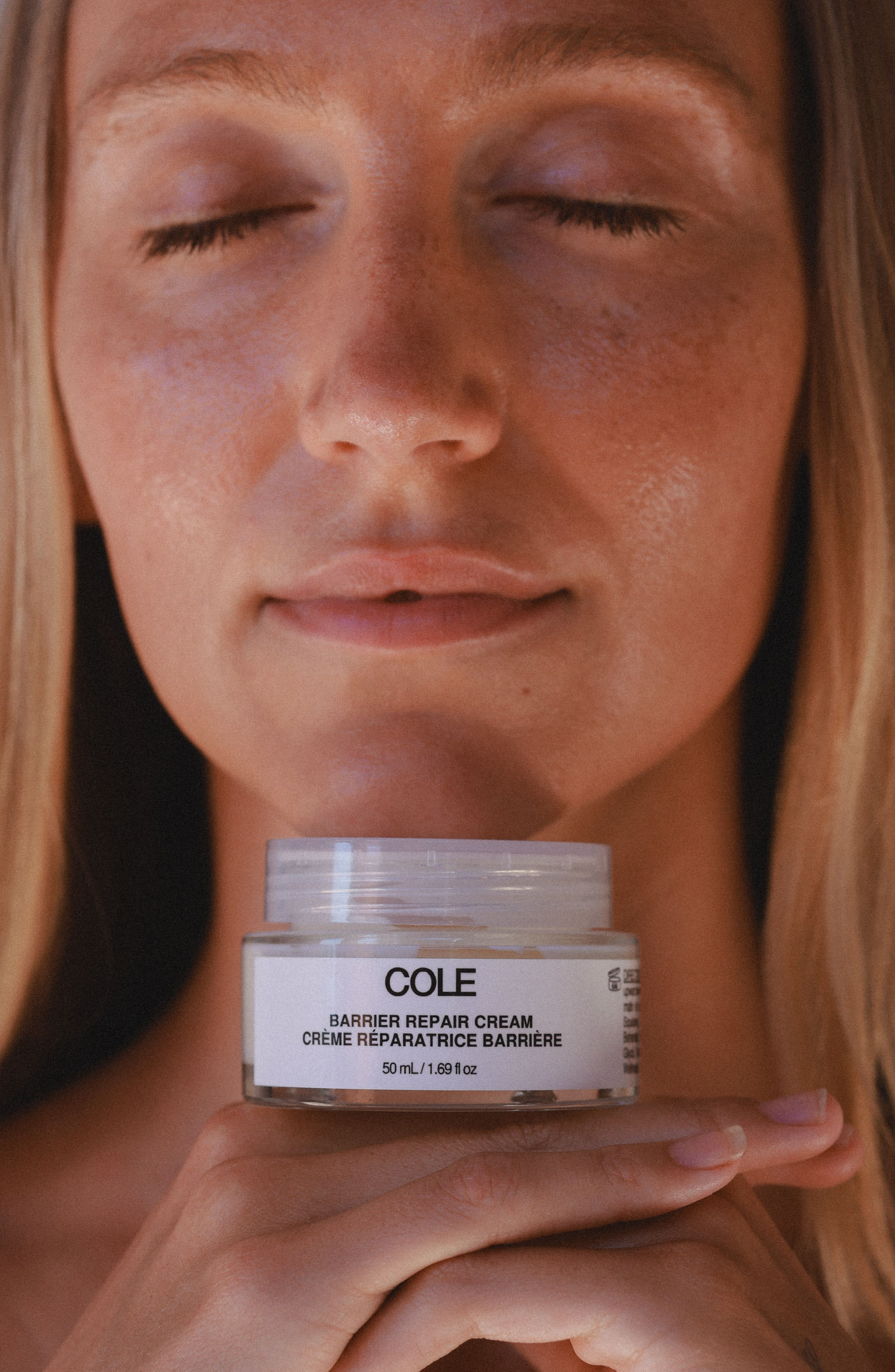
What happens when a naturopathic doctor with a deep understanding of skin biology decides to rethink modern skincare? You get COLE Skin & Supplements—a Canadian-made line blending clean ingredients, clinical expertise and a holistic approach to skin health. Founded by Dr. Jillian Cole, the brand focuses on strengthening the skin barrier from the inside out through biocompatible skincare and wellness supplements designed to work in synergy. We caught up with Jillian to chat about healing stressed skin, the connection between gut health and glow, and the personal journey that inspired her to create COLE. —Noa Nichol
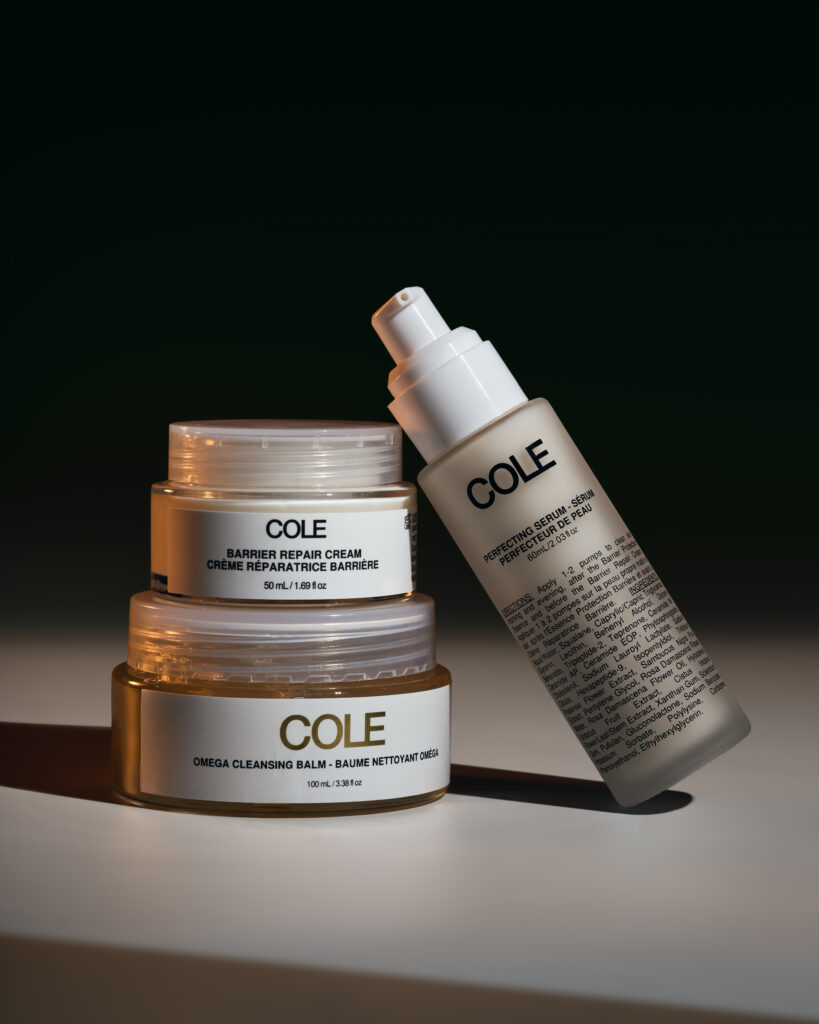
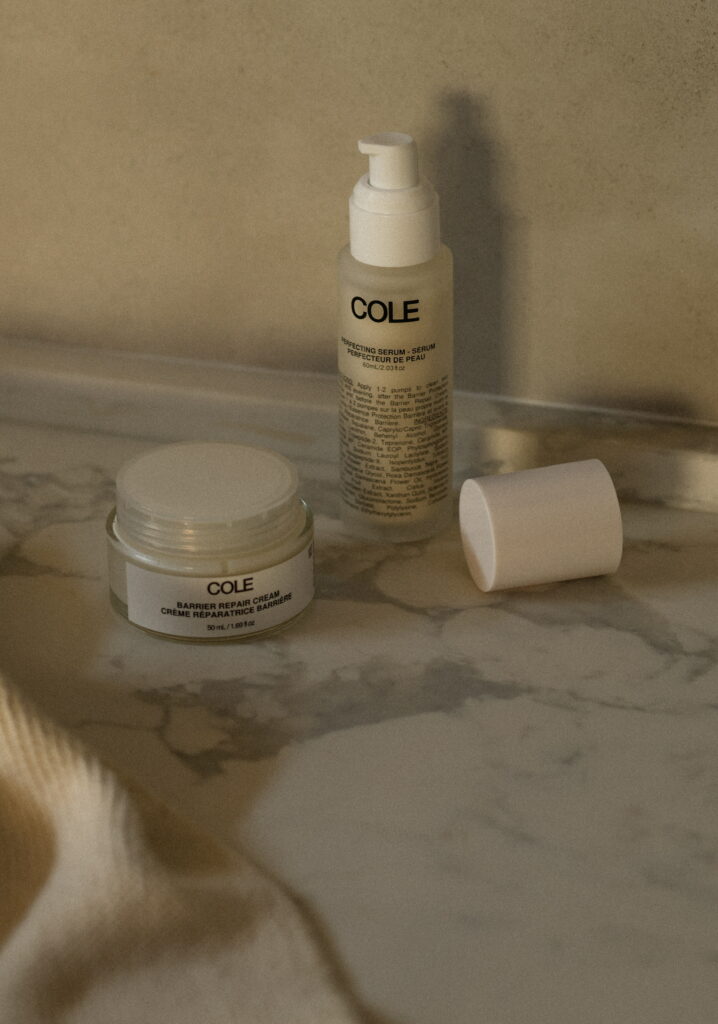
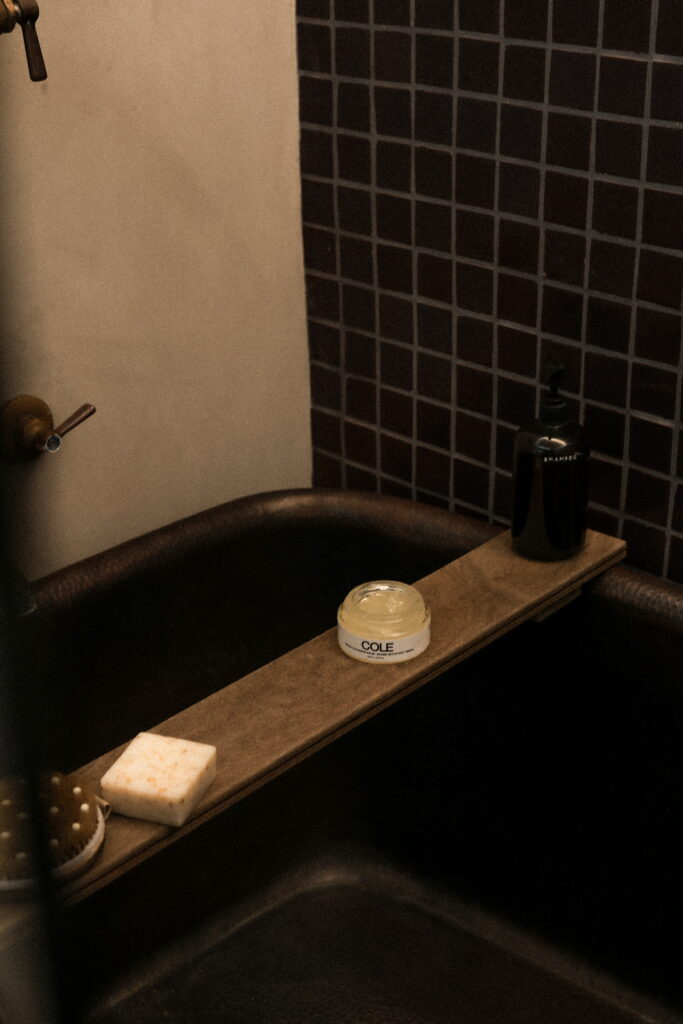
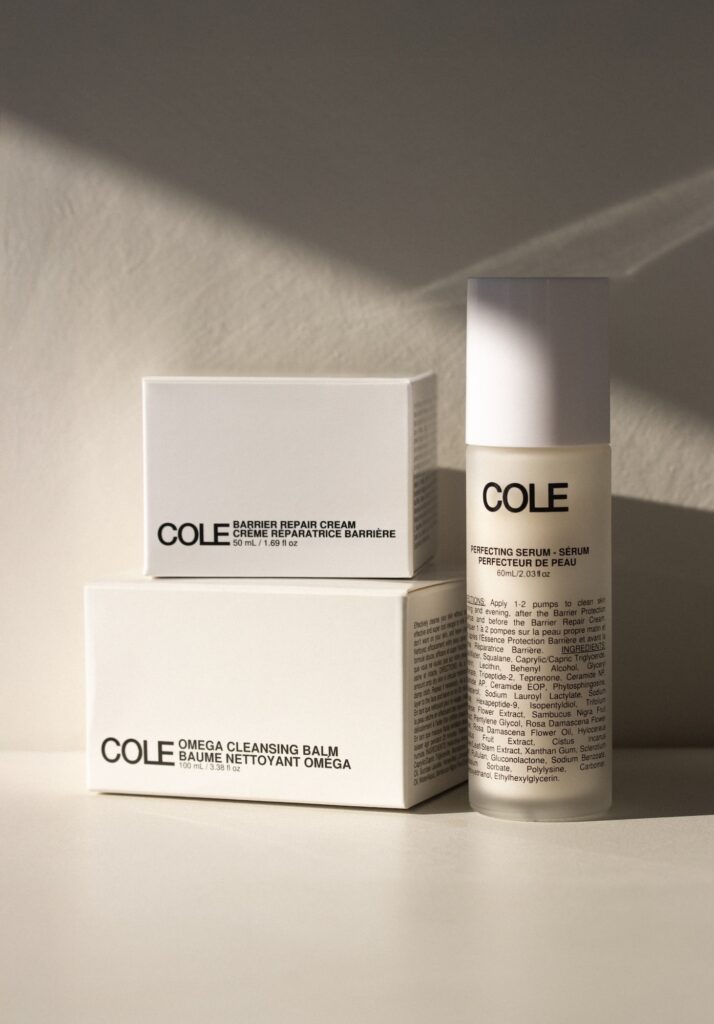
Why do you think the beauty industry spent so many years focusing on aggressive treatments instead of protecting and supporting the skin itself?
The industry was built on a results-now culture. Consumers wanted visible change fast, and aggressive treatments deliver that. Peels, acids, high-concentration retinoids create dramatic, immediate results that photograph well and sell products. The problem is that skin health was never really the goal. The goal was the appearance of improvement, and those are two very different things. Corneotherapy has been around since the 1960s, but it never had the marketing machine behind it that “transformative” treatments did.
What we’re also seeing now is a measurable rise in skin sensitization globally. More people than ever are reporting reactive, easily irritated skin, and that’s not a coincidence. It’s the cumulative result of years of over-stripping, over-treating, and dismantling the very barrier that protects us. I think that reality, lived in real skin by real women, has done more to shift the conversation than any trend cycle ever could. When your skin keeps breaking down no matter what you try, you start asking different questions. That’s the shift I formulate for.
How do you balance clinical efficacy with the growing consumer demand for clean, gentle skincare?
What I’ve found through both clinical practice and formulation is that gentle and efficacious are far more aligned than the industry has historically suggested. A compromised skin barrier doesn’t absorb actives well. It’s reactive, inflamed, and unpredictable. When you restore barrier integrity first, the skin actually becomes more responsive to everything you put on it. So gentleness isn’t a compromise of efficacy. It’s the foundation that makes efficacy possible. That said, I’m rigorous about formulation. Every ingredient has to earn its place. I’m looking at bioavailability, skin microbiome compatibility, and how the formula behaves across different hormonal skin states, because the woman I formulate for isn’t static. Her skin isn’t either.
How did your journey as a Stage 3 cancer survivor transform the way you think about wellness, beauty, and the products we put on our bodies every day?
It made everything personal in a way that’s impossible to manufacture. When you’re in cancer treatment, your skin becomes a record of everything your body is going through. Mine was dry, reactive, hormonally disrupted, and completely different from anything I’d experienced before. Treatment forced me into early menopause, so I was navigating barrier dysfunction and hormonal skin shifts simultaneously, while also being hyperaware of every single thing I was putting on my body. That experience didn’t just inform COLE and further define why I created this brand and the formulations, it became the reason COLE exists. I’m the proof of concept for this brand. I needed products that could work for skin in survival mode, and when they didn’t exist, I formulated them. That’s the integrity behind everything I make.
What actually happens biologically to our skin when we’re chronically stressed?
Chronic stress triggers a sustained release of cortisol, and cortisol is essentially hostile to skin barrier function. It breaks down the proteins and lipids that hold the skin barrier together. It disrupts the skin’s pH, impairs wound healing, increases transepidermal water loss, and creates an environment where inflammation becomes baseline rather than reactive. You also see changes in the skin microbiome under chronic stress, a shift away from the microbial balance that keeps skin resilient and calm. What most people experience as “stress skin,” the dullness, the breakouts, the sudden sensitivity, is actually the downstream effect of a barrier that’s been structurally compromised. It’s a systemic issue presenting topically, which is exactly why topical solutions alone are often insufficient.
Do you think consumers are becoming more skeptical of overly complicated beauty regimens?
Absolutely, and I think it’s one of the most intelligent shifts I’ve seen in the industry. For years, complexity was positioned as sophistication. The more steps, the more products, the more impressive the routine. What we now understand is that many of those multi-step routines were actually creating the problems they claimed to solve, over-exfoliation, sensitization, barrier damage, and then selling the fix for that too. Consumers are exhausted, and they’re educated now in a way they weren’t a decade ago. They’re reading labels, asking about mechanisms, questioning marketing claims. Skin minimalism is a direct response to having been overcomplicated and undersupported for a long time.
Why do you believe healthy skin can’t always be treated purely topically?
Because skin is an organ. It’s the largest one we have, and it’s downstream of everything happening internally. Hormonal fluctuations, chronic inflammation, nutritional deficiencies, gut microbiome imbalances, all of it surfaces on the skin. I see this constantly in the women who come to COLE. They’ve tried every topical. They’ve rebuilt their routines. And their skin is still reactive or dull or not healing the way it should, because the driver is internal. The most elegant topical formula in the world can’t compensate for a body that’s hormonally dysregulated or nutritionally depleted. That’s why COLE works across both channels, because real skin health requires both.
What are the biggest misconceptions people still have about what actually creates healthy skin?
The biggest one is that tightness means clean and that tingling means working. Those sensations are signs of irritation and barrier disruption, and the industry spent decades conditioning people to read them as efficacy. The second is that more actives equal better results. Layering high-concentration actives on a compromised barrier doesn’t accelerate improvement but rather it accelerates damage. And the third, which I think is finally starting to shift, is the idea that your skin type is fixed. Skin is dynamic. It changes with hormones, stress, seasons, life events. The women I formulate for have often been given a skin type label years ago that no longer reflects the skin they’re actually living in.
How important was it for you to prove that clinical skincare doesn’t have to look cold, intimidating, or overly medical?
It was non-negotiable. The woman I’m speaking to has been through something, a health crisis, a hormonal shift, a season of life that changed her skin and changed her. She deserves to feel held by the brand, not lectured at. Clinical doesn’t have to mean sterile. Science doesn’t have to mean cold. I wanted COLE to feel like precision and warmth existing in the same space, because that’s actually what corneotherapy is. It’s rigorous science in service of restoration. The branding had to reflect that. When someone picks up a COLE product, I want them to feel like they’ve arrived somewhere that gets it. Somewhere that was built for exactly where they are.
Win! A $208 COLE Prize Pack!
Congrats Jen S. of Chilliwack, BC, who will receive a $208 COLE Skin & Supplements Prize Pack! Please note: if you are the winner, you will receive a DM (direct message) in Instagram directly from @vitadailymedia. Please be wary of fake accounts, which often use similar handles with an extra or missing letter, number or symbol. We will never ask for a payment or for your credit card number, and we will never ask you to click through a link. If you are unsure whether you have been contacted, via Instagram, by us or a fake account, email us before responding. Full contest rules/regulations here.
share:

June 10th, 2026 at 9:09 am
A good serum under barrier cream at night. @charlesbowden1959
@cjanebowden
June 10th, 2026 at 9:41 am
Cleanse well and then moisturize @jessrmeisner
@janetlmeisner
June 10th, 2026 at 10:55 am
I use vitamin C serum every day & use copper peptides on opposite days that I use tretinoin! I can’t wait to try COLES SKINCARE!! OBSESSED!!
🤩🤩🤩🤩🤩🤩🤩🤩🤩🤩
June 10th, 2026 at 10:58 am
Always use moisturizer & SPF daily!!
I moisturize then moisturize 20 minutes later layering daily(vitamin C serum) at night copper peptides!!
@dakinibluesky
June 10th, 2026 at 5:01 pm
I use a really good quality cleanser on my face every night before going to sleep. I never go to sleep with makeup on! [email protected]
My insta handle is: cinglephotos
June 10th, 2026 at 8:14 pm
It’s not a secret! Moisturizing!!!!
@agee1004
I’m @ccuma
June 10th, 2026 at 8:24 pm
I use ice water baths to deep puff my skin in the morning! @oxo.cube
June 10th, 2026 at 8:52 pm
Clay masks and aloe vera for my face !
@stephadt
June 10th, 2026 at 8:53 pm
Clay masks and aloe vera For my face!
@lesblonds.15
June 10th, 2026 at 8:54 pm
Clay masks and aloe vera for my face!
@mamzelleed
June 11th, 2026 at 6:58 am
SPF everyday
I tagged @karlabarla17
My IG is @beachlivin_
June 11th, 2026 at 7:08 am
Fave skincare secret is periodically doing a mask of honey and oatmeal from the pantry. @gypsy_cat69
@arcticvixen007
June 11th, 2026 at 8:00 am
I moisturize.. wait 20 minutes! Moisturize again and repeat! I use serums & vitamin C daily & at night copper peptides & seal with glycerine! Looking forward to trying COLE SKINCARE!! ✨✨✨
@dakinibkuesky
@debgravenor
June 11th, 2026 at 12:41 pm
IG: @jessi.michaels.80
I like to use products with SPF in them and then I don’t have to add SPF to my daily routine (unless I’m out in the sun) @ahutch780
June 11th, 2026 at 9:27 pm
Drink lots of water. @akathenan
My IG @204_va
June 12th, 2026 at 9:40 am
Spf every day
June 12th, 2026 at 5:30 pm
Clean and moisturize your face as part of your bedtime routine and try to do a zinc masque twice a year. @mcguiremcclean
@msdanieli
June 12th, 2026 at 5:47 pm
Eye cream @winswithabogey
Thanks! Ig: @thebaeoftidal
June 12th, 2026 at 5:52 pm
I use a serum spritzer every day. I find it so much easier just spray then pat it into my skin. Tagging @damn_it_janet. On ig I am lillianmb23
June 12th, 2026 at 6:03 pm
Toners @caitlinmayne
@kitty.banx
June 12th, 2026 at 7:19 pm
I drink plenty of water @pamalot28. I am @wghutton
June 12th, 2026 at 7:32 pm
Cleansing every evening @kampar
@jan_leeu
June 12th, 2026 at 7:46 pm
@joseph.yu.01 I apply vitamin c serum every morning , high in antioxidant
IG: howtochangeaname
June 12th, 2026 at 10:01 pm
Hydrate between products! @j3n_o
IG @plumie.o
June 13th, 2026 at 3:12 pm
A good hydration makes good skin. @couicoui77
My IG : @melcami1
June 14th, 2026 at 5:18 am
exfoliate before moisturizing
IG @tonivelthuis
June 14th, 2026 at 9:42 am
Keep it simple! No more than a couple of products. Tag @michelle_policelli. I’m @lara.maynard on IG.
June 14th, 2026 at 5:38 pm
@alicesp18 Drinking lots of water daily is my favourite and best skin care treatment.
My Instagram handle: @wandyjb
June 14th, 2026 at 7:58 pm
@carry_me_cary I use moisturizer before bed. @naomilindstein1
June 15th, 2026 at 3:37 pm
Using sunscreen daily even in winter @mattila_87 posted by @lebeau5450
June 16th, 2026 at 5:38 pm
Facial reflexology and myofacial release 🙌🏼 plus switching to COLE and using filtered water on my face has improved my skin SO much.
June 16th, 2026 at 5:40 pm
Can’t edit my comment, but Insta @mindbodyblonde
June 16th, 2026 at 7:00 pm
Wear SPF daily @cabalisticblue
My handle @mrmeladejam
June 16th, 2026 at 9:01 pm
Always moisturize! @chrismiles
June 17th, 2026 at 5:37 am
Retinol at nite, sunscreen in the morning
IG: @cmcleodmetz
June 17th, 2026 at 8:35 pm
I do an exfoliating mask once a month and use a facial cleanser serum and toner every morning. I don’t put anything on my skin at night. I just let nature take its course . It works for me !!
@ lillylorra88
Tagging my daughter @candycaneanne who loves a good skin care routine.
June 22nd, 2026 at 8:43 am
get lots of sleep @hdfraga. Thanks @maryandcedar