
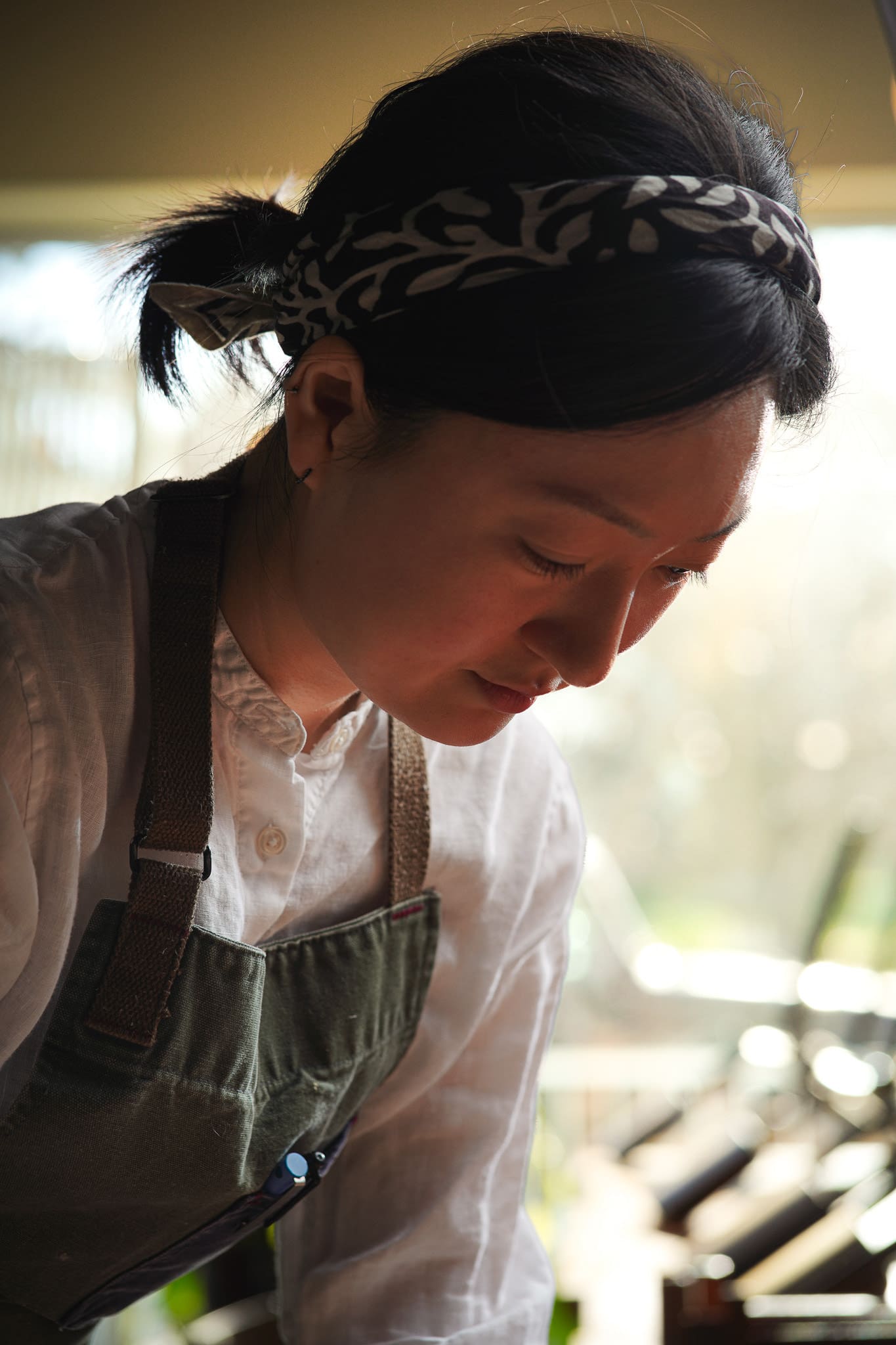
As Yes Shef returns for its fifth year at the Fairmont Pacific Rim, some of B.C.’s most talented women chefs are set to take centre stage. We caught up with one of this year’s culinary stars to talk mentorship, inspiration, and what she’s serving up at this landmark celebration of women in food and drink. —Noa Nichol
Jiwon Seo, Dachi
What does participating in Yes Shef mean to you personally, and how does it feel to be part of a community celebrating women shaping BC’s culinary scene?
I have worked with very talented women throughout my years in the kitchen, and they’ve inspired me so much in many ways. They are the reason I was able to navigate some challenging times and why I could make it this far. By participating in Yes Shef, I’ll get to meet and see other chefs who are in the industry, making a path for current and future women chefs, which will recharge and inspire me. Also, gathering all these women in one room is very powerful.
You’re not just showcasing your skills, but also mentoring the next generation through this event. What’s one piece of advice you wish you had received earlier in your culinary journey?
I wish someone had told me that this career actually starts from the moment you take your first chef position. When I took my first chef position, it felt like I had achieved all I wished for – which was true. When (most) cooks start their career, their goal is to be a chef somewhere. But there weren’t a lot of conversations about what’s after that.
And after a few months in my second chef job, I realized I had just started my career. Before becoming a chef of a restaurant, I was warming up and training for a long marathon by cooking other talented chefs’ food.
The industry has historically been tough for women. What changes are you most proud to see today, and what work do you feel still needs to be done?
I have been lucky to work in a safe environment for women; there was barely anyone who didn’t believe in me because I’m a woman. This is because prior generations worked so hard and proved that women can do it. And because of that, I was able to cultivate the culture within my team that we are all equal. I think that nowadays, people believe in women for being organized and detail-oriented, accepting these differences as strengths rather than weaknesses. I think we need to continue to grow in the direction we’ve been paving.
Your cooking often reflects both your personal story and the community around you. How do you express that identity through the dish or flavours you’re bringing to Yes Shef this year?
What you eat is who you are, what you cook is what you eat. Truly, cooking does reflect so much of who I am. For this event, I’m bringing the dish that will represent my heritage and my work background. It will be a melting pot of Korean taste with Western techniques, which is how I usually build my dishes. It will be familiar yet unique in taste.
Finally, could you share a meaningful recipe with us—something that holds a special place in your heart, whether it’s a family tradition, a dish from your heritage, or one that represents a turning point in your career?
There is a dish my mom used to make that I did not appreciate as a child. She washes and braises over-fermented radish kimchi that has been topped with big pieces of dried anchovies and doenjang, a Korean fermented soybean paste, and one of the most essential elements of Korean cuisine. It has such a deep flavour and is packed with umami, which made it hard for me to like it as a kid when I just wanted to eat sweets and junk food. However, one day, as a fully grown adult living far away from my family, I just craved it. Thinking about it brought me back to the dining table with my family for breakfast with that dish on.
Radish Kimchi
- 1 Korean radish(can be found in Korean grocery stores!)
- salt
- 1/5 cup fish sauce
- 1/2 cup gochugaru(Korean chilli flakes)
- 8 grated garlic
- 1/5 cup sugar
- 1 russet potato
- 200ml of water(or veg stock if you have on your hands)
- Peel and dice the potato, then boil it in water until it becomes soft and easily breaks apart. Mash the cooked potato in its water to create a smooth, starchy mixture. Set aside to cool completely.
- Peel the radish and cut it into long strips, about the length of your fingers. Place the radish in a bowl, toss with salt, and let it sit for 30 minutes. This draws out excess moisture and helps keep the kimchi crisp.
- Rinse the radish thoroughly to remove the salt. Drain well and transfer to a dry bowl.
- In the cooled potato-water mixture, add fish sauce, gochugaru (Korean red pepper flakes), minced garlic, and sugar. Taste the sauce and adjust it to your preference—make it spicier, sweeter, or more savory as desired.
- Pour the sauce over the radish and mix until all pieces are evenly coated.
- Transfer the mixture to a clean, dry container. Press a piece of plastic wrap directly onto the surface of the kimchi to minimize air contact, then seal the container tightly.
- Leave the container at room temperature overnight to start the fermentation process. The next day, transfer it to the refrigerator. The kimchi will be ready to eat in a few days once the flavors have developed.
share:

Be the first to comment